OpenShift is Red Hat's Cloud Computing Platform as a Service (PaaS) offering. OpenShift is an application platform in the cloud where application developers and teams can build, test, deploy, and run their applications.
$0.08
per hour
OCI
Score9 out of 10
N/A
Oracle Cloud Infrastructure (OCI) is Oracles's infrastructure-as-a-service (IaaS) platform which combines the utility of public cloud with the granular control, security, and predictability of on-premises infrastructure.
N/A
Pricing
Red Hat OpenShift
OCI
Editions & Modules
No answers on this topic
No answers on this topic
Offerings
Pricing Offerings
Red Hat OpenShift
OCI
Free Trial
Yes
Yes
Free/Freemium Version
Yes
Yes
Premium Consulting/Integration Services
No
Yes
Entry-level Setup Fee
No setup fee
Optional
Additional Details
—
—
More Pricing Information
Community Pulse
Red Hat OpenShift
OCI
Considered Both Products
Red Hat
No answer on this topic
Oracle
Verified User
Chose OCI
Oracle Cloud Infrastructure provides strong and Innovative database services with its enterprise Autonomous Database and Exadata Features. Oracle Database management can make huge workloads autonomously. OCI in addition is more cheaper compared to it's other competitors in the …
A de minimis incentive was given to thank the reviewer for their time. The incentive was not used to bias or drive a particular response, nor was the incentive contingent on a positive endorsement. More Info
Risk Insight Product in Information Technology at Telkomsel (Telecommunications, 5001-10,000 employees)
Chose OCI
Oracle Cloud Infrastructure (OCI) competes effectively with cloud giants like AWS, Azure and GCP. OCI's standout features include robust security and compliance measures, transparent pricing with cost optimization tools, high-performance computing capabilities, seamless …
A de minimis incentive was given to thank the reviewer for their time. The incentive was not used to bias or drive a particular response, nor was the incentive contingent on a positive endorsement. More Info
Red Hat OpenShift, despite its complexity and overhead, remains the most complete and enterprise-ready Kubernetes platform available. It excels in research projects like ours, where we need robust CI/CD, GPU scheduling, and tight integration with tools like Jupyter, OpenDataHub, and Quiskit. Its security, scalability, and operator ecosystem make it ideal for experimental and production-grade AI workloads. However, for simpler general hosting tasks—such as serving static websites or lightweight backend services—we find traditional VMs, Docker, or LXD more practical and resource-efficient. Red Hat OpenShift shines in complex, container-native workflows, but can be overkill for basic infrastructure needs.
A de minimis incentive was given to thank the reviewer for their time. The incentive was not used to bias or drive a particular response, nor was the incentive contingent on a positive endorsement. More Info
As per our usage Oracle Cloud Infrastructure for almost 6 years hosting 500 + customers I can say its well suited application for any small scale to larger scale application as it can handle that capacity and provide more reliable cloud service only if you need any messaging service like pub/sub or sqs better to consider other services.
A de minimis incentive was given to thank the reviewer for their time. The incentive was not used to bias or drive a particular response, nor was the incentive contingent on a positive endorsement. More Info
We had a few microservices that dealt with notifications and alerts. We used OpenShift to deploy these microservices, which handle and deliver notifications using publish-subscribe models.
We had to expose an API to consumers via MTLS, which was implemented using Server secret integration in OpenShift. We were then able to deploy the APIs on OpenShift with API security.
We integrated Splunk with OpenShift to view the logs of our applications and gain real-time insights into usage, as well as provide high availability.
A de minimis incentive was given to thank the reviewer for their time. The incentive was not used to bias or drive a particular response, nor was the incentive contingent on a positive endorsement. TR verified that a representative sample of customers was invited. More Info
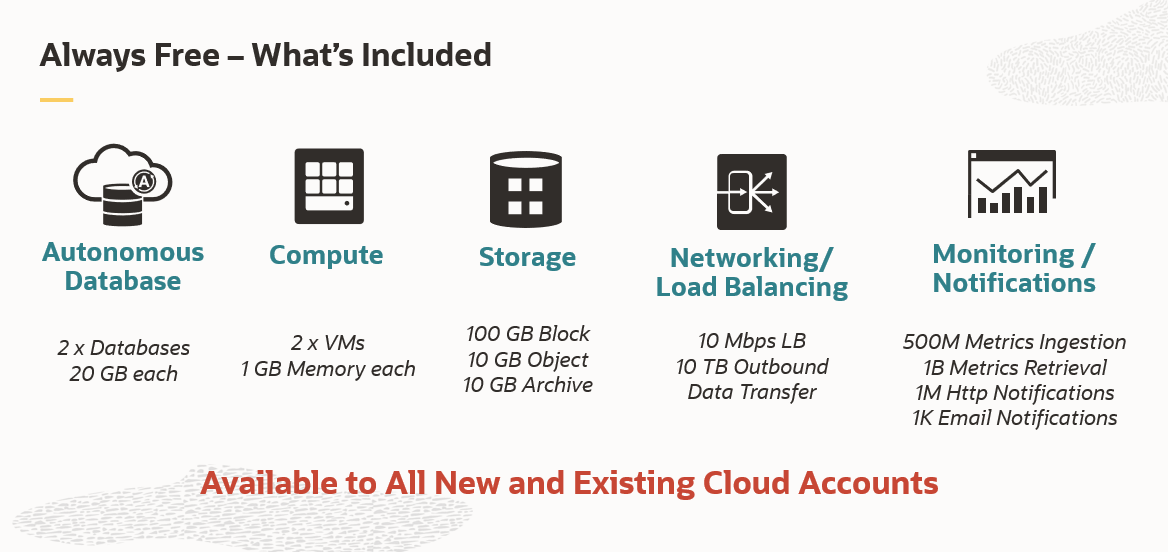
Oracle Cloud Infrastructure has a generous free tier, moreso than other hyperscalers, with an always-free tier that guarantees certain products are always free
Oracle Cloud Infrastructure allows you to size VMs with differing combinations of CPU and RAM, which is contrary to other hyperscalers that have specific pre-defined combinations only
A de minimis incentive was given to thank the reviewer for their time. The incentive was not used to bias or drive a particular response, nor was the incentive contingent on a positive endorsement. More Info
OpenShift virtualization has a little room for improvement. I'm coming from it as a Rev customer. There's some things in that OpenShift virtualization that were in Rev that I would like to see in OpenShift virtualization. I realized that they're chasing the VMware crowd and that's fine, but from us old Rev customers, we'd like to see some things that was in Rev around via migration and things of that nature that could be in OpenShift virtualization, I hope is being planned to be put in.
A de minimis incentive was given to thank the reviewer for their time. The incentive was not used to bias or drive a particular response, nor was the incentive contingent on a positive endorsement. More Info
Navigating the UI takes lots of getting used to. It reminds me of older GCP (just to get used to where everything is).
Permission for different things always seemed to be more difficult than it really needed to be. Once you got them set up you were good but updating anything or creating new permissions for just about anything took longer than I thought it should.
Based on how the buttons were laid out, it was pretty easy to delete all of your DNS records, and backing them up was not as intuitive as I'd like with the UI, but it was easy to do using a script.
A de minimis incentive was given to thank the reviewer for their time. The incentive was not used to bias or drive a particular response, nor was the incentive contingent on a positive endorsement. More Info
OpenShift is really easy of use through its management console. OpenShift gives a very large flexibility through many inbuilt functionalities, all gathered in the same place (it's a very convenient tool to learn DevOps technics hands on) OpenShift is an ideal integrated development / deployment platform for containers
A de minimis incentive was given to thank the reviewer for their time. The incentive was not used to bias or drive a particular response, nor was the incentive contingent on a positive endorsement. More Info
Reliability: Very dependable and stable OCI services have been for the business operations.Performance: The speed and efficiency of OCI in meeting their computing and storage needs.Scalability: The ease and effectiveness of scaling resources up or down to accommodate changing demands.Security: The robustness and effectiveness of OCI's security features in protecting their data and applications.
A de minimis incentive was given to thank the reviewer for their time. The incentive was not used to bias or drive a particular response, nor was the incentive contingent on a positive endorsement. More Info
The virtualization part takes some getting used to it you are coming from a more traditional hypervisor. Customization options are not intuitive to these users. The process should be more clear. Perhaps a guide to Openshift Virtualization for users of RHV, VMware, etc. would ease this transition into the new platform
A de minimis incentive was given to thank the reviewer for their time. The incentive was not used to bias or drive a particular response, nor was the incentive contingent on a positive endorsement. TR verified that a representative sample of customers was invited. More Info
The services & products in Oracle Cloud Infrastructure needs more improvement to beat other Cloud service providers. The price is good & Security processes are good. We are requiring to put more effort in supporting this Oracle Cloud Infrastructure than other Cloud service providers. Probably better ways are there but is not super easy to find or not super available
Redhat openshift is generally reliable and available platform, it ensures high availability for most the situations. in fact the product where we put openshift in a box, we ensure that the availability is also happening at node and network level and also at storage level, so some of the factors that are outside of Openshift realm are also working in HA manner.
A de minimis incentive was given to thank the reviewer for their time. The incentive was not used to bias or drive a particular response, nor was the incentive contingent on a positive endorsement. TR verified that a representative sample of customers was invited. More Info
Yeah sometimes we had to face unplanned outages due to underlying infrastructure issues, so not every time,e but once in a while we face issues with availability. But the good thing is we have redundancy with DR setup and multi region so we can manage.
A de minimis incentive was given to thank the reviewer for their time. The incentive was not used to bias or drive a particular response, nor was the incentive contingent on a positive endorsement. More Info
Overall, this platform is beneficial. The only downsides we have encountered have been with pods that occasionally hang. This results in resources being dedicated to dead or zombie pods. Over time, these wasted resources occasionally cause us issues, and we have had difficulty monitoring these pods. However, this issue does not overshadow the benefits we get from Openshift.
A de minimis incentive was given to thank the reviewer for their time. The incentive was not used to bias or drive a particular response, nor was the incentive contingent on a positive endorsement. TR verified that a representative sample of customers was invited. More Info
From the start, I was surprised by response times and image quality accessing windows VMs with RDP. GCP, Azure and -many offerings in AWS- don't perform this speed. Also, that's evident in the quality of Infrastructure Management Team, because I just received one warning regarding a region failure, what confirms that's a mature platform.
A de minimis incentive was given to thank the reviewer for their time. The incentive was not used to bias or drive a particular response, nor was the incentive contingent on a positive endorsement. More Info
Every time we need to get support all the Red Hat team move forward looking to solve the problem. Sometimes this was not easy and requires the scalation to product team, and we always get a response. Most of the minor issues were solved with the information from access.redhat.com
A de minimis incentive was given to thank the reviewer for their time. The incentive was not used to bias or drive a particular response, nor was the incentive contingent on a positive endorsement. More Info
Overall it is amazing, there is always room for improvement. We have weekly updates that tend to slow the program used more and more. We had to change some reports within Oracle because the others wouldn’t load. This is tied to our payroll and the delays are causing many time constraint issues and panic. We have to create a new report when one breaks. Otherwise awesome!
A de minimis incentive was given to thank the reviewer for their time. The incentive was not used to bias or drive a particular response, nor was the incentive contingent on a positive endorsement. More Info
I was not involved in the in person training, so i can not answer this question, but the team in my org worked directly with Openshift and able to get the in person training done easily, i did not hear problem or complain in this space, so i hope things happen seamlessly without any issue.
A de minimis incentive was given to thank the reviewer for their time. The incentive was not used to bias or drive a particular response, nor was the incentive contingent on a positive endorsement. TR verified that a representative sample of customers was invited. More Info
A de minimis incentive was given to thank the reviewer for their time. The incentive was not used to bias or drive a particular response, nor was the incentive contingent on a positive endorsement. More Info
We went thru the training material on RH webesite, i think its very descriptive and the handson lab sesssions are very useful. It would be good to create more short duration videos covering one single aspect of openshift, this wll keep the interest and also it breaks down the complexity to reasonable chunks.
A de minimis incentive was given to thank the reviewer for their time. The incentive was not used to bias or drive a particular response, nor was the incentive contingent on a positive endorsement. TR verified that a representative sample of customers was invited. More Info
A de minimis incentive was given to thank the reviewer for their time. The incentive was not used to bias or drive a particular response, nor was the incentive contingent on a positive endorsement. More Info
A de minimis incentive was given to thank the reviewer for their time. The incentive was not used to bias or drive a particular response, nor was the incentive contingent on a positive endorsement. More Info
A de minimis incentive was given to thank the reviewer for their time. The incentive was not used to bias or drive a particular response, nor was the incentive contingent on a positive endorsement. More Info
The Tanzu Platform seemed overly complicated, and the frequent changes to the portfolio as well as the messaging made us uneasy. We also decided it would not be wise to tie our application platform to a specific infrastructure provider, as Tanzu cannot be deployed on anything other than vSphere. SUSE Rancher seemed good overall, but ultimately felt closer to a DIY approach versus the comprehensive package that Red Hat OpenShift provides.
A de minimis incentive was given to thank the reviewer for their time. The incentive was not used to bias or drive a particular response, nor was the incentive contingent on a positive endorsement. More Info
We used Microsoft Azure and Docker earlier and faced some difficulties like Microsoft Azure and Docker. Occasionally, the generation of large images can delay deployment. It is also necessary for me to admit that Microsoft Azure and Docker have a somewhat steep learning curve. Proper paperwork needs to be there. Docker has issues with performance on a number of platforms. On the other hand, OCI is easy to deploy and easy to understand.
A de minimis incentive was given to thank the reviewer for their time. The incentive was not used to bias or drive a particular response, nor was the incentive contingent on a positive endorsement. More Info
It's easy to understand what are being billed and what's included in each type of subscription. Same with the support (Std or Premium) you know exactly what to expect when you need to use it. The "core" unit approach on the subscription made really simple to scale and carry the workloads from one site to another.
A de minimis incentive was given to thank the reviewer for their time. The incentive was not used to bias or drive a particular response, nor was the incentive contingent on a positive endorsement. More Info
was not part of initial purchase team. Anyways, i think unit pricing and billing frequency is good compared to other Cloud service providers, when it comes to Cloud Capital expenditure & Operational expenditure. Would be more interested in exploring more options where customers can get more cost relaxations on trying out new cloud services in Oracle Cloud Infrastructure for example a new App or a feature
This is a great platform to deployment container applications designed for multiple use cases. Its reasonably scalable platform, that can host multiple instances of applications, which can seamlessly handle the node and pod failure, if they are configured properly. There should be some scalability best practices guide would be very useful
A de minimis incentive was given to thank the reviewer for their time. The incentive was not used to bias or drive a particular response, nor was the incentive contingent on a positive endorsement. TR verified that a representative sample of customers was invited. More Info
We have hosted around 500 + customers on this cloud so till day not faced any major issues, so we can use it for any kind of products and it can hold the load and easily scale based on need.
A de minimis incentive was given to thank the reviewer for their time. The incentive was not used to bias or drive a particular response, nor was the incentive contingent on a positive endorsement. More Info
Services & Infra wise is ok to use & host applications & services. Security wise also good for a Cloud service provider. It is a interesting area to explore & using it for day to day needs can be further improvised in future probably. Modern day Services like AI and Machine learning could be improved
All of the above. Red Hat OpenShift going into a developer-type setting can be stood up very quickly. There's a very short period to have developers onboard to it and they're able to become productive much faster than a grow your own type solution.
A de minimis incentive was given to thank the reviewer for their time. The incentive was not used to bias or drive a particular response, nor was the incentive contingent on a positive endorsement. TR verified that a representative sample of customers was invited. More Info
A de minimis incentive was given to thank the reviewer for their time. The incentive was not used to bias or drive a particular response, nor was the incentive contingent on a positive endorsement. TR verified that a representative sample of customers was invited. More Info