
Notion vs. Roadmunk
| Product | Rating | Most Used By | Product Summary | Starting Price |
|---|---|---|---|---|
 Notion | Score8.7 out of 10 | N/A | Notion aims to present users with an all-in-one workspace — for notes, tasks, wikis, and databases, from Notion Labs in San Francisco. | $5 per month per user |
 Roadmunk | Score9 out of 10 | N/A | Roadmunk is a roadmap visualization platform that is designed to enable product managers and their teams to communicate the strategic roadmap throughout their organization. The vendor says product leaders can easily input milestones, roadmap data and create unlimited pivots in real time. The vendor says it has differentiated itself through intuitive user-centric design, seamless manipulation of roadmap views and enterprise data security. Since late 2021, Roadmunk is part of Tempo. | $19 per seat |
| Notion | Roadmunk | |||||||||||||||
|---|---|---|---|---|---|---|---|---|---|---|---|---|---|---|---|---|
| Editions & Modules |
|
| ||||||||||||||
| Offerings |
| |||||||||||||||
| Entry-level Setup Fee | No setup fee | No setup fee | ||||||||||||||
| Additional Details | A discount is offered for annual billing. | Ready to roadmap? All our plans start with a free 14-day trial. | ||||||||||||||
| More Pricing Information | ||||||||||||||||
| Notion | Roadmunk | |
|---|---|---|
| Considered Both Products | No answer on this topic | No answer on this topic |
| Key User Insights | ||
| Would buy again | ||
92% Would buy again 73 Answers | 100% Would buy again 8 Answers | |
| Delivers good value for the price | ||
97% Delivers good value for the price 58 Answers | 100% Delivers good value for the price 7 Answers | |
| Happy with the feature set | ||
97% Happy with the feature set 77 Answers | 100% Happy with the feature set 8 Answers | |
| Lived up to sales and marketing promises | ||
96% Lived up to sales and marketing promises 43 Answers | 100% Lived up to sales and marketing promises 5 Answers | |
| Implementation went as expected | ||
93% Implementation went as expected 51 Answers | 100% Implementation went as expected 6 Answers | |
| Notion | Roadmunk | ||||||||||||||||||||||||||||
|---|---|---|---|---|---|---|---|---|---|---|---|---|---|---|---|---|---|---|---|---|---|---|---|---|---|---|---|---|---|
| Project Management |
| ||||||||||||||||||||||||||||
| Communication |
| ||||||||||||||||||||||||||||
| File Sharing & Management |
| ||||||||||||||||||||||||||||
| Notion | Roadmunk | |
|---|---|---|
| Small Businesses |  Flock Score9.1 out of 10 |  Craft.io Score8.3 out of 10 |
| Medium-sized Companies |  Microsoft Viva Engage Score7.9 out of 10 |  ProductPlan Score9.5 out of 10 |
| Enterprises |  Google Keep Score9.9 out of 10 |  Jira Align Score8.9 out of 10 |
| All Alternatives | View all alternatives | View all alternatives |
| Notion | Roadmunk | |
|---|---|---|
| Likelihood to Recommend | 8.2 | 9.0 |
| Usability | 10.0 | 8.0 |
| Support Rating | - | 10.0 |
| Data Sharing and Collaboration | 8.4 | - |
| Data Sources | 4.7 | - |
| Notion | Roadmunk | |
|---|---|---|
| Likelihood to Recommend |
|
|
| Pros |
|
|
| Cons |
|
|
| Likelihood to Renew |
| No answers on this topic |
| Usability |
|
|
| Support Rating | No answers on this topic |
|
| Alternatives Considered |
|
|
| Return on Investment |
|
|
| ScreenShots | Roadmunk Screenshots 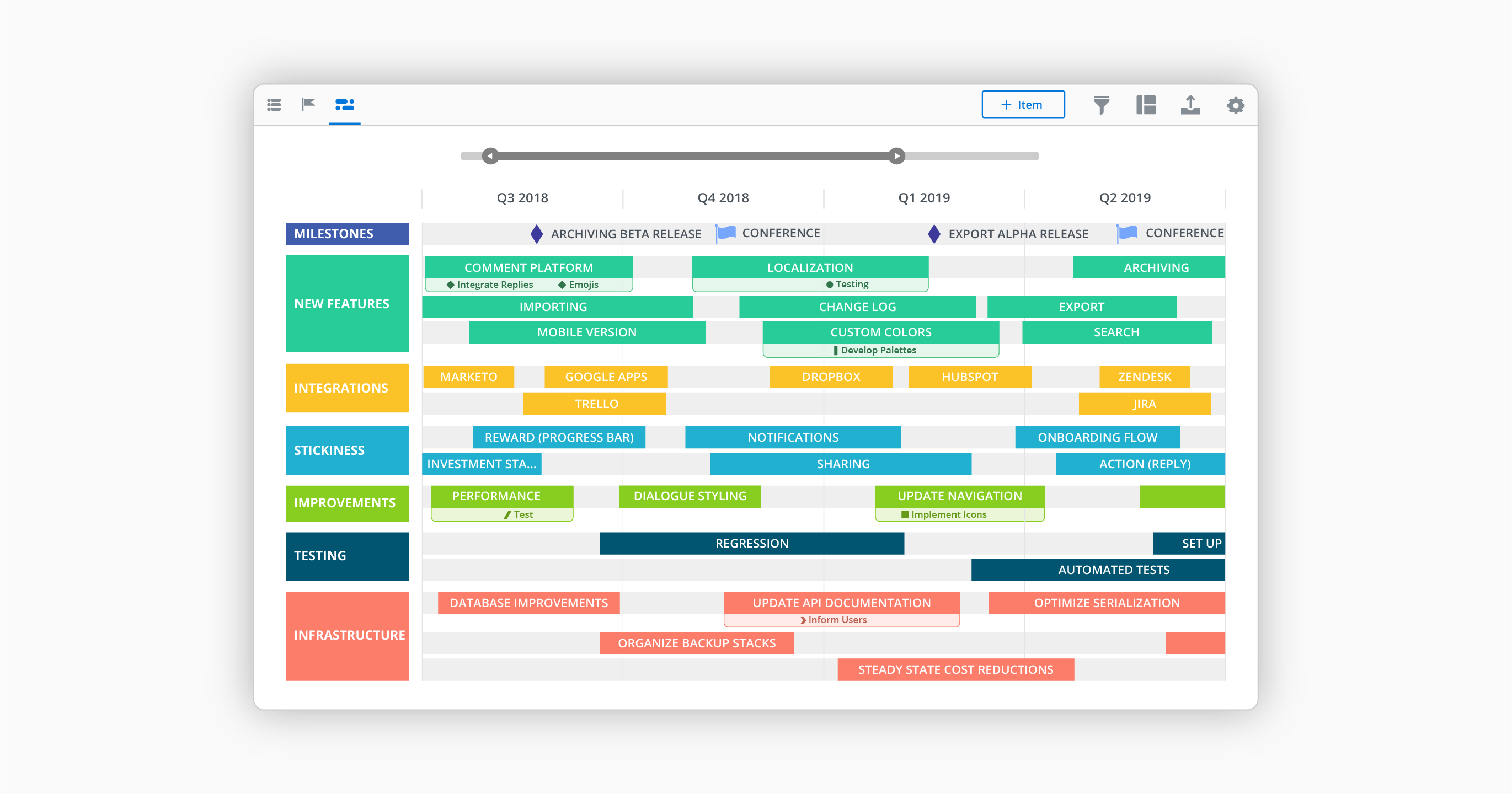     |




