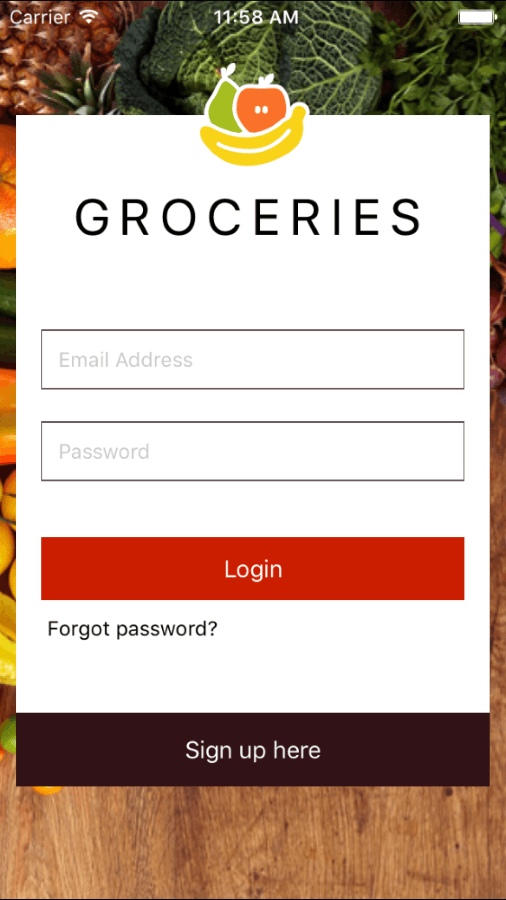
NativeScript is an open source framework that allows
you to create native iOS and Android apps, with one codebase, using the web
skills you already have (JavaScript and CSS) and the libraries you already
love.
N/A
Qlik Analytics Platform
Score8.2 out of 10
N/A
The Qlik Analytics Platform (QAP) is a developer platform for building custom analytic applications based on rich frontend and backend APIs. It gives full API access to the Qlik associative engine to build rich data-driven analytic applications, for example when building web applications for extranet and Internet deployment.
N/A
Pricing
NativeScript
Qlik Analytics Platform
Editions & Modules
No answers on this topic
No answers on this topic
Offerings
Pricing Offerings
NativeScript
Qlik Analytics Platform
Free Trial
Yes
No
Free/Freemium Version
Yes
No
Premium Consulting/Integration Services
No
No
Entry-level Setup Fee
No setup fee
No setup fee
Additional Details
The NativeScript framework and CLI are completely free and open source. NativeScript Sidekick is a free download to improve developer productivity with optional paid tiers for power users.
I gotta be honest, after a PoC period, we choose to rewrite the whole application in a different cross-platform app. Our developers had to invest a lot of time and effort to debug a lot of plugin-related issues, which we needed to utilize the android mobile phone capabilities. QR reader, special visualizations, and fine-tuning were really hard and often resulted in writing native Android code instead of using the shared Angular code. In the end, we think that writing a standalone Android app and an Angular app would have been a better alternative, as the shared code base was so unreliable that it did not save us any time.
A de minimis incentive was given to thank the reviewer for their time. The incentive was not used to bias or drive a particular response, nor was the incentive contingent on a positive endorsement. More Info
Qlik Analytics Platform has helped us track turnaround time as well as sales volumes. We can display metrics in a multitude of ways and can then slice it up in even more ways by adding filters. It is nice that you can filter down the data by essentially "Qliking" anywhere to find insights. Qlik Analytics Platform has been extremely beneficial in reducing manual reports. We are able to automate numerous reports in addition to setting up alerts, through Nprinting, that will notify users when certain metrics are hit. For example, if our turnaround time exceeds a certain number, we can alert business stakeholders so they can take a closer look. We can also send notifications to sales representatives when their territories are underperforming.
A de minimis incentive was given to thank the reviewer for their time. The incentive was not used to bias or drive a particular response, nor was the incentive contingent on a positive endorsement. More Info
True native app. The app uses native components and that is quite noticeable in the overall performance of the app. NativeScript is also awesome in the way we can access the native APIs, so we are never really constrained by the framework. If we need, we can just dive into the native APIs without leaving our environment and language (JS).
Cross-platform. Builds for Android and iOS. It deals with the platforms differences very well.
Support for Vue.js. Even though it is just a community effort, the NativeScript-Vue plugin is the best alternative to build native Apps with Vue.js. That was a major factor to go with NativeScript.
A de minimis incentive was given to thank the reviewer for their time. The incentive was not used to bias or drive a particular response, nor was the incentive contingent on a positive endorsement. More Info
A de minimis incentive was given to thank the reviewer for their time. The incentive was not used to bias or drive a particular response, nor was the incentive contingent on a positive endorsement. More Info
A de minimis incentive was given to thank the reviewer for their time. The incentive was not used to bias or drive a particular response, nor was the incentive contingent on a positive endorsement. More Info
A de minimis incentive was given to thank the reviewer for their time. The incentive was not used to bias or drive a particular response, nor was the incentive contingent on a positive endorsement. More Info
The hybrid is ok but native is better for performance and the right use case I want to go for is the performance without dealing with too many development tools.
A de minimis incentive was given to thank the reviewer for their time. The incentive was not used to bias or drive a particular response, nor was the incentive contingent on a positive endorsement. More Info
The community support is excellent. They have a slack community as well as a discourse forum forum.nativescript.org Both of these offer community driven support. The forum is more for a threaded discussion. The slack community is more for a quick talk.
A de minimis incentive was given to thank the reviewer for their time. The incentive was not used to bias or drive a particular response, nor was the incentive contingent on a positive endorsement. More Info
Customer support is provided through resellers, and finding the right reseller for your context can be a challenge. However our support from our last two resellers/partners has been largely very good. The online community is strong, though obviously doesn't replace having local technical experts working with the product and managing it.
A de minimis incentive was given to thank the reviewer for their time. The incentive was not used to bias or drive a particular response, nor was the incentive contingent on a positive endorsement. More Info
Ionic Ionic is an excellent Angular-based framework for mobile, and it does give a lot of access to the native device api's. However, the technology is based on Cordova, which means the apps being built are just webviews, with html, css and JS all running on the UI thread, and potentially creating very slow experiences for users. NativeScript is a truly native solution, and so provides a faster user experience. ReactNative We evaluate ReactNative, and found it much the same as NativeScript. The main difference is that your JS is all written with React, while NativeScript lets you choose between normal JS, Angular, and Vue. For our team, Angular was the most appropriate choice.
A de minimis incentive was given to thank the reviewer for their time. The incentive was not used to bias or drive a particular response, nor was the incentive contingent on a positive endorsement. More Info
Qlik is a platform with more scaling ability and functionality compared to PowerBI. PowerBI is the prior step before passing to Qlik, however, Qlik provides more functions and abilities to the business domain unit with better management capabilities for the IT team that set it up. In the end, we implemented Qlik for functionality and scalability.
A de minimis incentive was given to thank the reviewer for their time. The incentive was not used to bias or drive a particular response, nor was the incentive contingent on a positive endorsement. More Info
The poor quality of NativeScript documentation has the potential to weigh heavily on development timelines, budgets, and QA resources in a NEGATIVE manner.
The poor interoperability of NativeScript plugins can significantly increase development time.
The need to seek out professional instruction to learn how to use NativeScript effectively may become a burden on your budget.
The number of breaking changes between versions of NativeScript, may cause your development efforts to lag further behind the most recent releases of NativeScript and your other chosen environments than you are accustomed to.
NativeScript still does not support the latest major version of Angular. Any significant changes to the other environment components of your systems may hold you back even further while NativeScript plays catch-up.
A de minimis incentive was given to thank the reviewer for their time. The incentive was not used to bias or drive a particular response, nor was the incentive contingent on a positive endorsement. More Info