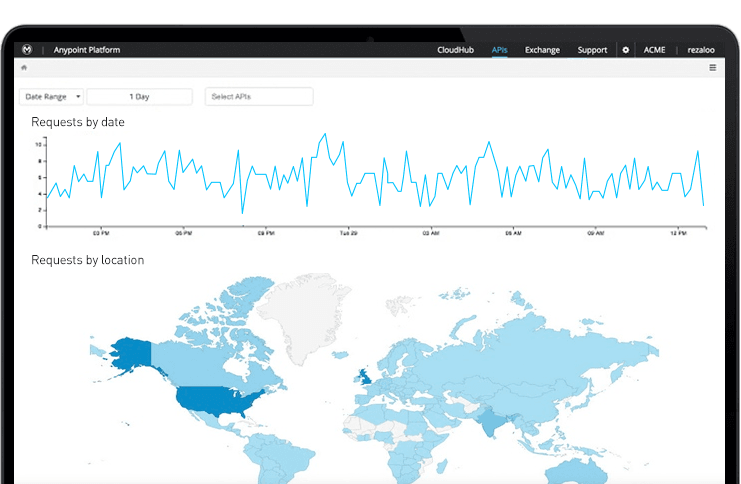
The Anypoint Platform developed by MuleSoft and acquired by Salesforce in early 2018 is designed to
connect apps, data, and devices anywhere, on-premises or in the cloud. This platform was built to
offer out-of-the-box connectors as well as tools that architects and developers can adopt quickly to
design, build and manage the entire lifecycle of their APIs, applications, and products.
N/A
UiPath Integration Service
Score 5.0 out of 10
N/A
UiPath Integration Service (including technology from Cloud Elements, following UiPath's acquisition of the company in 2021) is a cloud API integration service that uses cooperative
apps to connect an organization’s customers, partners and employees to the
cloud services they use. The vendor says that by using their pre-built
elements, their one-to-many approach connects applications with services, each
through a single API. The organization’s app can instantly share data with
other applications…
N/A
Pricing
MuleSoft Anypoint Platform
UiPath Integration Service
Editions & Modules
No answers on this topic
No answers on this topic
Offerings
Pricing Offerings
Anypoint Platform
UiPath Integration Service
Free Trial
Yes
Yes
Free/Freemium Version
Yes
No
Premium Consulting/Integration Services
No
No
Entry-level Setup Fee
No setup fee
No setup fee
Additional Details
—
—
More Pricing Information
Community Pulse
MuleSoft Anypoint Platform
UiPath Integration Service
Features
MuleSoft Anypoint Platform
UiPath Integration Service
Cloud Data Integration
Comparison of Cloud Data Integration features of Product A and Product B
MuleSoft Anypoint Platform is best tool in the market for developing APIs with complex structures communicating with various different types of applications including web applications as well as legacy applications. Also applications including database connectivity for fetching and updating data in the DB tables. I cant think of any scenario which MuleSoft Anypoint Platform could not be used for developing the integrations.
Provides wide range of popular connectors like salesforce, netsuite, sftp and many more. A user can easily integrate with those services using specific connector.
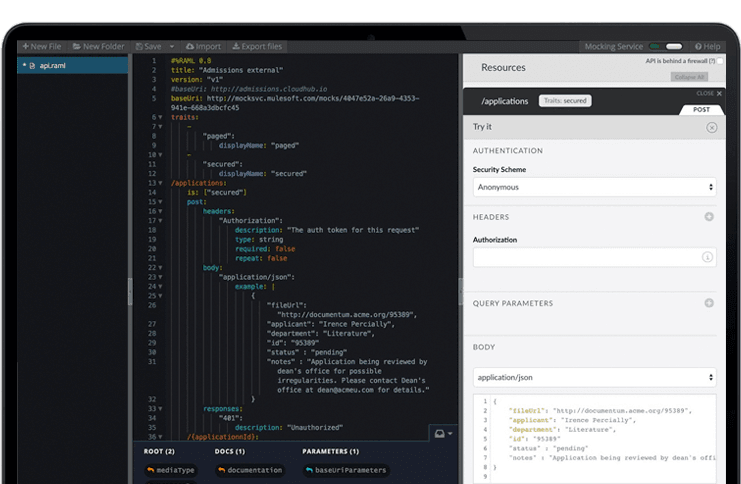
Support API development using RAML and desing tool. The platform is very good in data type classification.
Cloud deployment and post deployment monitoring is easy. A user can configure application worker as per need. Alert and notifications are real time.
Has more features than what we really need so we're paying for more than we use. Sort of like paying for an Abrams tank when all we really need is a Toyota Corolla.
Not a value product, tends to be expensive.
Takes a while for developers to learn to use Mulesoft Anypoint.
MuleSoft Anypoint Platform is really very easy to adopt for application integration. Simple UI and easy data weave language allows user to focus on business portion only. The API management and deployment of application are hassle free.
Anypoint Platform support is very responsive. There is also a huge knowledge base and an active online forum where answers to most questions can be found. When needed support engages the engineering group so adequate solutions or workarounds are always provided.
Once we have moved all of our system integration APIs to the MuleSoft Anypoint Platform, we will need to communicate with a wide variety of external systems. All of our business and service logic is stored in the aforementioned core systems. Anypoint Platform (and all of our APIs) makes it easy to connect to various other platforms. In order to link to these many other systems, connectors and/or components are utilized, and they are simple to configure and integrate.
MuleSoft is also a similar product to Cloud Elements, but is not available as an option in this form.
Workato and MuleSoft are competing cloud API connector platforms that perform a similar function to Cloud Elements. We chose Cloud Elements over them because CE provided a more robust path to unifying the behavior of connected systems.
Zapier is a workflow automation tool that I feel draws erroneous comparison to Cloud Elements that I need to highlight. Workflow automation tools (Zapier, IFTTT, Microsoft Flow) do provide multiple integrations, but for simplistic scenarios where only a handful of explicitly described steps need accomplished. Cloud Elements is a platform for developers to deliver faster and with higher reliability than making integrations one-by-one in complex systems that solve demanding problems.
We are able to build integrations in HALF the time we could build them from scratch.
They allow our development team to spend more hours focused on developing our core product, not connections to other products.
Their large catalog of services to connect to allows us to spend much less time researching other platform integration endpoints and increases our R&D speed a considerable amount.