Amazon Web Services (AWS) is a subsidiary of Amazon that provides on-demand cloud computing services. With over 165 services offered, AWS services can provide users with a comprehensive suite of infrastructure and computing building blocks and tools.
$100
per month
Microsoft Defender for Cloud
Score8.5 out of 10
N/A
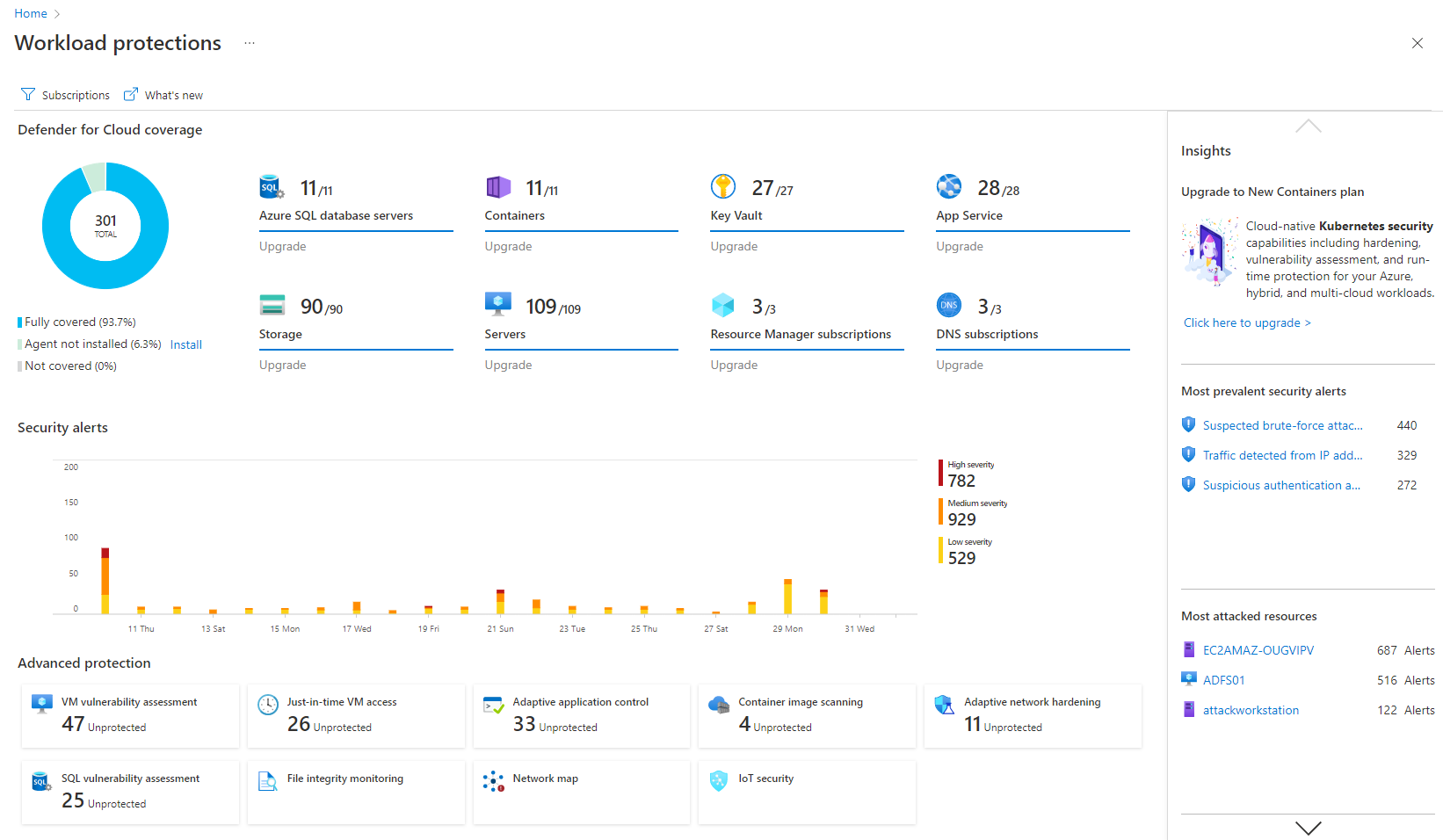
Microsoft Defender for Cloud is a Cloud Security Posture Management (CSPM) and Cloud Workload Protection Platform (CWPP) for Azure, on-premises, and multicloud (Amazon AWS and Google GCP) resources.
N/A
Pricing
Amazon Web Services
Microsoft Defender for Cloud
Editions & Modules
Free Tier
$0
per month
Basic Environment
$100 - $200
per month
Intermediate Environment
$250 - $600
per month
Advanced Environment
$600-$2500
per month
No answers on this topic
Offerings
Pricing Offerings
Amazon Web Services
Microsoft Defender for Cloud
Free Trial
Yes
Yes
Free/Freemium Version
Yes
No
Premium Consulting/Integration Services
No
No
Entry-level Setup Fee
No setup fee
No setup fee
Additional Details
AWS allows a “save when you commit” option that offers lower prices when you sign up for a 1- or 3- year term that includes an AWS service or category of services.
A de minimis incentive was given to thank the reviewer for their time. The incentive was not used to bias or drive a particular response, nor was the incentive contingent on a positive endorsement. More Info
This is something that is actually common across most cloud providers. A comprehensive understanding of one's use cases, constraints and future directions is key to determining if you even need a cloud solution. If you are a 2-person startup developing something with a best-scenario audience of 1k DAU in a year, you would very likely best served by a dirt-cheap dedicated Linux server somewhere (and your options to graduate to a cloud solution will still be open). If, however, you are a bigger fish, and/or you are actively considering build-vs-buy decisions for complicated, highly-loaded, six-figure requests per minute systems, global loadbalancing, extreme growth projections - then MAYBE you solve all or part of it with a cloud provider. And depending on your taste for risk, reliability, flexibility, track record - it might be AWS.
A de minimis incentive was given to thank the reviewer for their time. The incentive was not used to bias or drive a particular response, nor was the incentive contingent on a positive endorsement. More Info
A de minimis incentive was given to thank the reviewer for their time. The incentive was not used to bias or drive a particular response, nor was the incentive contingent on a positive endorsement. More Info
We are almost entirely satisfied with the service. In order to move off it, we'd have to build for ourselves many of the services that AWS provides and the cost would be prohibitive. Although there are cost savings and security benefits to returning to the colo facility, we could never afford to do it, and we'd hate to give up the innovation and constant cycle of new features that AWS gives us.
The customer support of Amazon Web Services are quick in their responses. I appreciate its entire team, which works amazingly, and provides professional support. AWS is a great tool, indeed, to provide customers a suitable way to immediately search for their compatible software's and also to guide them in a good direction. Moreover, this product is a good suggestion for every type of company because of its affordability and ease of use.
A de minimis incentive was given to thank the reviewer for their time. The incentive was not used to bias or drive a particular response, nor was the incentive contingent on a positive endorsement. More Info
Amazon Web Services fits best for all levels of organisations like startup, mid level or enterprise. The services are easy to use and doesn't require a high level of understanding as you can learn via blogs or youtube videos. AWS is Reasonable in cost as the plan is pay as you use.
A de minimis incentive was given to thank the reviewer for their time. The incentive was not used to bias or drive a particular response, nor was the incentive contingent on a positive endorsement. More Info
Using Amazon Web Services has allowed us to develop and deploy new SAAS solutions quicker than we did when we used traditional web hosting. This has allowed us to grow our service offerings to clients and also add more value to our existing services.
Having AWS deployed has also allowed our development team to focus on delivering high-quality software without worrying about whether our servers will be able to handle the demand. Since AWS allows you to adjust your server needs based on demand, we can easily assign a faster server instance to ease and improve service without the client even knowing what we did.
A de minimis incentive was given to thank the reviewer for their time. The incentive was not used to bias or drive a particular response, nor was the incentive contingent on a positive endorsement. More Info