Since 2004, Mandiant has been a partner to security-conscious organizations. Mandiant’s approach helps organizations develop more effective and efficient cyber security programs and instills confidence in their readiness to defend against and respond to cyber threats.
N/A
Microsoft Defender for Cloud
Score 8.5 out of 10
N/A
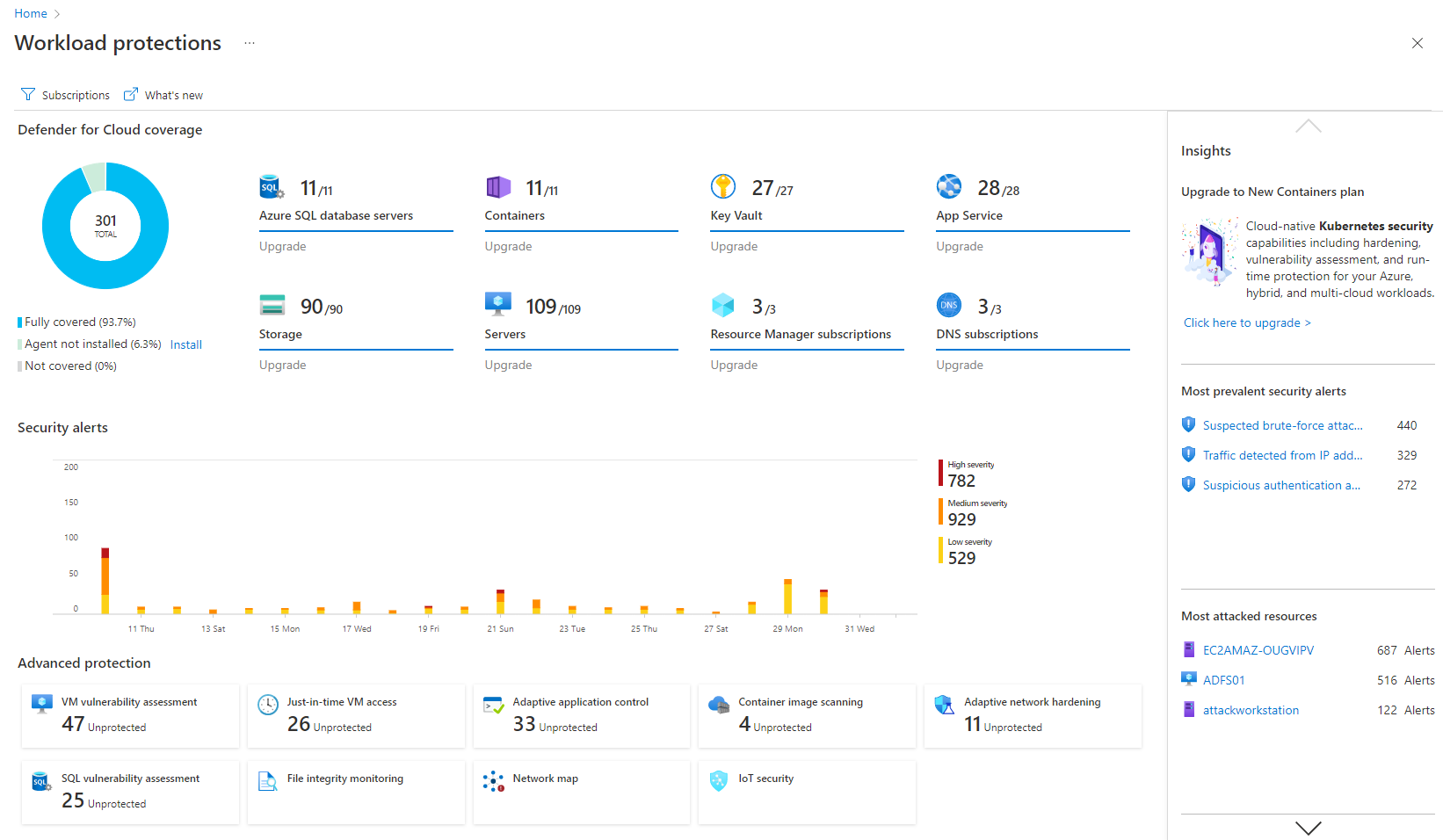
Microsoft Defender for Cloud is a Cloud Security Posture Management (CSPM) and Cloud Workload Protection Platform (CWPP) for Azure, on-premises, and multicloud (Amazon AWS and Google GCP) resources.
N/A
Pricing
Mandiant Advantage Attack Surface Management
Microsoft Defender for Cloud
Editions & Modules
No answers on this topic
No answers on this topic
Offerings
Pricing Offerings
Mandiant Advantage Attack Surface Management
Microsoft Defender for Cloud
Free Trial
Yes
Yes
Free/Freemium Version
Yes
No
Premium Consulting/Integration Services
No
No
Entry-level Setup Fee
Required
No setup fee
Additional Details
—
—
More Pricing Information
Features
Mandiant Advantage Attack Surface Management
Microsoft Defender for Cloud
Threat Intelligence
Comparison of Threat Intelligence features of Product A and Product B
Mandiant Advantage Attack Surface Management
7.7
Ratings
3% below category average
Microsoft Defender for Cloud
-
Ratings
Network Analytics
8.20 Ratings
00 Ratings
Threat Recognition
7.30 Ratings
00 Ratings
Vulnerability Classification
7.30 Ratings
00 Ratings
Automated Alerts and Reporting
8.20 Ratings
00 Ratings
Threat Analysis
8.20 Ratings
00 Ratings
Threat Intelligence Reporting
6.40 Ratings
00 Ratings
Automated Threat Identification
8.20 Ratings
00 Ratings
Vulnerability Management Tools
Comparison of Vulnerability Management Tools features of Product A and Product B
Many companies that have an presence can benefit from using Mandiant ASM to identify and manage their internet facing assets, like web servers, email servers and DNS servers. This helps reduce the risk of cyberattacks targeting these assets.However smaller organizations with exposure might not always need the extensive attack surface monitoring provided by Mandiant ASM. For example a small company with one website may not require much monitoring, as a larger corporation.
If you need to proceed with pay as you go service then go ahead with Microsoft Defender for Cloud. This could be expensive in the long run but if the organization usage is slightly less than then this would suite the purpose. Also, it has the latest threat updates, so you're future proof in terms of potential treats.
Mandiant ASM combines sources of information such, as assets through the internet cloud resources and suppliers from third parties. This comprehensive approach provides organizations with an understanding of their external attack surface.
With scanning Mandiant ASM identifies threats and vulnerabilities present on the external attack surface and promptly notifies users. Whenever a new threat or vulnerability is detected an alert is generated to empower enterprises to take action in mitigating the risks.
Mandiant ASM assesses risks based on their likelihood of exploitation impact on organizations and severity. This prioritization enables organizations to focus their efforts, on addressing the risks effectively.
Automation is crucial to managing sprawl and the additional complexity that comes with it. SOC management workbooks and process automation give significant flexibility.
The Security posture score and Security Alerts are neatly centralized and offer me crucial information quickly.
Defender for Cloud avoids the common compromise of simplicity for completeness (former Azure Security Center). The security warnings and advice go into great detail while remaining current and useful.
To enhance user experience it would be beneficial to make the interface more user friendly and easier to navigate. This can be achieved by simplifying the layout offering help when needed and utilizing terminology that's easily understandable.
Additionally incorporating reporting features that are customizable will empower users to generate reports tailored to their individual requirements.
In order to enhance the solutions efficiency optimizing the code and implementing data structures would prove valuable.
UI/UX. It can get a little messy when navigating around with all the flyouts in the Azure portal which can be frustrating, particularly when under time pressure.
The query languages for the queries and workbooks are another language that needs to be learned - it would be nice to have kept it closer to T-SQL or something like that to minimize the need to learn new syntax.
Adding cost estimations to the security recommendations would really improve the experience.
It is a great product that integrates nicely when running an Azure platform and even multi-cloud environment. Not looking for point-solutions but a suite that answers most requirements. It is very comfortable being able to use KQL, workbooks and automation that is native to the azure platform
I decided to go with Mandiant Advantage Attack Surface Management because it offers a range of features performs excellently and is easy to use. What I really appreciate about Mandiant is their commitment, to innovation and their proven track record, in ensuring security.
I believe Microsoft Defender for Cloud stacks up well against the other tools we looked at. It is native to the Azure platform and provides the same insights as the other tools. We selected Microsoft Defender for Cloud because it integrates well with the Azure resources and gives the needed insight, security alerts and recommendations.
Automation plays a role in saving time by streamlining operations related to attack surface management. These include automated asset discovery, vulnerability scanning and continuous monitoring of threat intelligence. As a result security teams can allocate their efforts towards projects such as security planning and incident response.
ASM provides a view of the external attack surface, for businesses encompassing internet facing assets, cloud resources and third party vendors. This enhances the understanding of assets enabling organizations to identify and prioritize risks effectively and make decisions on security investments
One notable advantage is cost savings. By eliminating the need to purchase and maintain security tools ASM becomes a solution for enterprises. It can replace products, like asset discovery tools, vulnerability management tools and threat intelligence feeds with its capabilities.