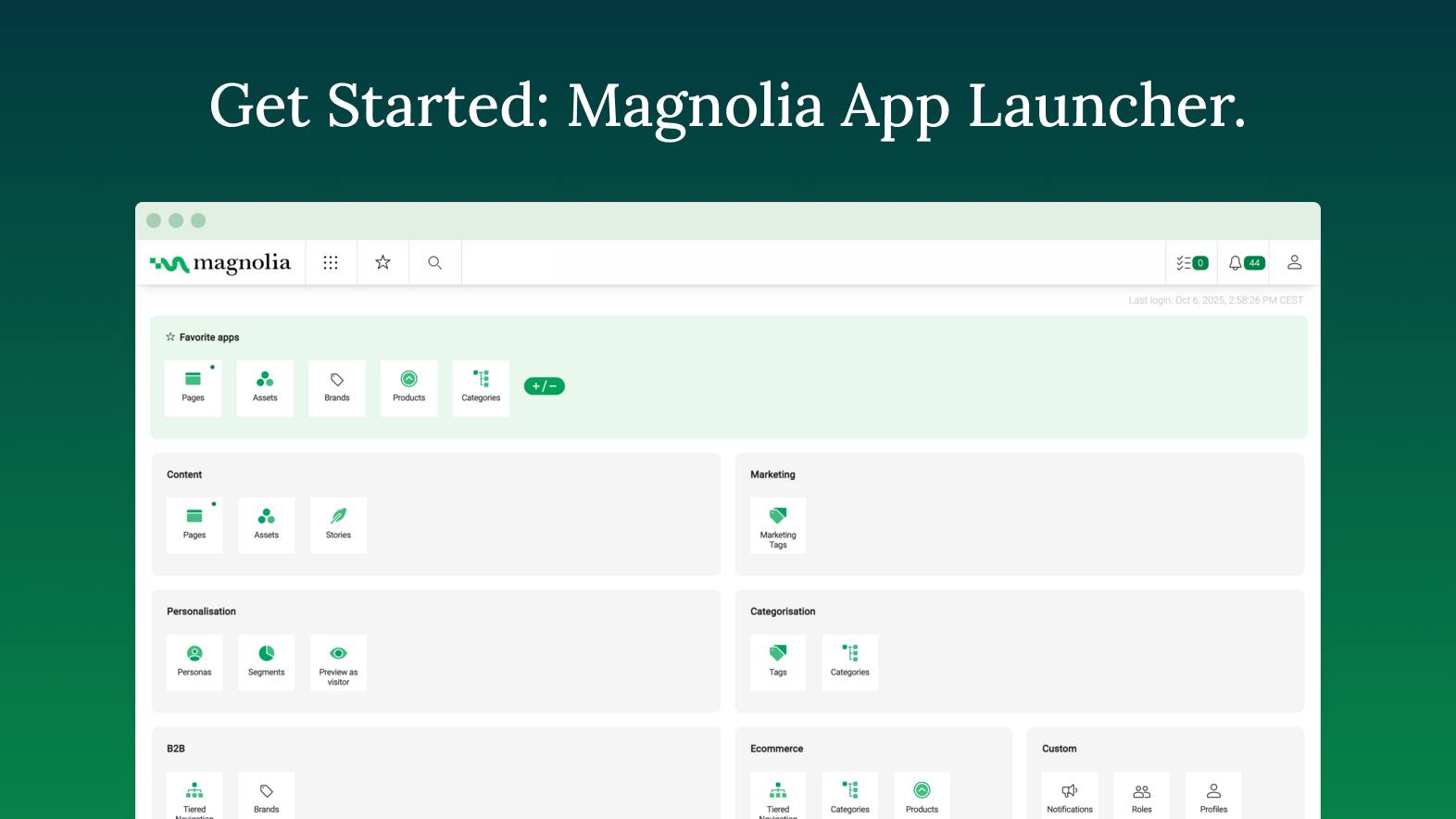
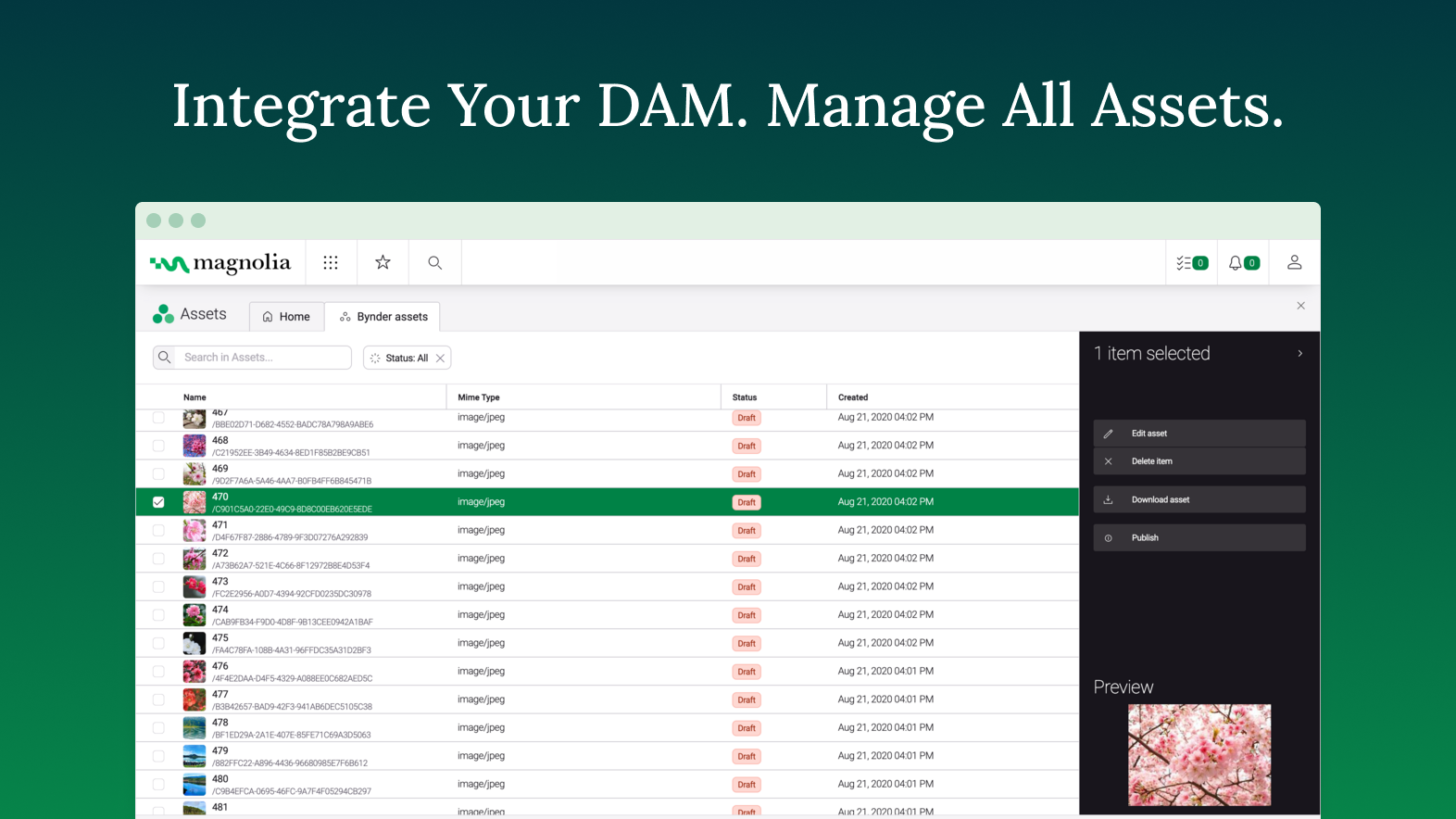
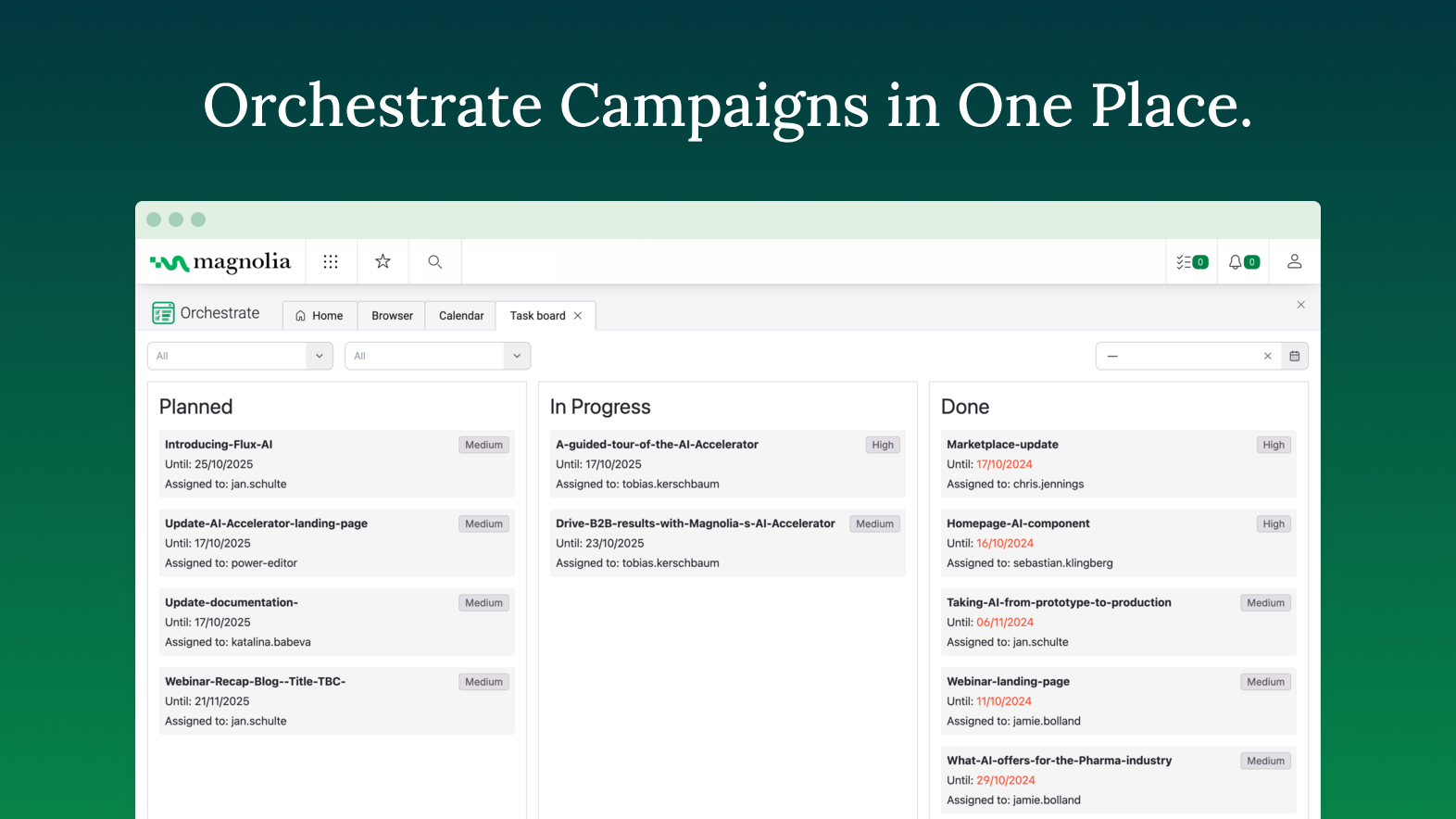
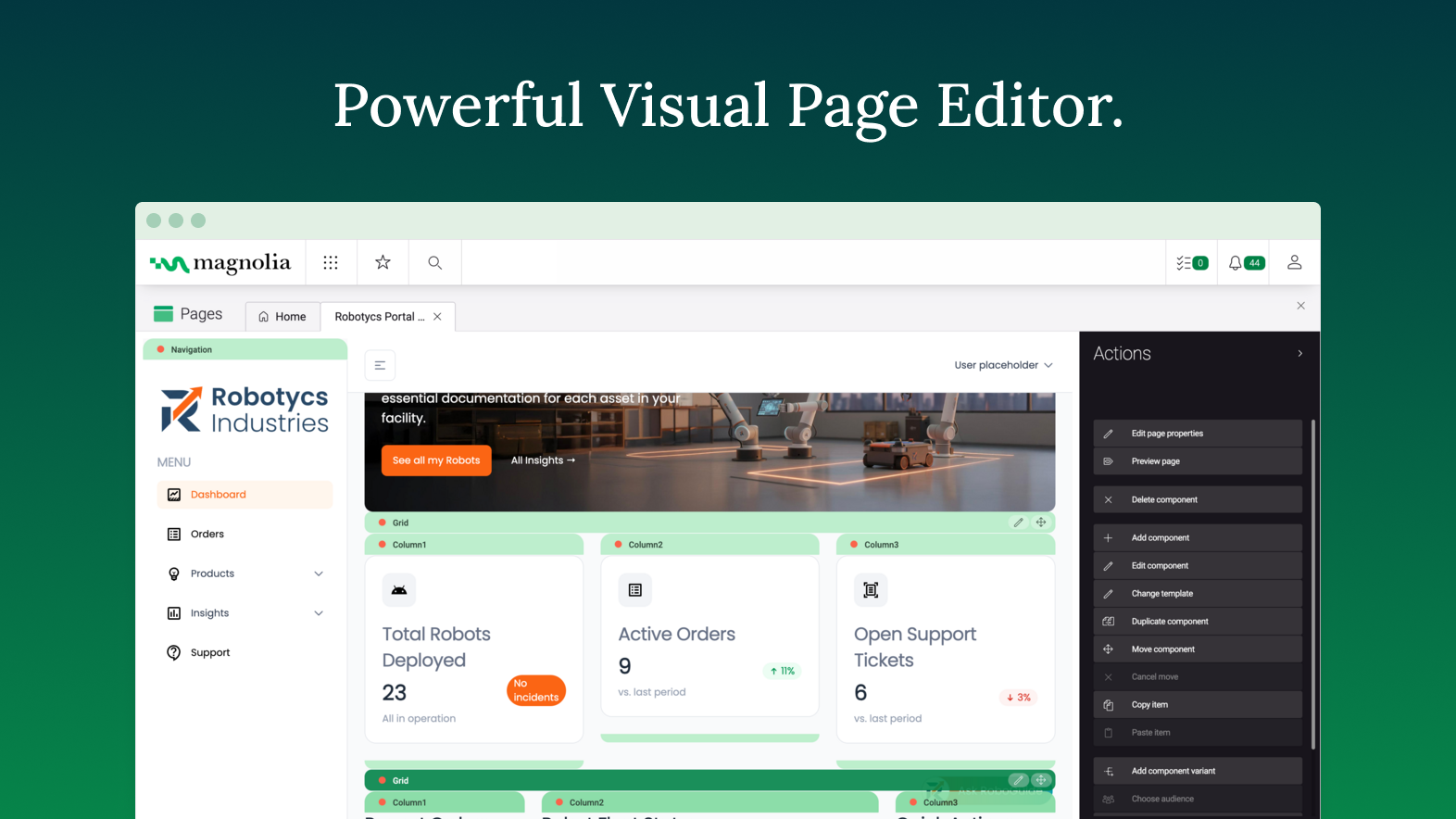
Founded in Switzerland in 1997, Magnolia is a CMS used to build composable digital experiences. Magnolia helps create fully integrated customer experiences and speeds up digital delivery of content. Magnolia boasts 480 enterprise customers, thousands of Community Edition deployments, and more than 200 certified Magnolia Partners around the world. They further state that their enterprise customers include Sanofi, Generali, the Atlassian, The New York Times, Harley Davidson, and Union…
$3,500
per month
WordPress
Score 8.6 out of 10
N/A
Wordpress is an open-source publishing platform popular with bloggers, and a content management system, known for its simplicity and modifiability. Websites may host their own blogging communities, controlling and moderating content from a single dashboard.
$4
per month 6 GB storage
Pricing
Magnolia
WordPress
Editions & Modules
DX Core
$3500
per month
DX Cloud
$6000
per month
Personal
$4
per month 6 GB storage
Premium
$8
per month 13 GB storage
Business
$25
per month 50 GB storage
Commerce
$45
per month 50 GB storage
Enterprise
Contact for pricing
Offerings
Pricing Offerings
Magnolia
WordPress
Free Trial
Yes
No
Free/Freemium Version
No
No
Premium Consulting/Integration Services
No
No
Entry-level Setup Fee
No setup fee
No setup fee
Additional Details
—
Pricing for Business and Commerce plans vary on number of GB.
More Pricing Information
Community Pulse
Magnolia
WordPress
Features
Magnolia
WordPress
Security
Comparison of Security features of Product A and Product B
Magnolia
8.1
Ratings
0% above category average
WordPress
8.7
Ratings
8% above category average
Role-based user permissions
8.10 Ratings
8.70 Ratings
Platform & Infrastructure
Comparison of Platform & Infrastructure features of Product A and Product B
Magnolia
8.1
Ratings
7% above category average
WordPress
8.7
Ratings
14% above category average
API
8.50 Ratings
9.00 Ratings
Internationalization / multi-language
7.70 Ratings
8.40 Ratings
Web Content Creation
Comparison of Web Content Creation features of Product A and Product B
Magnolia
8.0
Ratings
4% above category average
WordPress
8.3
Ratings
7% above category average
WYSIWYG editor
8.50 Ratings
8.70 Ratings
Code quality / cleanliness
8.40 Ratings
7.00 Ratings
Admin section
8.00 Ratings
8.70 Ratings
Page templates
8.90 Ratings
9.00 Ratings
Library of website themes
7.00 Ratings
6.50 Ratings
Mobile optimization / responsive design
8.50 Ratings
9.00 Ratings
Publishing workflow
7.50 Ratings
8.70 Ratings
Form generator
6.90 Ratings
9.00 Ratings
Web Content Management
Comparison of Web Content Management features of Product A and Product B
If you need a business CMS that brings along a good amount of features and also give you the chance to develop features on your own, Magnolia would be a good choice. Even if you have not the fitting infrastructure around, Magnolia provides you different ways like SAAS oder PAAS. If you have to review your code our have any problems the team behind will helps in a short time. Without using the connectors it is not so easy to connect special functionalities like Marketing tools or optimization tools. The DAM is very slow if you have an huge amount of documents and pictures to store for your website - you have to add an external DAM.
In my opinion, smaller organizations with simpler layouts would be well suited to use WordPress, however, larger organizations with more advanced website feature needs may need another product. We found the website to be great at first, but as we grew, we needed more options that were not fitting for the product we had with WordPress and had to look at alternatives.
Versatility of defining actions for custom handlers.
Reloading classes when code is modified in a local dev environment is nice. While it doesn't seem to work when changes extend beyond the method body (i.e., adding methods), it remediates the pain of long startup times.
WordPress breaks often so you need to have someone who understands how to troubleshoot, which can take time and money.
Some plugins are easier to customize than others, for example, some don't require any coding knowledge while others do. This can limit your project if you are not a coder.
WordPress can be easily hacked, so you also need someone who can ensure your sites are secure.
Magnolia is an innovative CMS, for example it is possible to use the ipad to manage the contents. Magnolia’s team works hard to improve the product; the community is small but active and the support for the enterprise version is good. Magnolia’s team asks the users what they think and what they need, and the new functionalities planned for Magnolia 5.3 are very exciting for example the content personalization.
As time goes on, websites will become less focused on paged content and more immersive. At the same time, the need for security will only go up. While WordPress has served the web community well for over 11 years, it's probably time to look for other better platforms.
There are a ton of small things that could make this CMS great Off the top of my head... 1) Better navigation between a component and its corresponding node in the jcr ( devs often have to flip between a page and a spot in the jcr even though there could be a button to take you from a page/component in the pages app to its location in the JCR) 2) Why does a content editor need to open the page to edit the page properties? They could just as easily edit the dialog from the tree view if they have many pages to touch, and it would save them time by not having to render the page.
WordPress has excellent UX/UI, mainly because it's familiar. The platform is still a bit dated on the back end, but it has improved from the past. I wouldn't give it a 10 in this area because it does require some coding and development knowledge. You can't just jump in and create a website with confidence, like you would with Jimdo, Squarespace or similar tools.
Anyone can visit WordPress.org and download a fully functional copy of WordPress free of charge. Additionally, WordPress is offered to users as open-source software, which means that anyone can customize the code to create new applications and make these available to other WordPress users.
It's a lean and performant platform. You don't need to put reverse proxy servers in front of it to speed it up (although that does make it go even quicker) as there are various layers of caching built in to the application. While it's a little cryptic, the internal caching system is actually quite configurable and can be tuned to the right sort of content.
Often what tends to surprise many an IT manager is that you can run it on relatively modest hardware. We've often been met with "are you sure ?" but the reality is that it doesn't need a whole lot of horsepower.
Mostly, any performance issues have to do with using too many plugins and these can sometimes slow down the overall performance of your site. It is very tempting to start adding lots of plugins to your WordPress site, however, as there are thousands of great plugins to choose from and so many of them help you do amazing things on your site. If you begin to notice performance issues with your WordPress site (e.g. pages being slow to load), there are ways to optimize the performance of your site, but this requires learning the process. WordPress users can learn how to optimize their WordPress sites by downloading the WPTrainMe WordPress training plugin (WPTrainMe.com) and going through the detailed step-by-step WordPress optimization tutorials.
You always get an answer based on your SLA. But you always get a solution. That's the successfactor in this case. To often i was frustrated about people in a company without even a clue what there product is about or how to solve a problem. Magnolia's Support Team does a very good job and try to help you in most of the cases
WordPress itself only has community service so your experience will depend on where you turn. Online, through forums and community boards, support is rudimentary but effective. You can easily turn to your local community and find exceptional individuals who know and use WordPress regularly for more advanced, inexpensive, support. I'm rating this less than 10 because of the lack of any formal support provided by a company.
Varies by the person providing training. High marks as it's incredibly easy to find experienced individuals in your community to provide training on any aspect of WordPress from content marketing, SEO, plugin development, theme design, etc. Less than 10 though as the training is community based and expectations for a session you find may fall short.
WordPress is not a great solution if you have: 1) A larger site with performance / availability requirements. 2) Multiple types of content you want to share - each with its own underlying data structure. 3) Multiple sites you need to manage. For very small sites where these needs are not paramount, WordPress is a decent solution
Magnolia DXP offers similar or more capability compared to the other platform, while much easier to implement. For example, Adobe Experience Manager tend to be more monolithic in nature, heavier footprint compared to Magnolia. Hence when implementing a DXP, it is much faster to build using Magnolia, at a much lower TCO. The other platform like Kontent.ai and Strapi are pure headless platform and offer lesser features. What really make Magnolia different is the APAC team, who are all out to support their client in the implementation, ensuring their client maximize their platform and the project implementation is successful. This is some thing that is not experienced when using other platform(s)
There are no other site builders/platforms that stand up to the ease and versatility (heavy custom coding and customizations included) as Wordpress. Drupal is clunky and outdated, as is Joomla, and while Wix or Squarespace may be sufficient for someone with very low web needs, much like Shopify, it's incredibly limiting and either requires hitting it with a hammer and hacking code together to do what you want, or relying on often shoddily-built third party themes and liquid scripts.
WordPress is completely scalable. You can get started immediately with a very simple "out-of-the box" WordPress installation and then add whatever functionality you need as and when you need it, and continue expanding. Often we will create various WordPress sites on the same domain to handle different aspects of our strategy (e.g. one site for the sales pages, product information and/or a marketing blog, another for delivering products securely through a private membership site, and another for running an affiliate program or other application), and then ties all of these sites together using a common theme and links on each of the site's menus. Additionally, WordPress offers a multisite function that allows organizations and institutions to manage networks of sites managed by separate individual site owners, but centrally administered by the parent organization. You can also expand WordPress into a social networking or community site, forums, etc. The same scalability applies to web design. You can start with a simple design and then scale things up to display sites with amazing visual features, including animations and video effects, sliding images and animated product image galleries, elements that appear and fade from visitor browsers, etc. The scaling possibilities of WordPress are truly endless.
We have placed web content management in the hands of the organisation than retained it within the technology team.
We were able to quickly move to MVP and release and we are now focussed on moving the platform forward at some pace whilst not being burdened with BAU work inside the technology team as so much as self-service to trained organisational users
The use of the SAAS/PASS has inbuilt business resiliency as specialist work and aspects such as underlying security is done by Magnolia and we are able to focus internal effort on building out the platform.