Gliffy is an online diagramming tool with collaboration features from the San Francisco company of the same name, offering standalone versions of Gliffy and integrated versions for Jira and Confluence.
$6
per month
Lucid Visual Collaboration Suite
Score 8.5 out of 10
N/A
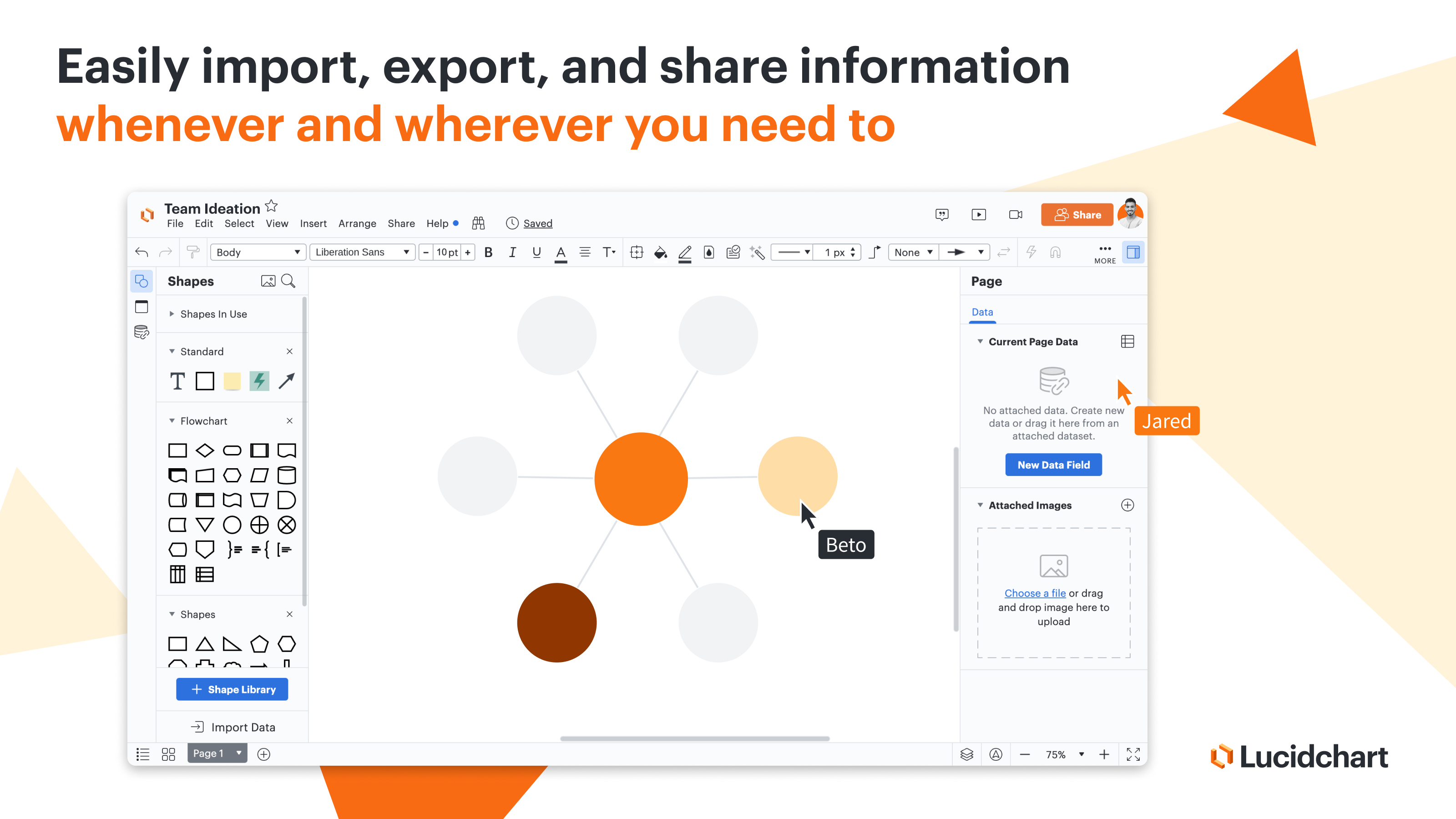
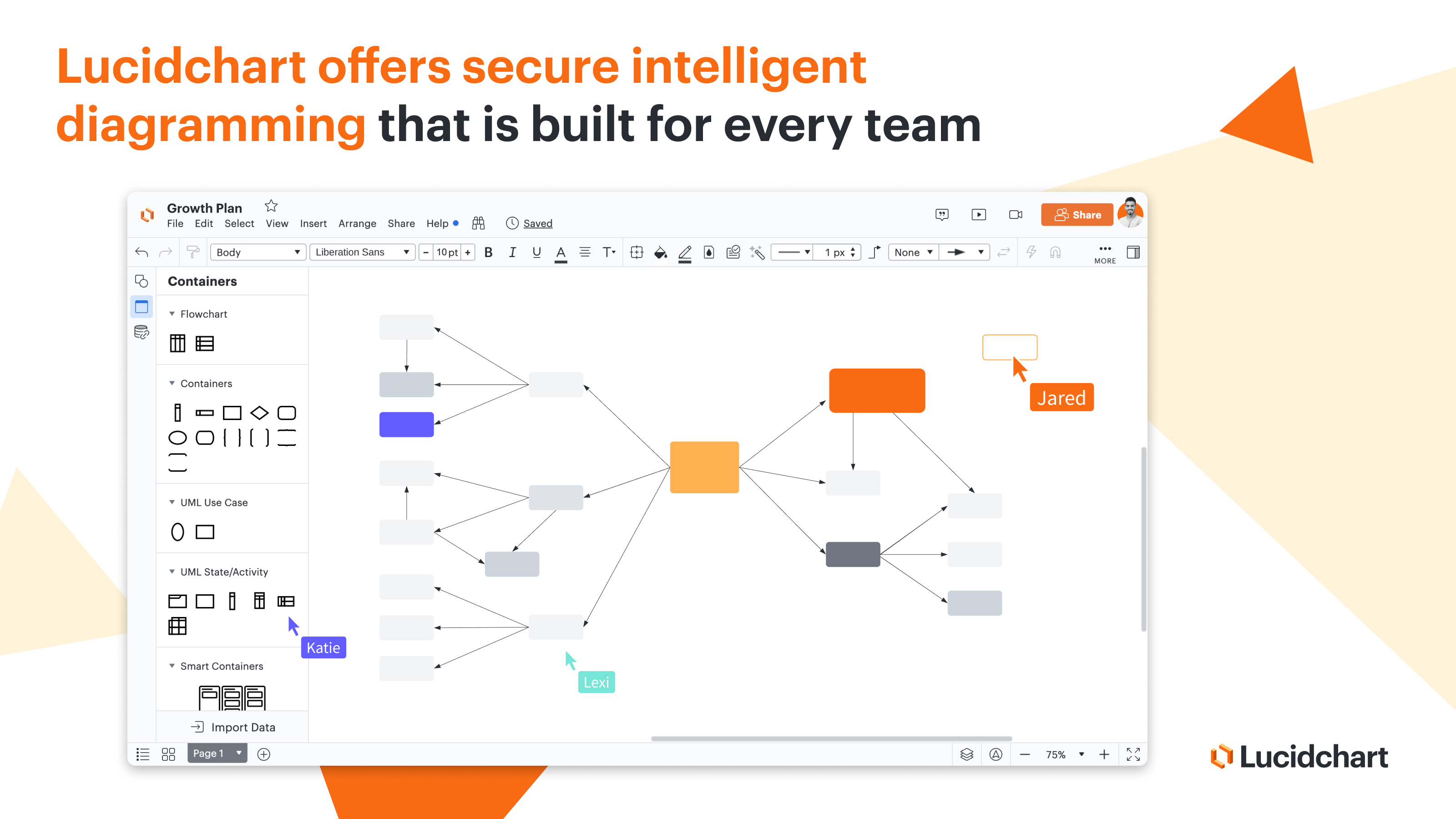
The Lucid Visual Collaboration Suite empowers teams to ideate, plan, design, build, and launch game-changing solutions from a shared infinite canvas.
$0
per month
Pricing
Gliffy
Lucid Visual Collaboration Suite
Editions & Modules
Professional
$6
per month
Free
$0
Individual
$9
per month per user
Team
$10
per month per user (3 user minimum)
Enterprise
.
per year
Offerings
Pricing Offerings
Gliffy
Lucid Visual Collaboration Suite
Free Trial
No
Yes
Free/Freemium Version
No
Yes
Premium Consulting/Integration Services
No
Yes
Entry-level Setup Fee
No setup fee
Optional
Additional Details
For Enterprise pricing, please reach out.
—
More Pricing Information
Community Pulse
Gliffy
Lucid Visual Collaboration Suite
Considered Both Products
Gliffy
Verified User
Employee
Chose Gliffy
The interface is pretty decent and easy to use, with more helpful and advance features in comparison to others.
The Gliffy platform supports only web whereas Lucidchart and Zoho Creator both support web, iPhone App and Android App. Gliffy is geared toward SMB and MSB whereas their competitors also market to freelancers and Enterprise customers providing solutions for each. Gliffy only …
I was not involved with the Gliffy evaluation, though I've often went looking for similar solutions to see if some of the gaps I've identified were better addressed. I haven't evaluated alternatives deeply enough to consider a switch seriously.
I used Gliffy for years and only switched to Lucidchart because Gliffy was no longer an option. I was delighted to find that Lucidchart was just as easy, if not easier to use and actually made collaboration with my teammates easier than Gliffy.
To me, Lucidchart is the clear winner due to the superior design, ease of use, and collection of templates that enable users to deliver impressive results in less time.
Unlike the competition we found the SSO integration, simple to use interface and visual tools of Lucidchart a better option for our organization. The ease of deployment was also a key factor and it allowed us to leverage all our platforms in collaboration. Lucidchart also has …
Both LucidCharts vs draw.io are flowchart tools that provide tons of different shapes and styles, for all sorts of flowchart uses. When it comes to costs, draw.io is an open-sourced tool so there are no pay-for-premium fees like those Lucidchart charges. One key benefit that …
Gliffy is user-friendly, with a drag-and-drop interface that makes it easy to create clear and visually appealing diagrams without steep learning curves. It’s perfect for creating straightforward, quick wireframes. Gliffy lacks features for detailed UI/UX wireframing and prototyping compared to specialized tools like Figma, Sketch, or Adobe XD.
I personally think that Lucid Visual Collaboration Suite is the best visual collaboration software out there. I’ve used Canva, Apple Freeform, and Microsoft whiteboarding software, and none of them really measure up. If you want simple, easy, collaborative, and intuitive, then Lucid Visual Collaboration Suite is the best solution. At the same time, if you’re tight on budget, it’s probably not going to be a solution you can afford.
First it's important to point out that Gliffy has priced itself incredibly well for small to medium sized businesses. Most other similar solutions are so expensive that organizations will avoid getting workflow software overall. Gliffy can take pride in knowing they're helping small business operate better.
Gliffy is incredibly easy to use for a first time user. I rarely have to train someone on how to use it. It's a lot of fun to see people get excited about systems and processes when using Gliffy. If you need to get up and running quickly I can't think of a better solution for workflow visualization.
I also like using Gliffy for mindmapping. I'm sure some mindmapping experts can tell me how I'm doing that incorrectly, but it just works for me. This points to the ease with which Gliffy allows you to get your thoughts down quickly and easily.
Large number of predefined charts, diagrams, flows
A great repository of various symbols and objects
The easiness of using and manipulating objects and shapes. There is a lot of auto-editing and adjusting which the software does for you which saves a lot of your time.
Easy way of duplicating shapes.
While working with the app everything feels organic and natural. You don't get the clunky/limited feeling which happens with some other similar apps.
I have had some trouble saving complex diagrams and viewing them on the fly. On a handful of occasions, diagrams are unable to save, which means I either need to try to "save as" a separate diagram, or I am perpetually stuck trying to "load" recent changes. Overall, this means I always have a slight lingering fear that my diagrams aren't fully saved or recoverable. Support has been pretty responsive helping me to reload corrupted diagrams.
Adding Text, Notes, and Images can be a challenge. While laying out objects with simple text is a strength, adding formatted text and commentary can be a challenge. I often find my objects ghost-moving all over the screen and lost. I'd love a drag-and-drop way to load images in to diagrams. The process is a bit cumbersome with the file upload wizard.
Template environments - I struggled a bit to try to create a default starting point for my diagrams. I've tried to load common libraries and ignore others, those settings are often ignore upon reload. I'd love to use the same 10 objects and ignore the rest, I am not able (yet) to create this scenario, though there may be more to learn.
Searching, Indexing, Retrieving my diagrams. As part of an enterprise plan, I find there are too many clicks required to a) find/search for my diagrams and b) save diagrams into my Gliffy folder. In our implementation I can see all folders for all of my colleagues, and need to drill down a bit before I get to my folder, where I can actually search my documents in a list. I'd prefer a more intuitive way to land on my diagrams and to organize them (e.g., by customer) so that I can access them more quickly.
I have used the templates before and those are nice! I would like to see more
The ONLY complaint I can come up with is that there has been several times that my screen will lock up and i have to fully refresh it, even when it is a fairly fresh load.
Because of its great versatility and ease of use. From diagramming to roadmpas and even user interface wireframes. Once a draft or first version is done we like to use the Confluence integration so we can collaborate and have one single source of truth
I based my assessment on aggregated user feedback and reviews from platforms like G2 and Software Advice. Many users highlight the simplicity and versatility of Gliffy’s interface, which makes it accessible for both beginners and professionals. Features like drag-and-drop functionality, a variety of templates, and integration options (e.g., Atlassian tools) contribute to its high rating.However, it doesn’t score a perfect 10 because some users report performance issues with complex diagrams, limited advanced features compared to competitors, and occasional difficulties with collaboration features. Balancing these strengths and weaknesses lands Gliffy in the 8-9 range for usability
The usability of Lucid Visual Collaboration Suite is bar none and incomparable to any other tool used in the past. There is such a vast offering that covers all the needs of any user in industries far and wide. It is no doubt that this is a firm recommendation for anyone and everyone to utilize this tool for all their needs.
I would rate the overall support for Lucidchart as a 9. The support provided is generally robust and responsive. Their help center, tutorials, and webinars offer extensive resources for users. The ticket-based support system is effective, providing timely resolutions to most issues. Moreover, they actively gather user feedback, demonstrating a commitment to continuous improvement
Gliffy is easier to use together with Confluence since it provides an integration where you can edit an image directly on the page. Visio and PowerPoint is better drawing tools but we have moved away from them since there isn’t a good way to keep track of the original file of the vector/bitmap included in the Confluence page.
Lucidchart is well beyond Microsoft Visio and is constantly improving. Visio is pretty much stagnant and hasn't been improved for several years, Lucid is constantly adding new functionality like AI powered functions and tools. We have no reason to pay for Visio licenses when Lucid can provide so much more for less.
Gliffy had a positive ROI on our initial efforts in getting team members to map out their workflows, provide them in confluence through its integration and get them distributed to our organization. The ease of use was a huge success for adoption.
Gliffy did seem to have unfriendly costs. Even as a customer for years that signs year-long contracts the price needle did not move much. Enterprise-wide software is expected to have discounts at a bulk buy within the industry.
Gliffy for the first time provided a tool for us to put our thoughts in a shareable format. It paved the way for increased organization and getting to buy into pre-existing processes.
It sure has. It has saved me a lot of time. Think of all the time I could have wasted trying to learn a program that does the same thing, whereas Lucidchart just does it with ease, learn as you go, and be a boss at it.
Lucidchart has increased productivity. My diagrams have helped co-workers find connectivity and helped them troubleshoot devices. This has saved time and increased productivity.