Laravel is a free, open source web application PHP framework.
N/A
Odoo
Score 6.9 out of 10
Mid-Size Companies (51-1,000 employees)
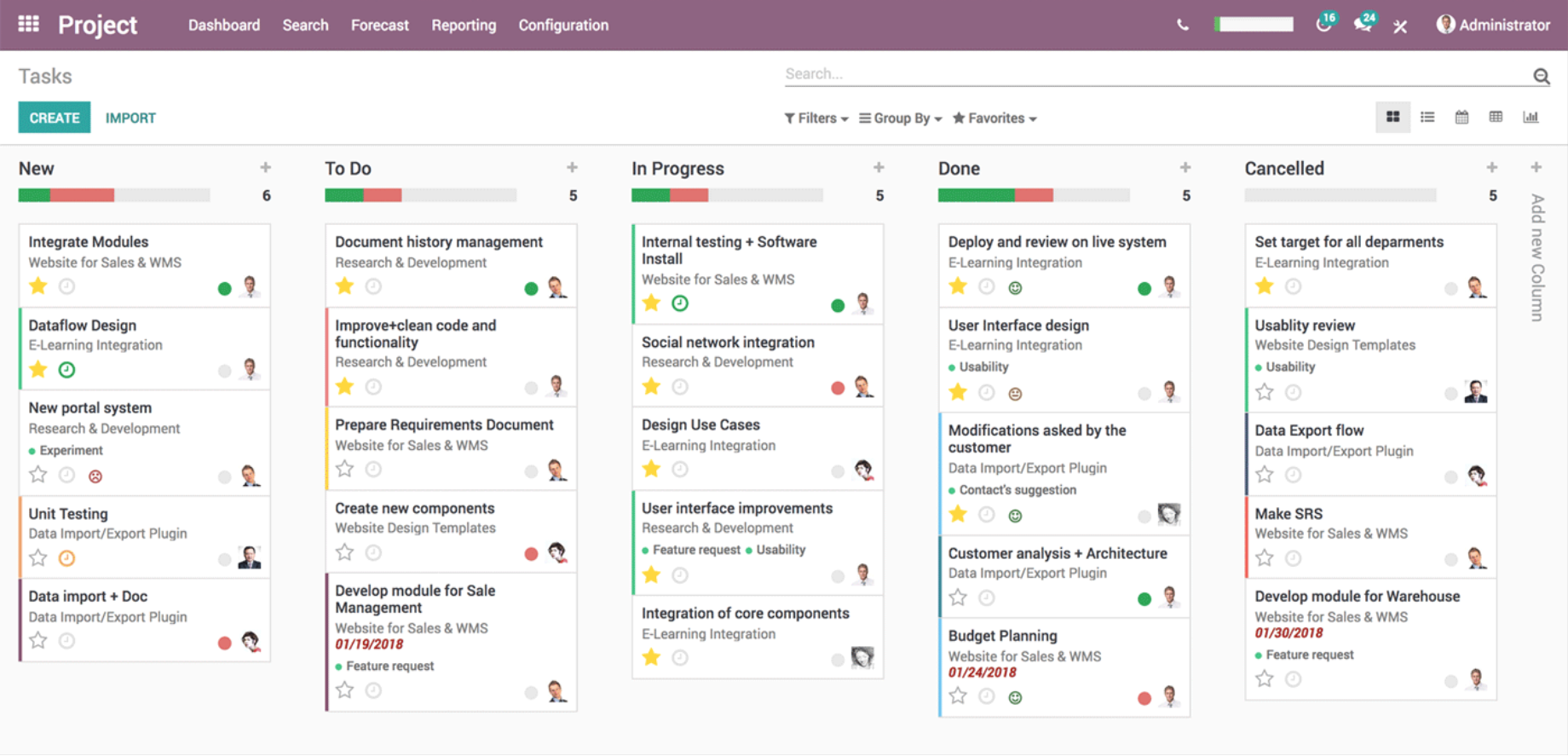
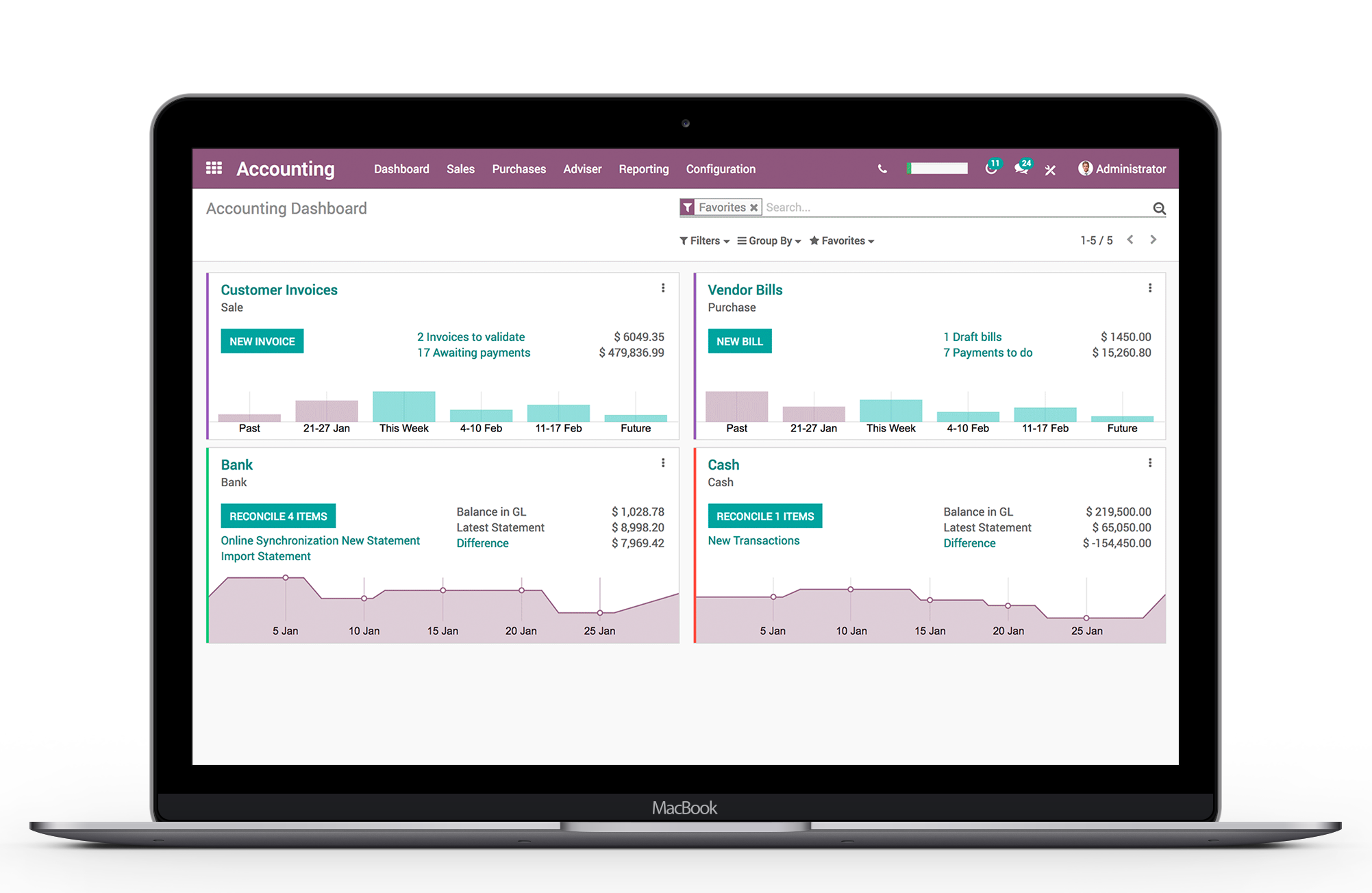
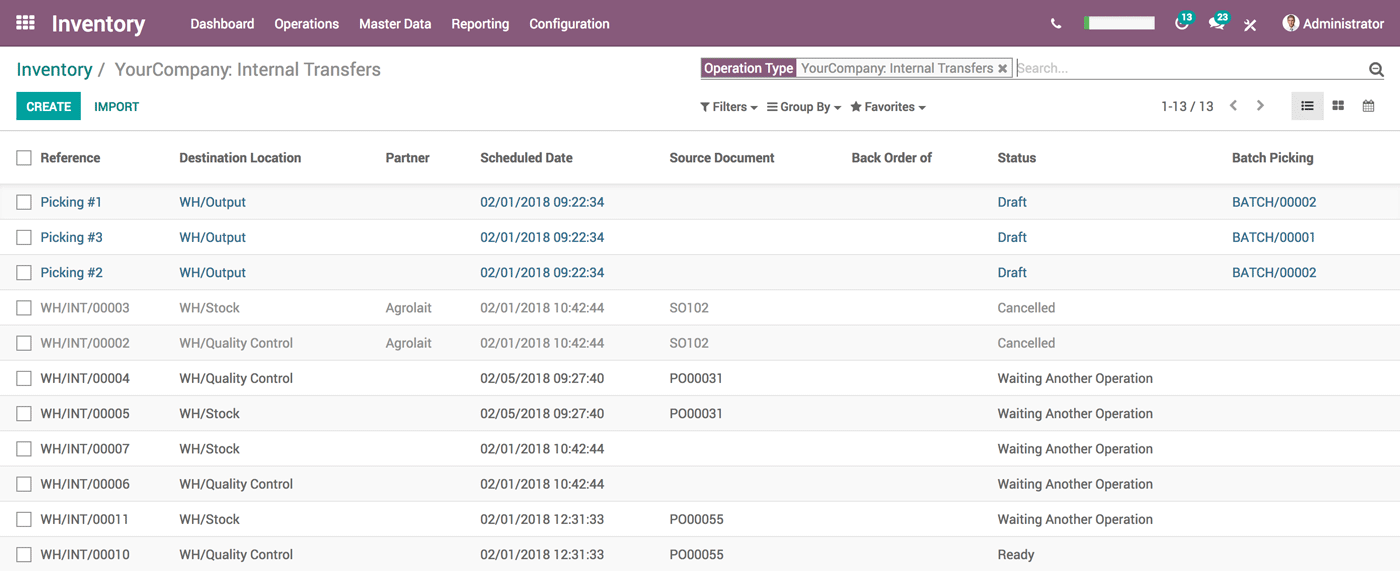
Odoo, from the Belgium-headquartered multinational company of the same name, is a suite of business applications for managing the sales pipeline. It also comprises a PoS and inventory management modules, scaling to a warehouse or retail management solution.
$31.10
per month per user
Pricing
Laravel PHP Framework
Odoo
Editions & Modules
No answers on this topic
Standard
$31.10
per month per user
Custom
$46.70
per month per user
Offerings
Pricing Offerings
Laravel PHP Framework
Odoo
Free Trial
No
Yes
Free/Freemium Version
No
Yes
Premium Consulting/Integration Services
No
No
Entry-level Setup Fee
No setup fee
-$49,321,250 per app/ per user/ per month
Additional Details
—
A discount is offered for new users for the first 12 months of use for the initial users purchased. ($24.90 instead of $31.10 for Standard)
More Pricing Information
Community Pulse
Laravel PHP Framework
Odoo
Features
Laravel PHP Framework
Odoo
Payroll Management
Comparison of Payroll Management features of Product A and Product B
Laravel PHP Framework
-
Ratings
Odoo
4.0
Ratings
57% below category average
Pay calculation
00 Ratings
5.80 Ratings
Benefit plan administration
00 Ratings
6.00 Ratings
Direct deposit files
00 Ratings
6.00 Ratings
Customization
Comparison of Customization features of Product A and Product B
Laravel PHP Framework
-
Ratings
Odoo
8.5
Ratings
11% above category average
API for custom integration
00 Ratings
8.00 Ratings
Plug-ins
00 Ratings
9.00 Ratings
Security
Comparison of Security features of Product A and Product B
Laravel PHP Framework
-
Ratings
Odoo
2.4
Ratings
109% below category average
Single sign-on capability
00 Ratings
1.00 Ratings
Role-based user permissions
00 Ratings
3.90 Ratings
Reporting & Analytics
Comparison of Reporting & Analytics features of Product A and Product B
Laravel PHP Framework
-
Ratings
Odoo
7.7
Ratings
6% above category average
Dashboards
00 Ratings
7.90 Ratings
Standard reports
00 Ratings
7.30 Ratings
Custom reports
00 Ratings
7.90 Ratings
General Ledger and Configurable Accounting
Comparison of General Ledger and Configurable Accounting features of Product A and Product B
Laravel PHP Framework
-
Ratings
Odoo
3.6
Ratings
73% below category average
Accounts payable
00 Ratings
6.20 Ratings
Accounts receivable
00 Ratings
6.20 Ratings
Global Financial Support
00 Ratings
3.90 Ratings
Primary and Secondary Ledgers
00 Ratings
5.80 Ratings
Journals and Reconciliations
00 Ratings
4.80 Ratings
Configurable Accounting
00 Ratings
3.50 Ratings
Standardized Processes
00 Ratings
3.50 Ratings
Inventory Management
Comparison of Inventory Management features of Product A and Product B
Laravel PHP Framework
-
Ratings
Odoo
6.2
Ratings
24% below category average
Inventory tracking
00 Ratings
8.50 Ratings
Automatic reordering
00 Ratings
7.10 Ratings
Location management
00 Ratings
7.90 Ratings
Order Management
Comparison of Order Management features of Product A and Product B
Laravel PHP Framework
-
Ratings
Odoo
5.6
Ratings
34% below category average
Pricing
00 Ratings
7.30 Ratings
Order entry
00 Ratings
7.80 Ratings
Credit card processing
00 Ratings
8.10 Ratings
Cost of goods sold
00 Ratings
7.90 Ratings
Order Orchestration
00 Ratings
6.10 Ratings
Subledger and Financial Process
Comparison of Subledger and Financial Process features of Product A and Product B
Laravel PHP Framework
-
Ratings
Odoo
2.4
Ratings
103% below category average
Billing Management
00 Ratings
5.80 Ratings
Cash and Asset Management
00 Ratings
5.80 Ratings
Travel & Expense Management
00 Ratings
5.80 Ratings
Budgetary Control & Encumbrance Accounting
00 Ratings
2.00 Ratings
Period Close
00 Ratings
4.80 Ratings
Project Financial Management
Comparison of Project Financial Management features of Product A and Product B
Laravel PHP Framework
-
Ratings
Odoo
1.0
Ratings
154% below category average
Budgeting and Forecasting
00 Ratings
1.00 Ratings
Project Costing
00 Ratings
1.00 Ratings
Cost Capture
00 Ratings
1.00 Ratings
Capital Project Management
00 Ratings
1.00 Ratings
Customer Contract Compliance
00 Ratings
1.00 Ratings
Project Revenue Recognition
00 Ratings
1.00 Ratings
Project Execution Management
Comparison of Project Execution Management features of Product A and Product B
Laravel PHP Framework
-
Ratings
Odoo
2.5
Ratings
93% below category average
Project Planning and Scheduling
00 Ratings
7.00 Ratings
Task Insight for Project Managers
00 Ratings
7.00 Ratings
Project Mobile Functionality
00 Ratings
6.00 Ratings
Definable Resource Pools
00 Ratings
7.00 Ratings
Grants Management
Comparison of Grants Management features of Product A and Product B
Laravel PHP Framework
-
Ratings
Odoo
1.0
Ratings
152% below category average
Award Lifecycle Management
00 Ratings
1.00 Ratings
Procurement
Comparison of Procurement features of Product A and Product B
Laravel PHP Framework
-
Ratings
Odoo
7.4
Ratings
7% above category average
Bids Analyzed and Compared
00 Ratings
6.00 Ratings
Contract Authoring
00 Ratings
7.00 Ratings
Contract Repository
00 Ratings
5.00 Ratings
Requisitions-to-Purchase Orders Integrated
00 Ratings
6.00 Ratings
Supplier Management
00 Ratings
6.70 Ratings
Risk Management
Comparison of Risk Management features of Product A and Product B
Laravel PHP Framework
-
Ratings
Odoo
7.8
Ratings
18% above category average
Risk Repository
00 Ratings
10.00 Ratings
Control Management
00 Ratings
1.00 Ratings
Control Efficiency Assessments
00 Ratings
1.00 Ratings
Issue Detection
00 Ratings
10.00 Ratings
Remediation and Certification
00 Ratings
10.00 Ratings
Logistics
Comparison of Logistics features of Product A and Product B
Laravel PHP Framework
-
Ratings
Odoo
3.5
Ratings
62% below category average
Transportation Planning and Optimization
00 Ratings
1.00 Ratings
Transportation Execution Management
00 Ratings
1.00 Ratings
Trade and Customs Management
00 Ratings
1.00 Ratings
Fulfillment Management
00 Ratings
1.00 Ratings
Warehouse Workforce Management
00 Ratings
1.00 Ratings
Manufacturing
Comparison of Manufacturing features of Product A and Product B
Laravel PHP Framework
-
Ratings
Odoo
7.8
Ratings
5% above category average
Production Process Design
00 Ratings
8.00 Ratings
Production Management
00 Ratings
6.40 Ratings
Configuration Management
00 Ratings
7.00 Ratings
Work Execution
00 Ratings
7.00 Ratings
Manufacturing Costs
00 Ratings
8.00 Ratings
Supply Chain
Comparison of Supply Chain features of Product A and Product B
Laravel PHP Framework
-
Ratings
Odoo
7.7
Ratings
8% above category average
Forecasting
00 Ratings
7.50 Ratings
Inventory Planning
00 Ratings
6.50 Ratings
Performance Monitoring
00 Ratings
7.50 Ratings
Product Lifecycle Management
Comparison of Product Lifecycle Management features of Product A and Product B
Implementation was a terrible experience for us. Because it required a third party, we ended up way over budget and schedule. While Odoo advertises that it works with many systems, these third-party integrations often don't work out of the box and require extensive coding to set up. Furthermore, these "apps" can frequently break or lose integration.
There isn't a whole lot to dislike about the framework, honestly. If I am forced to say something is that sometimes the authors change the directory layout and it's not always easy to deal with. That being said, I've never not been able to upgrade within a few hours.
Sometimes using the artisan CLI - it requires additional tweaking to get it running on non-standard application rollouts.
Once you complete the training with Odoo, you have a great grasp of how the system works, and most every feature is intuitive- There is rarely a task within Odoo that I get frustrated trying to figure out- I can typically look through the system and find what I need to do, and if I ever do need support, the Odoo Support team is excellent
Easy - there is NO SUPPORT (like in ABSOLUTELY NOTHING!!!!!!!). Even for legally mandatory requirements where the system MUST work, they will gladly take a month to get back to you with a NON-answer. We couldn't even get our bank statements correctly into Odoo for 2 months - leading to no reconciliation and the company accounts were a mess (still are!!) as a result - Completely irresponsible. Have not EVEN had an apology from Odoo - they couldn't care less !!
Originally, it was a decision between Zend, CodeIgniter, and CakePHP for me. I chose CakePHP and used it as my main PHP framework for at least a couple of years before noticing and giving Laravel a fair try. Ultimately I selected Laravel because I felt it fit with my preferred development style, it utilized many of the modern best-practices I wanted to follow, and I felt that it allowed me to build better things in less time that seemed more maintainable. I have used, and still do use, Symfony directly for certain things, but I think of it (and use it) more as a code library than as a full application framework. When I'm building a web application, I tend to prefer Laravel.
Compared to Zoho, I think Odoo lacks some clear ease of use that Zoho provides out of the box. Mainly the easy importation of leads and conversion / tracking. Additionally Zoho analytics is easier to customize the dashboard from the menus. After some tinkering I think you can get the same thing with Odoo, it's language and logic just take some geting used to. Airtable provides similarly easy to customize dashboards that are aesthetically appealing. but lacks the ability to track the customer journey as effectively as Odoo or Zoho systems.
It has helped us improve our purchasing and sales flow, now it is more organized, we can see which product was purchased from which supplier and which price is more convenient, very good
It helps to manage payments efficiently, and in less time than when it was managed manually, so it is a positive point that we can rescue in our organization.
In my case, managing inventory helps me more easily locate the most specific products that I require. Currently, we do not have details of mismatches with the products, so my inventory and my stock are kept perfectly updated.