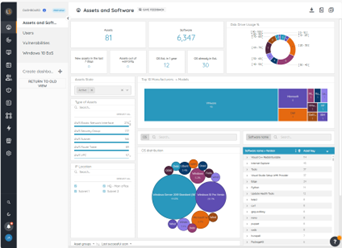
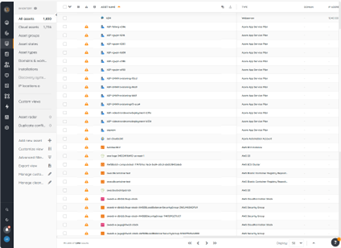
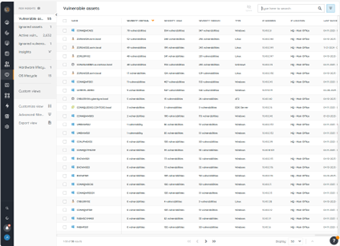
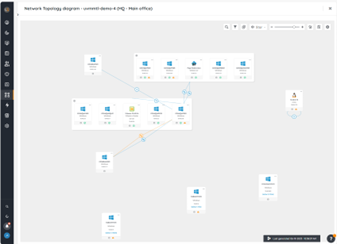
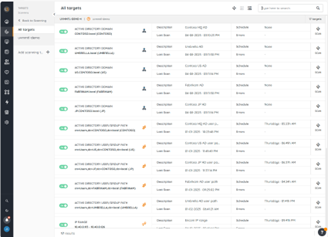
Lansweeper is an IT asset management solution that provides network discovery of all connected users, devices, and software within the IT estate. Lansweeper's device recognition capabilities provide complete visibility across the entire IT estate, in one centralized IT inventory. Lansweeper automatically and continuously discovers IT assets across infrastructure — servers, laptops, desktops, virtual & cloud machines, networks devices and IoT assets— in order to…
$2,868
per year (includes 2000 assets)
SPDocKit
Score 10.0 out of 10
N/A
SysKit, in Zagreb, offers SPDocKit as the Ultimate SharePoint On-Premises Administration Tool, used to automate routine administrators’ tasks such as document configuration and exploration of SharePoint structure.
N/A
Pricing
Lansweeper
SysKit SPDocKit
Editions & Modules
Starter
$2868
per year Includes 2,000 assets
Pro
$5268
per year Includes 2,000 assets
Enterprise
Contact Sales
Starts at 10,000 Assets
No answers on this topic
Offerings
Pricing Offerings
Lansweeper
SPDocKit
Free Trial
Yes
No
Free/Freemium Version
Yes
No
Premium Consulting/Integration Services
Yes
No
Entry-level Setup Fee
No setup fee
No setup fee
Additional Details
—
—
More Pricing Information
Community Pulse
Lansweeper
SysKit SPDocKit
Features
Lansweeper
SysKit SPDocKit
IT Asset Management
Comparison of IT Asset Management features of Product A and Product B
Lansweeper I believe is well suited for any environment - its low cost and small footprint make it an easy addition to any organization, big or small, that is looking for an asset inventory solution that can either replace or supplement existing asset management systems. It may not be well suited for situations where a lot of customization is necessary, such as pulling in custom fields or details from equipment that don't reside in a registry.
The product is second to none in providing an accurate and detailed view of a SharePoint farm, its composition, and its configuration. It is an essential tool for discovery purposes, and it should be used anytime business continuity and disaster recover plans/documentations are being prepared. Since SharePoint doesn't include a "farm clone" method, SPDocKit provides the next best thing in attempts to replicate configuration. It can also be used as a Q&A checkpoint through the use of farm snapshots to highlight differences that exist between two or more environments.
Inventory - LANSweeper scans the network for devices - anything with an SNMP trap or using AD or local credentials. We can get an in-depth look at devices.
Reporting - LANSweeper can generate just about any report you can imagine. We can check RAM in groups and determine where upgrades are needed. We can find local printers (which aren't allowed on our network) and address that issue with the user. We can check CPU type to help determine end of life without our network.
Printers - It's nice to have a quick look at printer statuses. Toner levels, out of paper, and service errors are all reported via LANSweeper.
Discovery. When trying to learn the ins and outs of an unfamiliar SharePoint farm configuration, SPDocKit creates a complete and accurate picture.
Documentation. Documenting farm configurations manually is a very time and labor intensive process, so I turn to SPDocKit to automate the process for me.
Change Tracking. SPDocKit can take a series of farm snapshots over time, and it can highlight and track differences in configuration and settings from snapshot to snapshot.
Can only scan what it sees. Doesn't show every item on the machine. Patches are also absent.
Software Recognition is OK with Microsoft. It is dire within our network of multiple products. Recognition is at about 35% with constant manual work needed to baseline for each manufacturer in each network
Datacenter compliance is a manual project. We used Excel extensively.
License optimization is limited to installations v surplus licenses. We need to know who's using what and how.
Cloud Readiness. Unfortunately, SPDocKit cannot run against SharePoint Online (SPO) environments due to its reliance on server APIs that aren't exposed in the cloud.
Variations. SPDocKit exists in a number of forms for licensing purposes, and not all versions are equivalent. It's sometimes difficult to know what version of the product houses the feature that I want to use, as well as whether or not I'm licensed for it.
Lots of info online there are tons of SQL Reports you can copy from the web as Lansweeper and users post many of them. They also send out alerts that pop up on Lansweeper, letting you know of an update that you need for certain software and provide an SQL report so you can scan your system to see what PCs need this update.
SysKit support is second to none. On occasions where I've had questions about any aspect of SPDocKit, I've reached out to SysKit through available channels and usually gotten back a detailed and helpful answer within 24 hours of my request submission. They're also very friendly and supply more information that may be related to my inquiry or problem. I never feel like customer support is an afterthought with SysKit.
Microsoft System Center needs to install agents on all IT asset for discovery and sometimes the agents can easily get corrupted. Lansweeper is a SaaS solution and it's easier to deploy to all IT asset that are connected to the network. This save us a lot of deployment time without the need to engage vendor for professional service.
I am unaware of any other product on the market that does what SysKit SPDocKit does. SPDocKit has certainly been doing it the longest, and it offers a unique value proposition and set of capabilities.
It had a positive impact on solutions expense cause several teams we're using different solutions with different costs that used several servers and DB resources. Now, we've been able to simply that a lot with Lansweeper.
With my previous point, people had to train and learn about each of their solutions. Now we can put a team in charge and so the other teams can focus on other tasks.
Last year Lansweeper changed their licencing prices a lot so it slashed our budget.
The product cost may appear large, but when you compare the cost and reuse of the product to what it would cost in time and effort to carry out its functions manually, the cost is truly a drop in the bucket.
Since I operate as a consultant, I consider the SysKit SPDocKit tool essential to the work I do. It allows me to go into new environments, generate a farm report, and use that report as something I provide to the client - as well as for my own purposes.