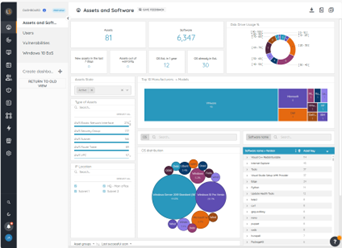
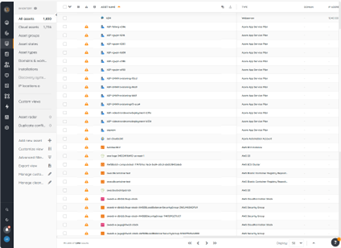
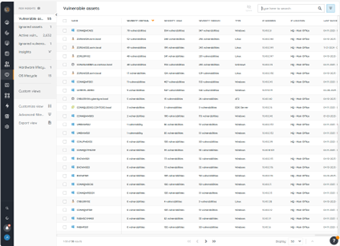
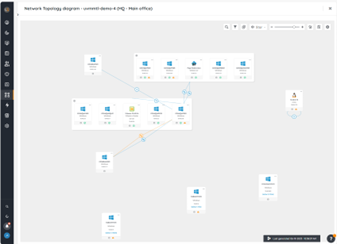
Lansweeper is an IT asset management solution that provides network discovery of all connected users, devices, and software within the IT estate. Lansweeper's device recognition capabilities provide complete visibility across the entire IT estate, in one centralized IT inventory. Lansweeper automatically and continuously discovers IT assets across infrastructure — servers, laptops, desktops, virtual & cloud machines, networks devices and IoT assets— in order to…
$2,868
per year (includes 2000 assets)
Snow Atlas
Score8 out of 10
N/A
Snow Atlas is a cloud-native platform built from the ground up to provide Technology Intelligence for today’s hybrid enterprises. Based on a microservices architecture and standardized APIs, Snow Atlas provides a unified foundation for Snow’s IT asset management, SaaS management and FinOps solutions. It can be used to display all of the technology in an enterprise's IT stack, or to find opportunities to enhance, optimize and efficiently manage technology assets and share data with…
Lansweeper I believe is well suited for any environment - its low cost and small footprint make it an easy addition to any organization, big or small, that is looking for an asset inventory solution that can either replace or supplement existing asset management systems. It may not be well suited for situations where a lot of customization is necessary, such as pulling in custom fields or details from equipment that don't reside in a registry.
A de minimis incentive was given to thank the reviewer for their time. The incentive was not used to bias or drive a particular response, nor was the incentive contingent on a positive endorsement. More Info
A de minimis incentive was given to thank the reviewer for their time. The incentive was not used to bias or drive a particular response, nor was the incentive contingent on a positive endorsement. More Info
Inventory - LANSweeper scans the network for devices - anything with an SNMP trap or using AD or local credentials. We can get an in-depth look at devices.
Reporting - LANSweeper can generate just about any report you can imagine. We can check RAM in groups and determine where upgrades are needed. We can find local printers (which aren't allowed on our network) and address that issue with the user. We can check CPU type to help determine end of life without our network.
Printers - It's nice to have a quick look at printer statuses. Toner levels, out of paper, and service errors are all reported via LANSweeper.
A de minimis incentive was given to thank the reviewer for their time. The incentive was not used to bias or drive a particular response, nor was the incentive contingent on a positive endorsement. More Info
Can only scan what it sees. Doesn't show every item on the machine. Patches are also absent.
Software Recognition is OK with Microsoft. It is dire within our network of multiple products. Recognition is at about 35% with constant manual work needed to baseline for each manufacturer in each network
Datacenter compliance is a manual project. We used Excel extensively.
License optimization is limited to installations v surplus licenses. We need to know who's using what and how.
A de minimis incentive was given to thank the reviewer for their time. The incentive was not used to bias or drive a particular response, nor was the incentive contingent on a positive endorsement. More Info
SaaS connectors are not always kept up to date usually when Publishers make changes to their Portal API's. Appears to be little active monitoring on Flexera/Snow Atlas' side unless a customer reports an issue with the data being returned. Fixes are normally implemented as as quickly as possible, depending on whether it is considered a Bug Fix or a Feature Enhancement.
Users - Snow on SAM - No ability to add or bulk import manually. Completely reliant on AD Discovery or Entra ID Discovery
Users - SaaS module - No ability for bulk update of Users for things line 'Online only' or 'Qualified' user accounts. This is an issue in larger companies where you have thousands of SaaS Users being reported through connectors like Microsoft E365.
SaaS module Dashboard does not allow for filtering of insights to a specific Publisher.
Not all Back end SMACC functionality form Snow License Manager have been exposed to the front-end access, as Snow Atlas does not allow customer Administrators access to the back end or SQL databases.
If you are migrating from on-prem Snow License Manager to Atlas, migration tools have not been created by Snow and will require a Project to handle your migration. Without Migration tools, we had to use a Managed Service Partner who had to manually create a lot of their own scripts to retrieve data that cannot be downloaded via reports and imported into Atlas. Any attachments documentation on Agreement or License Records has to be manually re-attached/uploaded to the relevant Agreement/License records in Atlas as the migration was performed.
A de minimis incentive was given to thank the reviewer for their time. The incentive was not used to bias or drive a particular response, nor was the incentive contingent on a positive endorsement. More Info
A de minimis incentive was given to thank the reviewer for their time. The incentive was not used to bias or drive a particular response, nor was the incentive contingent on a positive endorsement. More Info
A de minimis incentive was given to thank the reviewer for their time. The incentive was not used to bias or drive a particular response, nor was the incentive contingent on a positive endorsement. More Info
Lots of info online there are tons of SQL Reports you can copy from the web as Lansweeper and users post many of them. They also send out alerts that pop up on Lansweeper, letting you know of an update that you need for certain software and provide an SQL report so you can scan your system to see what PCs need this update.
A de minimis incentive was given to thank the reviewer for their time. The incentive was not used to bias or drive a particular response, nor was the incentive contingent on a positive endorsement. More Info
Front line support staff done always understand the issue you are explaining or the need to escalate to back end/higher up areas for resolutions and can often require use of the Escalate function or emailing to your Account/Customer Success Manager. That said, once an issue properly is understood, it is handled well.
A de minimis incentive was given to thank the reviewer for their time. The incentive was not used to bias or drive a particular response, nor was the incentive contingent on a positive endorsement. More Info
We should have spun up a Project to manage the implementation. Snow indicated to us the ease in which Snow Atlas could be implemented, however this did not factor in that we were migrating from their on-prem product Snow License Manager hosted through a Managed Servicer Partner. For a clean installation, your implementation can be quick and likely not require a Project. If you are migrating from another products or are a company that can have lots of stakeholders, fingers in the pie, hurdles/business processes that need to be adhered to, definitely use a Project to perform your implementation.
A de minimis incentive was given to thank the reviewer for their time. The incentive was not used to bias or drive a particular response, nor was the incentive contingent on a positive endorsement. More Info
Microsoft System Center needs to install agents on all IT asset for discovery and sometimes the agents can easily get corrupted. Lansweeper is a SaaS solution and it's easier to deploy to all IT asset that are connected to the network. This save us a lot of deployment time without the need to engage vendor for professional service.
A de minimis incentive was given to thank the reviewer for their time. The incentive was not used to bias or drive a particular response, nor was the incentive contingent on a positive endorsement. More Info
It had a positive impact on solutions expense cause several teams we're using different solutions with different costs that used several servers and DB resources. Now, we've been able to simply that a lot with Lansweeper.
With my previous point, people had to train and learn about each of their solutions. Now we can put a team in charge and so the other teams can focus on other tasks.
Last year Lansweeper changed their licencing prices a lot so it slashed our budget.
A de minimis incentive was given to thank the reviewer for their time. The incentive was not used to bias or drive a particular response, nor was the incentive contingent on a positive endorsement. More Info