Lacework is a cloud-native application protection platform offered as-a-Service; delivering build-time to run-time threat detection, behavioral anomaly detection, and cloud compliance across multicloud environments, workloads, containers, and Kubernetes.
N/A
Microsoft Defender for Cloud
Score 8.5 out of 10
N/A
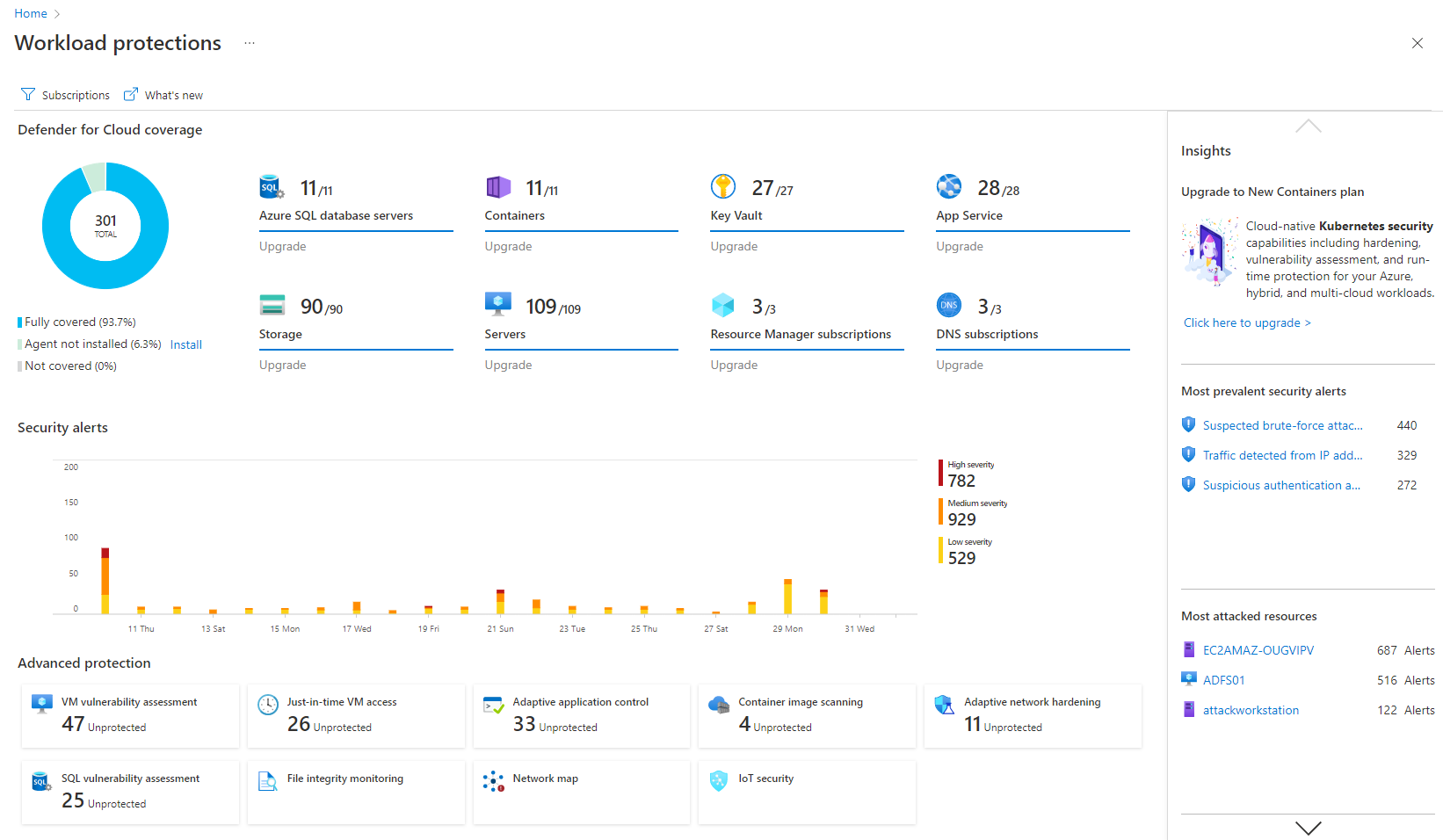
Microsoft Defender for Cloud is a Cloud Security Posture Management (CSPM) and Cloud Workload Protection Platform (CWPP) for Azure, on-premises, and multicloud (Amazon AWS and Google GCP) resources.
Lacework is well suited for behavioral analysis. One thing to consider thought is in the early stages there will be quite a bit of noise generated by Lacework. There will be a higher volume alerts generated initially - until a good baseline is generated. Overall Lacework is good with alert handling - integration with Slack is good.
If you need to proceed with pay as you go service then go ahead with Microsoft Defender for Cloud. This could be expensive in the long run but if the organization usage is slightly less than then this would suite the purpose. Also, it has the latest threat updates, so you're future proof in terms of potential treats.
Automation is crucial to managing sprawl and the additional complexity that comes with it. SOC management workbooks and process automation give significant flexibility.
The Security posture score and Security Alerts are neatly centralized and offer me crucial information quickly.
Defender for Cloud avoids the common compromise of simplicity for completeness (former Azure Security Center). The security warnings and advice go into great detail while remaining current and useful.
Not all runtime behaviour alerts offer enough data to decide whether or not something is malicious. Having even more data (e.g., what process is doing a specific action) would help.
UI/UX. It can get a little messy when navigating around with all the flyouts in the Azure portal which can be frustrating, particularly when under time pressure.
The query languages for the queries and workbooks are another language that needs to be learned - it would be nice to have kept it closer to T-SQL or something like that to minimize the need to learn new syntax.
Adding cost estimations to the security recommendations would really improve the experience.
It is a great product that integrates nicely when running an Azure platform and even multi-cloud environment. Not looking for point-solutions but a suite that answers most requirements. It is very comfortable being able to use KQL, workbooks and automation that is native to the azure platform
Compared to Sysdig Falco (the free open-source IDS), Lacework helps security teams by providing actionable alerts and a user-friendly interface that gives you an overview of all workloads being monitored, and detailed insights into these workloads if needed. Falco requires you to build your own integration and interface around it, including a mechanism to whitelist certain alerts. This made it harder for the security team to focus their time on potential intrusions.
I believe Microsoft Defender for Cloud stacks up well against the other tools we looked at. It is native to the Azure platform and provides the same insights as the other tools. We selected Microsoft Defender for Cloud because it integrates well with the Azure resources and gives the needed insight, security alerts and recommendations.
Being a FinTech company, financial institutions who partner with us want to know that we are appropriately maintaining a Security, Risk and Compliance program that maintains a level of comfort for their vendor management. Lacework gives us the ability to monitor and maintain a level of security for our infrastructure that puts our partners at ease, reduces the revenue cycle for new partners and opens doors to the future.