A solution to bridge the gap between strategy and execution for portfolio, product, and program management teams, used to manage idea intake, prioritize your feature backlog, and track progress with live roadmaps.
$27,000
per year
StoriesOnBoard
Score 1.1 out of 10
N/A
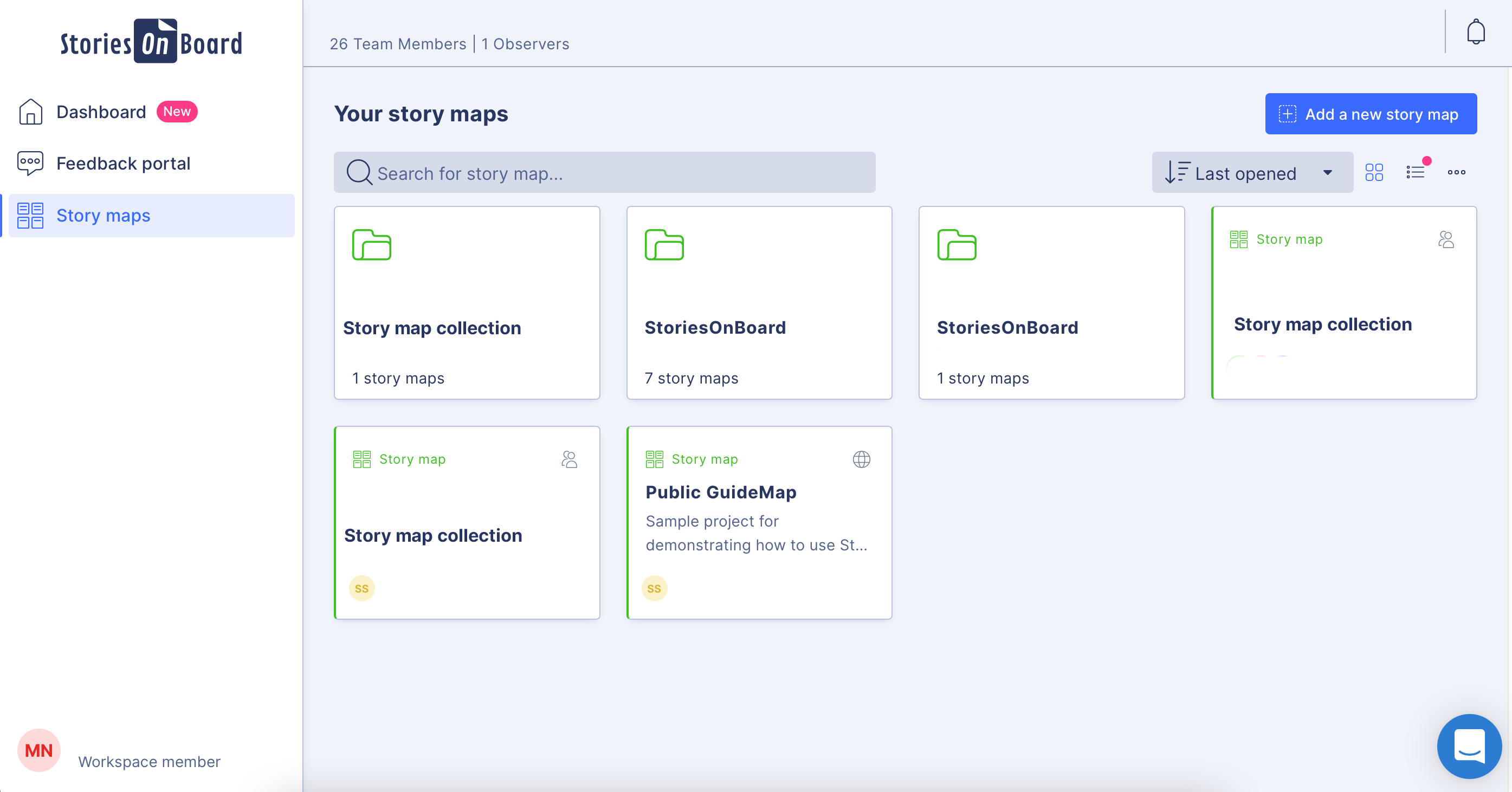
StoriesOnBoard is a holistic product management tool powered by user feedback. Through collecting user and customer feedback into a single repository and sorting it based on custom rules and collaborating with stakeholders to form actionable feature ideas from them, users can make sure their ideas will be driven by real user needs. Ideas can be validated on a public roadmap and then placed on a user story map to plan releases. StoriesOnBoard supports the product management…
The Atlassian Jira Align (formerly AgileCraft) tools help keep our scrum teams moving in the right direction. It gives Sr. Executives visibility into the progress of our digital transformation efforts. It provides information to our program manager to create the necessary artifacts to justify continued funding of our initiatives. It also supports the SAFe framework, along with some others. And the Atlassian Jira Align (formerly AgileCraft) tools provide integration to other tools that we use in our portfolio.
As mentioned earlier, we also use StoriesOnBoard to create other processes (customer and employee journey). We use the swim lanes to differentiate between measures, tools and processes and working with them is very easy and understandable for this purpose.
Less easy is the use of context, i.e. when one part of a story map depends on another story map. This cannot be avoided (at least for us) to avoid creating redundancy (and the risk of creating different stages). At appropriate places, we refer to the other map in the title.
Effective Sprint planning : Sprint planning can be done using Planning Poker in AgileCraft by clicking Team > Manage > Other > Estimation Games very effectively for distributed teams.
Team Capacity Allocation Report: After tasks are created at team or program level, the report from AgileCraft cab be pulled and can be verified that no team member is under or over allocated. A report can be generated by navigating to Team > Manage > Assign Tasks.
Effective Requirement trace-ability: To maintain requirements trace-ability follow the steps below:
Upload test cases against the story/requirement. once uploaded test cases will be visible under that story
Execute Test cases in AgileCraft and mark them as Pass/Fail based on the actual outcome
Based on test results, The acceptance criterion's can be marked as “Pass” or “Fail” & if marked failed corresponding defect can be logged & can be attached with the story
So against each story we can easily see whether all test cases been executed or not & which acceptance criterion's are failed & how many defects are in open or close state.
Daily Scrum: In AgileCraft, the option to run a daily stand-up is available from Team > Manage > Daily Standups. Selecting the sprint number opens the daily stand-up meeting window in which each team member's tasks are visible and hours can be burned against them. Conduct Scrum meetings in AgileCraft, and burn each associate hour against the tasks created during the meeting. The burn-down chart can be generated & viewed during the stand-up to check whether the team is on track.
The initial ticket creation screen lacks some important features, such as assigning "point values" (a measure of effort needed for the ticket).
The browser needs to be manually refreshed to see new tickets, which can make things confusing when several people in a meeting are simultaneously creating tickets.
The interface on some smaller portions of the software are sometimes difficult to understand.
Most of the things are easily manageable except certain things that are hidden and you need to ask teammates who are aware of how they can link attachements in the comment section and so on.
StoriesOnBoard works really well; all features are well thought through. It could look a bit fresher, although the new updated dashboard is already much better than it was.
Overall support from Jira team is good. It comes at an additional price but it is very efficient. There are no long wait times, you get a dedicated team to look into your issues. The support is available throughout the year and they keep a record of your issues. Overall we are very satisfied with the support they have provided us over the years, it has been very effective for the price that we pay.
Microsoft Azure Devops won't have the major functionality of software management like Jira. The customization provided by Jira is having a cutting edge over any project management tool. Adds-on and Plugins feature in the Jira Tool make it as perfect as desired task management tool for any company. One of the best Agile based Project Management Tools.
The only other competitor we looked at was cardboardit.com. Both had solid functionality, but StoriesOnBoard was more user-friendly and quick to learn and use in our opinion.
It has positively impacted our tech teams, allowing them to better organize the tasks and items they are working on and has greatly improved their ability to communicate & review these tasks with other teams.
I believe it negatively impacted other departments as lengthy training was required by many associates to attempt using the tool, only to find out it didn't meet our needs, therefore much time was wasted.
StoriesOnBoard (and story mapping in general) creates a low-cost visual method of aligning on high-level business and technical requirements early in a project and provides an ongoing reference as the project progresses. Having this alignment is critical for the later stages of the project.