IBM® watsonx™ Orchestrate® leverages AI to automate complex workflows. The solution helps build, deploy, and manage AI assistants and agents. It offers a catalogue of pre-built agents and tools, low-code agent builder, multi-agent collaboration capabilities, and integrations with enterprise apps.
$500
per month
Rasa
Score6 out of 10
Enterprise companies (1,001+ employees)
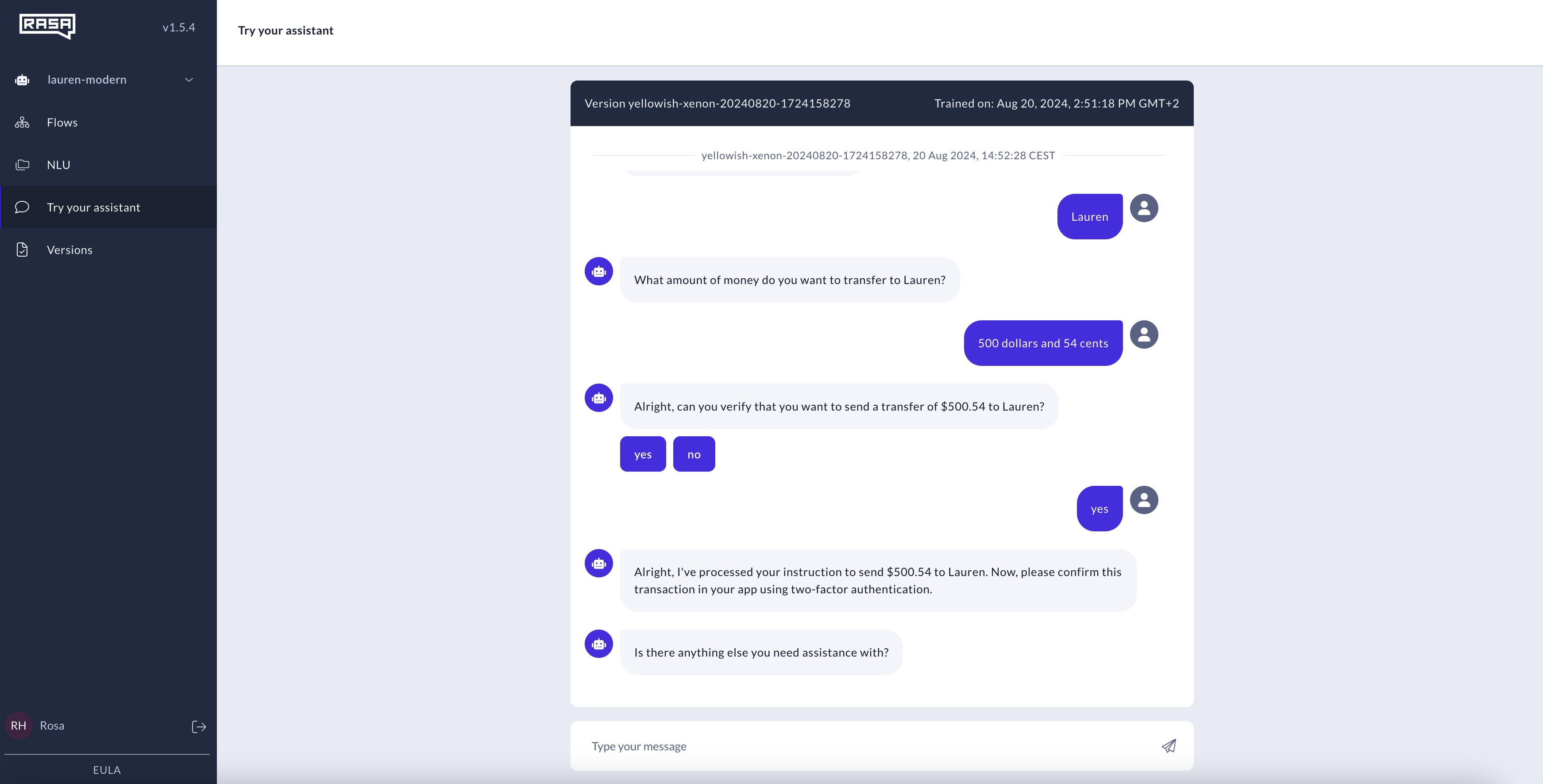
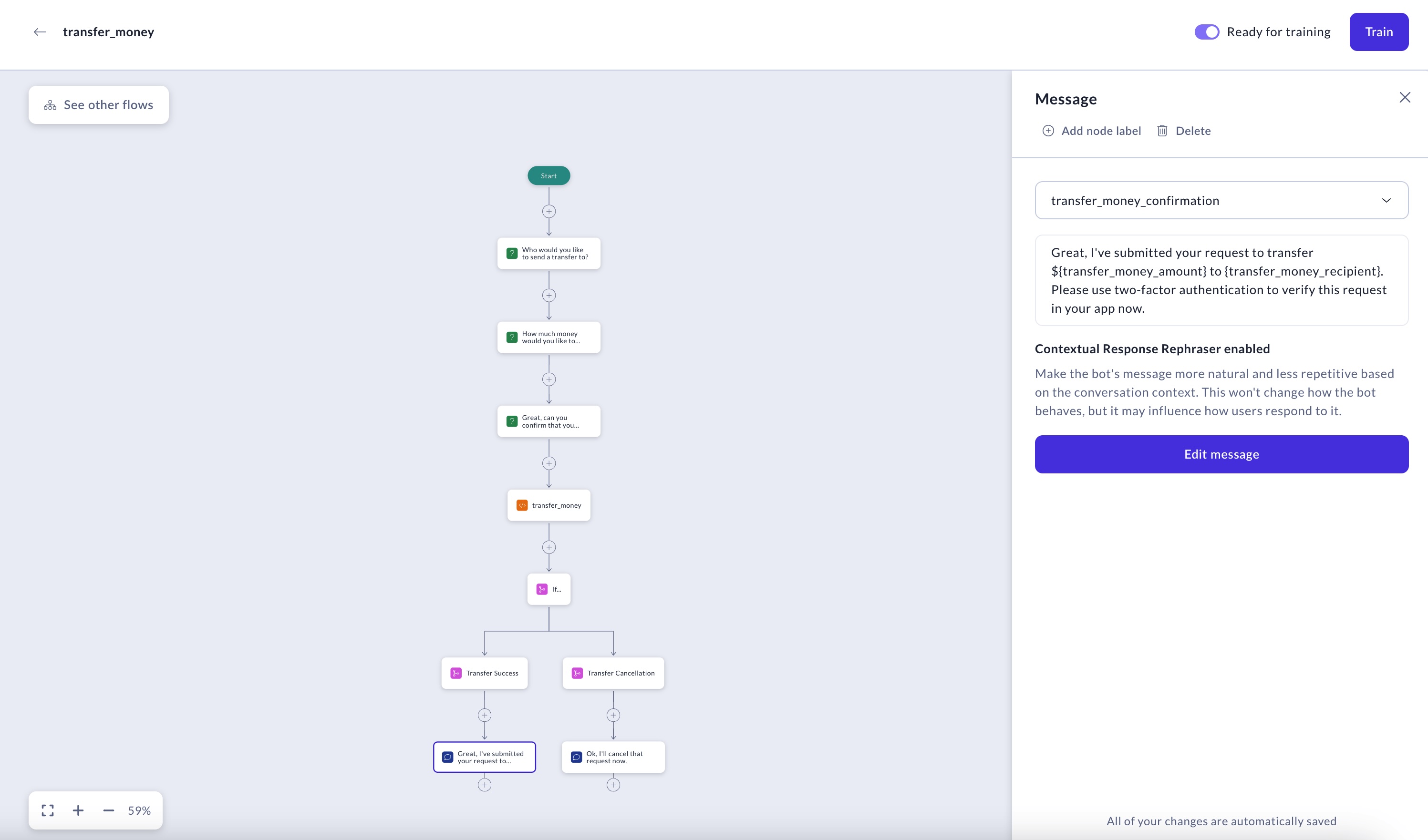
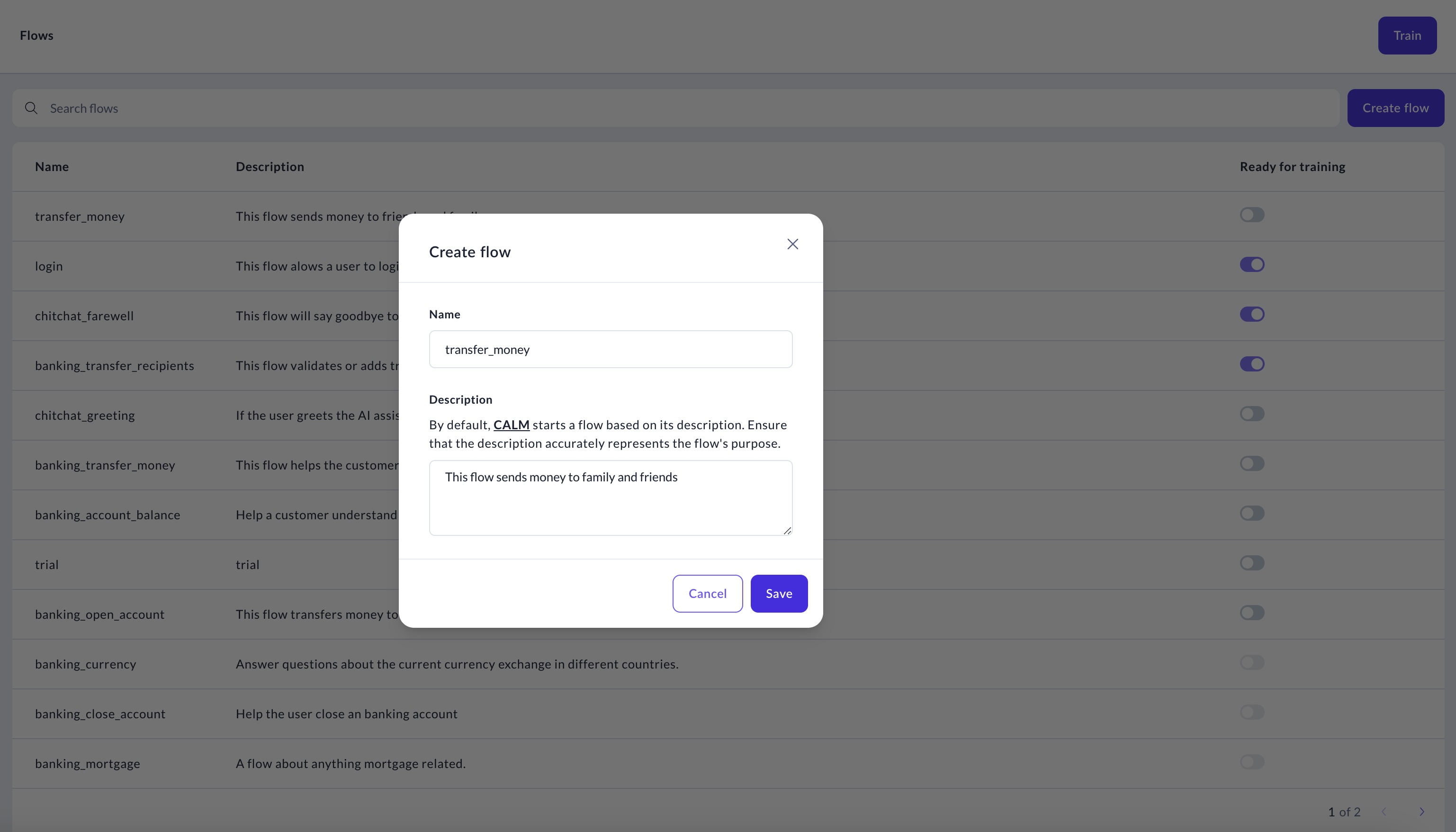
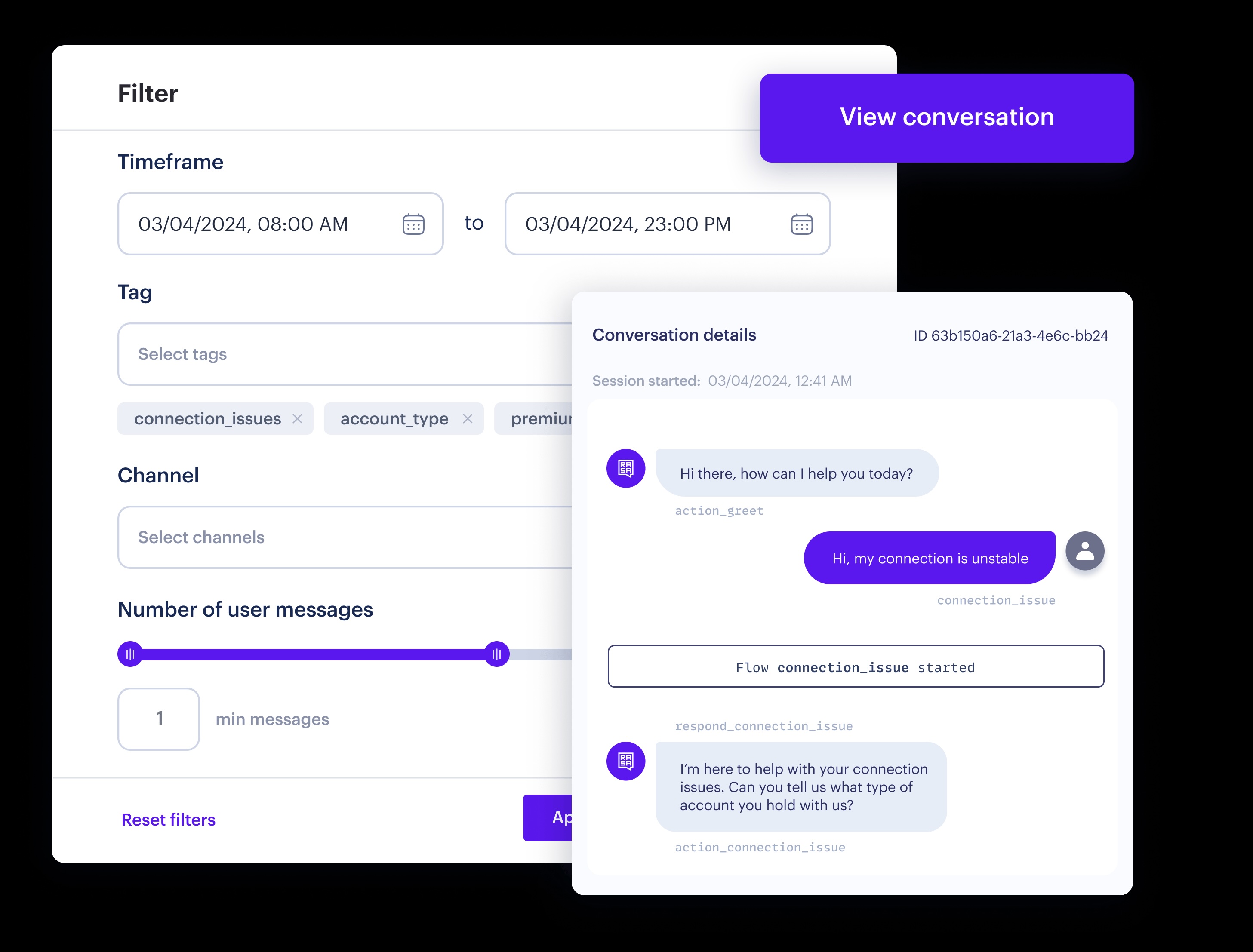
Rasa is a conversational AI platform from the company of the same name headquartered in San Francisco, enabling enterprises to build customer experiences. Rasa’s platform was built to create enterprise-grade virtual assistants, allowing personalized conversations with customers - at scale. Rasa’s conversational AI platform allows companies to build better customer experiences by lowering costs through automation, improving customer satisfaction, and providing a scalable way to gather customer…
$0
Pricing
IBM watsonx Orchestrate
Rasa
Editions & Modules
Essential
$500
per month per subscription
Essentials
$500
per month Per subscription
Standard
Enterprise
Standard
Enterprise
per month Per subscription
Developer Edition
$0
Growth
starting at $35k
Enterprise
Contact Sales
Offerings
Pricing Offerings
IBM watsonx Orchestrate
Rasa
Free Trial
Yes
Yes
Free/Freemium Version
No
Yes
Premium Consulting/Integration Services
Yes
Yes
Entry-level Setup Fee
Optional
No setup fee
Additional Details
IBM watsonx Orchestrate can be deployed and run on IBM Cloud, AWS, or on-premises. Prices shown are indicative, may vary by country, exclude any applicable taxes and duties, and are subject to product offering availability in a locale.
Chatbot Developer in Information Technology at Compass.uol (Information Technology & Services, 1001-5000 employees)
Chose IBM watsonx Orchestrate
IBM Watson Assistant provides a highly intuitive and user-friendly interface, making it accessible to non-technical users to easily create and deploy conversational agents. Additionally, being a cloud-based platform, it eliminates the need for manual retraining of the bot after …
A de minimis incentive was given to thank the reviewer for their time. The incentive was not used to bias or drive a particular response, nor was the incentive contingent on a positive endorsement. More Info
Rasa Technologies Inc
Verified User
Chose Rasa
The NLU algorithms are more efficient in Rasa. Creating conversations is much easier. In IBM, the more use cases we created, the more complicated it was to up date the entire model. It was quite common to mess up what had already been done.Rasa has greater scope for use with …
A de minimis incentive was given to thank the reviewer for their time. The incentive was not used to bias or drive a particular response, nor was the incentive contingent on a positive endorsement. More Info
Senior Data Scientist in Information Technology at Deutsche Telekom IT (Telecommunications, 5001-10,000 employees)
Chose Rasa
Glean - proprietary semantic search algorithms, no backend actions integration IBM Watsonx - complicated dialogue builder, poor separation of no-code and pro-code interfaces ELMOS (agent based) - all logic in code, no dialogue logic in no-code interface possible
A de minimis incentive was given to thank the reviewer for their time. The incentive was not used to bias or drive a particular response, nor was the incentive contingent on a positive endorsement. More Info
In our case, it is well-suited for workday integration, which allows us to automate the entire workflow. However, we are still working on the O9 platform integration, which we feel is less appropriate, and integrating the workflow into the platform.
Rasa Pro is well suited for corporate use and for chatbots which require backend connections. Smaller chatbots with a few flows might be better served with a simple dialogue engine and custom AI agents, or Rasa Open Source. Rasa does not come with its own complex vector database, just in-memory FAISS and connectors to external vector DB's such as Milvus and Qdrant. It provides only a basic document parser and embedder for FAISS. If you need to build a RAG focused chatbot around a large knowledge base with complex documents, e.g. lots of MS Word or PDF files, you'll have to build a separate document parser and embedder, as well as your own semantic search engine
A de minimis incentive was given to thank the reviewer for their time. The incentive was not used to bias or drive a particular response, nor was the incentive contingent on a positive endorsement. More Info
New and improved natural language processing yielding better results helps the assistants understand the intention behind the query.
Preserves context of communication, allowing the customers to establish inquiries on the website and continue on the mobile app without having extra informational input.
Intelligent conversations mean that complex paths that are branched based on the user's inputs allow for a much more natural flow of the conversation than fixed scripts.
A de minimis incentive was given to thank the reviewer for their time. The incentive was not used to bias or drive a particular response, nor was the incentive contingent on a positive endorsement. More Info
A de minimis incentive was given to thank the reviewer for their time. The incentive was not used to bias or drive a particular response, nor was the incentive contingent on a positive endorsement. More Info
I think that it needs to be able to integrate better with the knowledge catalogs. It currently provides a default database, which isn't quite large enough for enterprise use. We can connect that then to an external source, but it'd be nice if we could able just to instantiate one straight away.
A de minimis incentive was given to thank the reviewer for their time. The incentive was not used to bias or drive a particular response, nor was the incentive contingent on a positive endorsement. More Info
A de minimis incentive was given to thank the reviewer for their time. The incentive was not used to bias or drive a particular response, nor was the incentive contingent on a positive endorsement. More Info
Currently we are using to develop chatbots based on client provided flow what kind chatbot required for client either button or free text chatbots. we will decided accordingly flow and develop chatbot using IBM Watson. We will integrated custom components if required which is not present in library. Action flow and dialog flow we are currently in chatbot.
A de minimis incentive was given to thank the reviewer for their time. The incentive was not used to bias or drive a particular response, nor was the incentive contingent on a positive endorsement. More Info
With the growing use of AI and chatbots, it's very easy to use, and the conversational language makes it easier than keyword searches in a document. The contextual language processing is impressive. It's easy to integrate into our internal portal. The use of this tool would depend on each company's security and data sensitivity.
A de minimis incentive was given to thank the reviewer for their time. The incentive was not used to bias or drive a particular response, nor was the incentive contingent on a positive endorsement. More Info
With the help of dedicated team - documentation and video resources it is relatively easier to build. We prioritized pro-code usage to begin with launch.
A de minimis incentive was given to thank the reviewer for their time. The incentive was not used to bias or drive a particular response, nor was the incentive contingent on a positive endorsement. More Info
To develop chatbots based on client provided flow what kind chatbot required for client either button or free text chatbots. we will decided accordingly flow and develop chatbot using IBM Watson. We will integrated custom components if required which is not present in library. IBM Watson library anyone can easily learn and develop chatbots.
A de minimis incentive was given to thank the reviewer for their time. The incentive was not used to bias or drive a particular response, nor was the incentive contingent on a positive endorsement. More Info
We've rarely had to engage support, but they've always been prompt in responding and very attentive. Support experiences have been extremely positive (but we're mostly happy that we just don't have any cause to routinely need support in the first place!).
A de minimis incentive was given to thank the reviewer for their time. The incentive was not used to bias or drive a particular response, nor was the incentive contingent on a positive endorsement. More Info
Rasa support has been very responsive, trying to fix any reported issues ASAP. They've also listened to many requests for improvement. The Rasa features and changelog are well documented
A de minimis incentive was given to thank the reviewer for their time. The incentive was not used to bias or drive a particular response, nor was the incentive contingent on a positive endorsement. More Info
A de minimis incentive was given to thank the reviewer for their time. The incentive was not used to bias or drive a particular response, nor was the incentive contingent on a positive endorsement. More Info
A de minimis incentive was given to thank the reviewer for their time. The incentive was not used to bias or drive a particular response, nor was the incentive contingent on a positive endorsement. More Info
Make has more community of workflows to follow that have been redeveloped and are available for download. Selecting WxO is based on our trust level with IBM and the propositions of the Granite model being less biased, more business trained, and the ecosystem allowing for expansion with Assistant and Discovery.
A de minimis incentive was given to thank the reviewer for their time. The incentive was not used to bias or drive a particular response, nor was the incentive contingent on a positive endorsement. More Info
A de minimis incentive was given to thank the reviewer for their time. The incentive was not used to bias or drive a particular response, nor was the incentive contingent on a positive endorsement. More Info
From past 3+ years I am using IBM Watson in our current project easily can implement and manage and monitor user how their using. Is there and update also just update dialog is just enough to change no need to touch any other templates. Multiple language will support, and action and dialog speak recognize chatbot we can create as per client requirement. Overall, as of now good experience with IBM Watson.
A de minimis incentive was given to thank the reviewer for their time. The incentive was not used to bias or drive a particular response, nor was the incentive contingent on a positive endorsement. More Info
By automating tasks that would otherwise require human intervention, organizations may achieve cost savings in terms of labor, especially for handling large volumes of routine inquiries.
Virtual assistants can handle a large number of simultaneous interactions, making them scalable to accommodate growing customer bases and increasing workloads without a linear increase in staffing.
A de minimis incentive was given to thank the reviewer for their time. The incentive was not used to bias or drive a particular response, nor was the incentive contingent on a positive endorsement. More Info
A de minimis incentive was given to thank the reviewer for their time. The incentive was not used to bias or drive a particular response, nor was the incentive contingent on a positive endorsement. More Info