IBM Robotic Process Automation with Automation Anywhere is a robotic process automation solution combining business process management tools from IBM with Automation Anywhere's bots and automation capabilities.
$840
per month
SpecFlow
Score 10.0 out of 10
N/A
SpecFlow is an open source BDD for .NET. that aims to bridge the communication gap between domain experts and developers by binding readable behavior specifications to the underlying implementation.
N/A
Pricing
IBM Robotic Process Automation
SpecFlow
Editions & Modules
IBM RPA On premises
Platform starter pack, starting at USD 840.00 per month
per month
IBM RPA Software as a service (SaaS)
Platform starter pack, starting at USD 840.00 per month
This tool is capable of filling out forms for various records and work applications, and offers advanced functionalities that can be quickly comprehended. Although it requires expertise to manage, it is user-friendly and not overly complex to operate. Our cost savings have been achieved by minimizing manual labor and optimizing our resources. I appreciate IBM's support in automating various use-cases, enabling us to implement solutions for our clients regardless of their industry or department.
It is best suited for implementing the automated test cases in a human readable form so it's easy for non-technical members of the team and stakeholders to understand the test cases, features and the functionalities of the application. Automation of Integration tests and End to End tests are good use case. It is less appropriate or situations where the focus is only on the writing and maintenance of unit tests.
Versatility to be used in combination with different kinds of automated testing like automated performance testing, API testing, UI testing etc. I use JavaScript, Selenium, C#, email testing libraries, database testing libraries in combination with BDD with SpecFlow. I am able to use all these with SpecFlow to make my automation framework to be able to automate any kind of automated testing.
It provides different widely used runner options like NUnit, XUnit etc. Before I started to work on establishing proper test automation in my workplace, the previous automation framework (non-BDD based) as well as unit tests used NUnit runner. The transition to using BDD was smooth because we could use the same runner and there were no compatibility issues.
The auto-complete feature is good. I use it with Visual Studio as well as Rider and I don't have to recall the entire Gherkin statements. I just type a few words and the entire Gherkin statement implemented in framework is auto-suggested by SpecFlow. It saves time and context switching.
It's complex and pricey, thus it's not practical for use in most small enterprises.
It takes some time to get accustomed to and it is challenging to absorb everything and understand each function when not all of it is addressed in the manual.
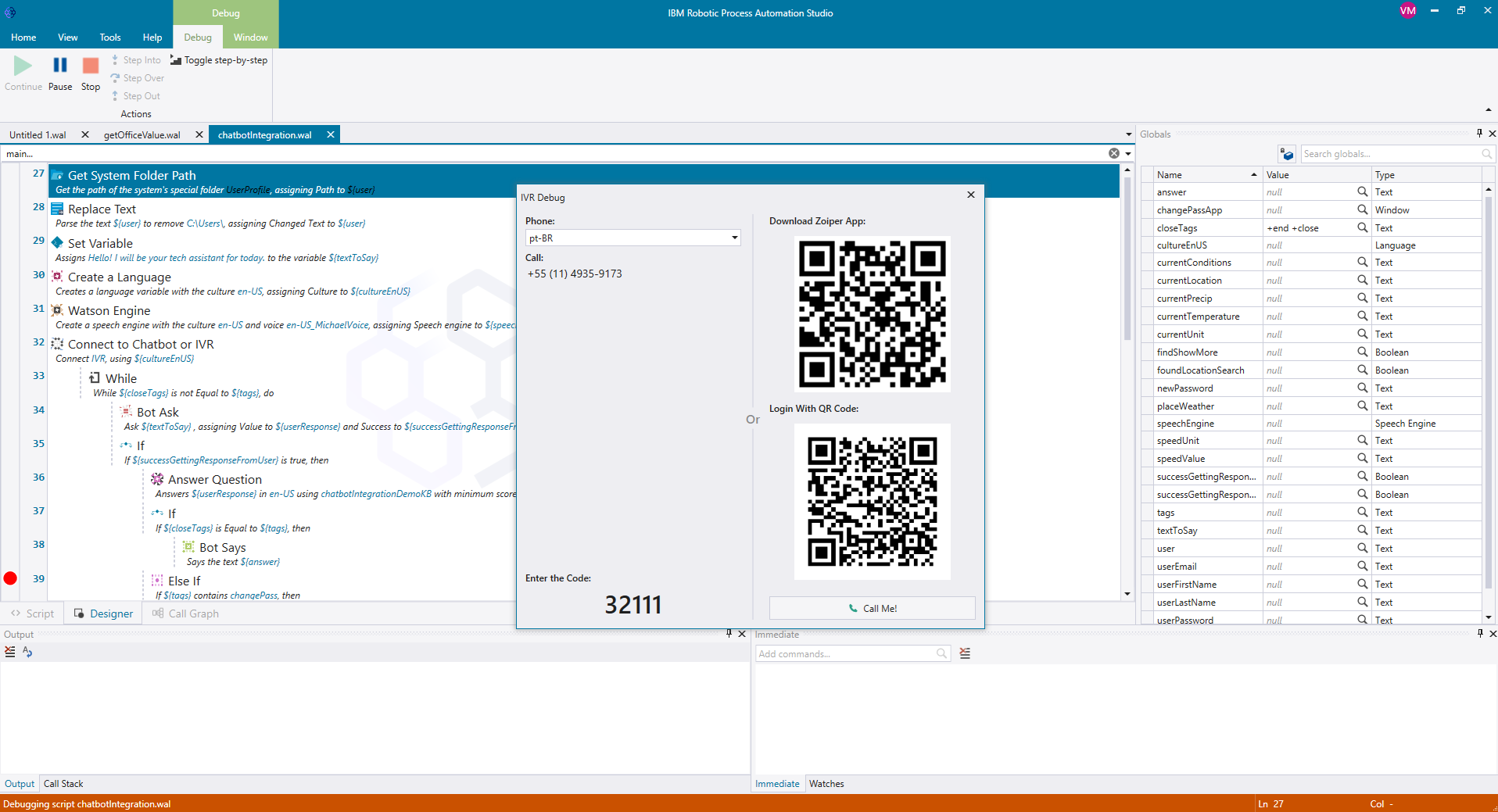
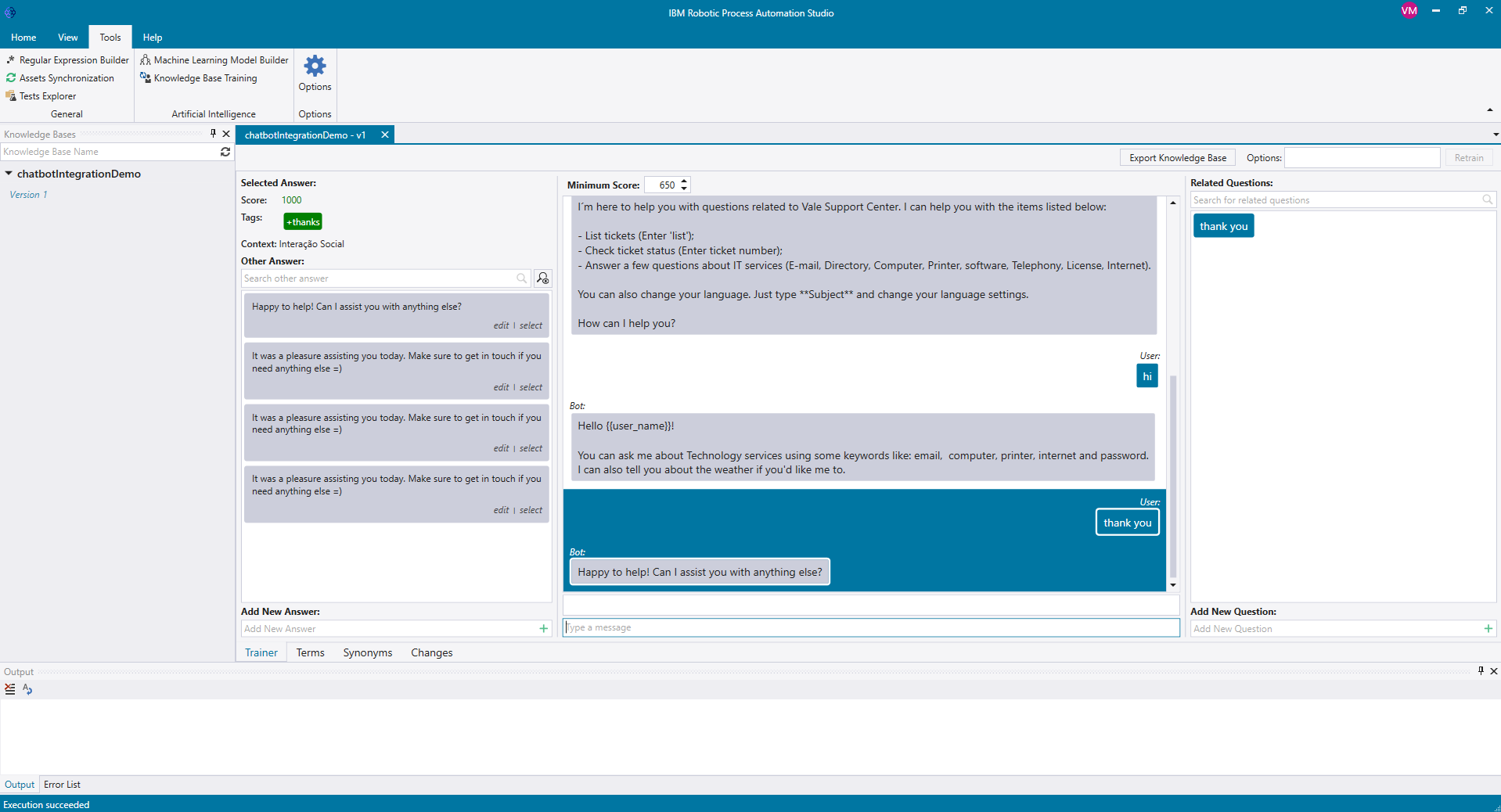
We recommend making improvements to the Chatbot integration and making it easier to build.
SpecFlow does not accepts optional input variables in the methods defined during Gherkin statement implementation. Cucumber supports optional input variables in the methods defined during Gherkin statement implementation.
The tests identified while using SpecFlow with NUnit removes all white spaces in the scenario names. It makes the tests less readable. If the white spaces are not auto-removed, it would be much better for readability as well as their actual identification in the repository.
IBM RPA is a very powerful tool, it has almost all the features that are necessary to build, implement and manage highly functional robots. The learning curve is very fast, so excellent skills are acquired. It is not necessary to have strong programming knowledge because its use is very easy. It is just drag and drop commands. By adding rules and logic, wonderful robots can be achieved.
IBM has done a great job with enablement for the product. There is documentation for use-cases, development videos for beginners, and a community forum that has proven useful for getting started with the application. Although the resources cannot solve every problem a developer comes across, they have been very beneficial to our technical team.
I am main developer of the this implementation. I have faced many chanllenges in implementation as IBM RPA not provided direct commands to automate Excel. I enjoyed in finding solution and best approach for the implementation
1.RPA Functionality: Both IBM RPA and Accenture RPA offer core RPA functionalities, such as the ability to automate rule-based, repetitive tasks, data entry, and data extraction from various applications and systems. 2.User-Friendly Design: Both platforms typically provide user-friendly interfaces and low-code or no-code development environments, allowing business users to create and manage automation processes without extensive coding knowledge. 3. Scalability: IBM RPA and Accenture RPA are designed to scale across an organization to address automation needs in various departments and processes.
SpecFlow is .Net based which supports C#. Behave is Python based. Cucumber is Java based. Ghost Inspector is no-code based but provides very limited testing features. We wanted to implement BDD so we rued out using Ghost Inspector. Most of the developers in my team are C# experts so it was decided for everyone's comfort to go for SpecFlow rather than Behave or Cucumber. It's import to have technical experts in the language of the automation framework because there are many situations where the solutions to the test automation needs are not straightforward and implementing those requires expertise in the related programming language.
IBM RPA can improve the accuracy and consistency of certain tasks, which can result in improved quality and reduced errors.
In our organization have IBM RPA has reduced the time required to complete certain tasks by up to 62%, which resulted in significant time and cost savings.
One of the impacts to our business was automating repetitive and manual tasks
Everyone stays on the same page regarding the behavior of existing functionalities whether it be technical or non-technical individuals. So there is less need for multiple people to get involved which saves time and thus money.
Reusing the same code through the implemented Gherkin statement saves test automation time and thus reduces cost.
We combine SpecFlow with other opensource testing technologies to make our automation framework more versatile which further saves costs for us.