IBM DevOps Test Performance helps software testing teams test earlier and more frequently by shifting testing left. IBM DevOps Test Performance validates the scalability of web and server applications, identifies the presence and cause of system performance bottlenecks and reduces load testing. Software testing teams can execute performance tests that analyze the impact of load on applications.
N/A
Tricentis NeoLoad
Score9.3 out of 10
N/A
Tricentis NeoLoad is a solution for continuous performance testing software to automate API and application load testing. It was developed by the French company Neotys and acquired by Tricentis, along with the company, in March 2021.
A de minimis incentive was given to thank the reviewer for their time. The incentive was not used to bias or drive a particular response, nor was the incentive contingent on a positive endorsement. More Info
Go for IBM RPT if: 1. You're testing a Java-based Web application with HTTP protocol 2. You wanted to distribute the load across machines easily 3. Your team is in learning phase/not really introduced to a wide range of performance testing tools Do not go for IBM RPT if: 1. You wanted to test REST or any other advanced protocols 2. Your system under test demands a very high user load 3. Your application is written in .NET or any other platform except Java.
A de minimis incentive was given to thank the reviewer for their time. The incentive was not used to bias or drive a particular response, nor was the incentive contingent on a positive endorsement. More Info
While Tricentis NeoLoad supports SAP GUI protocols, recording and maintaining test scripts for complex SAP transactions (like those in the OTC module) can be cumbersome.
For instance, we had challenges recording a VA01 (Sales Order Creation) transaction because of the dynamic nature of SAP screen fields and session handling. NeoLoad sometimes struggles to properly correlate or handle SAP’s SAPGUI Dynpro fields automatically.
A de minimis incentive was given to thank the reviewer for their time. The incentive was not used to bias or drive a particular response, nor was the incentive contingent on a positive endorsement. More Info
A de minimis incentive was given to thank the reviewer for their time. The incentive was not used to bias or drive a particular response, nor was the incentive contingent on a positive endorsement. More Info
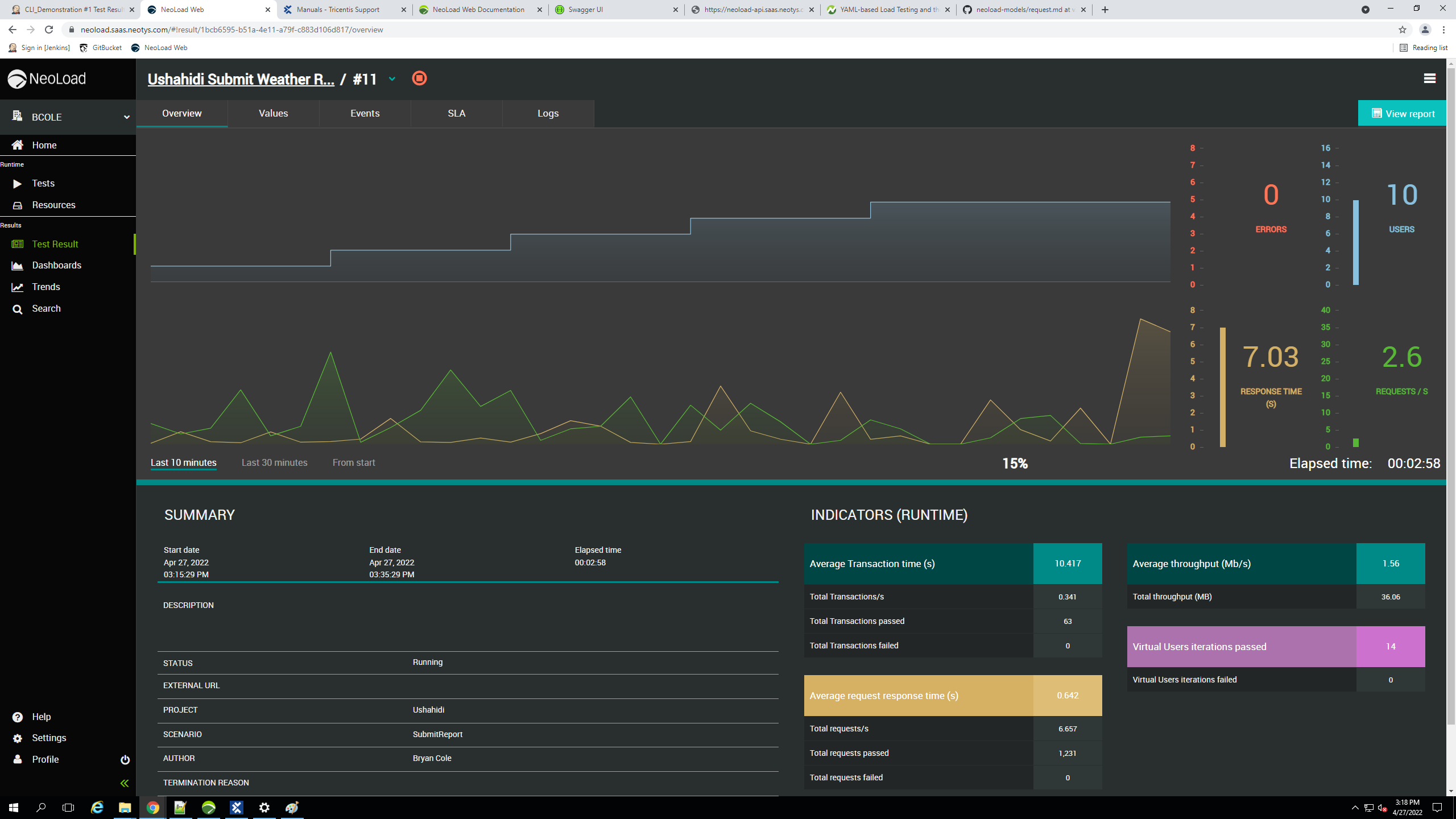
With Tricentis NeoLoad, we have control on the test dynamically. One can alter user count/volume even when test is in progress. This makes it a very cool tool as you can avoid running multiple tests eventually saves a lot of time.
Tricentis NeoLoad user paths are very well structured. End points can be identified and tweaked easily especially when a large list of endpoints are part of the neoload project.
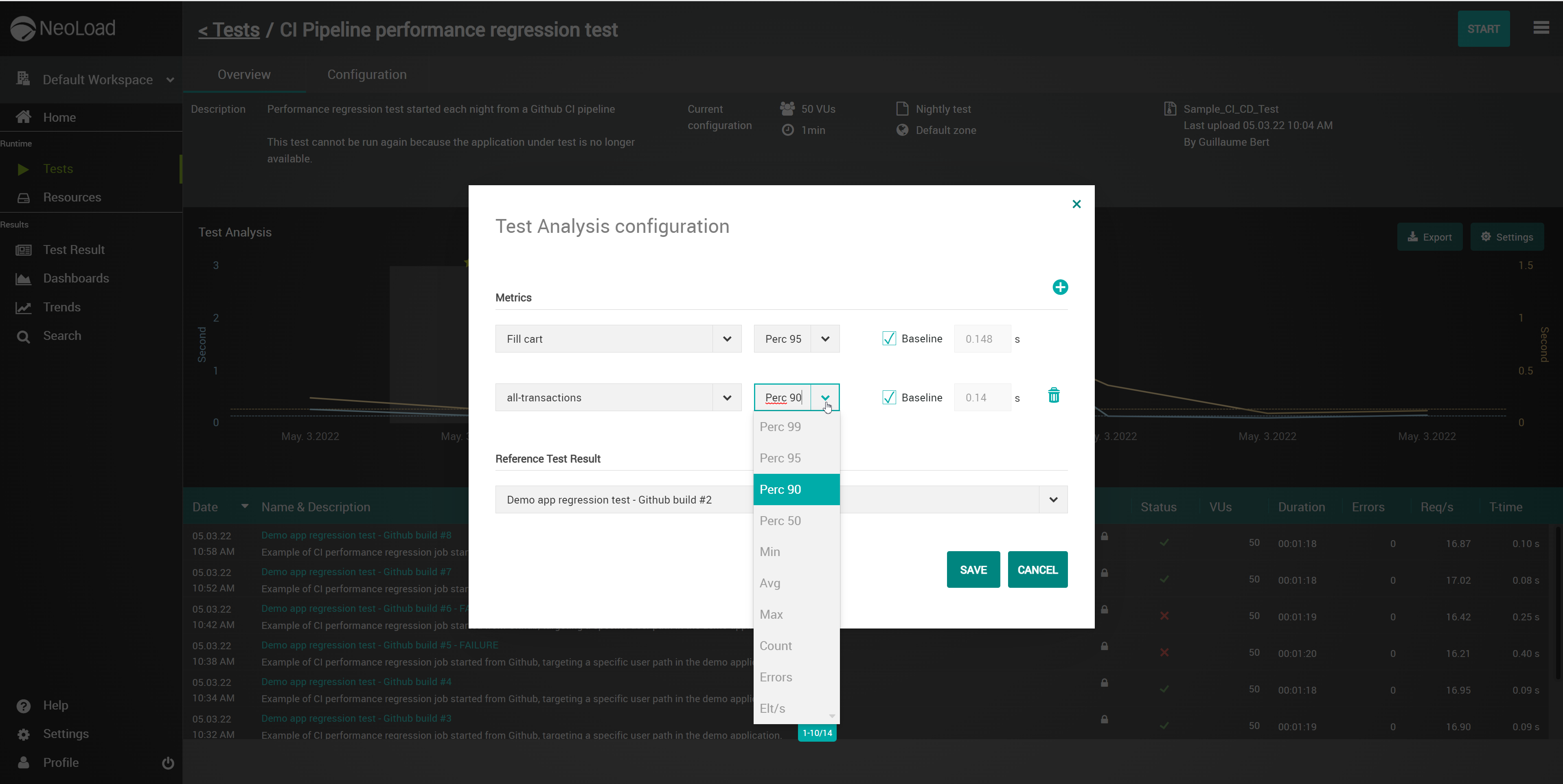
Tricentis NeoLoad results comparison is one of the cool options. We can compare previous tests against the current one to see the exact delta between transaction metrics. This helps in gauging the application behaviour with changes deployed
A de minimis incentive was given to thank the reviewer for their time. The incentive was not used to bias or drive a particular response, nor was the incentive contingent on a positive endorsement. More Info
Memory utilization could have been improved.(Eats up system's RAM)! It may crash if a test is conducted with the heavy load if adequate RAM is not available in the VM/host machine.
Licensing could have been made simpler. IBM's licensing method is difficult to follow.
Support for protocols other than HTTP. Not really up to the current trend.
A de minimis incentive was given to thank the reviewer for their time. The incentive was not used to bias or drive a particular response, nor was the incentive contingent on a positive endorsement. More Info
Ease of use: Some users find certain features or aspects of the interface to be confusing or hard to use. Improving the overall usability of the tool could make it more accessible and easier for users to get up and running with it.
Integration with other tools: Tricentis NeoLoad does not have many integrations with other tools. Adding more integrations with popular tools and platforms could make it easier for users to work with Tricentis NeoLoad as part of their overall workflow.
Mobile testing: Some users wish that Tricentis NeoLoad had more robust support for testing the performance of mobile applications. This could include the ability to simulate different mobile devices and networks, as well as the ability to test the performance of native mobile apps.
Cloud support: Tricentis NeoLoad does not have as much support for cloud-based applications and infrastructure. Adding more support for testing the performance of applications hosted in the cloud could be a useful feature for some users.
Advanced scripting capabilities: While Tricentis NeoLoad does offer some scripting capabilities, it would be nice to have more advanced options for customizing and automating load testing scenarios. Adding more advanced scripting capabilities could make it easier for users to create complex load testing scenarios.
A de minimis incentive was given to thank the reviewer for their time. The incentive was not used to bias or drive a particular response, nor was the incentive contingent on a positive endorsement. More Info
We find NeoLoad easy to use compared to their competitors. It requires minimal coding knowledge, also it is easy to train newcomers with NeoLoad. It also offers good integration and automation capability where with less code you can automate your testing process
A de minimis incentive was given to thank the reviewer for their time. The incentive was not used to bias or drive a particular response, nor was the incentive contingent on a positive endorsement. More Info
This is the only area where we strongly feel Tricentis needs to improve. Their support process is inadequate, representatives are not so capable of providing solutions at one shot without consulting their internal engineering teams. Most importantly, the time they take to resolve simple issues is huge and at many times hampered our work.
A de minimis incentive was given to thank the reviewer for their time. The incentive was not used to bias or drive a particular response, nor was the incentive contingent on a positive endorsement. More Info
A de minimis incentive was given to thank the reviewer for their time. The incentive was not used to bias or drive a particular response, nor was the incentive contingent on a positive endorsement. More Info
Cost/Licensing: While JMeter is an opensource testing tool from Apache, compared to IBM RPT and HP LoadRunner, RPT is much cheaper than Loadrunner. Functionality:JMeter provides basic functionalities which are adequate for performance testing, however advanced features are not available (such as load testing with GUI, reporting is very basic etc.). But when it comes to Loadrunner, it offers very broad features and supports a variety of protocols. So in this category, Loadrunner is a winner, but RPT is better than JMeter. Ease of operating:JMeter is easy compared to LoadRunner, but it has old GUI and look and feel is not that great to understand. Also, most of the things are to be done in a command line, non-GUI mode. While LoadRunner is very advanced with many options, which also confusing sometimes. But RPT, on the other hand, maintains a balance between simplicity and offering of different features. So winner: RPT.
A de minimis incentive was given to thank the reviewer for their time. The incentive was not used to bias or drive a particular response, nor was the incentive contingent on a positive endorsement. More Info
When we used Apache JMeter we faced some problems like less documentation is available for integrating tools, and some integrations have not yet been deployed. Very few plugin updates are made. Since customer support is an open source tool, it is a major problem. While Tricentis Neoload provides better documentations and customer services.
A de minimis incentive was given to thank the reviewer for their time. The incentive was not used to bias or drive a particular response, nor was the incentive contingent on a positive endorsement. More Info
A de minimis incentive was given to thank the reviewer for their time. The incentive was not used to bias or drive a particular response, nor was the incentive contingent on a positive endorsement. More Info
Performance testing is like an insurance. An online store which is not available causes a loss of sales. Without a performance test you do not know if it might happen. The invest into performance tests reduces the risk of loosing sales. The flexible license model of NeoLoad allows or customers to choose reasonable and suiteable rate.
A de minimis incentive was given to thank the reviewer for their time. The incentive was not used to bias or drive a particular response, nor was the incentive contingent on a positive endorsement. More Info