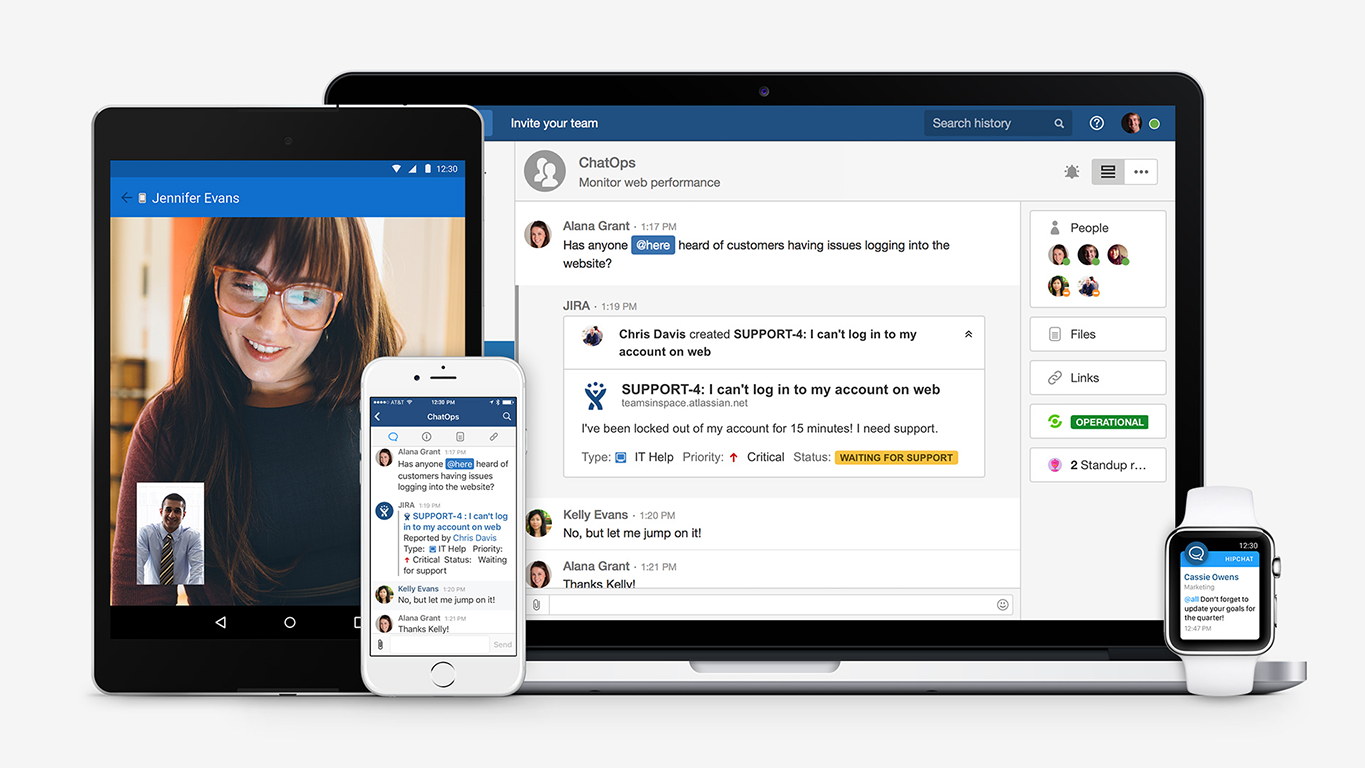
HipChat was discontinued by Atlassian because it wasn't as versatile as Slack and couldn't handle Video/Audio calls as well as Zoom. It lacked the screen sharing capabilities of Skype and ScreenHero (now owned by Slack). It wasn't great at any particular area and its competitors were obviously better in those areas. This lack of versatility negatively impacted it's adoption at GLG, and I'd imagine the rest of world as well. HipChat excels at instant messaging communication (which is the one thing they got right) and although you could make specific rooms to chat about certain topics, Slack was already doing this way better. Overall it's impossible to recommend this software today. If I recall it was very expensive compared to better and more feature rich competitors. If you're seeking a bare bones method of communication you may consider the free version of it, but outside of that scenario, you are almost certainly better off going with a different product.
Statuspage is a very straightforward yet reliable platform for communicating scheduled maintenance and unexpected downtime. We love the ability to automate maintenance windows and customize every aspect of the messaging. While in a situation where we have the degradation of services or downtime, the platform is easy to use, intuitive and reliable. The last thing I want is to spend a lot of time getting a message out, that time is better spent on handling interactions with customers and addressing the issue.
HipChat is very stable and reliable. I have never had issues with not being able to connect or being able to communicate with others on HipChat.
HipChat integrates quite well with other applications, such as Jira and Stash. This is a main selling point for my team. It provides a convenient feed of actions on a JIRA story or Stash pull request.
HipCat does a good job of allowing 1-1 and group chats. It is simple to start a new conversation and it is easy to hold a group conversation and keep track of who is in the room.
I like how HipChat has away/here/on mobile statuses. This makes it easy to see if a person is available to be contacted.
Mobile app is not very responsive on iOS. Sometimes connection to Hipchat servers is taking too long even on good networks.
Both mobile and desktop versions have no alphabetical or recent sorting for groups and chat rooms.
Video and audio calls are pretty useless, they're slow and not always work.
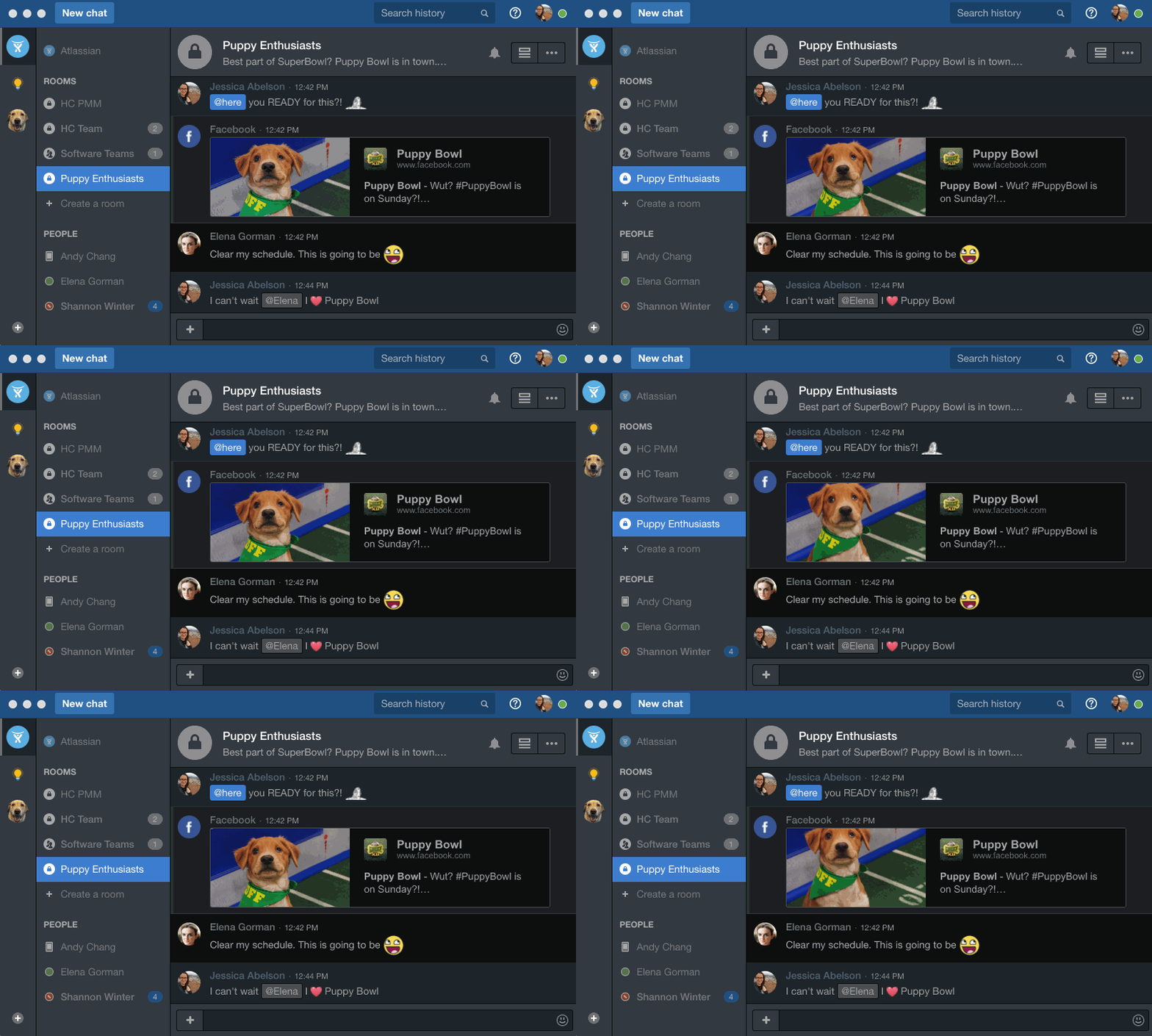
The whole user interface is simple but very outdated - apparently Atlassian didn't focus too much on Hipchat even though they tried in the last 2 years.
If you make a mistake, you need to edit on the various platforms like Twitter manually. I wish it would edit the Tweet or delete it and post a new one.
i like how its easy to login , create rooms or start private conversations . The best feature i like describing usability is searching history of conversation in either a room or private conversation just by typing single word .Easy file uploading and downloading .Mention feature is very easy to use which shows all the names starting with given letter .
HipChat support was one of the best I've encountered. When we faced difficult tasks in terms of updates to infrastructure (where HipChat sits on top) or updates to the application itself, HipChat support was very responsive to our questions, concerns, and comments. HipChat also had some really good online documentation. We were able to find step-by-step guidelines and documentation when implementing new features or installing new updates/patches.
Support is very responsive although we haven't had to contact them in a time of emergency, all of our support inquiries were answered in a timely manner and usually resolved with their first response. Support responsiveness played a big role in our decision since if we need help during downtime, we can't really afford to wait.
I've used Slack and it's much better app in comparison with HipChat. Slack is much faster than HipChat. Slack has strong user community and lot of documentation around how to use it. Product functionality and performance is superb with Slack compared to HipChat. Slack has more emojis and icons which brings them closer to how people use their cell phones in text conversations.
I would say StatusPage on its own is a great service. StatusPage for Hipchat can only be used with that specific chat client. But on its own StatusPage can be integrated with many tools, like Slack, email notifications, text notifications, etc. I don't know of a tool that compares with StatusPage. You could essentially host your own status site with Greed Yellow or Red statuses, but you would be missing out on the robustness of a tool that keeps historical data, uptime, and segregates services based on components.
Actually I never shared of HipChat using with more than 25 persons in team simultaneously, but I believe it can be scaled for much largest collaboration teams. At least it works flawlessly for us, with transparent integration with Jira, and I am not see any reasons for some troubles for work at big scale.
HipChat has increased the effiency with which I am able to communicate with my coworkers, particularly those who work out of other offices. Having a light, portable messaging solution has been beneficial for checking in on small things without the need to send emails or schedule phone calls.