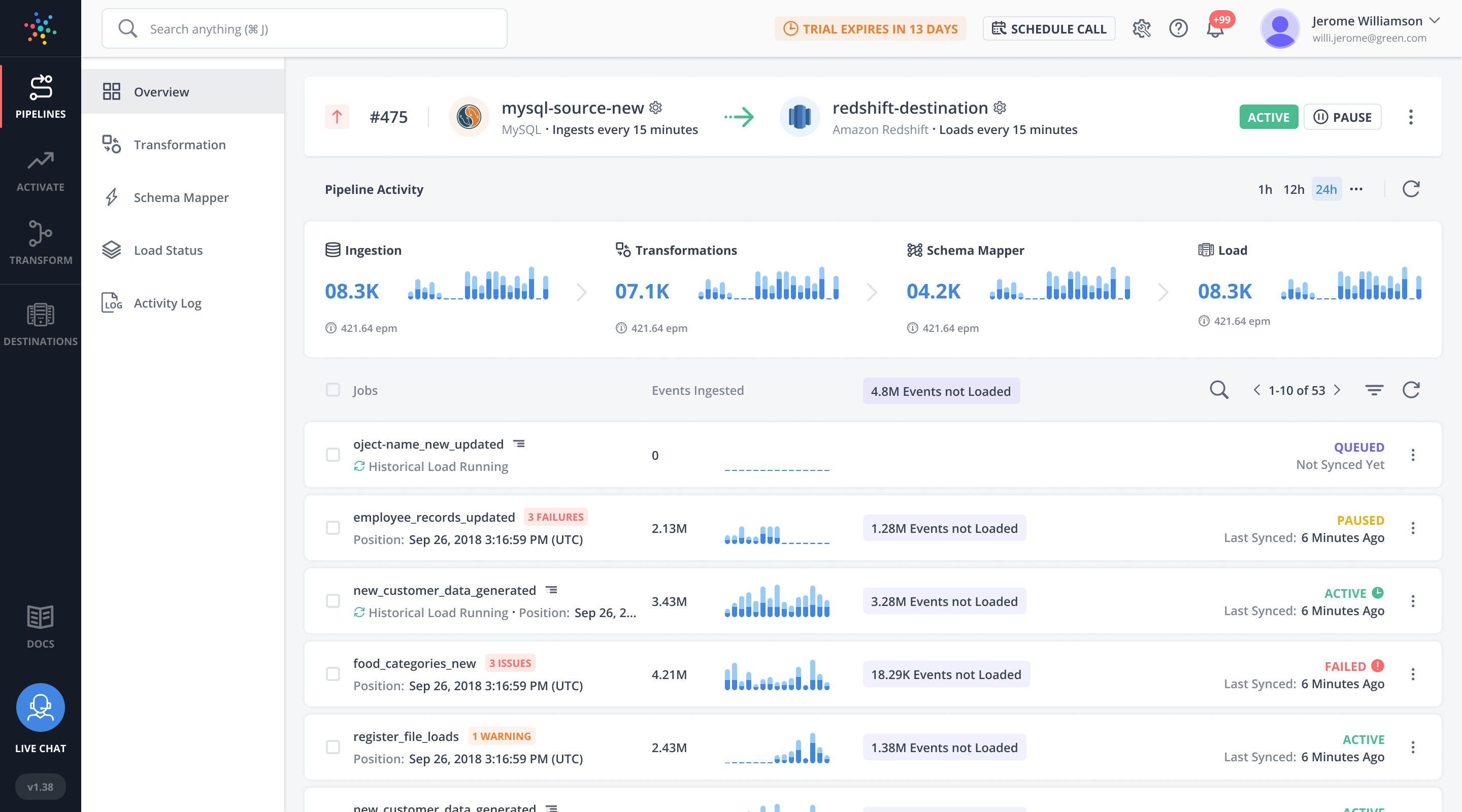
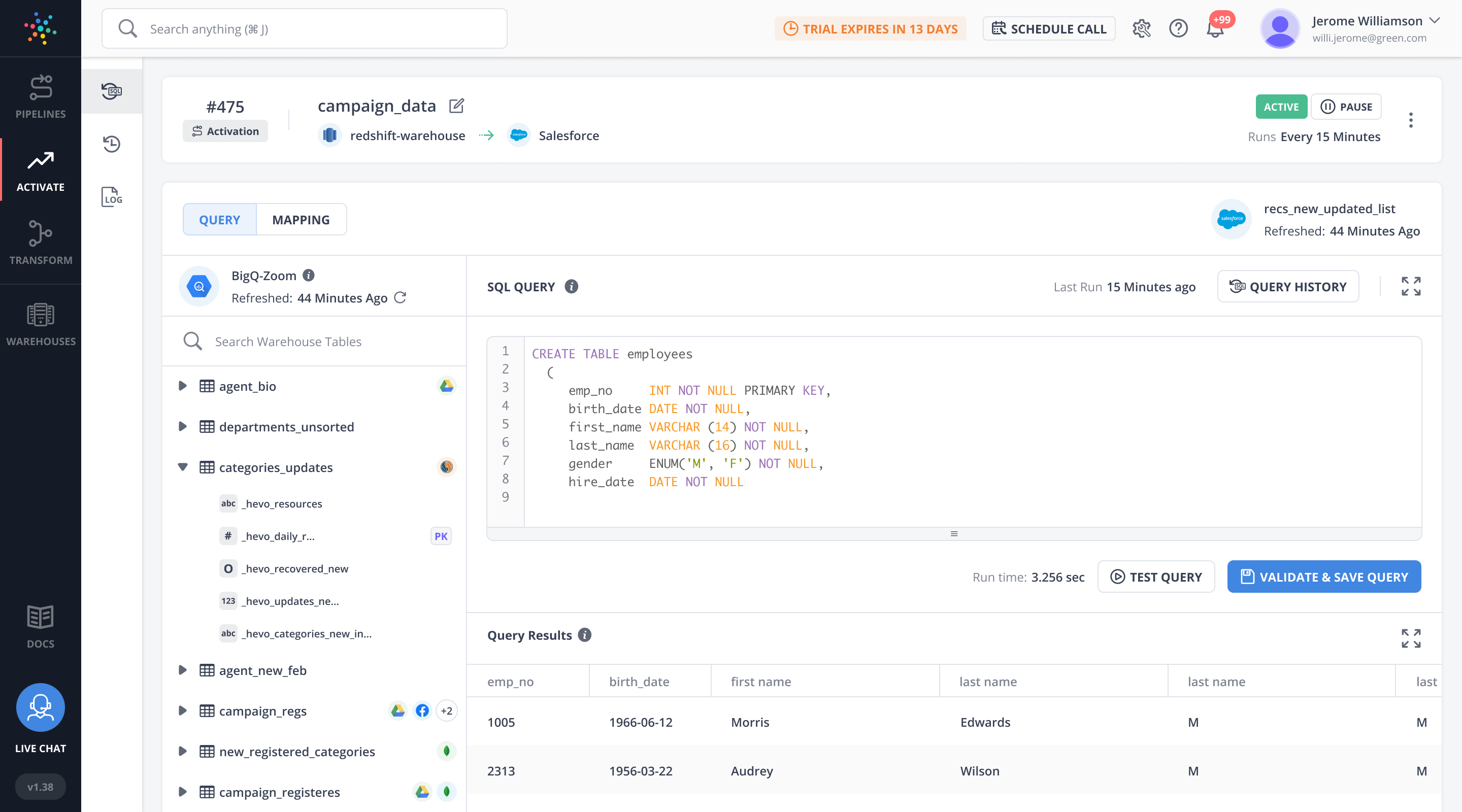
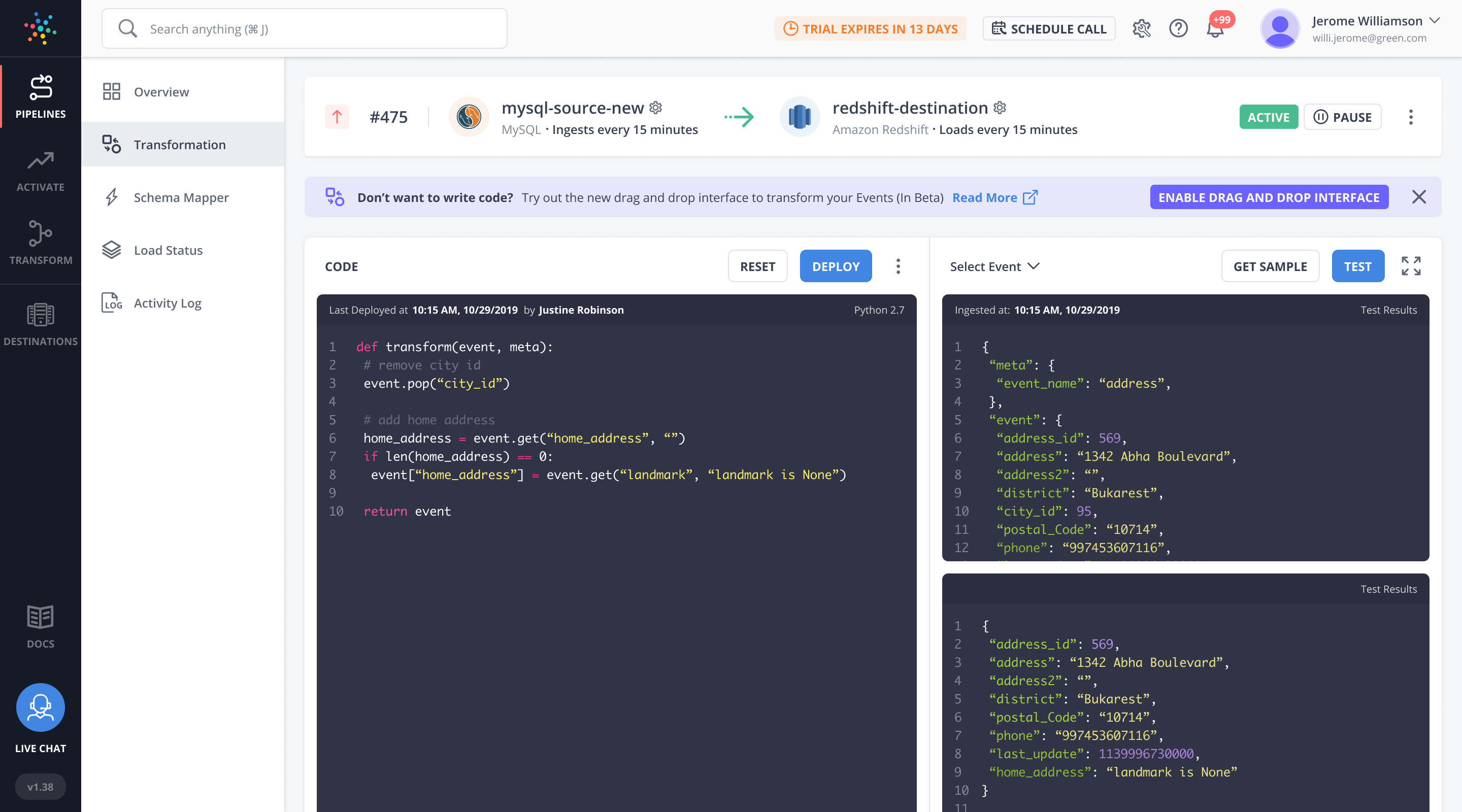
Hevo Data is a no-code, bi-directional data pipeline platform specially built for modern ETL, ELT, and Reverse ETL Needs. It helps data teams streamline and automate org-wide data flows to save engineering time/week and drive faster reporting, analytics, and decision making. The platform supports 100+ ready-to-use integrations across Databases, SaaS Applications, Cloud Storage, SDKs, and Streaming Services. The platform boasts 500 data-driven companies spread across 35+…
$149
per month
Skyvia
Score9.9 out of 10
Mid-Size Companies (51-1,000 employees)
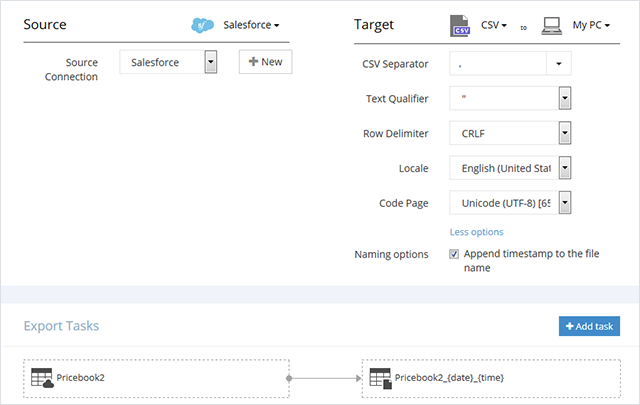
Skyvia is a no-code cloud data integration platform for ETL, ELT, Reverse ETL, data migration, one-way and bi-directional data sync, workflow automation, and real-time connectivity. Benefits of Using Skyvia: • Cost efficiency: With flexible pricing plans for each product, Skyvia suites for businesses of any size. • Flexibility: Skyvia provides adaptable, no-code integration tools for both basic and advanced business…
$99
per month
Pricing
Hevo
Skyvia
Editions & Modules
Free
$0
per month
Starter
$149 to $999
Per Month (Paid Yearly)
Business
Custom Pricing
Basic
$99
per month
Standard
$199
per month
Professional
$249
per month
Offerings
Pricing Offerings
Hevo
Skyvia
Free Trial
Yes
Yes
Free/Freemium Version
Yes
Yes
Premium Consulting/Integration Services
No
No
Entry-level Setup Fee
No setup fee
No setup fee
Additional Details
Hevo offers a Free Plan and a 14-day Free Trial for all the paid plans.
20% discount for annual pricing.
More Pricing Information
Community Pulse
Hevo
Skyvia
Considered Both Products
Hevo Data Inc.
No answer on this topic
Devart
Verified User
Chose Skyvia
Some may only look for results, but it is very important how you do it, the reliability of the work including unexpected peaks, as well as the final cost. Skyvia allows the developer to integrate the how, having more scope and intervention in decision-making based on data …
A de minimis incentive was given to thank the reviewer for their time. The incentive was not used to bias or drive a particular response, nor was the incentive contingent on a positive endorsement. More Info
It is of great help for unstructured data sources. The way Hevo Data flattens the high nested data is amazing. Schema management is also good by Hevo Data. The way it's tell about the data type and then we can identify any error in the model. Additionally, It is very easy to setup for any new user and once model is created then we do not have to worry about the script maintenance and updating the script daily.
A de minimis incentive was given to thank the reviewer for their time. The incentive was not used to bias or drive a particular response, nor was the incentive contingent on a positive endorsement. More Info
1. It can be connected to slack for companies that uses that system. 2. Also can be connected to Google Drive to share information from spreadsheets and csv data. 3. It works efficiently with WordPress websites which are the most used platform for web development. 4. It connects ORACLE's databases with different systems online and that's very useful.
A de minimis incentive was given to thank the reviewer for their time. The incentive was not used to bias or drive a particular response, nor was the incentive contingent on a positive endorsement. More Info
A de minimis incentive was given to thank the reviewer for their time. The incentive was not used to bias or drive a particular response, nor was the incentive contingent on a positive endorsement. More Info
A de minimis incentive was given to thank the reviewer for their time. The incentive was not used to bias or drive a particular response, nor was the incentive contingent on a positive endorsement. More Info
A de minimis incentive was given to thank the reviewer for their time. The incentive was not used to bias or drive a particular response, nor was the incentive contingent on a positive endorsement. More Info
Because as a developer and programmer is very easy to work with and provides many options to very complex problems. It provides guides for integration that are very useful and makes us save a lot of money and time on integrations. Also Skyvia is constantly adding more data systems on their lists for us to provide as web managers.
1. Cost efficient 2. Creation of automated pipeline 3. Can load data from multiple data sources 4. Updates data in near real-time - We were able to get near real time insights from the data model which we have created in hevo 5. It has good integration with different BI tools
A de minimis incentive was given to thank the reviewer for their time. The incentive was not used to bias or drive a particular response, nor was the incentive contingent on a positive endorsement. More Info
Compared to similar user-friendly data integration systems like Integrate.io, Stitch, or Azure, Skyvia still wins in the number of connectors and pricing policy. Skyvia is a tool for companies like ours, starving for simple but, at the same time, robust and cost-effective data transfer solutions. It doesn't require additional knowledge for implementation and usage because it's no code. We'd recommend Skyvia as the best solution for non-technical staff.
A de minimis incentive was given to thank the reviewer for their time. The incentive was not used to bias or drive a particular response, nor was the incentive contingent on a positive endorsement. More Info
A de minimis incentive was given to thank the reviewer for their time. The incentive was not used to bias or drive a particular response, nor was the incentive contingent on a positive endorsement. More Info
The core of our business lies in analyzing data from various sources, and while ETL itself is not our primary focus, it is a necessary process to achieve our goals. Thanks to Skyvia, we are able to streamline the ETL process at a reasonable price, allowing us to dedicate our efforts to data analysis without the burden of ETL complexities.
A de minimis incentive was given to thank the reviewer for their time. The incentive was not used to bias or drive a particular response, nor was the incentive contingent on a positive endorsement. More Info