HCSS is a construction software suite. It includes functionality for bidding, time card and project management, safety, planning, scheduling, equipment management, and data warehousing and reporting. Each module can be purchased separately. The suite can be hosted in the cloud.
N/A
Revit
Score 9.4 out of 10
N/A
Autodesk’s Revit is a Building Information Modelling (BIM) tool. It enables architectural, MEP, structural, and engineering design, and provides analysis to support iterative workflows
$350
per month
Pricing
HCSS
Revit
Editions & Modules
No answers on this topic
Monthly
$350
per month
1-Year
$2805
per year
3-Year
$8415
per 3 years
Offerings
Pricing Offerings
HCSS
Revit
Free Trial
No
Yes
Free/Freemium Version
No
No
Premium Consulting/Integration Services
No
No
Entry-level Setup Fee
Required
No setup fee
Additional Details
—
Pricing available for monthly, annual, or 3-year subscriptions. Longer subscriptions offer greater discounts.
More Pricing Information
Community Pulse
HCSS
Revit
Features
HCSS
Revit
Construction Project & Field Management
Comparison of Construction Project & Field Management features of Product A and Product B
HCSS
6.8
Ratings
11% below category average
Revit
7.3
Ratings
3% below category average
Plan distribution & viewing
6.90 Ratings
8.30 Ratings
Plan markups & sharing
6.00 Ratings
7.00 Ratings
Issue tracking & punchlists
9.90 Ratings
5.00 Ratings
Photo documentation
10.00 Ratings
8.00 Ratings
Jobsite reports
8.00 Ratings
6.00 Ratings
Document sharing
7.10 Ratings
10.00 Ratings
RFI tools
3.00 Ratings
7.00 Ratings
Collaboration & approvals
4.00 Ratings
7.00 Ratings
Mobile app
6.10 Ratings
3.80 Ratings
As-built drawings
00 Ratings
9.00 Ratings
Submittal design and management
00 Ratings
7.50 Ratings
Checklists
00 Ratings
7.20 Ratings
Meeting Minutes
00 Ratings
6.70 Ratings
Specifications
00 Ratings
10.00 Ratings
Change orders
00 Ratings
7.50 Ratings
Human Resource Management
Comparison of Human Resource Management features of Product A and Product B
HCSS
-
Ratings
Revit
6.7
Ratings
13% below category average
Employee demographic data
00 Ratings
6.70 Ratings
Employment history
00 Ratings
6.70 Ratings
Job profiles and administration
00 Ratings
6.30 Ratings
Workflow for transfers, promotions, pay raises, etc.
00 Ratings
7.40 Ratings
Organizational charting
00 Ratings
6.50 Ratings
Organization and location management
00 Ratings
6.90 Ratings
Compliance data (COBRA, OSHA, etc.)
00 Ratings
6.10 Ratings
Payroll Management
Comparison of Payroll Management features of Product A and Product B
HCSS
-
Ratings
Revit
7.2
Ratings
6% below category average
Pay calculation
00 Ratings
7.40 Ratings
Support for external payroll vendors
00 Ratings
6.60 Ratings
Off-cycle/On-Demand payment
00 Ratings
7.40 Ratings
Benefit plan administration
00 Ratings
7.10 Ratings
Direct deposit files
00 Ratings
7.10 Ratings
Salary revision and increment management
00 Ratings
7.40 Ratings
Reimbursement management
00 Ratings
7.60 Ratings
Asset Management
Comparison of Asset Management features of Product A and Product B
HCSS
-
Ratings
Revit
6.6
Ratings
8% below category average
Tracking of all physical assets
00 Ratings
6.60 Ratings
Reporting & Analytics
Comparison of Reporting & Analytics features of Product A and Product B
HCSS
-
Ratings
Revit
8.6
Ratings
12% above category average
Dashboards
00 Ratings
4.40 Ratings
Standard reports
00 Ratings
10.00 Ratings
Custom reports
00 Ratings
10.00 Ratings
Data exportability
00 Ratings
10.00 Ratings
Estimating
Comparison of Estimating features of Product A and Product B
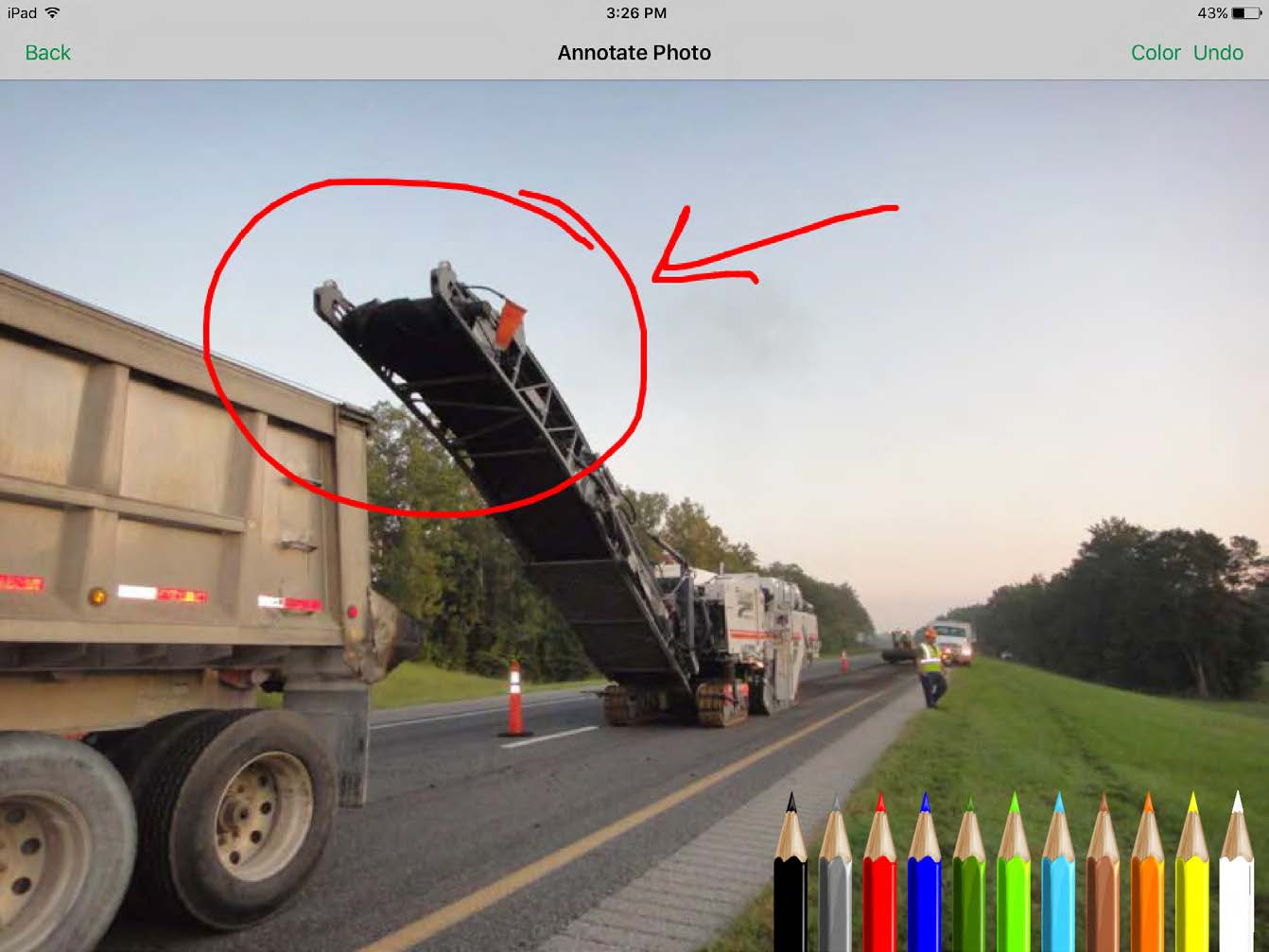
Our operation uses several pieces of what we call specialty equipment (not used every day on every job). The foreman when finished will give a location of where this equipment is left, this many times can be very vague and lead to a lowboy driver trying to block around to find the piece or driving down a street he cannot get turned around in. With the GPS devices, the driver can pinpoint exactly where the unit is and if he has room to turn around at that location.
Revit is well suited for creating collaborative projects that are fully integrated into the design and construction document process. We work a lot with engineering firms who also use Revit and the program allows us to fully integrate and coordinate our models together to make sure that everything is correct. I can see where my electrical engineer has placed lighting into the model and same with my mechanical engineer and their HVAC equipment
#1 is support! HCSS is by far the best software support of any product we have ever used. Unlike most software companies HCSS utilizes their support calls to help upgrade their software. When you here them tell you that they will write down a particular issue you come across during a support call if they can't help you then and there they will research and get an answer to you extremely fast. If the software will not do it, you can bet there is a good chance it will be on the list of enhancements you will see come out in the near future.
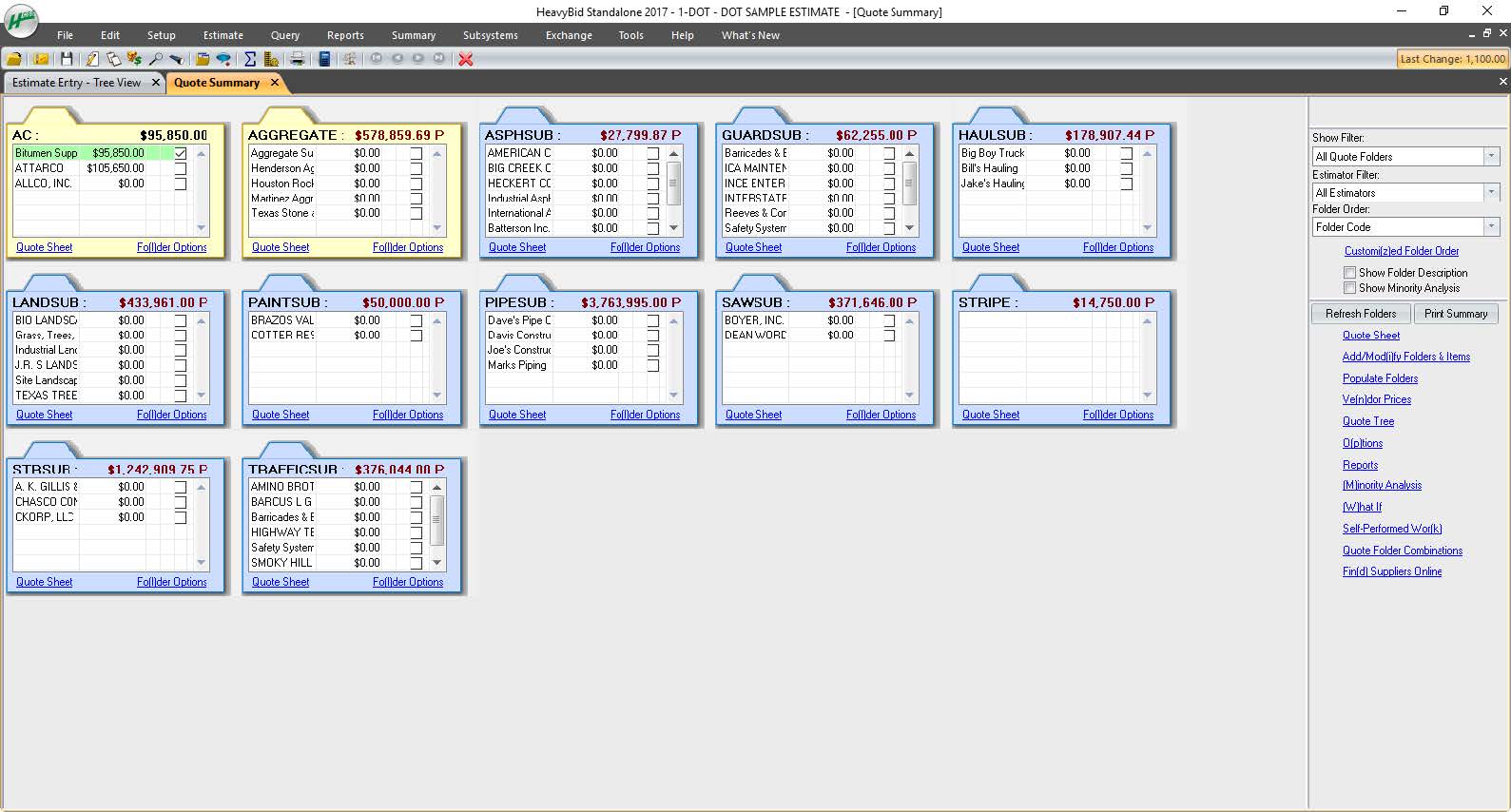
Estimating software is very extensive. Their software is capable of handling the smallest estimate all the way to the largest joint venture estimate. It has advanced features that make it extremely useful for analyzing job materials, subcontractors etc.
HeavyJob is an extremely useful tool for the field to keep the office up to date with job costs. Everything is at the Foreman's fingertips on Tablets to allow the information from the field to get uploaded to HeavyJob manager which then can export to accounting. We are also able to give our Foreman the ability to deal with the Daily and weekly safety needs (Tailgate Meetings, incident Investigation, observations etc.) right on the Tablets thru HeavyJob.
All their apps are on mobile devices. Although there is not a clear company policy on Android versus iPhone. Updates for features lag behind on Android. Some apps are exclusive to one platform making it hard to fully interconnect all programs.
Revit is a very complex application with lots features. Autodesk the makers of Revit should simplify these tools to make it easier for the end user to learn & apply.
Revit is missing some key functionality in the area of being able to duplicate drawings on the sheet level. Though there are macros offered by third parties, this should be really built-in to the product.
Revit does not support the very popular PDF format. So currently there is no option to attach or link a PDF file into Revit.
We will almost certainly be renewing all of our current seats of Revit and will likely be adding seats as we look to get more and more of our staff trained and using Revit. The software is starting to become the standard for our projects as we move forward as more and more of our clients are requesting or accepting use of it
As mentioned, user interface appears messy and complicated at initial onset. Training is necessary but becomes easy to maneuver through after solid daily use.
It is a professional environment, but far from easy and overly complex in many places. The system is often too deep in settings and overrides (see Visibility/Graphics in combination with linked files, filters, color overrides and view templates). I don't really like the dialog-in-dialog interface and its spartan looks. But it works well overall if you know what you are doing.
Revit seems to always be available when I need it. I have not experiences an outage. There are occasions where we need our internal IT department to trouble shoot a file on our Revit dedicated server and that sometimes causes a delay however that is not a software access issue
Revit is a fairly graphics heavy piece of software. It is powerful in its capabilities but as a result it takes a lot of the graphics card, the memory, etc. For all that it can do and the specs of my computer I find it pretty good from a performance standpoint
The people at HCSS who I interact with, whether it is a support technician, product manager, or the HCSS President, Mike Rydin, are as passionate at making construction management for heavy civil contractors a valuable experience as I am. They want to get us emphatic, project management addicted people in to tell them why their product is not working, and work with us to design the software to work for us. HCSS is good for the heavy civil contractor; it is going to help us to manage our projects with precision, accuracy, and accountability.
Autodesk has always had a good support system in place. There is a massive user base for Revit, and there are thousands of forum threads and other discussions online about any and every problem that you could ever run into. For being such a large program with so many different options, there aren't many roadblocks or pitfalls that users can fall into.
The training was Revit Essentials and it was very beneficial. I would say that it is best to get the training right before you know you will be using Revit as learning the basis then applying what you learned immediately is the most effective and best value for your money.
The online training is hit or miss. I feel that its better to be live to be able to pace and ask questions to a live person as you are learning hwo to do things. Its not natural to learn Revit especially if you know AutoCAD so my suggestion is the live training
It is critical to select the right team to take to HCSS for implementation. They take very good care of you and your team and listen to all of your concerns. During implantation we often discuss wants and needs with VPs and Officers as they pass through to check on our progress.
Implementing Revit as your main drafting software (i.e. moving to BIM from CAD) may be a tough decision if you have learned drafting. It is a different way to approach and think about developing a project. However, if you are able to adapt to a new way of thinking and get used to it by working through a few projects than it is as efficient as CAD in most areas in general and will also be both better/worse in some areas
We researched other software companies but none provided the depth of support and knowledge that HCSS brought to the table. HCSS is also always growing and listening to its customers. Customer support seems to remain the backbone of the company that is always striving to grow with the industry.
Revit is specifically for the design and documentation of buildings. As Revit's predecessor, AutoCAD has similar functionality for creating construction documents but Revit has the advantage of speed and simultaneously creating a 3D model when drawing walls, rooms, and floors which allows for the creation of 3D views and sections later with less effort. SketchUp can also be used for designing buildings but Revit allows for more specificity earlier in the process as opposed to SketchUp's general massing
While I am not directly involved with the deployment of Revit, it seems that our internal IT department has appreciated the ability to increase or decrease the number of seats. I have never had an issue with the deployment if and when needed, especially regarding the availability of a set
Revit is included in our AEC Collection. I find the cost of my suite affordable for what I am getting. The true cost of Revit is not found in the license cost, but in the training, SOPs and content management. We get our ROI from flushing out design errors/omissions which can add up to a large number. One issue can easily cost the project 10-100k depending on the issue. I see no reason anyone would find it challenging to get ROI from integrating 3d modeling in your business development.
Revit really is the foundation of content creation. If we didnt use Revit, it would be hard to claim we have a functioning BIM/VDC department. I would question any AEC professional that claims they can perform VDC and does not know how to use Revit.