Google Cloud SQL is a database-as-a-service (DBaaS) with the capability and functionality of MySQL.
$0
per core hour
Oracle Autonomous Database
Score 9.1 out of 10
N/A
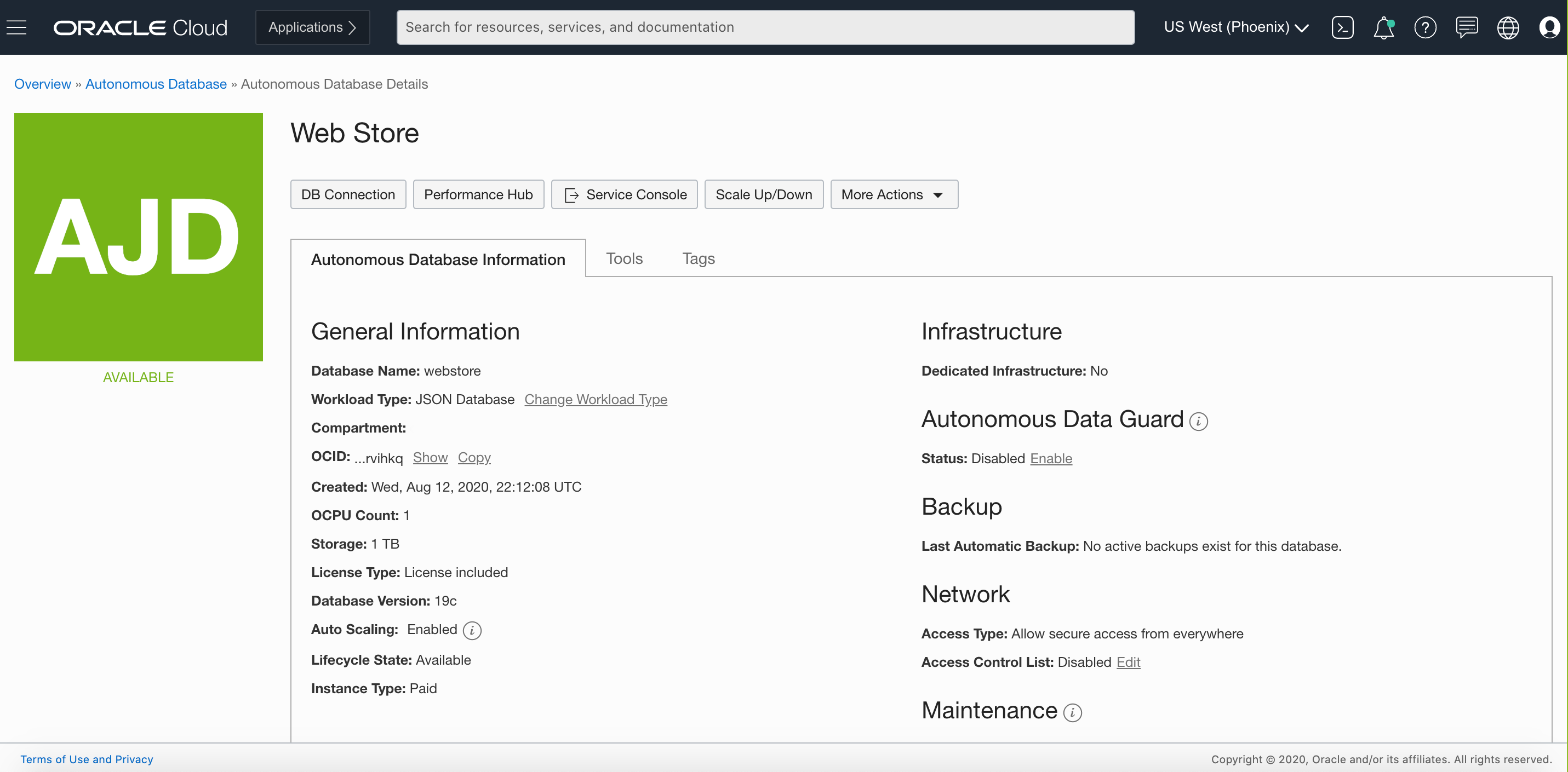
Oracle Autonomous Database provides a self-driving, self-securing, self-repairing cloud service that eliminate the overhead and human errors associated with traditional database administration. Oracle Autonomous Database takes care of configuration, tuning, backup, patching, encryption, scaling, and more.
N/A
Pricing
Google Cloud SQL
Oracle Autonomous Database
Editions & Modules
License - Express
$0
per core hour
License - Web
$0.01134
per core hour
Storage - for backups
$.08
per month per GB
HA Storage - for backups
$.08
per month per GB
Storage - HDD storage capacity
$.09
per month per GB
License - Standard
$0.13
per core hour
Storage - SSD storage capacity
$.17
per month per GB
HA Storage - HDD storage capacity
$.18
per month per GB
HA Storage - SSD storage capacity
$.34
per month per GB
License - Enterprise
$0.47
per core hour
Memory
$5.11
per month per GB
HA Memory
$10.22
per month per GB
vCPUs
$30.15
per month per vCPU
HA vCPUs
$60.30
per month per vCPU
No answers on this topic
Offerings
Pricing Offerings
Google Cloud SQL
Oracle Autonomous Database
Free Trial
Yes
Yes
Free/Freemium Version
No
Yes
Premium Consulting/Integration Services
No
No
Entry-level Setup Fee
No setup fee
Optional
Additional Details
Pricing varies with editions, engine, and settings, including how much storage, memory, and CPU you provision. Cloud SQL offers per-second billing.
—
More Pricing Information
Community Pulse
Google Cloud SQL
Oracle Autonomous Database
Features
Google Cloud SQL
Oracle Autonomous Database
Database-as-a-Service
Comparison of Database-as-a-Service features of Product A and Product B
Google Cloud SQL
9.3
Ratings
7% above category average
Oracle Autonomous Database
-
Ratings
Automatic software patching
9.60 Ratings
00 Ratings
Database scalability
9.50 Ratings
00 Ratings
Automated backups
9.70 Ratings
00 Ratings
Database security provisions
9.50 Ratings
00 Ratings
Monitoring and metrics
8.20 Ratings
00 Ratings
Automatic host deployment
9.00 Ratings
00 Ratings
Database Development
Comparison of Database Development features of Product A and Product B
Google Cloud SQL
-
Ratings
Oracle Autonomous Database
7.2
Ratings
17% below category average
Version control tools
00 Ratings
6.20 Ratings
Test data generation
00 Ratings
5.70 Ratings
Performance optimization tools
00 Ratings
8.20 Ratings
Schema maintenance
00 Ratings
9.00 Ratings
Database change management
00 Ratings
7.00 Ratings
Database Administration
Comparison of Database Administration features of Product A and Product B
Does what it promises well, for instance, as a sidecar for the main enterprise data warehouse. However, I would not recommend using it as the main data warehouse, particularly due to the heavy business logic, as other dedicated tools are more suitable for ensuring scalable operations in terms of change management and multi-developer adjustments.
Scenarios where this is best suited are like where there are not large set of data which has to be analyzed and extracted.It helps in the efficiency of data .It is also well suited for medium size companies where you have to create a common data for everyone. As for large set of data, there can be network latency issues and thus there are some limitations of this software.
There is no access to the physical host of the DB. This is expected from a managed DB. Everything must be done through the console or via API calls. This is a new learning curve for the DBAs.
Due to the lack of physical host access, certain features are not supported, such as Transportable tablespaces and Oracle LogMiner.
Certain special data types, (such as XMLType) are not allowed; be sure the app vendor certifies their product on this platform.
Autonomous is the way of the future and this is one system which is crucial to any system and is also autonomous. It is self-tuning and self-maintaining which are major advantages.
As with other cloud tools, users must learn a new terminology to navigate the various tools and configurations, and understand Google Cloud's configuration structure to perform even the most basic operations. So the learning curve is quite steep, but after a few months, it gets easier to maintain.
The product is continuously evolving and new features are added frequently. Management options through the OCI (Oracle Cloud Infrastructure) console and through the command line and API are being enhanced frequently.
GCP support in general requires a support agreement. For small organizations like us, this is not affordable or reasonable. It would help if Google had a support mechanism for smaller organizations. It was a steep learning curve for us because this was our first entry into the cloud database world. Better documentation also would have helped.
Unlike other products, Google Cloud SQL has very flexible features that allow it to be selected for a free trial account so that the product can be analyzed and tested before purchasing it. Integration capabilities with most of the web services tools are easier regarding Google Cloud SQL with its nature and support.
Hands down it's the best. It's secure and extremely fast. It also doesn't need a lot of babysitting. It's running itself. It does its job as advertised. This is why I feel everyone should if they haven't already taken a hard look OAD. I feel it's the future of technology at its best. Everyone should be taking notice of how far technology has come and where it's going.