The Google Cloud Operations Suite (formerly Stackdriver) is an APM platform based on three tools for error detection, tracing, and resolution. It manages cloud-based or on-premise applications in live or mid-production environments.
$0.01
per 1,000 read API calls
SolarWinds AppOptics
Score 8.1 out of 10
N/A
SolarWinds AppOptics (formerly Librato) is an IT infrastructure monitoring service and APM, based on technology acquired by SolarWinds with Librato in 2015 to expand its cloud monitoring portfolio.
N/A
Pricing
Google Cloud Operations Suite
SolarWinds AppOptics
Editions & Modules
Monitoring API Calls
$0.01
per 1,000 read API calls
Trace Ingestion
$0.20
per million spans
Monitoring Data
$0.26
per MB
Logging Data
$0.50
per GB
No answers on this topic
Offerings
Pricing Offerings
Google Cloud Operations Suite
SolarWinds AppOptics
Free Trial
No
Yes
Free/Freemium Version
No
No
Premium Consulting/Integration Services
No
No
Entry-level Setup Fee
No setup fee
No setup fee
Additional Details
—
—
More Pricing Information
Community Pulse
Google Cloud Operations Suite
SolarWinds AppOptics
Features
Google Cloud Operations Suite
SolarWinds AppOptics
Application Performance Management
Comparison of Application Performance Management features of Product A and Product B
Stackdriver is really a very good tool for errors and reporting. It provides the application issues especially the exception errors and sends the alerts. It's available for multiple languages like Python, GO and Java, etc. The best part is all the application errors are available at a single place and it comes with the GAE application. It's slow if you want to search very old logs and need to wait couple of hrs sometimes.
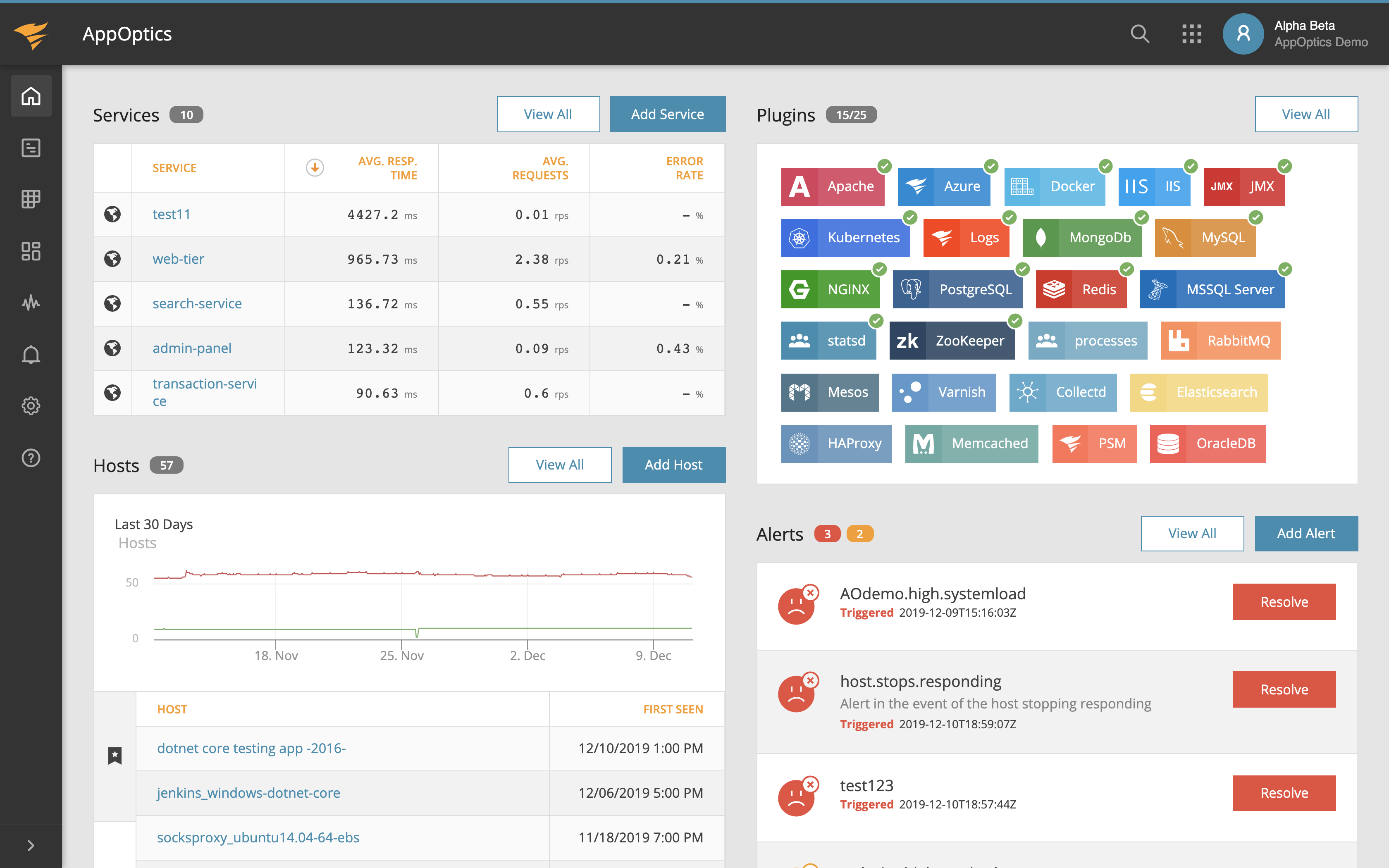
AppOptics is good for small to medium-sized organizations with less than 150 servers or less than 40 services to monitor. It performs well for this use case where people need to get an overview of application performance, and 95%ile data is okay. Somewhere every data point and every record is critical; it should be avoided.
The only thing that I would add is the possibility to display every single query our servers receive to eventually analyze them and query through them. We could also generate nice visualizations from that. Right now I believe we can only see averages.
AppOptics has performed well for all of the major functions we have needed it for. Especially when it comes to tracking down response time issues and researching app performance for different pages and different times of day we have been able to do everything we need to. We know there are some more advanced features that could help us in more niche areas, but haven't had the time to delve deeper into using or setting them up.
It is also a great problem detection tool, and this is extremely important for General Motors.
The user can count on the ease of flexible panels and advanced visualization tools that help to identify problems. Among the most common, we can mention:
- containment of hosts;
- cloud provider limitation;
- hardware wear.
And also Stackdriver Integration with other Google Cloud data tools such as BigQuery, Cloud Pub/Sub, Cloud Storage and Cloud Database.
Solarwinds AppOptics is rated as 9 out of 10 and the reason is there are still few areas where AppOptics needs to improve such as Service Now Integration, GCP Cloud Support, Better Dashboard visualization for application transactions flow. Other than these feature everything is there in AppOptics and that's a reason given 9 points out of 10.
Honestly, because it is from Google, we also mainly chose this product on the recommendation of other friends and businesses, and because of its reliability, security and ease of access. It also has excellent technical support and warranty. The staff is fast and super efficient and always helps us when we need help.
What we found positive in AppOptics from others is:
Easy to install and manage.
Various stack support.
Point to point deep-dive metrics and correlation.
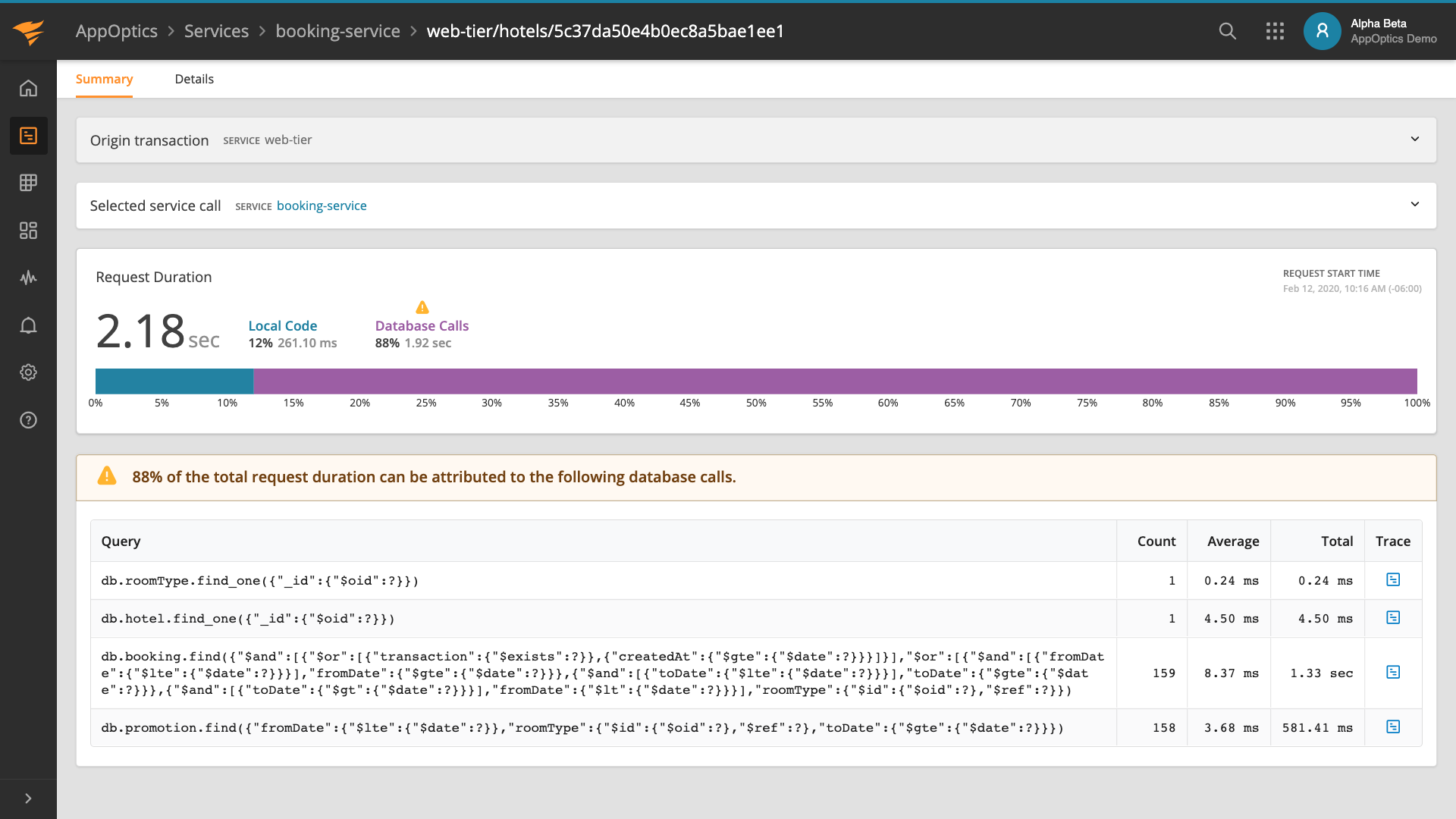
Metrics like DB connection, query analysis, latency in API calls, and other connections, response codes for various APIs, etc are the key ones in our case, which AppOptics provides efficiently.