
Galaxy vs. Liquibase
Galaxy vs. Liquibase
| Product | Rating | Most Used By | Product Summary | Starting Price |
|---|---|---|---|---|
 Galaxy | Small Businesses (1-50 employees) | Galaxy is presented as Cursor for software engineers and data practitioners, and as a modern SQL editor with features like an AI copilot, sharing and collaboration, as well as access control and security. Galaxy’s base product is a fast SQL editor with reworked parameterization, auto-complete, and table metadata to make data discovery and analysis more reliable and convenient for developers. Galaxy’s AI copilot is context-aware - meaning… | N/A | |
 Liquibase | Enterprise companies (1,001+ employees) | Liquibase is a database change management tool that extends DevOps best practices to the database, helping teams release software faster and safer by bringing the database change process into existing CI/CD automation. According to the 2021 Accelerate State of DevOps Report, elite performers are 3.4 times more likely to incorporate database change management into their process than low performers. Liquibase value proposition: Liquibase speeds up the development… | N/A |
| Galaxy | Liquibase | |||||||||||||||
|---|---|---|---|---|---|---|---|---|---|---|---|---|---|---|---|---|
| Editions & Modules | No answers on this topic | No answers on this topic | ||||||||||||||
| Offerings |
| |||||||||||||||
| Entry-level Setup Fee | No setup fee | No setup fee | ||||||||||||||
| Additional Details | — | — | ||||||||||||||
| More Pricing Information | ||||||||||||||||
| Galaxy | Liquibase |
|---|
| Galaxy | Liquibase | |
|---|---|---|
| Small Businesses |  DBeaver Score 9.2 out of 10 | DBeaver Score 9.2 out of 10 |
| Medium-sized Companies | DBeaver Score 9.2 out of 10 | DBeaver Score 9.2 out of 10 |
| Enterprises | DBeaver Score 9.2 out of 10 | DBeaver Score 9.2 out of 10 |
| All Alternatives | View all alternatives | View all alternatives |
| Galaxy | Liquibase | |
|---|---|---|
| Likelihood to Recommend | - (0 ratings) | 8.0 (0 ratings) |
| Likelihood to Renew | - (0 ratings) | 9.1 (0 ratings) |
| Usability | - (0 ratings) | 9.1 (0 ratings) |
| Support Rating | - (0 ratings) | 7.4 (0 ratings) |
| Implementation Rating | - (0 ratings) | 9.1 (0 ratings) |
| Galaxy | Liquibase | |
|---|---|---|
| Likelihood to Recommend |  No answers on this topic | 
|
| Pros | No answers on this topic |
|
| Cons | No answers on this topic |
|
| Likelihood to Renew | No answers on this topic |
|
| Usability | No answers on this topic |
 BISWA MAHAPATRA Lead DBA |
| Support Rating | No answers on this topic |
|
| Implementation Rating | No answers on this topic |
|
| Alternatives Considered | No answers on this topic |
|
| Return on Investment | No answers on this topic |
 Stephanie Williams Data Architect |
| ScreenShots | Galaxy Screenshots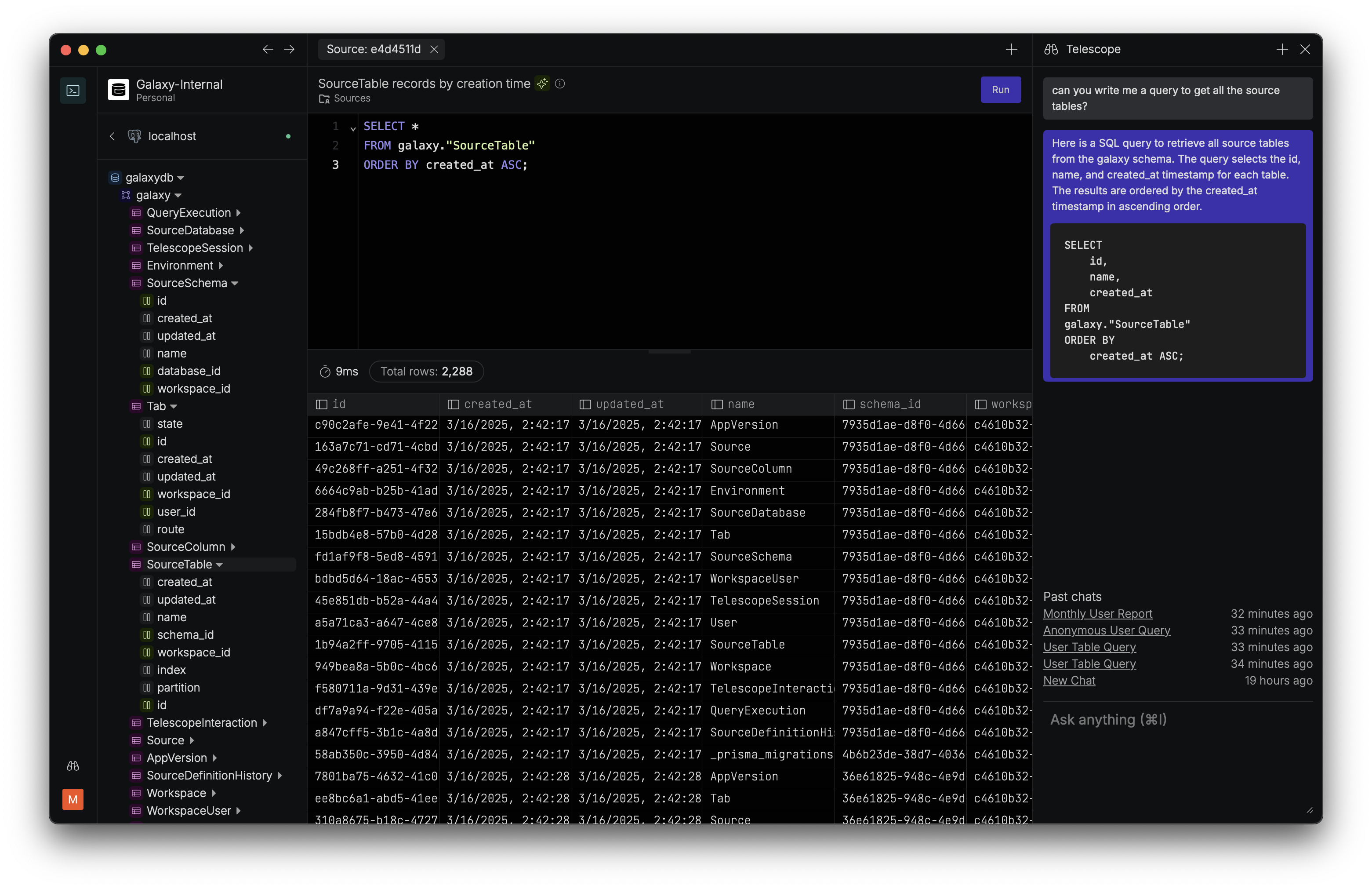 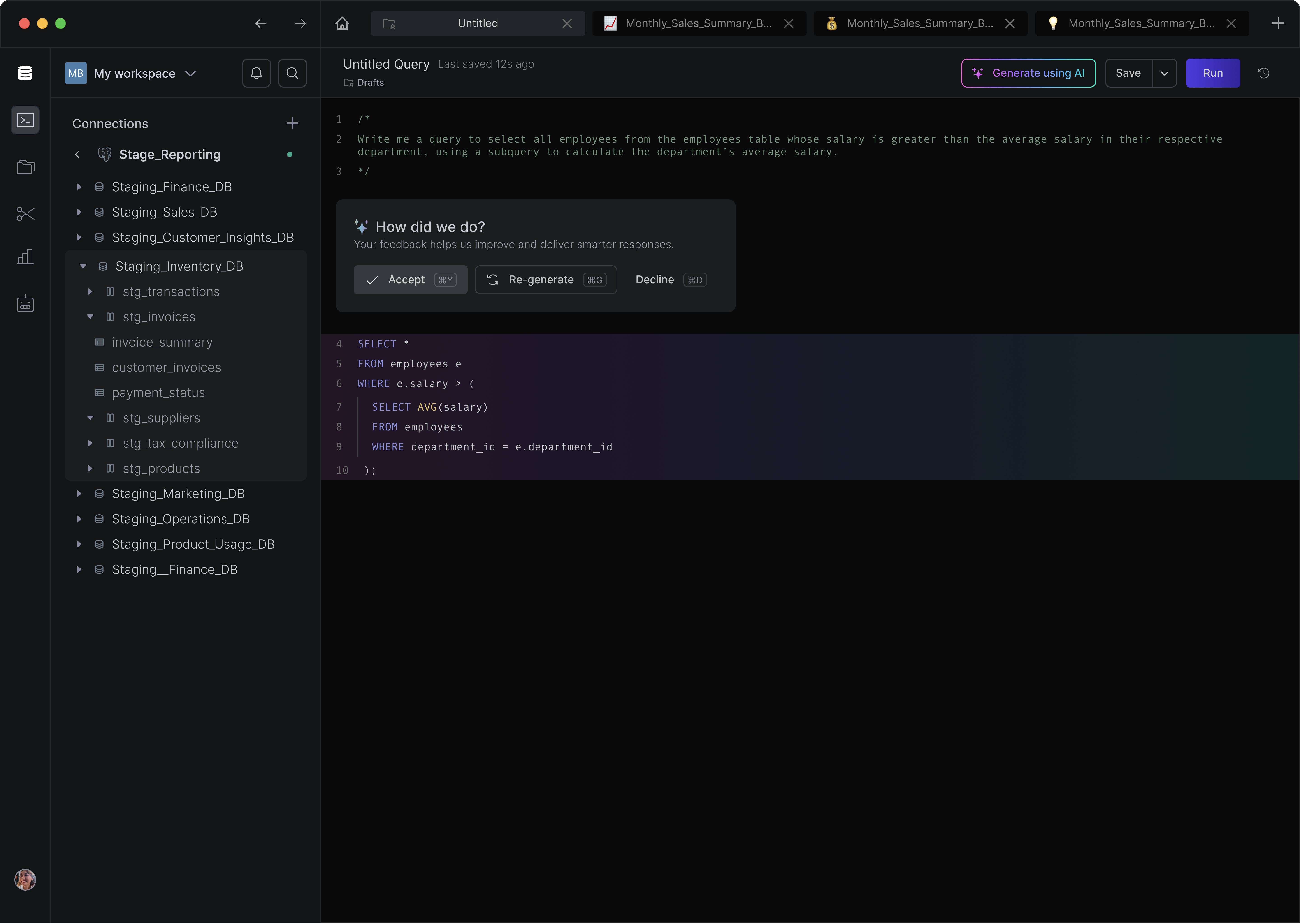 |