Fivetran replicates applications, databases, events and files into a high-performance data warehouse, after a five minute setup. The vendor says their standardized cloud pipelines are fully managed and zero-maintenance. The vendor says Fivetran began with a realization: For modern companies using cloud-based software and storage, traditional ETL tools badly underperformed, and the complicated configurations they required often led to project failures. To streamline and accelerate…
$0.01
Matillion
Score8 out of 10
N/A
Matillion is a data pipeline platform used to build and manage pipelines. Matillion empowers data teams with no-code and AI capabilities to be more productive, integrating data wherever it lives and delivering data that’s ready for AI and analytics.
$2.50
Pay as you go per user
Pricing
Fivetran
Matillion
Editions & Modules
Starter
$0.01
per credit
Standard
$0.01
per credit
Enterprise
$0.01
per credit
Developer: For Individuals
$2.50/credit
Pay as you go per user
Basic
$1000
per month 500 prepaid credits (additional credits: $2.18/credit)
Advanced
$2000
per month 750 prepaid credits (additional credits: $2.73/credit)
Enterprise
Request a Quote
Offerings
Pricing Offerings
Fivetran
Matillion
Free Trial
Yes
Yes
Free/Freemium Version
No
No
Premium Consulting/Integration Services
No
Yes
Entry-level Setup Fee
Optional
No setup fee
Additional Details
—
Billed directly via cloud marketplace on an hourly basis, with annual subscriptions available depending on the customer's cloud data warehouse provider.
Matillion requires a lot more initial setup effort and the resulting schemas are also much more "raw" data than the nicely cleaned schemas which Fivetran provides. Therefore it would also require more (manual) post-processing efforts compared to Fivetran. So the savings on time …
A de minimis incentive was given to thank the reviewer for their time. The incentive was not used to bias or drive a particular response, nor was the incentive contingent on a positive endorsement. More Info
A de minimis incentive was given to thank the reviewer for their time. The incentive was not used to bias or drive a particular response, nor was the incentive contingent on a positive endorsement. More Info
Senior Data Scientist in Engineering at iQuanti, Inc. (Information Technology and Services, 201-500 employees)
Chose Fivetran
Fivetran came well with the connectors' availability and updates with the source changes. We had an idea on data requirements in our case which helped us to work out on cost implication and take a decision for Fivetran as a data provider for our organization. These were 2 …
A de minimis incentive was given to thank the reviewer for their time. The incentive was not used to bias or drive a particular response, nor was the incentive contingent on a positive endorsement. More Info
Senior Database Architect in Information Technology at InnovAge (Hospital & Health Care, 1001-5000 employees)
Chose Matillion
We selected Matillion primarily because of it's ability to connect to numerous data sources and easily create transformation jobs. While Fivetran does a better job managing and examining deltas, it is not easy to use and is very non user friendly. SSIS was not a good fit for …
A de minimis incentive was given to thank the reviewer for their time. The incentive was not used to bias or drive a particular response, nor was the incentive contingent on a positive endorsement. More Info
Verified User
Chose Matillion
We decided to move forward with Matillion because it was the best tool among tools that support both ingesting data from a source system to a target database and running transformation workflows on it afterwards. Fivetran and Airbyte only support data ingestion and we had our …
A de minimis incentive was given to thank the reviewer for their time. The incentive was not used to bias or drive a particular response, nor was the incentive contingent on a positive endorsement. More Info
Verified User
Chose Matillion
Fivetran offers a managed service and pre-configured schemas/models for data loading, which means much less administrative work for initial setup and ongoing maintenance. But it comes at a much higher price tag. So, knowing where your sweet spot is in the build vs. buy spectrum …
A de minimis incentive was given to thank the reviewer for their time. The incentive was not used to bias or drive a particular response, nor was the incentive contingent on a positive endorsement. TR verified that a representative sample of customers was invited. More Info
Verified User
Chose Matillion
Cost and ease of use were better for our purposes. Matillion distinguishes itself from Fivetran and SnapLogic through its user-friendly design, no-code interface, in-depth transformation capabilities, allowing for complex data manipulations directly within the platform, …
A de minimis incentive was given to thank the reviewer for their time. The incentive was not used to bias or drive a particular response, nor was the incentive contingent on a positive endorsement. More Info
Senior Architect in Information Technology at Engage3 powered by Dexi (Retail, 201-500 employees)
Chose Matillion
Matillion ran circles around Stitch and Striim both in functionality, setup, and performance. There was no real comparison. Fivetran massively outperforms Matillion in pretty much every facet of the production from setup, maintenance, visibility, and usability. It already …
A de minimis incentive was given to thank the reviewer for their time. The incentive was not used to bias or drive a particular response, nor was the incentive contingent on a positive endorsement. More Info
Verified User
Chose Matillion
Prefer Matillion's visuals in terms of viewing jobs. We may end up using both Matillion and Fivetran
A de minimis incentive was given to thank the reviewer for their time. The incentive was not used to bias or drive a particular response, nor was the incentive contingent on a positive endorsement. More Info
Chief Technology Officer in Engineering at Lime Light CRM, Inc. (Internet, 51-200 employees)
Chose Matillion
We evaluated Fivetran and Xplenty prior to choosing Matillion. Matillion was the only solution that easily satisfied our single-tenant to multi-tenant use cases.
A de minimis incentive was given to thank the reviewer for their time. The incentive was not used to bias or drive a particular response, nor was the incentive contingent on a positive endorsement. More Info
Verified User
Chose Matillion
Matillion seemed more robust than Fivetran and was easier to use.
A de minimis incentive was given to thank the reviewer for their time. The incentive was not used to bias or drive a particular response, nor was the incentive contingent on a positive endorsement. More Info
Verified User
Chose Matillion
Fivetran had better ease of use, but I chose Matillion because of pricing and flexibility.
A de minimis incentive was given to thank the reviewer for their time. The incentive was not used to bias or drive a particular response, nor was the incentive contingent on a positive endorsement. More Info
Verified User
Chose Matillion
Matillion is cheaper and we really like the customer support of Matillion as well as lerning materials provided by Matillion were far better. They also made connectors for us for free while others were charging us for it.
A de minimis incentive was given to thank the reviewer for their time. The incentive was not used to bias or drive a particular response, nor was the incentive contingent on a positive endorsement. More Info
Verified User
Chose Matillion
Matillion gives great ability to connect to variety of sources and bring data into cloud data warehouse using connector based approach with which we can build complex transformation jobs which can do automated data fetches from your sources.
A de minimis incentive was given to thank the reviewer for their time. The incentive was not used to bias or drive a particular response, nor was the incentive contingent on a positive endorsement. More Info
Verified User
Chose Matillion
Matillion is affordable, easy to use with a graphical interface
A de minimis incentive was given to thank the reviewer for their time. The incentive was not used to bias or drive a particular response, nor was the incentive contingent on a positive endorsement. More Info
A de minimis incentive was given to thank the reviewer for their time. The incentive was not used to bias or drive a particular response, nor was the incentive contingent on a positive endorsement. More Info
Verified User
Chose Matillion
Matillion has better capabilities and better built-in elements that saves your time and efforts. also the connectivity across multiple data warehousing tool is better in Matillion. even the performance of the pipeline and the time required to create a particular pipeline is …
A de minimis incentive was given to thank the reviewer for their time. The incentive was not used to bias or drive a particular response, nor was the incentive contingent on a positive endorsement. TR verified that a representative sample of customers was invited. More Info
Verified User
Chose Matillion
Matillion is a good tool for integrating multiple clouds. Informatica has been a market standard for many years, it provides multiple capabilities for data governance, data quality, etc. However, Informatica is pretty expensive compared to Matillion. Also, Matillion is more …
A de minimis incentive was given to thank the reviewer for their time. The incentive was not used to bias or drive a particular response, nor was the incentive contingent on a positive endorsement. More Info
A de minimis incentive was given to thank the reviewer for their time. The incentive was not used to bias or drive a particular response, nor was the incentive contingent on a positive endorsement. More Info
Verified User
Chose Matillion
Matillion provided much more flexibility than the other products we tested, at a much lower price point. Other products, in my view, had a cleaner/simpler UI but I also felt that they offered much less functionality. A key design pattern we had to deliver was to perform delta …
A de minimis incentive was given to thank the reviewer for their time. The incentive was not used to bias or drive a particular response, nor was the incentive contingent on a positive endorsement. More Info
Manager of Data Engineering at Purple (Retail, 1001-5000 employees)
Chose Matillion
We used Airflow for a year before switching to Matillion. We switched to Matillion because the Airflow servers were not stable, and we didn't have any in-house expertise that could manage the Linux OS which Airflow is built on. We were constantly frustrated by the fact that …
A de minimis incentive was given to thank the reviewer for their time. The incentive was not used to bias or drive a particular response, nor was the incentive contingent on a positive endorsement. More Info
Verified User
Chose Matillion
Matillion easily integrates with Snowflake which is a huge selling point. It is also affordable fro the amount of data source connections that it comes with.
A de minimis incentive was given to thank the reviewer for their time. The incentive was not used to bias or drive a particular response, nor was the incentive contingent on a positive endorsement. More Info
Lead Analyst in Engineering at iQuanti, Inc. (Information Technology and Services, 201-500 employees)
Chose Matillion
Matillion offers the unique capability of digital platform connectors (API connectors) and special functionality for Snowflake (which is our primary database). Also various sources including AWS S3, sFTP and various databases connection. In Pricing, the matillion option has …
A de minimis incentive was given to thank the reviewer for their time. The incentive was not used to bias or drive a particular response, nor was the incentive contingent on a positive endorsement. More Info
A de minimis incentive was given to thank the reviewer for their time. The incentive was not used to bias or drive a particular response, nor was the incentive contingent on a positive endorsement. More Info
Verified User
Chose Matillion
We chose Matillion due to cost, compatibility with Redshift, and its ease to implement.
A de minimis incentive was given to thank the reviewer for their time. The incentive was not used to bias or drive a particular response, nor was the incentive contingent on a positive endorsement. More Info
VP, Technology in Engineering at Jukin Media, Inc (Entertainment, 51-200 employees)
Chose Matillion
There's a number of systems not available to enter in here that we also took a look at: AWS Data pipeline, Airflow, Xplenty, etc. The reason we chose Matillion is for the balance of features (ability to connect into cloud data sources like Jira), a simple interface to put …
A de minimis incentive was given to thank the reviewer for their time. The incentive was not used to bias or drive a particular response, nor was the incentive contingent on a positive endorsement. More Info
Verified User
Chose Matillion
Matillion is the best alternative for on-premise ETL tools if you are looking for a cloud-only solution. None of the tools we evaluated provide same features offered by Matillion. Extensive technical documentation is available on the website which makes development easy and …
A de minimis incentive was given to thank the reviewer for their time. The incentive was not used to bias or drive a particular response, nor was the incentive contingent on a positive endorsement. More Info
Fivetran and Matillion are both tools designed to extract and transform business data. Fivetran is a Data Replication tool that replicates business data from applications and databases and stores them in a single data warehouse, it is most popular with mid-sized businesses with many data sources to replicate. Matillion is a data integration tool that helps businesses to aggregate data from different sources for querying and analysis. Matillion is most popular with mid-sized businesses.
Features
Fivetran and Matillion both pull in data from many business sources, but they also have a few standout features that set them apart from each other.
Fivetran can pull in data directly from many SaaS applications right out of the box, making it a strong choice for organizations looking for a plug and play tool to handle SaaS data. Additionally, Fivetran helps organizations meet regulatory compliance standards for both GDPR and HIPAA. Lastly, customers are able to add new data sources to Fivetran, making it easy to add customer data to a businesses data warehouse.
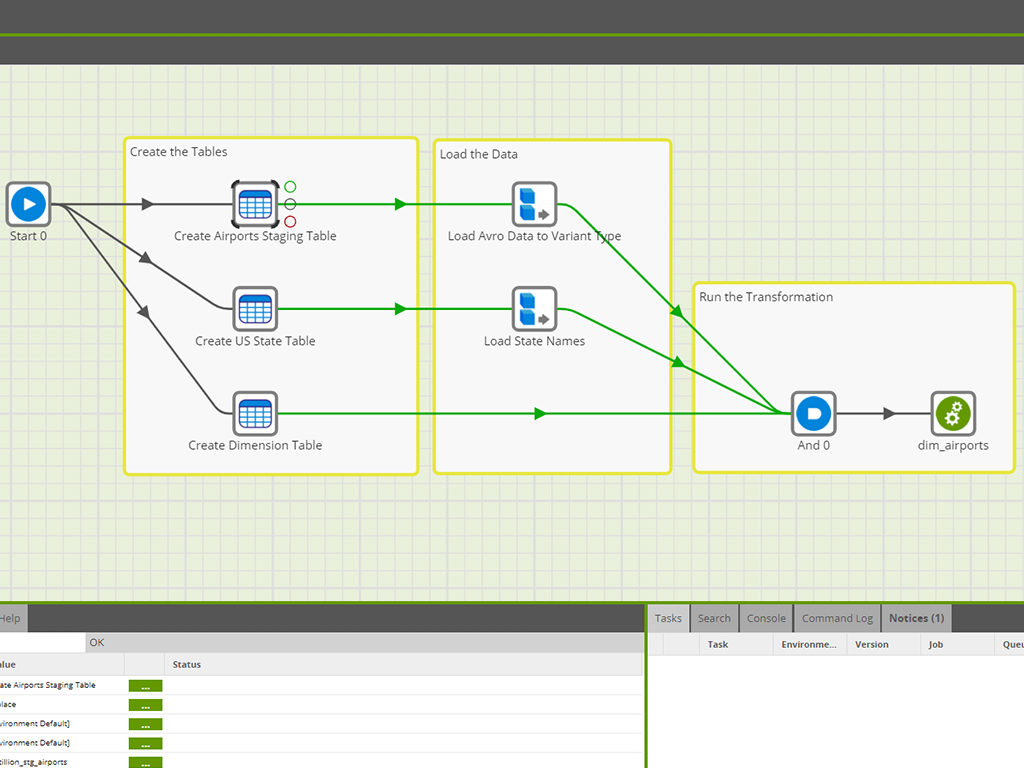
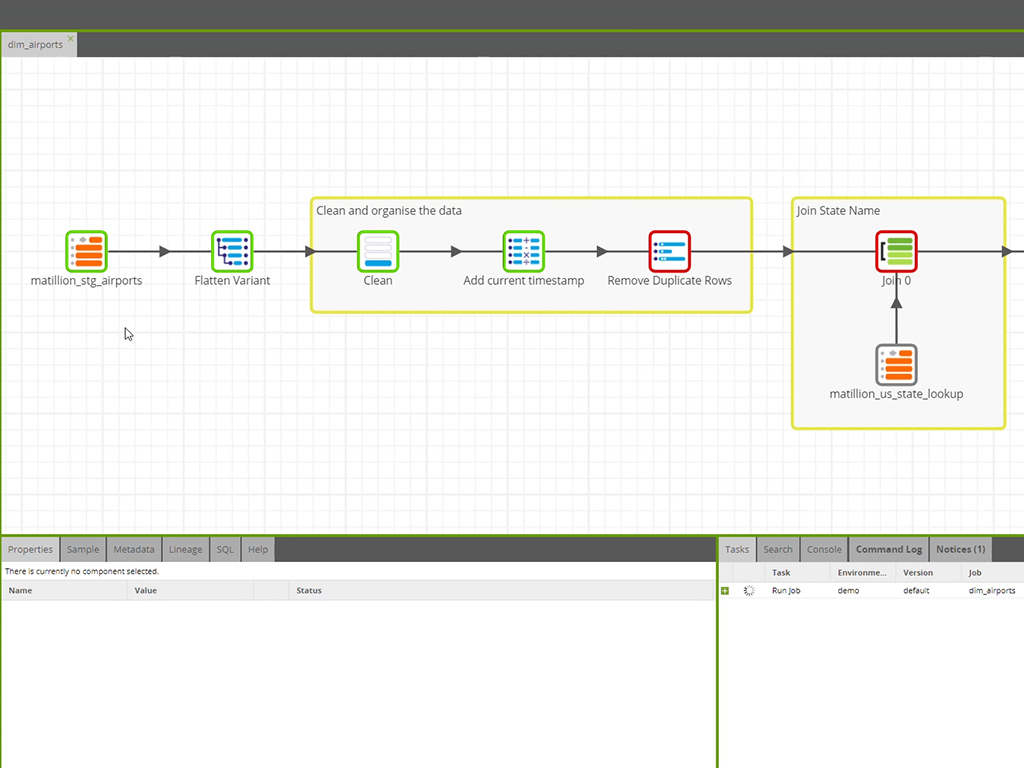
Matillion provides a simple to use interface that won’t require significant training for new users. For businesses that do need a little more training, however, Matillion provides both thorough documentation as well as in depth tutorial videos so users can get up to speed quickly. Lastly, Matillion provides ticket based support so users can reach out to the vendor for help with any software issues.
Limitations
Fivetran and Matillion both help organizations to handle large amounts of business data, but they also have some limitations that are important to consider.
Fivetran includes detailed documentation for their software, but provides no tutorials or training. New users will have to really on experienced coworkers or third party content when learning to use Fivetran. Additionally, Fivetran’s interface is more complex to use than Matillion, which can handle post load data transformations with a simple drag and drop interface.
Matillion has built in integrations for some SaaS applications, but not as many as Fivetran. For businesses that only use applications supported by Matillion this isn’t an issue, but it can be a problem for businesses with other SaaS applications. Additionally, Matillion only provides support for GDPR compliance, so businesses that need their data to be HIPAA compliant may need to consider other options.
Pricing
Pricing for Fivetran is dependent on the needs of the business starting at $1.00 per credit with access to all Fivetran connectors. Fivetran also offers a free trial so businesses can see if the software is right for them before making a purchasing decision.
Matillion similarly depends on the needs of the business, but it starts as low as $1.37 an hour and offers support for Amazon Redshift, Google BigQuery, Azure Synapse Analytics, and Snowflake.
Features
Fivetran
Matillion
Data Source Connection
Comparison of Data Source Connection features of Fivetran and Matillion
Feature
Fivetran
10.0
8 Ratings
17% above category average
Matillion
8.5
131 Ratings
1% above category average
Connect to traditional data sources
10.08 Ratings
8.9130 Ratings
Connecto to Big Data and NoSQL
10.06 Ratings
8.190 Ratings
Data Transformations
Comparison of Data Transformations features of Fivetran and Matillion
Feature
Fivetran
7.5
7 Ratings
8% below category average
Matillion
7.0
132 Ratings
15% below category average
Simple transformations
7.67 Ratings
7.6132 Ratings
Complex transformations
7.45 Ratings
6.5131 Ratings
Data Modeling
Comparison of Data Modeling features of Fivetran and Matillion
Feature
Fivetran
6.2
8 Ratings
25% below category average
Matillion
8.3
124 Ratings
4% above category average
Data model creation
2.06 Ratings
9.133 Ratings
Metadata management
4.04 Ratings
9.140 Ratings
Business rules and workflow
8.06 Ratings
8.4116 Ratings
Collaboration
7.95 Ratings
7.5116 Ratings
Testing and debugging
9.04 Ratings
7.7117 Ratings
Data Governance
Comparison of Data Governance features of Fivetran and Matillion
Fivetran's business model justifies the use-case where we require data from a single source basically a lot of data but if the requirement is not on the heavier side, Fivetran comes to costly operation when compared to its peers. Otherwise, I'll recommend Fivetran for stability and update and seamless service provider.
A de minimis incentive was given to thank the reviewer for their time. The incentive was not used to bias or drive a particular response, nor was the incentive contingent on a positive endorsement. More Info
Great: Need to query simpler APIs, or utilize well known services such as GSheets etc.? Matillion has got some of the best and easiest to use connectors out there. Not so great: Do you need have a competent CI/CD flow that you will be able to update / compare from Matillion as well as other sources at the same time? Good luck, you will need to be extra careful, as you might have to have a deeper dive into your servers Terminal each time you have a git conflict.
A de minimis incentive was given to thank the reviewer for their time. The incentive was not used to bias or drive a particular response, nor was the incentive contingent on a positive endorsement. TR verified that a representative sample of customers was invited. More Info
A de minimis incentive was given to thank the reviewer for their time. The incentive was not used to bias or drive a particular response, nor was the incentive contingent on a positive endorsement. More Info
A de minimis incentive was given to thank the reviewer for their time. The incentive was not used to bias or drive a particular response, nor was the incentive contingent on a positive endorsement. More Info
A de minimis incentive was given to thank the reviewer for their time. The incentive was not used to bias or drive a particular response, nor was the incentive contingent on a positive endorsement. More Info
Matillion is brilliant at importing data -- it would be amazing to have more ways to export data, from emailed exports to API pushes.
Any Python that takes more than a few lines of code requires an external server to run it. It would be great to have more integration (perhaps in a connected virtual environment) to easily integrate customized code.
Troubleshooting server logs requires quite a bit of technical expertise. More human readable detailed error handling would be greatly appreciated.
A de minimis incentive was given to thank the reviewer for their time. The incentive was not used to bias or drive a particular response, nor was the incentive contingent on a positive endorsement. TR verified that a representative sample of customers was invited. More Info
With the current experience of Matillion, we are likely to renew with the current feature option but will also look for improvement in various areas including scalability and dependability. 1. Connectors: It offers various connectors option but isn't full proof which we will be looking forward as we grow. 2. Scalability: As usage increase, we want Matillion system to be more stable.
A de minimis incentive was given to thank the reviewer for their time. The incentive was not used to bias or drive a particular response, nor was the incentive contingent on a positive endorsement. More Info
Very easy and intuitive to setup and maintain as there usually are not that many options. Very well documented (e.g. how to setup each connector, how the schema looks like, any specific features of this connector etc.). Also the operation is intuitive, e.g. you have status pages, log pages, configuration pages etc. for each connector.
A de minimis incentive was given to thank the reviewer for their time. The incentive was not used to bias or drive a particular response, nor was the incentive contingent on a positive endorsement. More Info
We are able to bring on new resources and teach them how to use Matillion without having to invest a significant amount of time. We prefer looking for resources with any type of ETL skill-set and feel that they can learn Matillion without problem. In addition, the prebuilt objects cover more than 95% of our use cases and we do not have to build much from scratch.
It runs pretty well and gets our data from point A to point cluster quickly enough. Honestly, it's not something I think about unless it breaks and that's pretty rare.
A de minimis incentive was given to thank the reviewer for their time. The incentive was not used to bias or drive a particular response, nor was the incentive contingent on a positive endorsement. More Info
Overall, I've found Matillion to be responsive and considerate. I feel like they value us as a customer even when I know they have customers who spend more on the product than we do. That speaks to a motive higher than money. They want to make a good product and a good experience for their customers. If I have any complaint, it's that support sometimes feels community-oriented. It isn't always immediately clear to me that my support requests are going to a support engineer and not to the community at large. Usually, though, after a bit of conversation, it's clear that Matillion is watching and responding. And responses are generally quick in coming.
A de minimis incentive was given to thank the reviewer for their time. The incentive was not used to bias or drive a particular response, nor was the incentive contingent on a positive endorsement. More Info
A de minimis incentive was given to thank the reviewer for their time. The incentive was not used to bias or drive a particular response, nor was the incentive contingent on a positive endorsement. More Info
We never seriously considered using anything else. Our data engineers had used Fivetran extensively in previous roles so when it came time to make a decision, there wasn't much of a process. They gladly signed the contract with Fivetran pretty quickly.
A de minimis incentive was given to thank the reviewer for their time. The incentive was not used to bias or drive a particular response, nor was the incentive contingent on a positive endorsement. More Info
Fivetran offers a managed service and pre-configured schemas/models for data loading, which means much less administrative work for initial setup and ongoing maintenance. But it comes at a much higher price tag. So, knowing where your sweet spot is in the build vs. buy spectrum is essential to deciding which tool fits better. For the transformation part, dbt is purely (SQL-) code-based. So, it is mainly whether your developers prefer a GUI or code-based approach.
A de minimis incentive was given to thank the reviewer for their time. The incentive was not used to bias or drive a particular response, nor was the incentive contingent on a positive endorsement. TR verified that a representative sample of customers was invited. More Info
We're using Matillion on EC2 instances, and we have about 20 projects for our clients in the same instance. Sometimes, we're struggling to manage schedules for all projects because thread management is not visible, and we can't see the process at the instance level.
A de minimis incentive was given to thank the reviewer for their time. The incentive was not used to bias or drive a particular response, nor was the incentive contingent on a positive endorsement. More Info
A de minimis incentive was given to thank the reviewer for their time. The incentive was not used to bias or drive a particular response, nor was the incentive contingent on a positive endorsement. More Info
A de minimis incentive was given to thank the reviewer for their time. The incentive was not used to bias or drive a particular response, nor was the incentive contingent on a positive endorsement. TR verified that a representative sample of customers was invited. More Info