Figma, headquartered in San Francisco, offers their collaborative design and prototyping application to support digital product and UI development.
$15
per month per editor
Swiftify
Score9 out of 10
Small Businesses (1-50 employees)
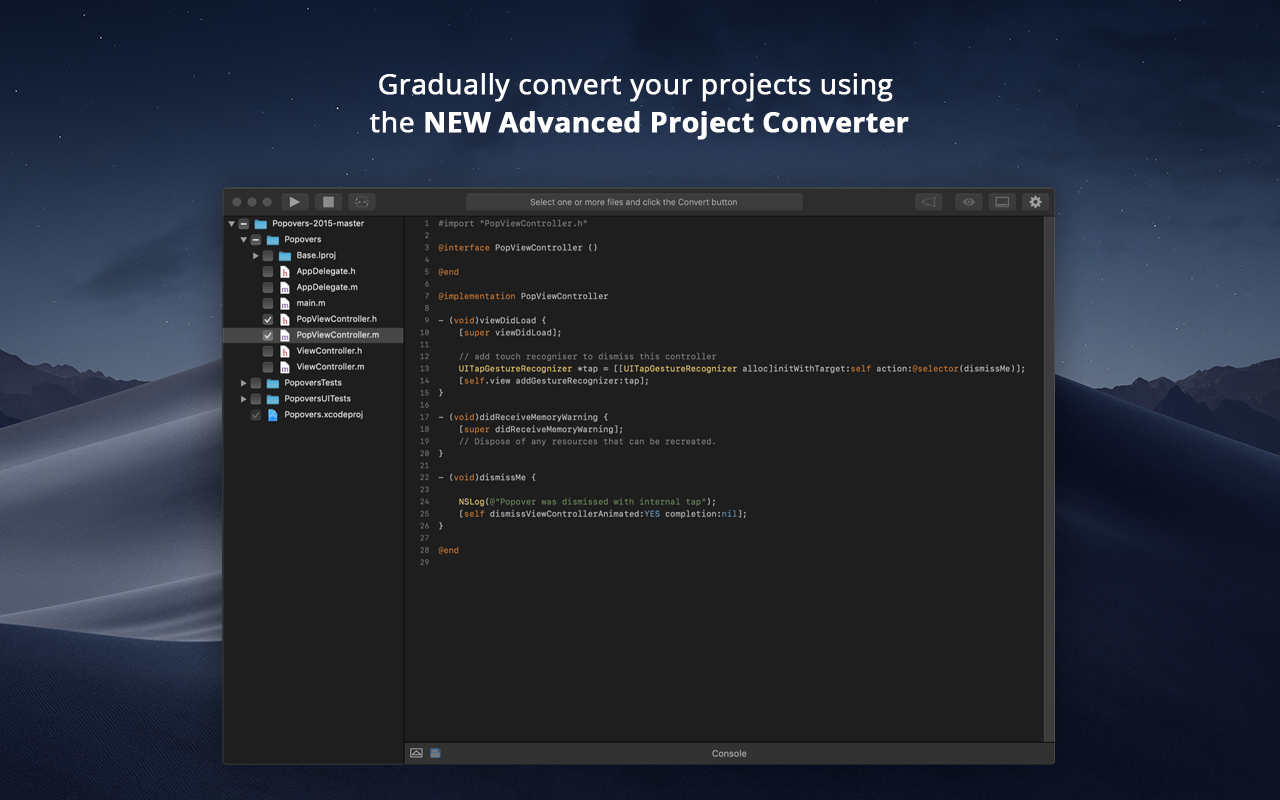
When Apple rolled out Swift back in 2014, Objective-C was set to be replaced. Even nowadays, however, there are plenty of apps and projects that still use Objective-C, and developers are faced with the prospect of either starting again from scratch or attempting to convert them to Swift. Swiftify for Xcode is designed to automate much of the conversion process, handling the task of replacing syntax while letting you focus on other aspects of migrating your project to…
Figma is a solid design tool to craft the UX design concepts/solutions for digital products. For printed marketing materials such as brochures, marketing flyers, press releases, etc, other design tools such as Adobe Illustrator, Photoshop, or InDesign might make more sense to use for those use case scenarios.
A de minimis incentive was given to thank the reviewer for their time. The incentive was not used to bias or drive a particular response, nor was the incentive contingent on a positive endorsement. More Info
It is recommended to use Swiftify in any situation that requires iOS development because even if you develop just in Swift or just in Objective-C, it could be helpful for researching and investigating purposes. Additionally, if you need to convert big quantities of code from Objective-C to Swift, this tool will optimise that work. It will not translate a whole class of 2000 lines perfectly, but after converting it you can review the code and modify the lines that have not been properly converted, making you save more than the 50% of the time in that case. I've not been able to test it properly as I only used the trial version and it is really limited.
A de minimis incentive was given to thank the reviewer for their time. The incentive was not used to bias or drive a particular response, nor was the incentive contingent on a positive endorsement. More Info
A de minimis incentive was given to thank the reviewer for their time. The incentive was not used to bias or drive a particular response, nor was the incentive contingent on a positive endorsement. More Info
A de minimis incentive was given to thank the reviewer for their time. The incentive was not used to bias or drive a particular response, nor was the incentive contingent on a positive endorsement. More Info
Prototyping in Figma is pretty much nothing more than a glorified slide show. Sure, variables, etc are available but it takes way to long to set them up and even more time when there are revisions needed.
It would be helpful if there were a contextual help system for various functionality. For example, advanced autolayout (like space between) can become very tricky to implement sometimes. I often wish there were an AI assistant to ask for help. I often use ChatGTP to help me through these times.
Searching layers needs to be much easier and more intuitive.
I would like to be able to make groups like the layers palette in Photoshop. That would help with organization and speed a lot.
A de minimis incentive was given to thank the reviewer for their time. The incentive was not used to bias or drive a particular response, nor was the incentive contingent on a positive endorsement. TR verified that a representative sample of customers was invited. More Info
A de minimis incentive was given to thank the reviewer for their time. The incentive was not used to bias or drive a particular response, nor was the incentive contingent on a positive endorsement. TR verified that a representative sample of customers was invited. More Info
Figma is a pretty cool tool in many areas. My team almost uses it on daily basis, such as, brainstorming on product/design topics, discussing prototypes created by designers. We even use it for retrospectives, which is super convenient and naturally keeps records of what the team discusses every month. Furthermore, I do see the potential of the product - currently we mainly use it for design topics, but it seems it is also a good fit for tech diagrams, which we probably will explore further in the future.
A de minimis incentive was given to thank the reviewer for their time. The incentive was not used to bias or drive a particular response, nor was the incentive contingent on a positive endorsement. More Info
It's easy to use for designers who are familiar with design terms and functions from Photoshop and Illustrator. However, non-tech and non-designer collaborators have a hard time figuring out how to leave comments and apply changes, compared to other online design tools like Canva and Squarespace. Even simple drag-and-drops and rearrangement of certain blocks become too complicated due to uncommon functions like Hug and Lock.
A de minimis incentive was given to thank the reviewer for their time. The incentive was not used to bias or drive a particular response, nor was the incentive contingent on a positive endorsement. More Info
A de minimis incentive was given to thank the reviewer for their time. The incentive was not used to bias or drive a particular response, nor was the incentive contingent on a positive endorsement. More Info
A de minimis incentive was given to thank the reviewer for their time. The incentive was not used to bias or drive a particular response, nor was the incentive contingent on a positive endorsement. More Info
I haven't used their support lately but in the past, they had a chat that I used often. They often responded in a few hours and were able to give a satisfactory solution. I would imagine it's less personal now but the community has expanded drastically so there are more resources out there to self serve with a bit of Google magic.
A de minimis incentive was given to thank the reviewer for their time. The incentive was not used to bias or drive a particular response, nor was the incentive contingent on a positive endorsement. More Info
In-person training has its own benefits - 1. It helps in resolving queries then and there during the training. 2. I find classroom or in-person training more interactive. 3. Classroom or in-person training could be more practical in nature where participants can have an hands on experience with tools and clarify their doubts with the trainer.
A de minimis incentive was given to thank the reviewer for their time. The incentive was not used to bias or drive a particular response, nor was the incentive contingent on a positive endorsement. More Info
Online training has its own merits and demerits - 1. Sometimes we may face issues with connectivity or the training content 2. The way training is being delivered becomes very important because not everyone is comfortable taking online training and learning by themselves. 3. With the advancement of technology online training has become popular but there is a segment of people who still prefer class-room training over online one.
A de minimis incentive was given to thank the reviewer for their time. The incentive was not used to bias or drive a particular response, nor was the incentive contingent on a positive endorsement. More Info
Figma compared to other tools has user friendly UI which is very easy for all levels of designers. Compared to Adobe XD and Sketch Figma is stable, while in other tools I have faced software crashing in the middle of the work which resulted in loss of data/design. Compared to other tools it's fast and shows less lag. Collaboration in Figma is very easy as it is cloud based but in XD it's not that smooth working with other designers.
A de minimis incentive was given to thank the reviewer for their time. The incentive was not used to bias or drive a particular response, nor was the incentive contingent on a positive endorsement. More Info
There's not much to compare - we haven't found any proprietary like it. Existing OpenSource solutions are unmaintained and Swiftify supports the latest versions of Swift.
A de minimis incentive was given to thank the reviewer for their time. The incentive was not used to bias or drive a particular response, nor was the incentive contingent on a positive endorsement. More Info
A de minimis incentive was given to thank the reviewer for their time. The incentive was not used to bias or drive a particular response, nor was the incentive contingent on a positive endorsement. TR verified that a representative sample of customers was invited. More Info
For now the impact has been small, considering that I used the trial version, it was helpful for small conversions. Summarising: Saving time on researching process
A de minimis incentive was given to thank the reviewer for their time. The incentive was not used to bias or drive a particular response, nor was the incentive contingent on a positive endorsement. More Info