Figma, headquartered in San Francisco, offers their collaborative design and prototyping application to support digital product and UI development.
$15
per month per editor
SAP Signavio Process Transformation Suite
Score 7.7 out of 10
N/A
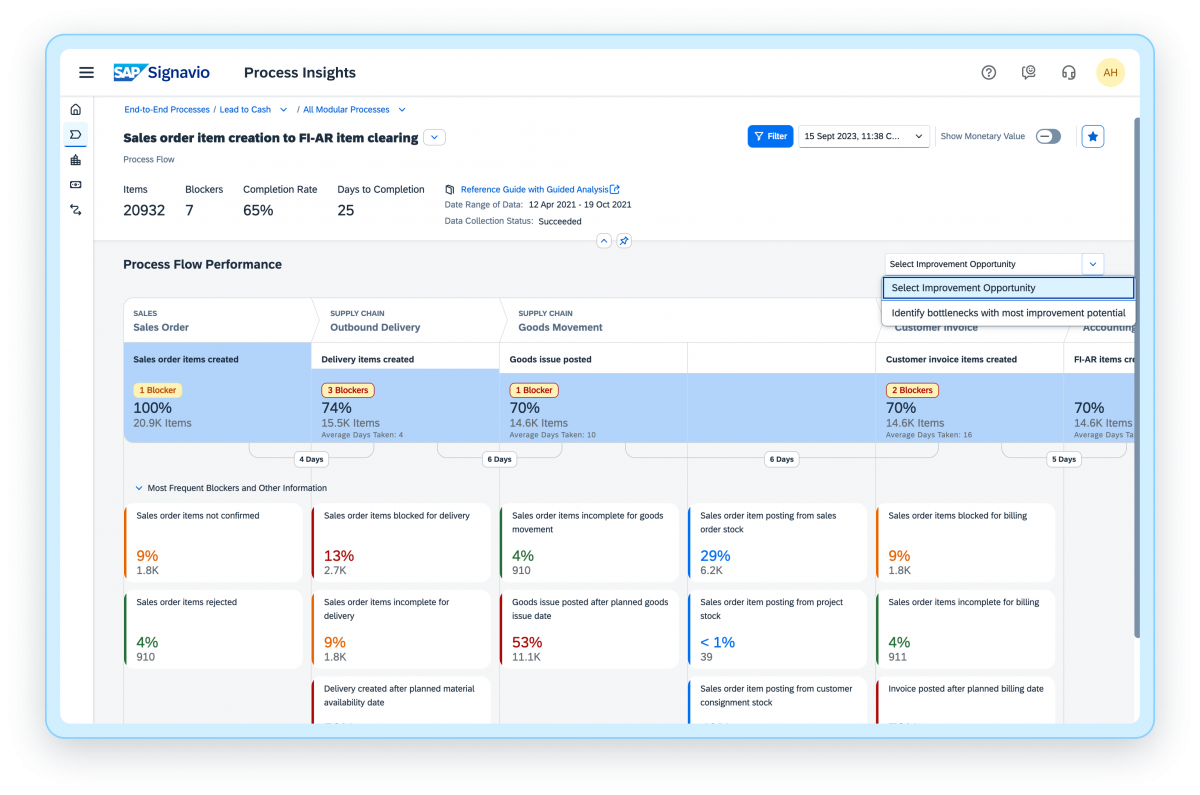
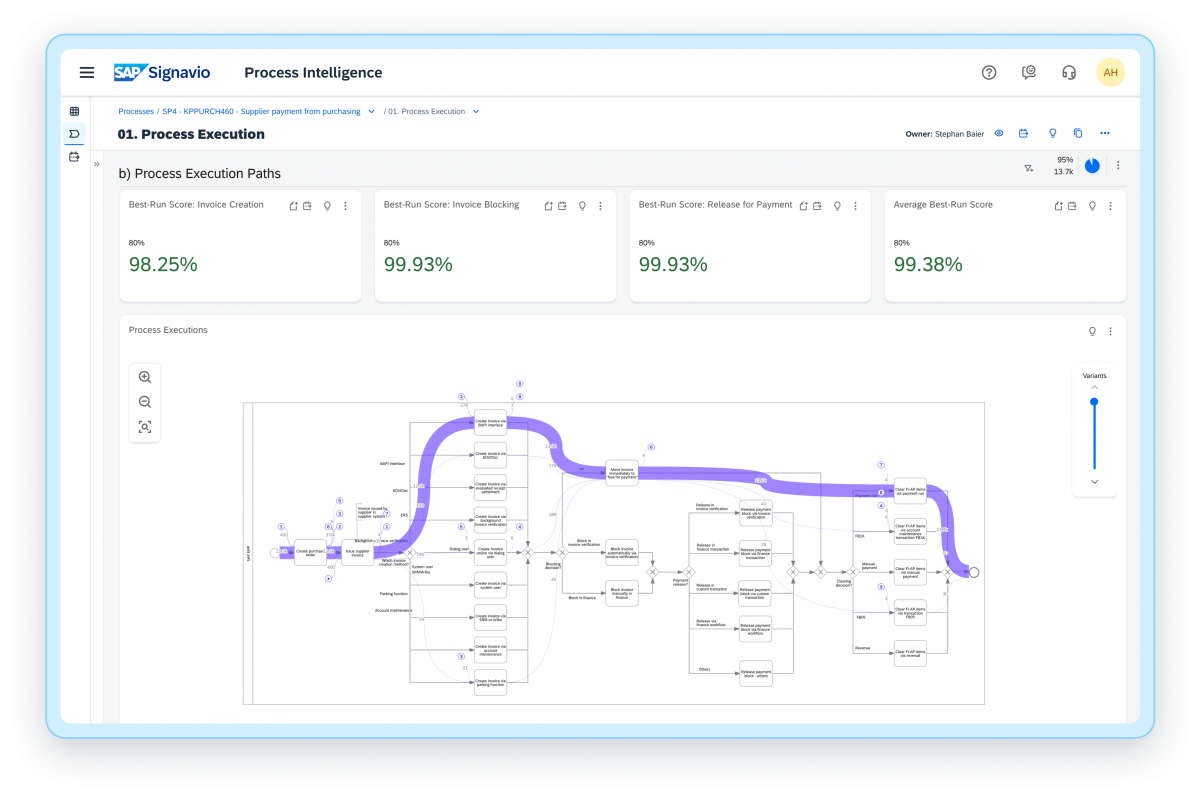
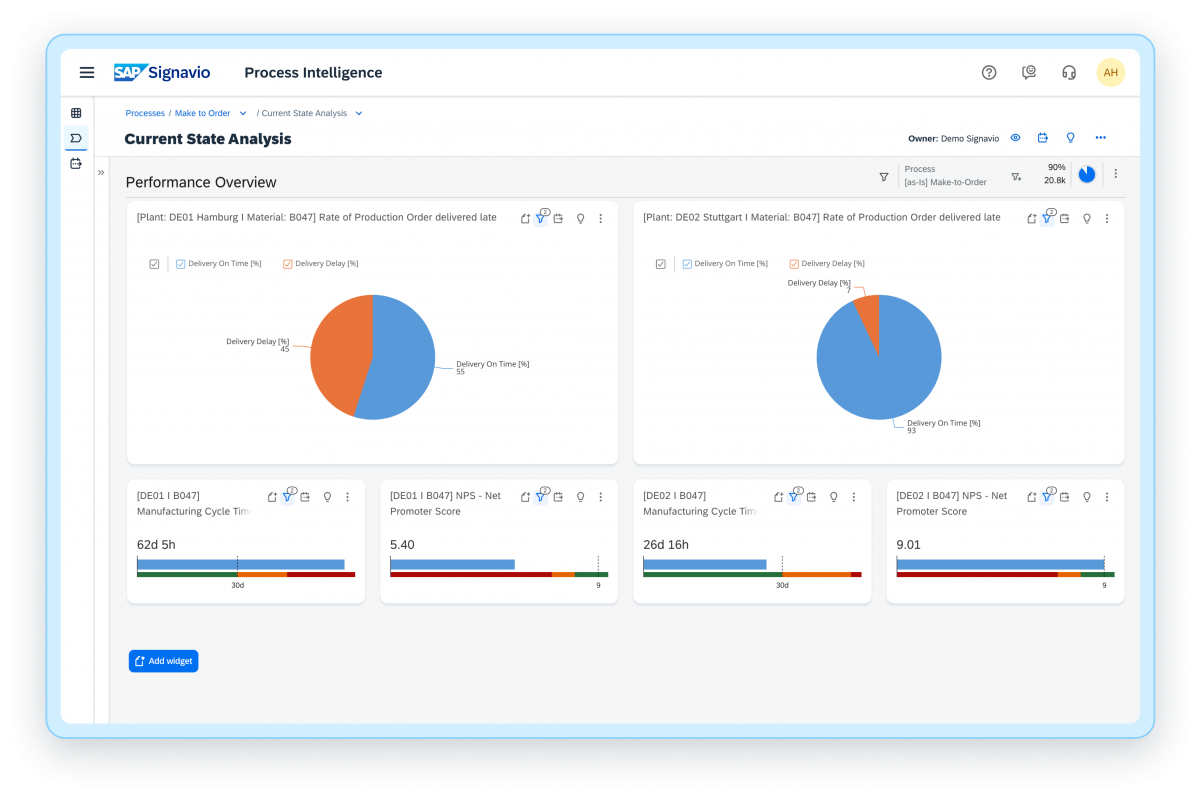
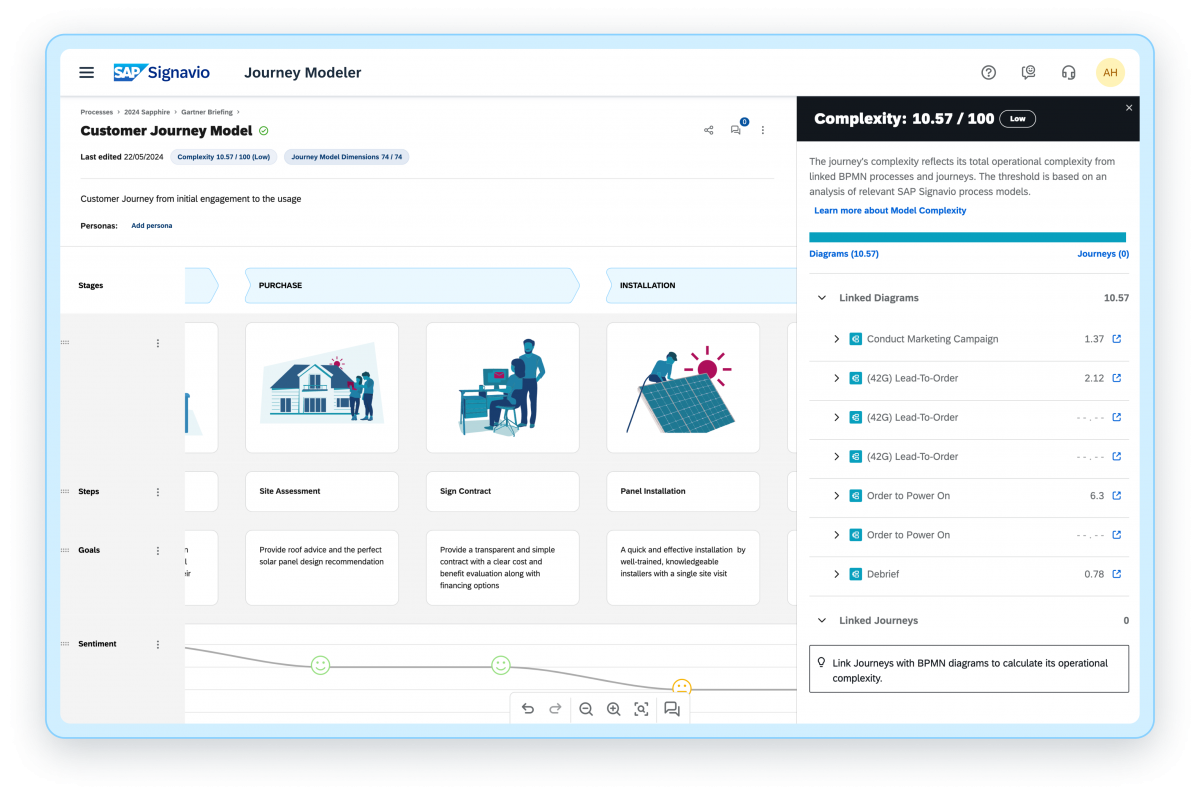
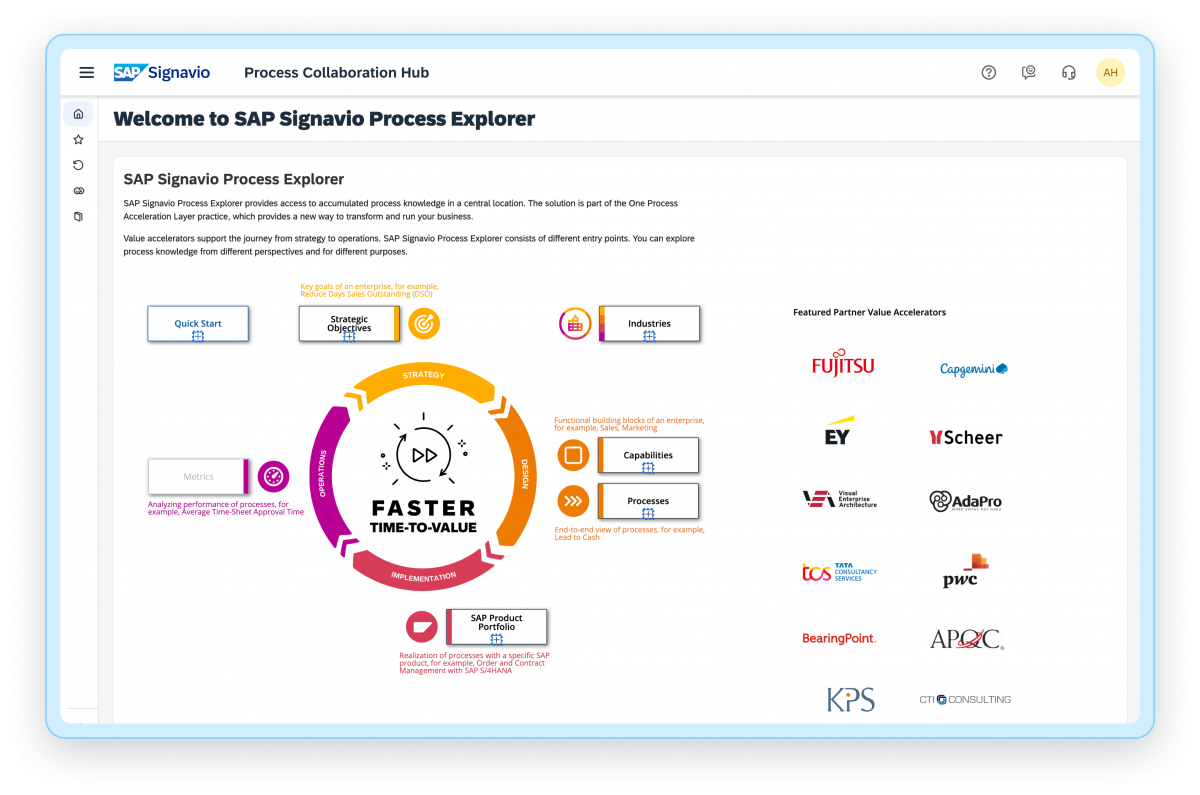
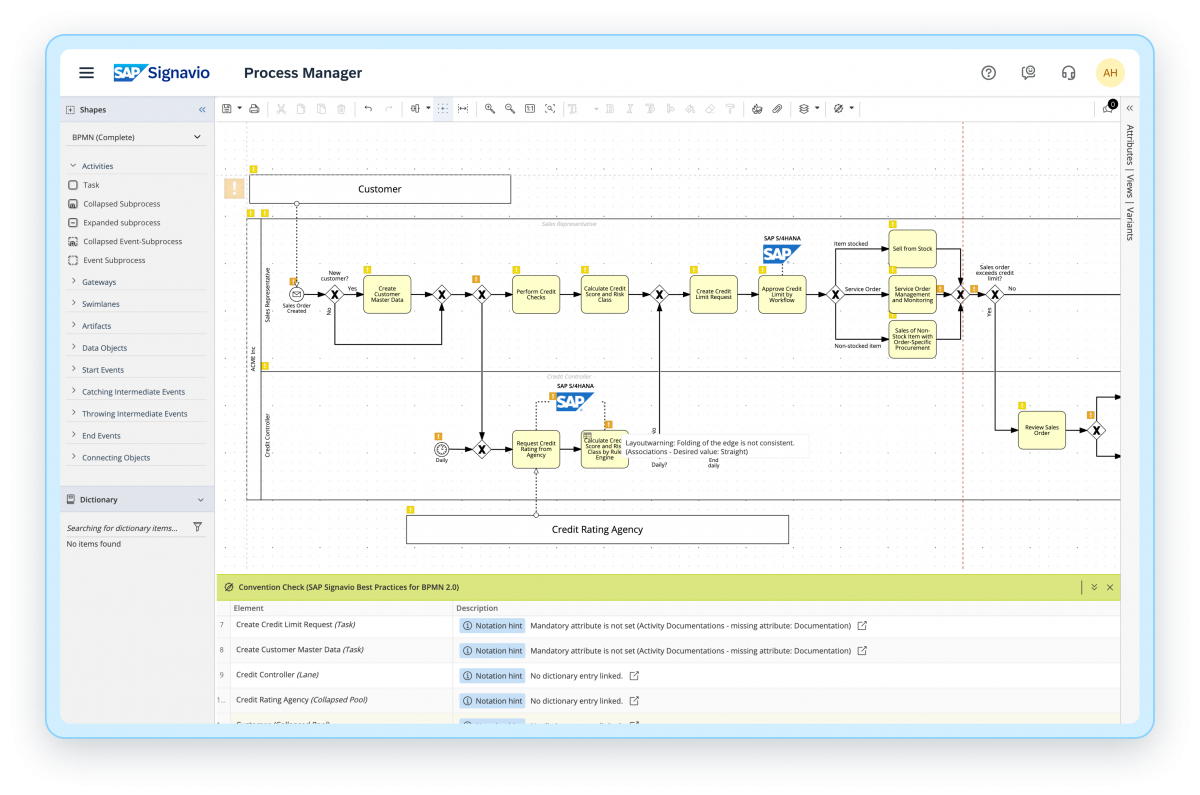
The SAP Signavio portfolio offers an integrated platform that helps usersto realign the organization and bring changes, with a suite of products that support business processes. The SAP Signavio portfolio offers a range of business transformation solutions to serve the emerging practice of customer excellence (CEX). SAP Signavio solutions bring together a full 360-degree view of outside-in and inside-out thinking, translating experiences into operational reality by putting the customer at the…
N/A
Pricing
Figma
SAP Signavio Process Transformation Suite
Editions & Modules
Professional
$144
per year
Organization
$540
per year
Starter
Free
No answers on this topic
Offerings
Pricing Offerings
Figma
SAP Signavio Process Transformation Suite
Free Trial
No
Yes
Free/Freemium Version
Yes
No
Premium Consulting/Integration Services
No
Yes
Entry-level Setup Fee
No setup fee
Optional
Additional Details
—
—
More Pricing Information
Community Pulse
Figma
SAP Signavio Process Transformation Suite
Features
Figma
SAP Signavio Process Transformation Suite
Reporting & Analytics
Comparison of Reporting & Analytics features of Product A and Product B
Figma
-
Ratings
SAP Signavio Process Transformation Suite
7.6
43 Ratings
7% below category average
Dashboards
00 Ratings
7.743 Ratings
Standard reports
00 Ratings
8.241 Ratings
Custom reports
00 Ratings
7.08 Ratings
Process Engine
Comparison of Process Engine features of Product A and Product B
Figma
-
Ratings
SAP Signavio Process Transformation Suite
8.0
54 Ratings
5% below category average
Process designer
00 Ratings
8.852 Ratings
Process simulation
00 Ratings
9.048 Ratings
Business rules engine
00 Ratings
7.122 Ratings
SOA support
00 Ratings
8.532 Ratings
Process player
00 Ratings
7.436 Ratings
Support for modeling languages
00 Ratings
8.839 Ratings
Form builder
00 Ratings
8.032 Ratings
Model execution
00 Ratings
6.429 Ratings
Collaboration
Comparison of Collaboration features of Product A and Product B
Figma
-
Ratings
SAP Signavio Process Transformation Suite
8.1
46 Ratings
4% below category average
Social collaboration tools
00 Ratings
8.146 Ratings
Content Management Capabilties
Comparison of Content Management Capabilties features of Product A and Product B
Figma is a solid design tool to craft the UX design concepts/solutions for digital products. For printed marketing materials such as brochures, marketing flyers, press releases, etc, other design tools such as Adobe Illustrator, Photoshop, or InDesign might make more sense to use for those use case scenarios.
Pros: 1. It reduces technical debt and accelerates a smooth transition, while harmonizing across data migration regions which replaces the legacy customization that are not for S4/HANA. 2. It cuts operational cost by 30% - 40% and improves SLA adherence, while process intelligence identifies duplicate or redundant approval steps when we know SAP ecosystems ties all modules together for better data insights. Cons: 1. Complicated and costly for small businesses. 2. Mature process required for better data feeding and data insights. 3. If non-SAP system data feed might cause misleading and incomplete data insights
Location agnostic (or home office agnostic) collaboration in virtual workshops
Internally within the team or with clients, I can prepare, gather materials, and lead during a workshop or meeting with SAP Signavio Process Transformation Suite and feel incredibly positioned as the facilitator. Whether in real time or in an asynchronous manner.
The combination of highly adaptable and visual work with collaborative tools like forms, comments, timers, and point voting transforms it into a tool I use frequently.
Prototyping in Figma is pretty much nothing more than a glorified slide show. Sure, variables, etc are available but it takes way to long to set them up and even more time when there are revisions needed.
It would be helpful if there were a contextual help system for various functionality. For example, advanced autolayout (like space between) can become very tricky to implement sometimes. I often wish there were an AI assistant to ask for help. I often use ChatGTP to help me through these times.
Searching layers needs to be much easier and more intuitive.
I would like to be able to make groups like the layers palette in Photoshop. That would help with organization and speed a lot.
For businesses looking to improve their current business processes, I think SAP Signavio Process Transformation Suite is incredibly well-suited.
In my opinion, SAP Signavio Process Transformation Suite excels in sectors with strict regulatory requirements.
I think SAP Signavio Process Transformation Suite is the best option when teams from several departments must work together on process design or improvement initiatives because of its real-time collaboration capabilities.
Figma is a pretty cool tool in many areas. My team almost uses it on daily basis, such as, brainstorming on product/design topics, discussing prototypes created by designers. We even use it for retrospectives, which is super convenient and naturally keeps records of what the team discusses every month. Furthermore, I do see the potential of the product - currently we mainly use it for design topics, but it seems it is also a good fit for tech diagrams, which we probably will explore further in the future.
It's easy to use for designers who are familiar with design terms and functions from Photoshop and Illustrator. However, non-tech and non-designer collaborators have a hard time figuring out how to leave comments and apply changes, compared to other online design tools like Canva and Squarespace. Even simple drag-and-drops and rearrangement of certain blocks become too complicated due to uncommon functions like Hug and Lock.
I haven't used their support lately but in the past, they had a chat that I used often. They often responded in a few hours and were able to give a satisfactory solution. I would imagine it's less personal now but the community has expanded drastically so there are more resources out there to self serve with a bit of Google magic.
In-person training has its own benefits - 1. It helps in resolving queries then and there during the training. 2. I find classroom or in-person training more interactive. 3. Classroom or in-person training could be more practical in nature where participants can have an hands on experience with tools and clarify their doubts with the trainer.
Online training has its own merits and demerits - 1. Sometimes we may face issues with connectivity or the training content 2. The way training is being delivered becomes very important because not everyone is comfortable taking online training and learning by themselves. 3. With the advancement of technology online training has become popular but there is a segment of people who still prefer class-room training over online one.
Training is taking way longer than expected. We have had more than 50 hours of training and still do not feel proficient enough to do anything meaningful with Process Intelligence. The Process Insights are pretty intuitive but does take a willingness to dig in and explore, but in general good right out of the box.
Figma compared to other tools has user friendly UI which is very easy for all levels of designers. Compared to Adobe XD and Sketch Figma is stable, while in other tools I have faced software crashing in the middle of the work which resulted in loss of data/design. Compared to other tools it's fast and shows less lag. Collaboration in Figma is very easy as it is cloud based but in XD it's not that smooth working with other designers.
We were able to end the use of archive versions thanks to SAP Signavio Process Transformation Suite, and everyone has access to the most recent archive. Mac and Windows users can collaborate on a single document. A design tool that spans the concept phase, design phase, and delivery to engineering
With the help of Signavio, we are now much more operationally efficient, which saves money and makes better use of our resources.
The software's emphasis on collaboration has encouraged innovation within our teams, resulting in original solutions and better project outputs.
Compliance is crucial for our sector. We have lowered the danger of regulatory problems by maintaining stringent compliance standards with the aid of Signavio.