Entrust Standard SSL Certificates vs. HashiCorp Vault

Overview
ProductRatingMost Used ByProduct SummaryStarting Price
Entrust Standard SSL Certificates
Score 9.9 out of 10
N/A
Entrust Standard SSL Certificates, also known as Organization validated certificates, offer strong encryption and browser trust, and include unlimited reissues, and unlimited server licensing. In addition to securing information between client browsers and servers, Standard SSL Certificates also secure information between two servers and come with a website security package that finds malware on websites and protects them from being blacklisted
$24
per year
HashiCorp Vault
Score 8.4 out of 10
N/A
HashiCorp offers Vault, an encryption tool of use in the management of secrets including credentials, passwords and other secrets, providing access control, audit trail, and support for multiple authentication methods. It is available open source, or under an enterprise license.
$0.03
Pricing
Entrust Standard SSL CertificatesHashiCorp Vault
Editions & Modules
Secure Email Personal
$24
per year
Standard SSL
$199
per year
Advantage SSL
$239
per year
Document Signing Individual
$315
per year
Document Signing Group
$315
per year
UC Multi-Domain
$319
per year
EV Multi-Domain SSL
$429
per year
Wildcard SSL
$699
per year
Cloud - HCP Vault
$0.03/hr
Open Source
Free
Enterprise
Contact sales team
Offerings
Pricing Offerings
Entrust Standard SSL CertificatesHashiCorp Vault
Free Trial
NoNo
Free/Freemium Version
NoYes
Premium Consulting/Integration Services
NoNo
Entry-level Setup FeeNo setup feeNo setup fee
Additional DetailsSave 13% with a 2-year purchase, and 18% with a 3-year purchase.
More Pricing Information
Community Pulse
Entrust Standard SSL CertificatesHashiCorp Vault
User Ratings
Entrust Standard SSL CertificatesHashiCorp Vault
Likelihood to Recommend
7.0
(0 ratings)
8.0
(0 ratings)
Likelihood to Renew
-
(0 ratings)
10.0
(0 ratings)
Usability
-
(0 ratings)
7.0
(0 ratings)
Support Rating
-
(0 ratings)
6.3
(0 ratings)
User Testimonials
Entrust Standard SSL CertificatesHashiCorp Vault
Likelihood to Recommend
When moving from internally signed certificates or when hosting external facing applications, Entrust makes it simple to deploy SSL certificates and to maintain their lifecycle.
Read full review
Vault is a reliable and resilient as the Key Management System. It is not for the novice user that does not have a background in information security. It requires a significant time investment into the different key engines that the solution offers to get started. It works very well once implemented and is very flexible in general.
Read full review
Pros
  • The renewal process is incredibly simple.
  • Turn around for new requests is very fast.
  • Full email notification system for application owners.
Read full review
  • The HTTP API you use to write and read secrets is open and can be used by any application.
  • It keeps our sensitive data/credentials out of our GitLab repositories.
  • Sealing and unsealing the Vault on demand adds an additional layer of security.
Read full review
Cons
  • There are so many purveyors of SSL certificates or SSL certificate resalers today. Entrust is not competitive on price.
Read full review
  • Documentation for the API moves slower than changes in the API itself
  • The database secret engine's API design isn't as elegant as it could be
  • No support for revocation of all secrets under one path
Read full review
Likelihood to Renew
No answers on this topic
HashiCorp Vault is the best there is out there, and it has become critical to our secret management use cases. It would be difficult to find anything that would suit our needs better and that would be beneficial for us to switch over to.
Read full review
Usability
No answers on this topic
We spent a little more time than we imagined to conceptually understand how HashiCorp Vault operates, as well as how it is configured. This is not trivial, and keep in mind that you will need to take some time to get a thorough understanding of the tool. The documentation could be more helpful in this regard.
Read full review
Support Rating
No answers on this topic
Hashicorp has been very responsive to our questions and inquiries up to this point. We are currently working on them to develop a more granular permissions model within Vault. We are very close to achieving our objectives with the help of their support team. We do not seem to be in the same time zone which makes it hard for escalated issues.
Read full review
Alternatives Considered
Their product is second to none, but their price is very high when compared to some.
Read full review
HashiCorp Vault integrates with a lot of tools and systems, and the documentation was pretty robust with a lot of community help. Because HashiCorp Vault is also older than other solutions, it is already well developed with a lot of features you need for storing secrets and configuration. HashiCorp Vault is also friendlier towards application build and is focused in providing security and a lot of customization for almost any use case scenario. Bitwarden is more limited to password management of enterprise accounts, but for application usage is not that great or easy to integrate. It does not scale well also. AWS Secrets Manager on the other hand is really good but more limited to AWS applications and vendor lock is problematic as well for such a critical piece of infrastructure.
Read full review
Return on Investment
  • Their product is necessary for us to provide modern services to our patients and still remain compliant with government regulation.
Read full review
  • Allowed better access control for credentials, passwords, and important keys.
  • After we started using HashiCorp Vault, we were able to base our environment 100% as code.
  • SSH access control that is possible using HashiCorp Vault adds an extra level of security in environments where external remote access is required.
Read full review
ScreenShots

HashiCorp Vault Screenshots

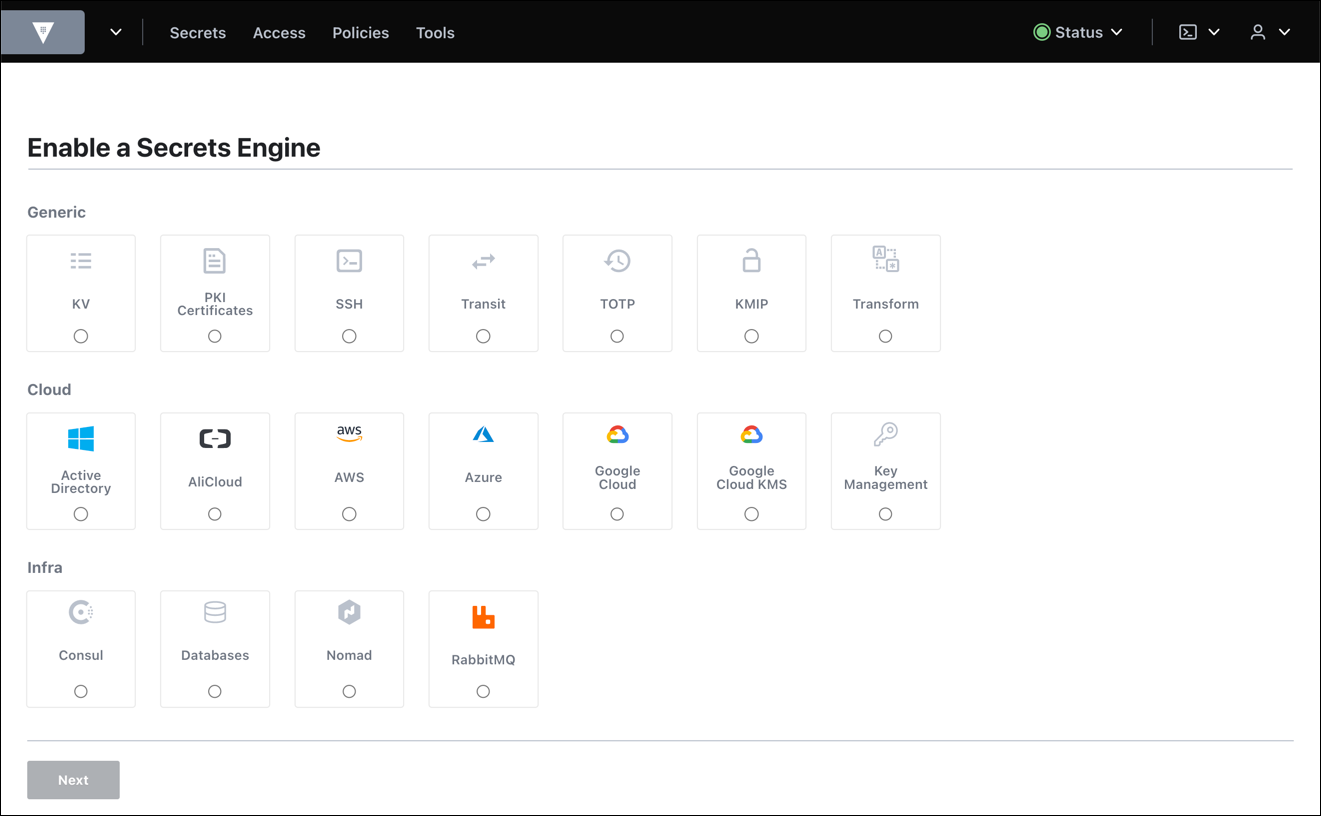
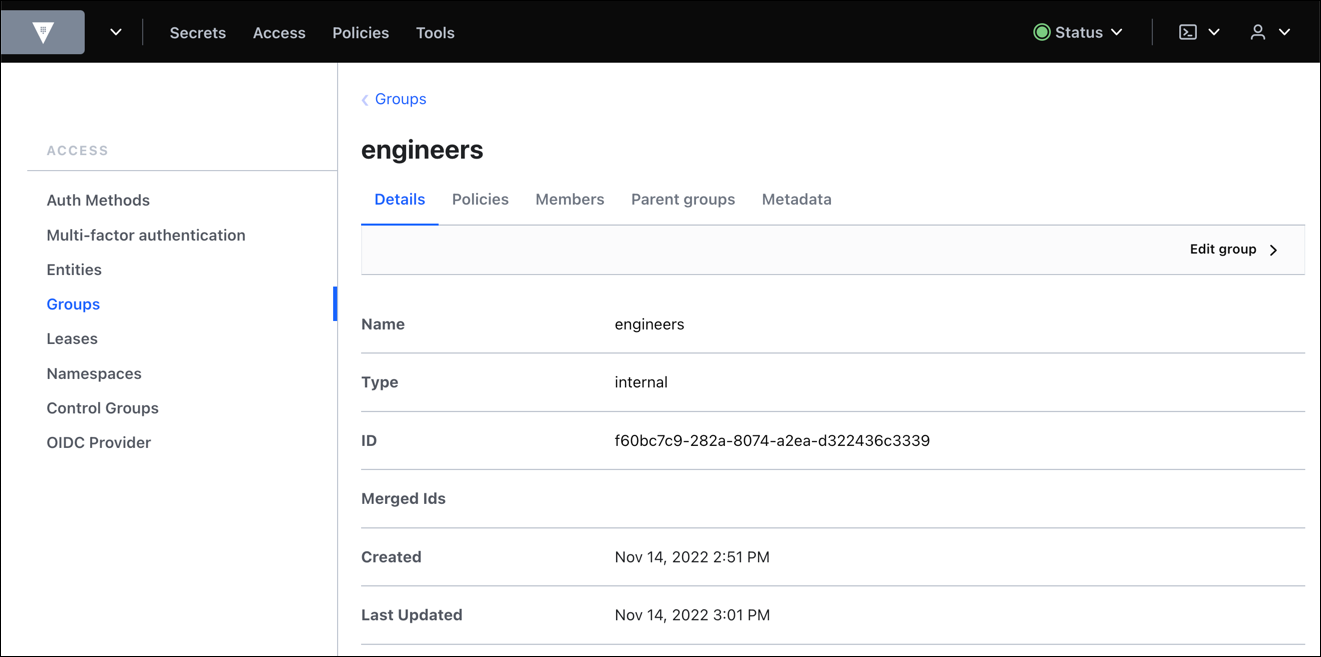
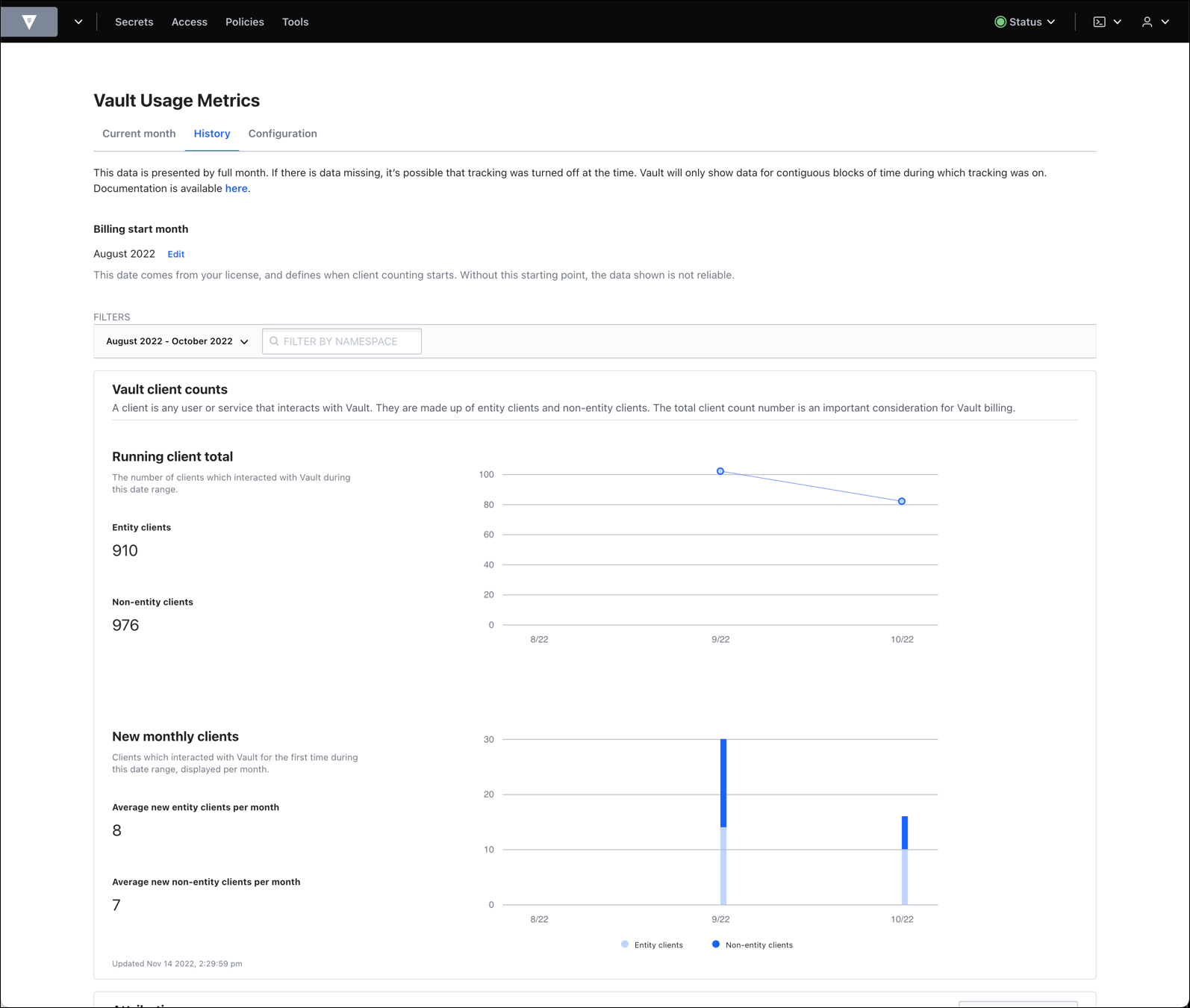
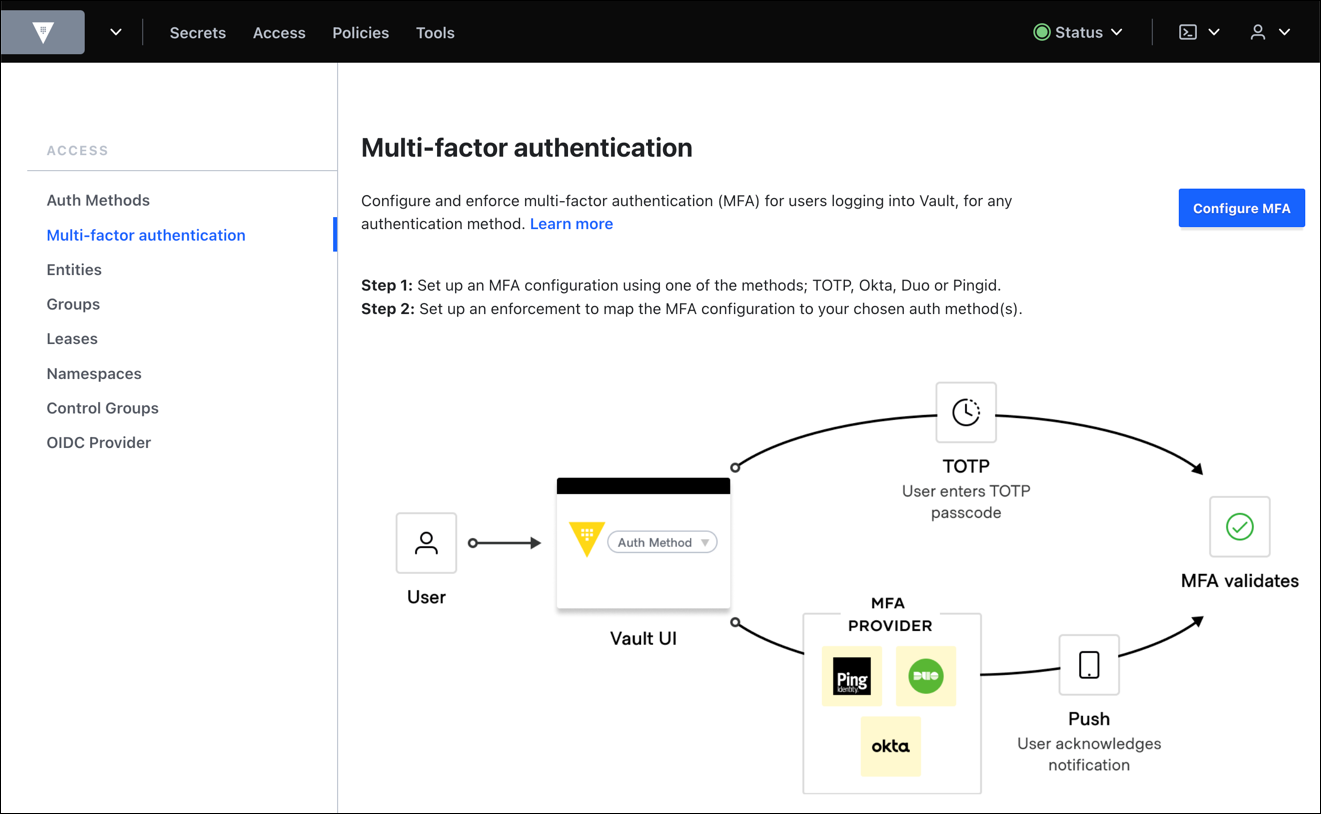
Screenshot of Example of writing a secret to Vault. Secrets are always encrypted and written to backend storage. To learn more: https://developer.hashicorp.com/vault/tutorials/getting-started/getting-started-first-secretScreenshot of Secrets menu to manage integrated secrets engines. Secrets Engines are components which store, generate, or encrypt data and are enabled at a path in Vault. To learn more: https://developer.hashicorp.com/vault/tutorials/getting-started/getting-started-uiScreenshot of Vault identity has support for groups. A group can contain multiple entities as its members. A group can also have subgroups. To learn more: https://developer.hashicorp.com/vault/docs/concepts/identityScreenshot of HCP Vault provides all of the power and security of Vault, without the complexity and overhead of managing it yourself. To learn more:  https://cloud.hashicorp.com/products/vaultScreenshot of View entity client and non-entity client counts.Screenshot of MFA is built on top of the Identity system of Vault. To learn more: https://developer.hashicorp.com/vault/docs/auth/login-mfa