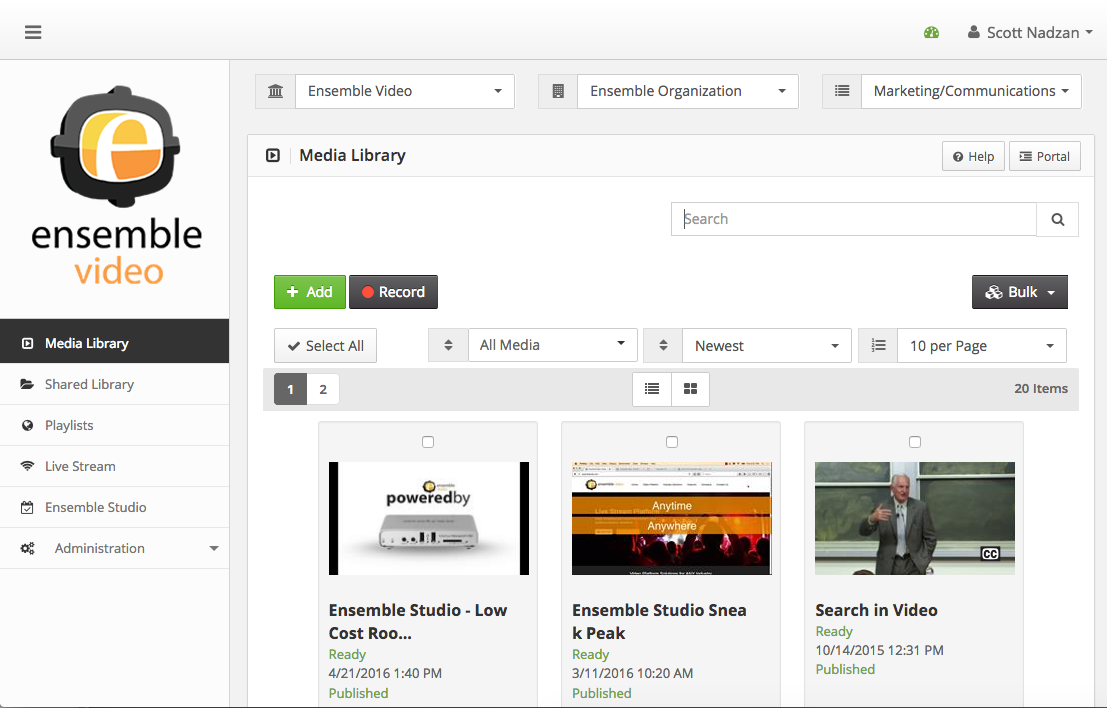
I'm not sure where Ensemble Video would be less appropriate. We've found it to be very effective for our campus-specific use cases. However, the product is very customizable in how a campus could structure their Ensemble instance to match their organization, and how users may be managed.
I use Flipgrid to allow students to share their work with each other. For example, my students created some artwork based on a prompt. Then, they used Flipgrid to record their work and explain their choices. I also required them to comment on each other’s work to make sure they watched the videos
A de minimis incentive was given to thank the reviewer for their time. The incentive was not used to bias or drive a particular response, nor was the incentive contingent on a positive endorsement. More Info
Adapting to user needs. Ensemble Video seems to always be listening to their clients needs and suggestions by implementing effective features in every system update. Communication seems to always indicate that these features are driven by requests that their customers have made to improve the service.
Client Support - I have an IT/support background and have had to deal with many vendors and external support. Ensemble is easily the most responsive and effective vendor when it comes to support. When needing certain solutions, they have sent code that was in development and not officially released so I could achieve my goals with project videos. Support is always personal, prompt and effective.
Customization. New templates, video players, account management, and embed options have allowed us to use Ensemble Video in a much more personalized way. Early versions of the service had an "Ensemble feel" but color schemes and logos are now able to be changed for a better organization feel.
User management. Some features are unique to the entire deployment (like authentication sources). It would be great if multiple authentication options could be used across different Ensemble institutions.
Upgrade processes. Though new versions of Ensemble Video are always better, the installation process is very manual and Ensemble Video must be involved directly. Not a weakness, but it would be nice to be able to perform our own upgrades/patches when needed.
Fligrid can improve using mixed tapes. I feel if it's not pointed out, teachers don't necessarily know it can be done.
When setting up the topic, some of the personalization choices are hard to find or down the page. It would be easier to choose the most used settings and making them the default - like the privacy settings.
I also believe the word Grid should be substituted with class. Teachers are always confused about what the Grid and topic are.
A de minimis incentive was given to thank the reviewer for their time. The incentive was not used to bias or drive a particular response, nor was the incentive contingent on a positive endorsement. More Info
A de minimis incentive was given to thank the reviewer for their time. The incentive was not used to bias or drive a particular response, nor was the incentive contingent on a positive endorsement. More Info
A de minimis incentive was given to thank the reviewer for their time. The incentive was not used to bias or drive a particular response, nor was the incentive contingent on a positive endorsement. More Info
Flipgrid has been easy for both our students and staff to use. When there is an issue with the program, we can easily reach support, and the trouble is resolved in an extremely quick and timely manner.
A de minimis incentive was given to thank the reviewer for their time. The incentive was not used to bias or drive a particular response, nor was the incentive contingent on a positive endorsement. More Info
Flipgrip is great for supporting educators. They provide opportunities for teachers to learn the program and become ambassadors for the program. They are also responsive to questions and concerns through many different modes. That includes online communities, email, and Facebook communities. They are eager to meet and troubleshoot with you and are also eager to meet educators at conferences and meetings.
A de minimis incentive was given to thank the reviewer for their time. The incentive was not used to bias or drive a particular response, nor was the incentive contingent on a positive endorsement. More Info
Ensemble Video has succeeded for us where other solutions have failed. It came along exactly when we needed it, for our organization. At the time, we were caught between the push and pull of several different solutions, uploading our videos with the expectation that users would take the time to download and play them, using popular public video streaming services with few settings and options, and forgoing videos altogether. Ensemble Video has taken our myriad needs and provided a platform that addresses all of them.
Flipgrid is a game changer, working in a similar fashion to these other applications, but offering much more in terms of teacher control and implementation inside the classroom. Teachers can create lesson plans that incorporate options for Flipgrid to be utilized as a formative assessment tool to better gauge student comprehension and understanding.
A de minimis incentive was given to thank the reviewer for their time. The incentive was not used to bias or drive a particular response, nor was the incentive contingent on a positive endorsement. More Info
This product is straightforward to implement and share across our building and district. As a large district, it was not difficult to train staff and have them feel at ease implementing the program.
A de minimis incentive was given to thank the reviewer for their time. The incentive was not used to bias or drive a particular response, nor was the incentive contingent on a positive endorsement. More Info
Ease of user contributed content. The videos that users upload to the system can either be automatically published or they can be reviewed by staff before being added to websites and courses. Instead of all these videos living on different sites (YouTube, Vimeo, etc.) we now have a centralized location that we have control over.
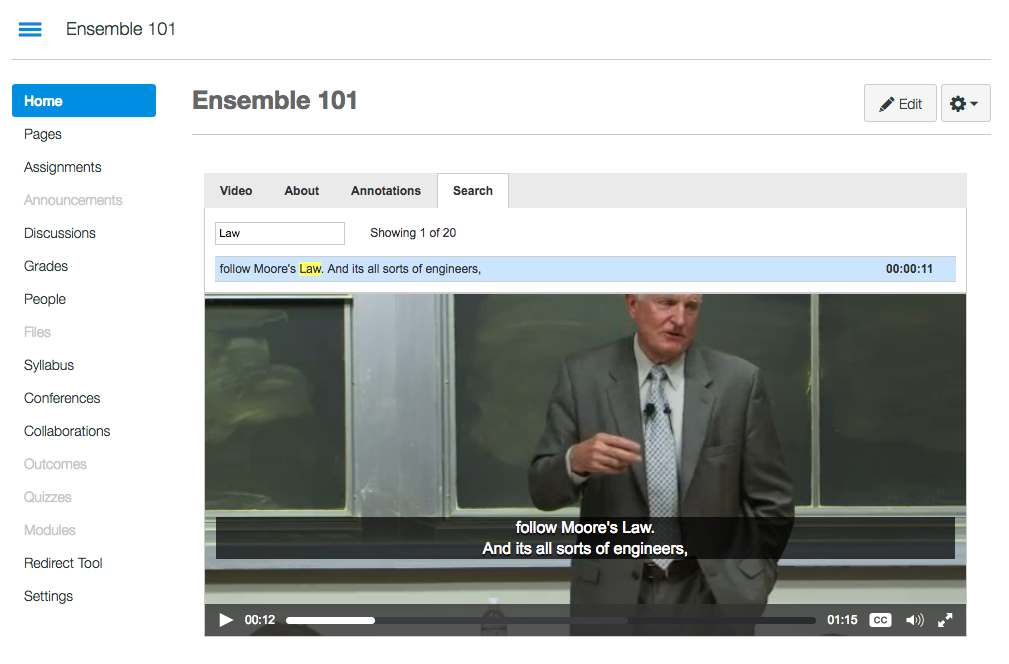
LMS Integration - A year ago YouTube changed their policy to not allow direct recording from webcams. This essentially broke the Blackboard Video Everywhere tool that allowed our instructors to post quick comments in class discussions and content areas. While they need to be pre-recorded, the Ensemble Building Block allows our instructors and students to once again upload and post videos, all from directly within the Blackboard content editor.
Flexibility - With the ease of creating user accounts and video libraries, Ensemble Video has become the go to option for Erikson courses, professional development content and project videos. Different departments can have their own account and have control over their libraries without the worry of them viewing or editing other institute content.
A de minimis incentive was given to thank the reviewer for their time. The incentive was not used to bias or drive a particular response, nor was the incentive contingent on a positive endorsement. More Info