DBConvert Streams vs. IBM Lift

Overview
ProductRatingMost Used ByProduct SummaryStarting Price
DBConvert Streams
Score 0.0 out of 10
Small Businesses (1-50 employees)
DBConvert Streams is a database migration and replication platform that enables data transfer between MySQL and PostgreSQL databases. The solution offers both one-time migrations and continuous real-time replication through Change Data Capture (CDC). Key Features and Benefits: Universal Database Compatibility: Automatically handles schema conversion between MySQL and PostgreSQL databases, eliminating manual type mapping No-Code Interface: Web…
$99
per month data transfer volume (15GB)
IBM Lift
Score 9.7 out of 10
N/A
IBM Lift is a tool provided to migrate on-premise databases to IBM Cloud.N/A
Pricing
DBConvert StreamsIBM Lift
Editions & Modules
Starter
$99
per month data transfer volume (15GB)
Profesional
$449
per month data transfer volume (75GB)
Enterprise
$899
per month data transfer volume (200GB)
No answers on this topic
Offerings
Pricing Offerings
DBConvert StreamsIBM Lift
Free Trial
YesNo
Free/Freemium Version
NoNo
Premium Consulting/Integration Services
NoNo
Entry-level Setup FeeNo setup feeNo setup fee
Additional Details
More Pricing Information
Community Pulse
DBConvert StreamsIBM Lift
Best Alternatives
DBConvert StreamsIBM Lift
Small Businesses
HYCU
HYCU
Score 8.9 out of 10
HYCU
HYCU
Score 8.9 out of 10
Medium-sized Companies
Matillion
Matillion
Score 7.8 out of 10
Matillion
Matillion
Score 7.8 out of 10
Enterprises
Oracle GoldenGate
Oracle GoldenGate
Score 8.7 out of 10
Oracle GoldenGate
Oracle GoldenGate
Score 8.7 out of 10
All AlternativesView all alternativesView all alternatives
User Ratings
DBConvert StreamsIBM Lift
Likelihood to Recommend
-
(0 ratings)
10.0
(0 ratings)
User Testimonials
DBConvert StreamsIBM Lift
Likelihood to Recommend
No answers on this topic
It's well suited for data migration, that's probably why it's called "lift". Although it's designed for migrating data from on-premises data centers to IBM Cloud, it actually can do more than that. In our case, we only use it to extract data from DB2 into CSV files. It's especially helpful when the data size is very big because it can handle that very fast.
Read full review
Pros
No answers on this topic
  • It extracts data from DB2 at vert fast speed
  • It can resume from last left off
  • The CLI is very easy to use
Read full review
Cons
No answers on this topic
  • Even though it can be hectic to migrate data into the cloud with IBM Lift, the support team is free and highly knowledgeable. Also, IBM Lift is well documented in detail explaining all methods to migrate data easily.
Read full review
Alternatives Considered
No answers on this topic
Before Implementing IBM Lift at SquareTrade, we were using AWS Database Migration Service, which was not only expensive but didn’t offer automatic rapid recovery from common issues during data migration.
Read full review
Return on Investment
No answers on this topic
  • IBM Lift being encrypted under 256-bit ensures that we safeguard data right from migration to the cloud.
  • Additionally, we save a lot since it is free to migrate data and we don’t incur any extra or additional fees to perform any data migration after paying for a subscription fee.
  • Automatic data recovery from common problems ensures that we don’t lose even mild data while migrating into the cloud.
Read full review
ScreenShots

DBConvert Streams Screenshots

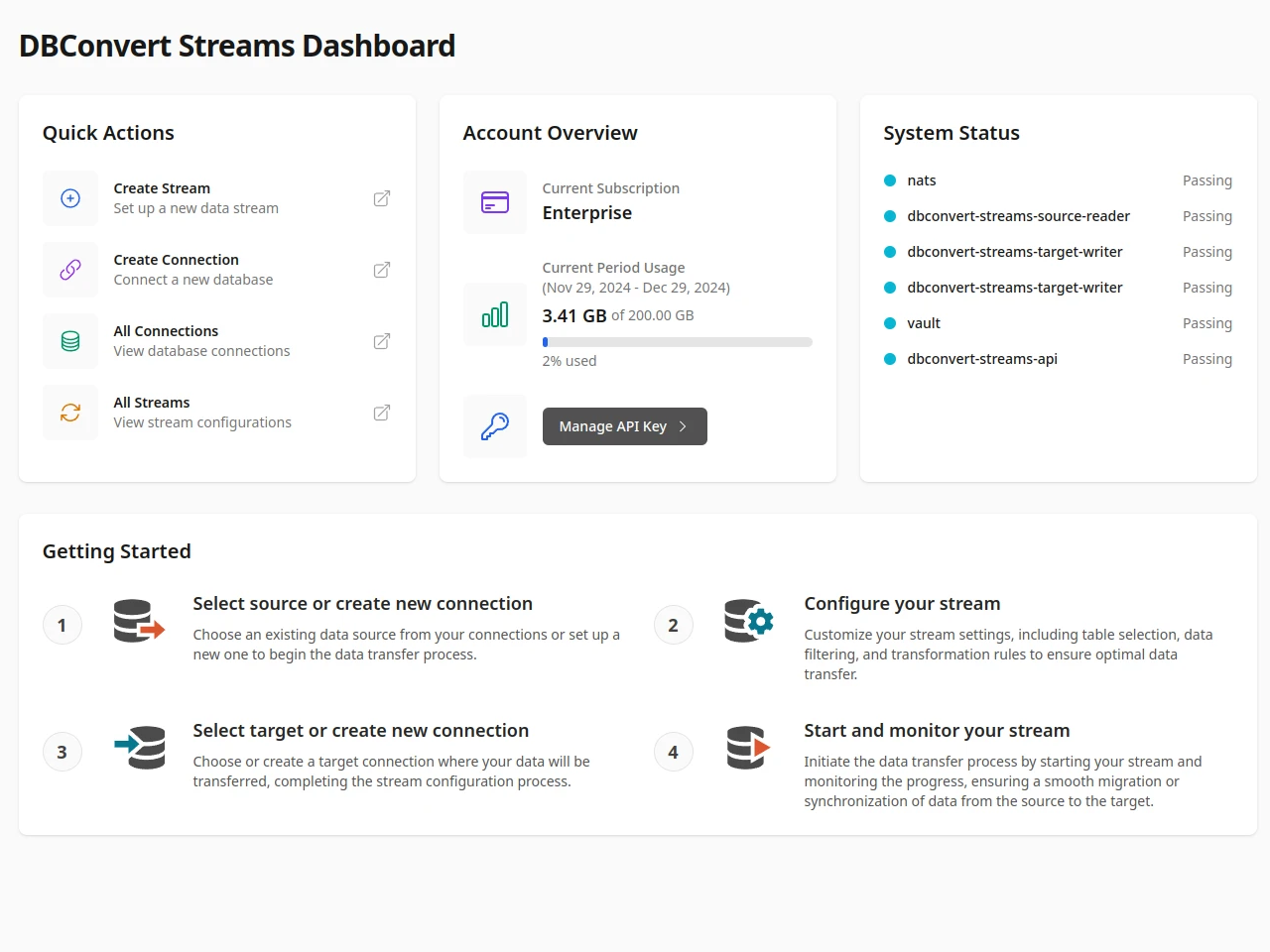
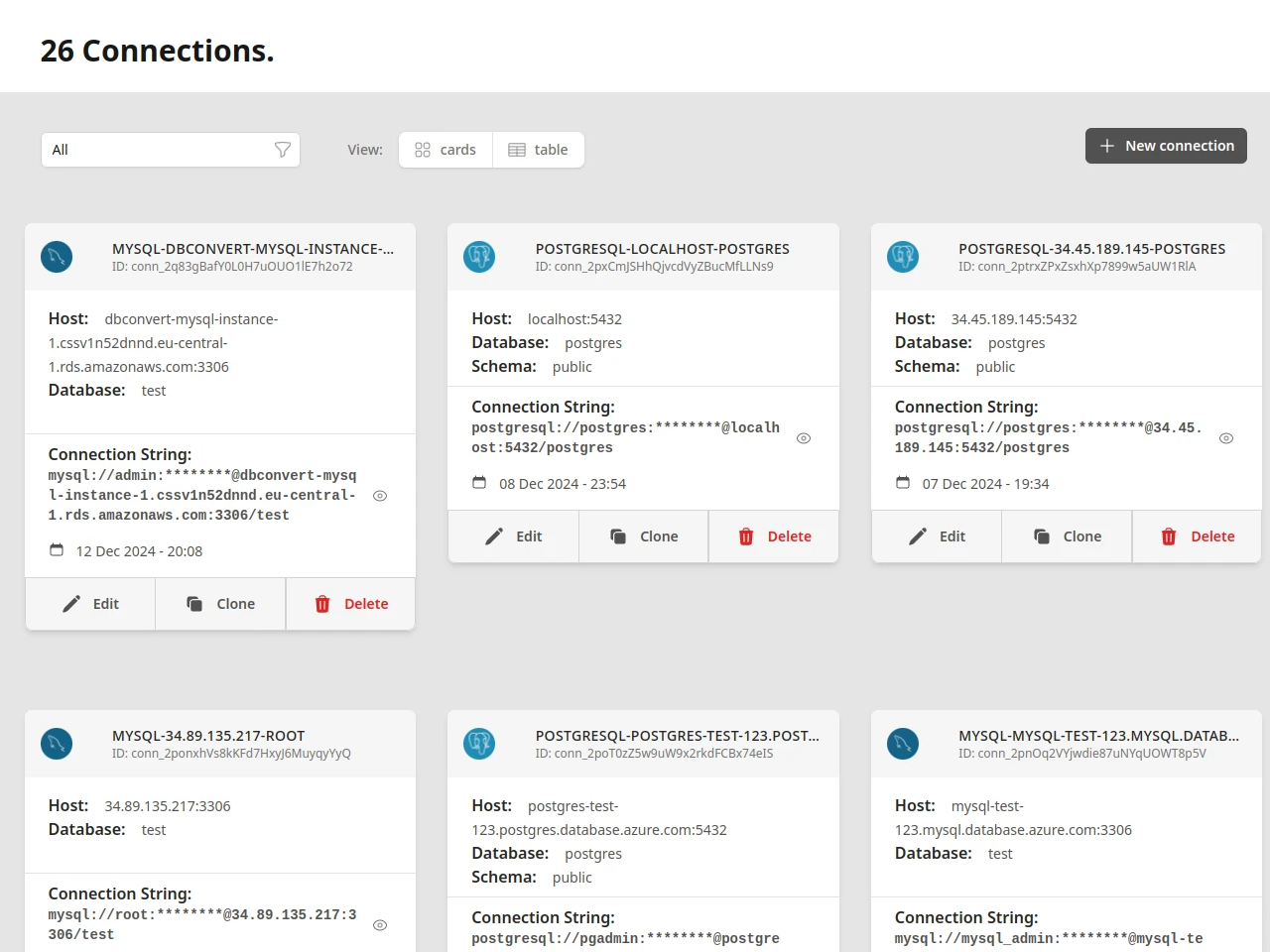
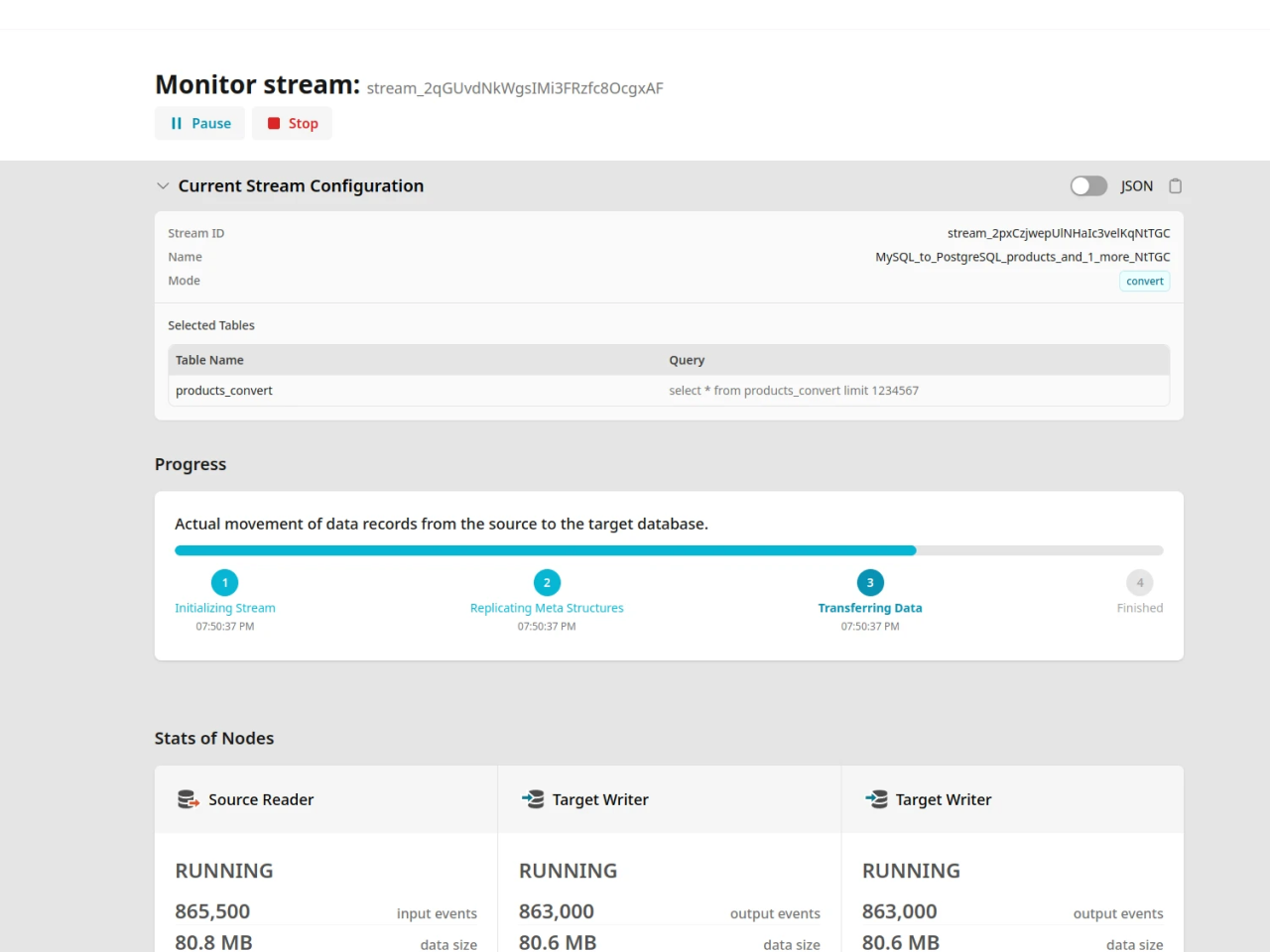
Screenshot of the main dashboard, showing quick actions, account overview with usage metrics, system status indicators, and a step-by-step getting started guide.Screenshot of the connections interface, showing multiple MySQL and PostgreSQL database connections across different environments including AWS, Azure, and local instances. Users can view connection details, edit configurations, and add new connections.Screenshot of the monitoring interface showing active data transfer with progress tracking, status indicators, and detailed metrics. Displays current stream configuration, progress stages, performance statistics from source reader and target writers, and system logs for troubleshooting. Users can pause or stop transfers while monitoring data volume and transfer rates.