The Dataiku platform unifies all data work, from analytics to Generative AI. It can modernize enterprise analytics and accelerate time to insights with visual, cloud-based tooling for data preparation, visualization, and workflow automation.
N/A
OpenText Magellan
Score9 out of 10
N/A
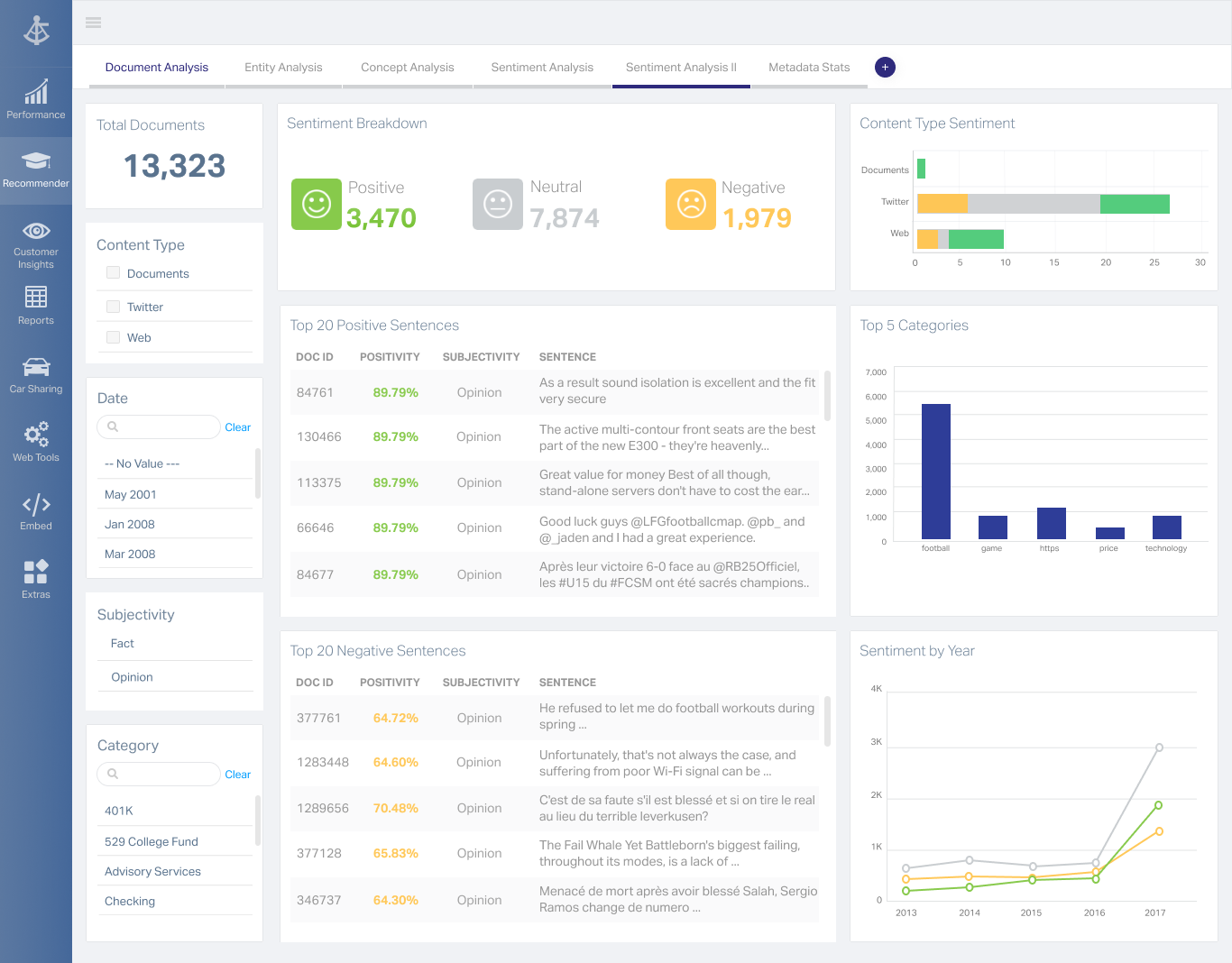
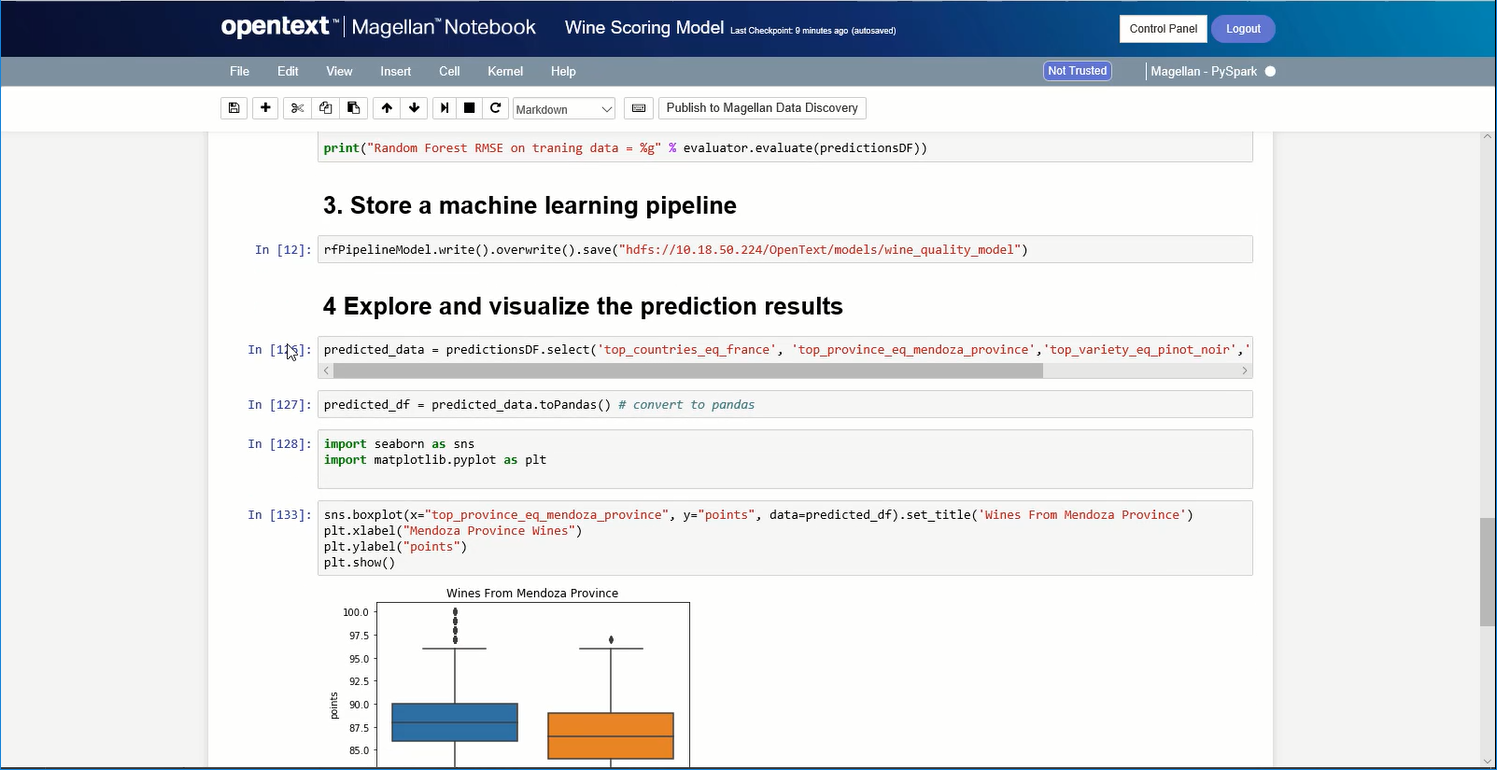
OpenText Magellan Analytics Suite leverages a comprehensive set of data analytics software to identify patterns, relationships and trends through data visualizations and interactive dashboards.
N/A
Pricing
Dataiku
OpenText Magellan
Editions & Modules
Discover
Contact sales team
Business
Contact sales team
Enterprise
Contact sales team
No answers on this topic
Offerings
Pricing Offerings
Dataiku
OpenText Magellan
Free Trial
Yes
No
Free/Freemium Version
Yes
No
Premium Consulting/Integration Services
No
No
Entry-level Setup Fee
No setup fee
No setup fee
Additional Details
—
—
More Pricing Information
Features
Dataiku
OpenText Magellan
Platform Connectivity
Comparison of Platform Connectivity features of Dataiku and OpenText Magellan
Feature
Dataiku
9.1
4 Ratings
8% above category average
OpenText Magellan
-
Ratings
Connect to Multiple Data Sources
10.04 Ratings
00 Ratings
Extend Existing Data Sources
10.04 Ratings
00 Ratings
Automatic Data Format Detection
10.04 Ratings
00 Ratings
MDM Integration
6.52 Ratings
00 Ratings
Data Exploration
Comparison of Data Exploration features of Dataiku and OpenText Magellan
Feature
Dataiku
10.0
4 Ratings
18% above category average
OpenText Magellan
-
Ratings
Visualization
9.94 Ratings
00 Ratings
Interactive Data Analysis
10.04 Ratings
00 Ratings
Data Preparation
Comparison of Data Preparation features of Dataiku and OpenText Magellan
Feature
Dataiku
10.0
4 Ratings
20% above category average
OpenText Magellan
-
Ratings
Interactive Data Cleaning and Enrichment
10.04 Ratings
00 Ratings
Data Transformations
10.04 Ratings
00 Ratings
Data Encryption
10.04 Ratings
00 Ratings
Built-in Processors
10.04 Ratings
00 Ratings
Platform Data Modeling
Comparison of Platform Data Modeling features of Dataiku and OpenText Magellan
Feature
Dataiku
8.7
4 Ratings
4% above category average
OpenText Magellan
-
Ratings
Multiple Model Development Languages and Tools
5.14 Ratings
00 Ratings
Automated Machine Learning
10.04 Ratings
00 Ratings
Single platform for multiple model development
10.04 Ratings
00 Ratings
Self-Service Model Delivery
10.04 Ratings
00 Ratings
Model Deployment
Comparison of Model Deployment features of Dataiku and OpenText Magellan
Feature
Dataiku
9.0
4 Ratings
5% above category average
OpenText Magellan
-
Ratings
Flexible Model Publishing Options
9.04 Ratings
00 Ratings
Security, Governance, and Cost Controls
9.04 Ratings
00 Ratings
BI Standard Reporting
Comparison of BI Standard Reporting features of Dataiku and OpenText Magellan
Feature
Dataiku
-
Ratings
OpenText Magellan
7.0
2 Ratings
15% below category average
Customizable dashboards
00 Ratings
7.02 Ratings
Report Formatting Templates
00 Ratings
7.01 Ratings
Ad-hoc Reporting
Comparison of Ad-hoc Reporting features of Dataiku and OpenText Magellan
Feature
Dataiku
-
Ratings
OpenText Magellan
8.3
3 Ratings
3% above category average
Drill-down analysis
00 Ratings
8.03 Ratings
Formatting capabilities
00 Ratings
8.03 Ratings
Integration with R or other statistical packages
00 Ratings
9.01 Ratings
Report sharing and collaboration
00 Ratings
8.02 Ratings
Report Output and Scheduling
Comparison of Report Output and Scheduling features of Dataiku and OpenText Magellan
Feature
Dataiku
-
Ratings
OpenText Magellan
8.3
2 Ratings
0% below category average
Publish to Web
00 Ratings
8.02 Ratings
Publish to PDF
00 Ratings
8.02 Ratings
Report Versioning
00 Ratings
9.02 Ratings
Report Delivery Scheduling
00 Ratings
8.02 Ratings
Data Discovery and Visualization
Comparison of Data Discovery and Visualization features of Dataiku and OpenText Magellan
Dataiku DSS is very well suited to handle large datasets and projects which requires a huge team to deliver results. This allows users to collaborate with each other while working on individual tasks. The workflow is easily streamlined and every action is backed up, allowing users to revert to specific tasks whenever required. While Dataiku DSS works seamlessly with all types of projects dealing with structured datasets, I haven't come across projects using Dataiku dealing with images/audio signals. But a workaround would be to store the images as vectors and perform the necessary tasks.
A de minimis incentive was given to thank the reviewer for their time. The incentive was not used to bias or drive a particular response, nor was the incentive contingent on a positive endorsement. More Info
If you do not have a large budget and are a large organization, I would steer clear of Actuate. If you are looking to do very complex washboarding, I would not use them. Your developers have to be very skilled to work with this. Plan to bring in consultants if necessary to help your process. Adhoc reporting is weak. If your pricing is user based and you expand, this could be very expensive.
A de minimis incentive was given to thank the reviewer for their time. The incentive was not used to bias or drive a particular response, nor was the incentive contingent on a positive endorsement. More Info
A de minimis incentive was given to thank the reviewer for their time. The incentive was not used to bias or drive a particular response, nor was the incentive contingent on a positive endorsement. More Info
A de minimis incentive was given to thank the reviewer for their time. The incentive was not used to bias or drive a particular response, nor was the incentive contingent on a positive endorsement. More Info
A de minimis incentive was given to thank the reviewer for their time. The incentive was not used to bias or drive a particular response, nor was the incentive contingent on a positive endorsement. More Info
I am no longer working for the company that was using Actuate but I believe they would continue to use it because the stitching costs would be to high. It would require a complete rewrite of the reports and the never version of Actuate (BIRT) even required an almost complete report rewrite
A de minimis incentive was given to thank the reviewer for their time. The incentive was not used to bias or drive a particular response, nor was the incentive contingent on a positive endorsement. More Info
As I have described earlier, the intuitiveness of this tool makes it great as well as the variety of users that can use this tool. Also, the plugins available in their repository provide solutions to various data science problems.
A de minimis incentive was given to thank the reviewer for their time. The incentive was not used to bias or drive a particular response, nor was the incentive contingent on a positive endorsement. More Info
It is quite intuitive to use. It is fit specifically for doing sentiment, emotion, and intention analysis as well as text classification and text summarization. I would have given 10 if it is fit for the purpose of doing image processing and analysis as well. There is a huge market to analyze video and image data.
A de minimis incentive was given to thank the reviewer for their time. The incentive was not used to bias or drive a particular response, nor was the incentive contingent on a positive endorsement. More Info
The support team is very helpful, and even when we discover the missing features, after providing enough rational reasons and requirements, they put into it their development pipeline for the future release.
A de minimis incentive was given to thank the reviewer for their time. The incentive was not used to bias or drive a particular response, nor was the incentive contingent on a positive endorsement. More Info
Strictly for Data Science operations, Anaconda can be considered as a subset of Dataiku DSS. While Anaconda supports Python and R programming languages, Dataiku also provides this facility, but also provides GUI to creates models with just a click of a button. This provides the flexibility to users who do not wish to alter the model hyperparameters in greater depths. Writing codes to extract meaningful data is time consuming compared to Dataiku's ability to perform feature engineering and data transformation through click of a button.
A de minimis incentive was given to thank the reviewer for their time. The incentive was not used to bias or drive a particular response, nor was the incentive contingent on a positive endorsement. More Info
It is vastly superior to these in many ways, for complex reporting it is a much more sophisticated solution. Visualizations are very good. Javascript extensibility is very powerful, others don't support this or as well. Pentaho and MS are both OLAP oriented. Pentaho is moving more toward big data, which was not our primary focus. Others are stuck in the Crystal Reports Band metaphor.
A de minimis incentive was given to thank the reviewer for their time. The incentive was not used to bias or drive a particular response, nor was the incentive contingent on a positive endorsement. More Info
Actuate can handle 50 to 60 sub reports inside a report very well.
Dynamically creating the datasource, chart, graph, reports are the main advantages. We can do any level of drilling, and can create a performance matrix dashboard efficiently.