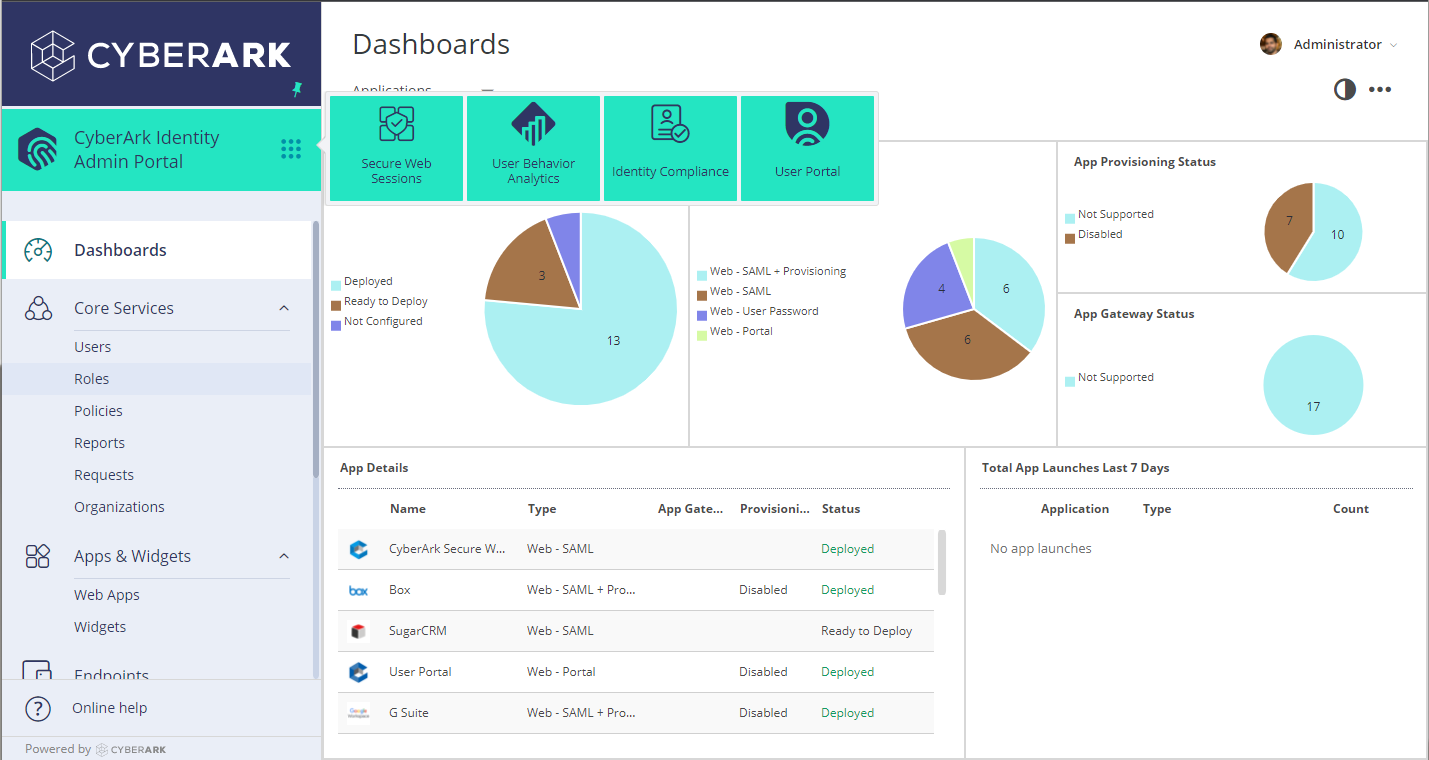
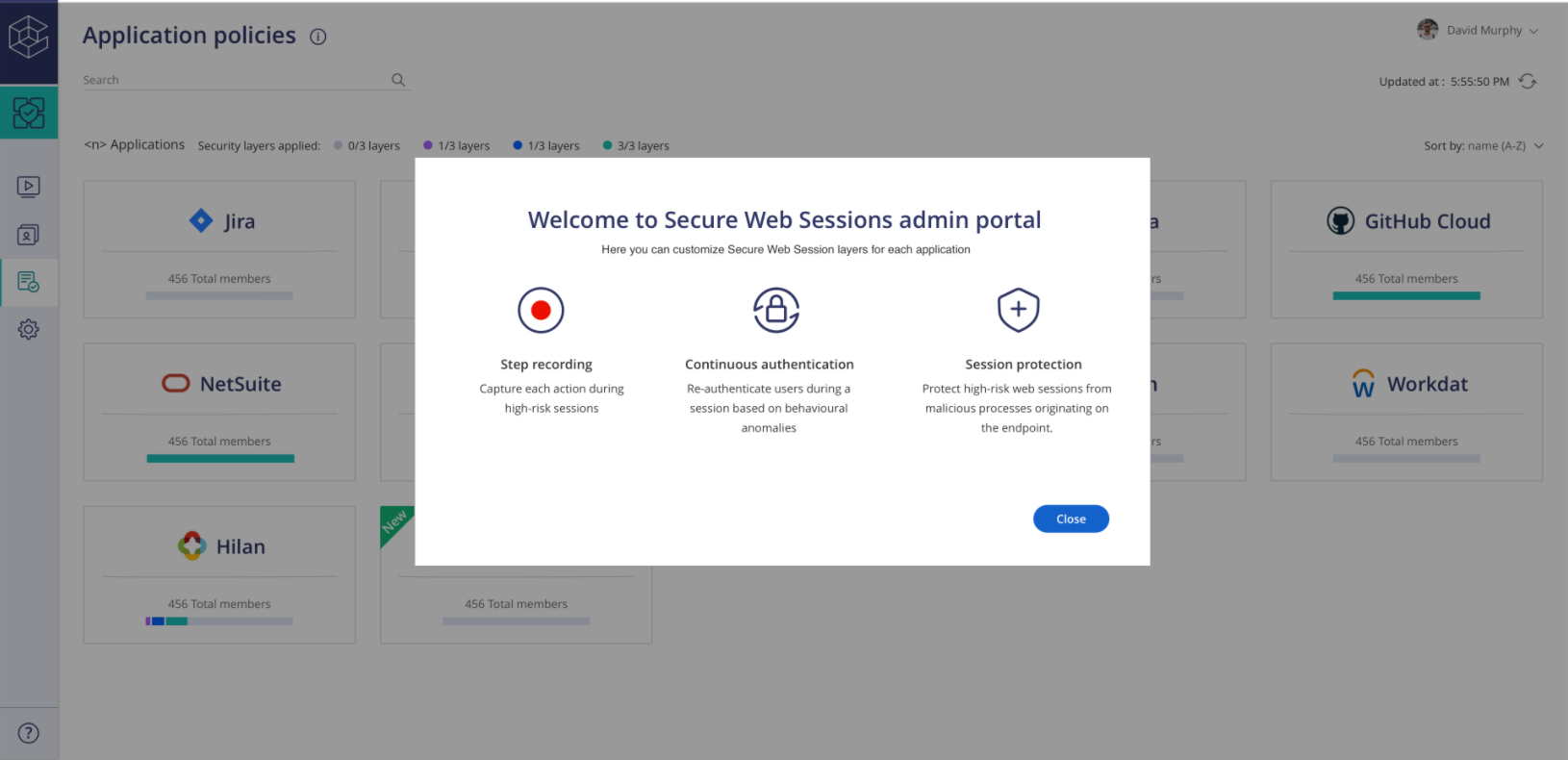
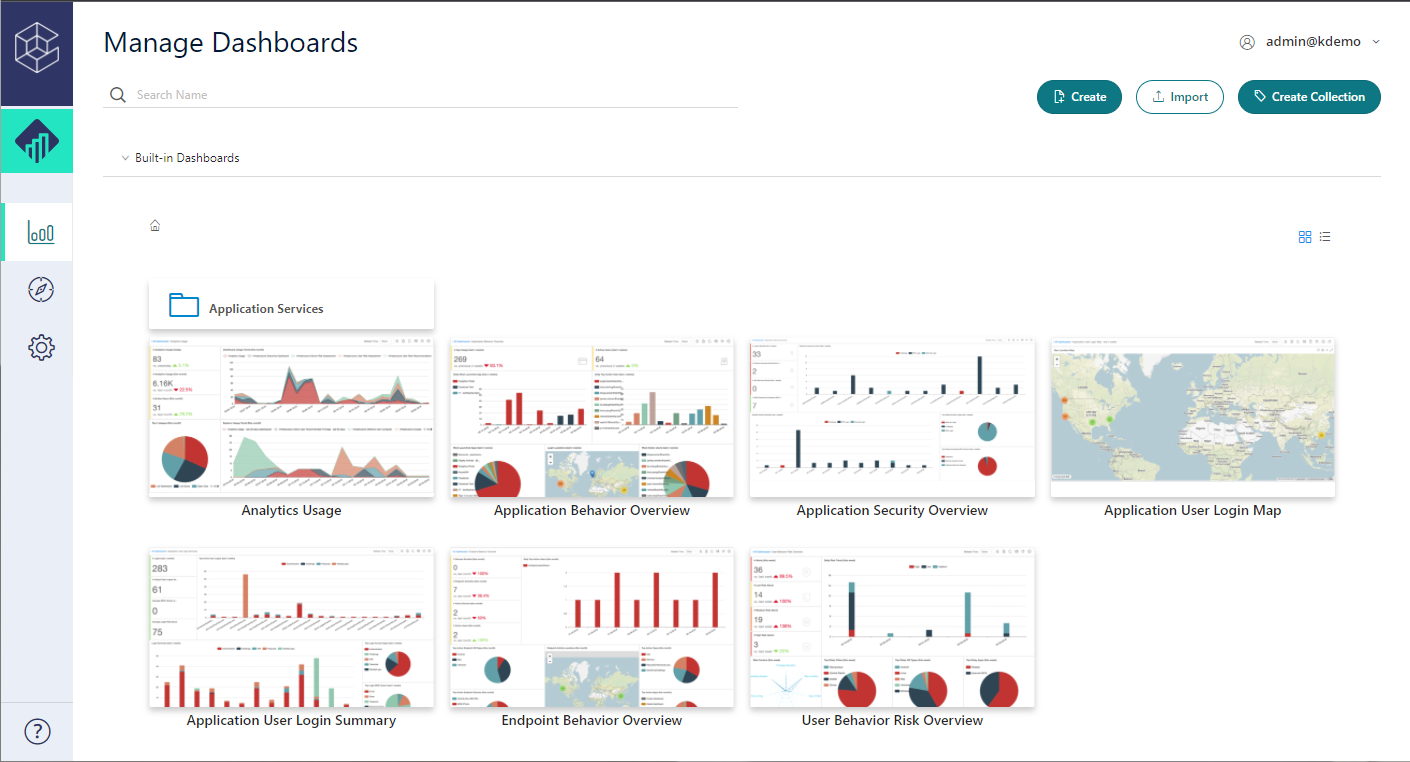
CyberArk Identity is a SaaS-delivered suite of solutions designed to simplify identity and access management in enterprises. CyberArk Identity unifies Workforce Access and Identity Management solutions in a single offering. Workforce Access capabilities include single sign-on, multi-factor authentication, session security, and credential management. Identity Management capabilities include lifecycle management, identity orchestration, and identity governance. With CyberArk Identity,…
N/A
F5 BIG-IP Access Policy Manager (APM)
Score 8.9 out of 10
N/A
F5 Networks provides BIG-IP Access Policy Manager as an identity and access solution which can be deployed as a standalone solution or as an add-on to F5 Networks' flagship BIG-IP TLM or F5 Advanced WAF applications.
N/A
Pricing
CyberArk Workforce Identity
F5 BIG-IP Access Policy Manager (APM)
Editions & Modules
No answers on this topic
No answers on this topic
Offerings
Pricing Offerings
CyberArk Workforce Identity
F5 BIG-IP Access Policy Manager (APM)
Free Trial
Yes
No
Free/Freemium Version
No
No
Premium Consulting/Integration Services
No
No
Entry-level Setup Fee
No setup fee
No setup fee
Additional Details
—
—
More Pricing Information
Community Pulse
CyberArk Workforce Identity
F5 BIG-IP Access Policy Manager (APM)
Features
CyberArk Workforce Identity
F5 BIG-IP Access Policy Manager (APM)
Identity Management
Comparison of Identity Management features of Product A and Product B
CyberArk Workforce Identity
9.0
Ratings
11% above category average
F5 BIG-IP Access Policy Manager (APM)
-
Ratings
ID-Management Access Control
9.00 Ratings
00 Ratings
ID Management Single-Sign On (SSO)
9.00 Ratings
00 Ratings
Multi-Factor Authentication
9.00 Ratings
00 Ratings
Password Management
9.00 Ratings
00 Ratings
Account Provisioning and De-provisioning
9.00 Ratings
00 Ratings
ID Management Workflow Automation
9.00 Ratings
00 Ratings
ID Risk Management
9.00 Ratings
00 Ratings
Virtual Private Network
Comparison of Virtual Private Network features of Product A and Product B
Centrify Identity Service is well suited for nearly any organization, especially ones utilizing Active Directory for user management. It is especially well suited for organizations looking to reduce internal resource use, because it's easy to maintain and manage. Its features also allow you to free up resources previously dedicated to the provisioning and deprovisioning of Office 365/Salesforce users (as well as other applications).
In the current digital world we are moving into, I would recommend F5 for all SMB to enterprise organizations. There are various models to pick from. This helps secure the environment and make the network robust to any sort of attacks. I am not able to think of any reason why one should not deploy or this device is less appropriate because nowadays every small company has application / ERPs. It is also worthwhile to note in case if all your apps are being deployed in the cloud by another service provider who provides you SAAS access, in that case, you can be at ease as securing these app falls on to the provider. However, should the budget be available I would recommend deploy this and enhancing your security.
Single Sign-on Integration is easy and complete configuration is UI driven with lots of help tips
RESTFul APIs for Multi-factor Authentication is easy to use and implement. Also, Centrify supports all new Security features for Multi Factor Authentication and hence you can easily select and configure different challenges based on the policies and roles for the user.
Lots of Built-in reports available for normal day to day auditing.
Occasionally, I get logged out of Gmail, sometimes in the middle of an email. I'm not sure why it happens, but I think it has something to do with timing out. Which is strange because I'm on email all day. Not sure why.
Centrify is central to creating efficiency and safety for our clients and internally. To remove it would cause a massive disturbance in the lives of our employees and our clients.
If F5 BIG-IP Access Policy Manager usability is fine it's not hard to use if you read the documentation but it does feel dated and could use a responsive design update to modernize user interface to current standards.
The support staff thus far has been very helpful. At times I feel they are driving the process forward without my intervention or constant reminder, which is nice to have in a company for a change. Most support seems to be a hassle but so far Centrify appears to treat your project as their own project.
We started off using ADFS from Microsoft, which took most of a day to get fully functional and nearly a week to get fully optimized. The documentation was inconsistent with ADFS and there was no real support without opening a Microsoft Premier Support ticket. At the time, if you turned on Multi-Factor Authentication (MFA) for Office 365, it turned it on for everything without any granularity. Our Information Security department said that MFA was a requirement for offsite access to our email systems, but users didn't need MFA when onsite. We looked at Okta, OneLogin, and Centrify at the same time. Centrify was the only one that responded quickly and offered a free POC with support included. We tried to deploy the Okta solution on our own, but ran into issues due to some of our non-standard AD configuration. We never received a return call from OneLogin. The Centrify POC took about 15 minutes to complete for basic functionality and a couple of hours to work out the issues related to our environment. We have been very happy with the Centrify solution and went live with our POC.
F5 BIG-IP Access Policy Manager integrates extremely well with the rest of our F5 infrastructure which is a big plus and provides us with a familiar user interface, but it isn't as scalable in its current iteration as something like Zscaler Private Access.
CyberArk Workforce Identity provides secure access to on-premises and cloud applications. The platform is highly scalable and works well for companies of any size.
I can classify and label data. Also keep track of activity in shared applications and data, to know exactly who accesses each of the files.