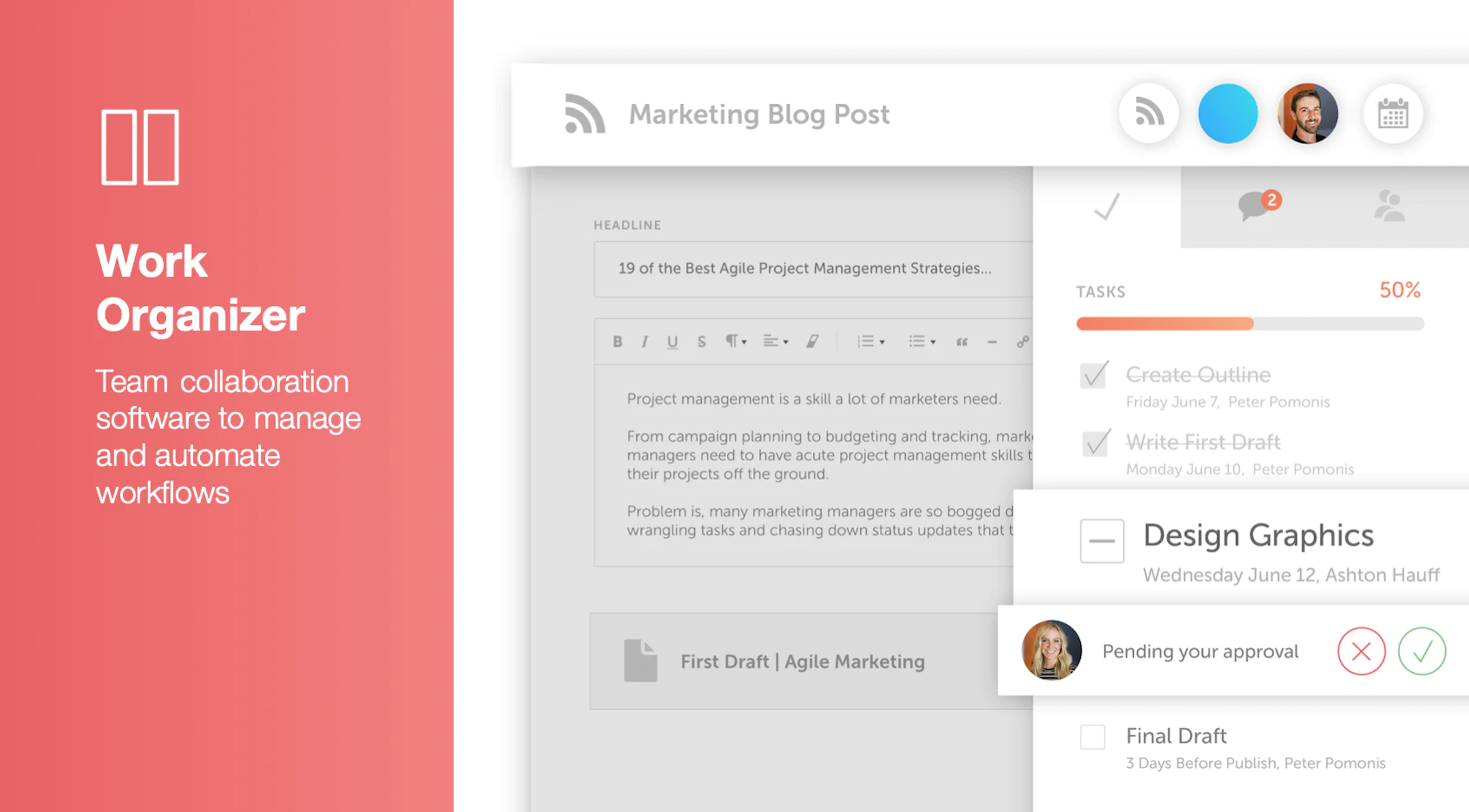
CoSchedule provides a content calendar, content optimization, and contentmarketing products, with users among 50,000 marketers worldwide, helping them organize their work, deliver projects on time, and prove marketing team value.
N/A
X Pro
Score8 out of 10
N/A
Replacing the former TweetDeck, X Pro is a social media dashboard application for management of Twitter accounts.
N/A
Pricing
CoSchedule Marketing Suite
X Pro
Editions & Modules
No answers on this topic
No answers on this topic
Offerings
Pricing Offerings
CoSchedule Marketing Suite
X Pro
Free Trial
No
No
Free/Freemium Version
Yes
Yes
Premium Consulting/Integration Services
No
No
Entry-level Setup Fee
No setup fee
No setup fee
Additional Details
—
—
More Pricing Information
Community Pulse
CoSchedule Marketing Suite
X Pro
Considered Both Products
CoSchedule
No answer on this topic
X Corp (formerly Twitter)
Verified User
Chose X Pro
Sprinklr is a one-stop space for all social media platforms and Tweetdeck only offers use with Twitter. However, Sprinklr has been unreliable for us in the past for scheduled posts and is a bit more complicated to navigate - hence we alternate between TweetDeck and Sprinklr. Spr…
A de minimis incentive was given to thank the reviewer for their time. The incentive was not used to bias or drive a particular response, nor was the incentive contingent on a positive endorsement. TR verified that a representative sample of customers was invited. More Info
CoSchedule is great for businesses or agencies who need an overview of all their marketing efforts, and who want to establish collaboration between multiple departments. The calendar view is one of the best we've worked with and makes it easy to see exactly what's happening. There is some slight clunkiness when it comes to admin-related tasks, and a few things aren't easy to find, but there's great support.
A de minimis incentive was given to thank the reviewer for their time. The incentive was not used to bias or drive a particular response, nor was the incentive contingent on a positive endorsement. More Info
TweetDeck is ideal for complex media organisations / newsrooms where you want to keep track of several users accounts, or switch between multiple user and/or title accounts. It is perfect for those who want to follow conversations in real-time via many channels, at a glance. It is also useful for those who want to schedule tweets to provide around the clock coverage even when unmanned. Now that it paid-for is less suited to smaller organisations with tight budgets.
A de minimis incentive was given to thank the reviewer for their time. The incentive was not used to bias or drive a particular response, nor was the incentive contingent on a positive endorsement. More Info
TweetDeck is the best platform to schedule tweets - it is far better than the website itself. The process is remarkably easy and scheduling a day's worth of tweets takes no more than 10 minutes.
Tracking news is very easy on TweetDeck due to being able to create multiple columns each focusing on a different subject. Columns can be created using handles, searches, hashtags, and trends, and this makes TweetDeck a great platform as a news editor.
A de minimis incentive was given to thank the reviewer for their time. The incentive was not used to bias or drive a particular response, nor was the incentive contingent on a positive endorsement. More Info
The platform seems sluggish as of late, likely as a result of the robust amount of data we are entering and the number of filters we're creating.
Social media scheduling exists, but we do run into publishing errors more often then we'd like.
Task templates when updated are not retroactive, so when you create projects for an entire year and then change a template, you need to go back and change them manually.
A de minimis incentive was given to thank the reviewer for their time. The incentive was not used to bias or drive a particular response, nor was the incentive contingent on a positive endorsement. More Info
TweetDeck has an editing feature for scheduled posts only if there is no image attached. When a post with an image needs editing, users must instead delete the entire post and reschedule it with the edits needed.
TweetDeck has a real-time display, however users often need to refresh the window manually to get scheduled posts to appear in the appropriate column.
TweetDeck users can scroll side to side to view all off the types of columns selected. This functionality often leads to traveling back to a previous page unintentionally.
A de minimis incentive was given to thank the reviewer for their time. The incentive was not used to bias or drive a particular response, nor was the incentive contingent on a positive endorsement. More Info
As I previously mentioned, if TweetDeck were to increase some features and integrations, cleaned up its interface, and developed a tool to measure ROI, it would remain competitive with HootSuite and Hubspot. Altogether, it is an effective tool for the job of scheduling and monitoring your impact on Twitter, it falls behind other competitors that offer a more robust solution.
The interface is very intuitive, from setting up social profiles, to posting, to tags, to optimizing for best day/time to post. It's super easy to scan the aggregate analytics. The calendar is very easy to grok at a glance, and the more advanced functionality is intuitive to set up.
A de minimis incentive was given to thank the reviewer for their time. The incentive was not used to bias or drive a particular response, nor was the incentive contingent on a positive endorsement. More Info
It's a pretty easy tool to use I find a few of the columns to be a bit repetitive. If you are managing more than one account you'll start to find yourself having easily 10 plus columns all tracking all different information which creates nice track lanes to keep all that relative information in one column or "view". With the amount of data that is pushed out, if you are following a large number of accounts, it's extremely easy to lose valuable posts in your feeds. As you begin building out your columns they get the point where you only look at one or two and the rest seem to be lost. Overall, this a free tool and there are other social monitoring tools that are out there but are in the multiple thousands of dollar range
TweetDeck tends to be available for use majority of the time...however, I've had times where it would get stuck in a loop and then post my Tweet multiple times.
I didn't have to use their official support, but I can say that they put out a lot of content online to help users. Their YouTube page has quite an array of tutorial videos explaining how things work and how to get the most out of their tools. If you're struggling, before picking up a phone or blasting off an email, try searching for your problem on YouTube or their forums.
A de minimis incentive was given to thank the reviewer for their time. The incentive was not used to bias or drive a particular response, nor was the incentive contingent on a positive endorsement. More Info
I've never had to contact customer support. Tweetdeck has always worked like a charm for me. And, if I have had a problem, I've simply deleted the column, then recreated it and it worked again. While it's not without its glitches every once in a great while, it's worked like a charm.
A de minimis incentive was given to thank the reviewer for their time. The incentive was not used to bias or drive a particular response, nor was the incentive contingent on a positive endorsement. More Info
CoSchedule provides collaborative planning of projects. The calendar view is very well designed. Meetings and tasks can be scheduled and tracked easily. Whatever is being done, no matter how big the task/project is, it gives a bird-eye view of everything. Additionally, it also integrated very well with WordPress. Their customer service team is also very helpful.
A de minimis incentive was given to thank the reviewer for their time. The incentive was not used to bias or drive a particular response, nor was the incentive contingent on a positive endorsement. More Info
Several years ago I used the Hootsuite Free service. I found Tweetdeck to be preferable because of its user interface, and greater functionality. Moreover, I recall Hootsuite bombarding me with emails that were just irrelevant. TweetDeck just does what it does, without hassle. Its UI and functionality for multiple accounts seems to be the best I've tried.
A de minimis incentive was given to thank the reviewer for their time. The incentive was not used to bias or drive a particular response, nor was the incentive contingent on a positive endorsement. More Info
It has saved me about 1 hour per day to keep things organized from Asana to WordPress.
By not having a functioning Google Doc import feature, it costs me about 30 minutes for each blog post to copy paste all the content, images, etc.
By bundling too many features into their plans, many of which we don't use (e.g. social media scheduling), we lose a little ROI because we are not using the full feature set. We use and prefer Buffer for social media, so when CoSchedule raised their price $40+ per month on features we would not be using, that hurt.
A de minimis incentive was given to thank the reviewer for their time. The incentive was not used to bias or drive a particular response, nor was the incentive contingent on a positive endorsement. More Info
A de minimis incentive was given to thank the reviewer for their time. The incentive was not used to bias or drive a particular response, nor was the incentive contingent on a positive endorsement. TR verified that a representative sample of customers was invited. More Info