Contentful is a cloud based CMS solution that provides the ability to manage content across multiple platforms.The editing interface allows for managing content interactively and provides developers the ability to deliver the content with the programming language and template framework of their choice.
$300
per month
Paligo
Score 9.3 out of 10
N/A
Paligo, headquartered in Stockholm, offers their component content management system (CCMS), supporting the creation and publishing of technical documentation and help systems.
$4,800
per year
Pricing
Contentful
Paligo
Editions & Modules
Lite
$300
per month
Community
Free
Enterprise
Custom
Professional
from $4800
per year
Business
Contact Sales
per year
Enterprise
Contact Sales
per year
Offerings
Pricing Offerings
Contentful
Paligo
Free Trial
Yes
No
Free/Freemium Version
Yes
No
Premium Consulting/Integration Services
No
No
Entry-level Setup Fee
Optional
Optional
Additional Details
—
—
More Pricing Information
Community Pulse
Contentful
Paligo
Features
Contentful
Paligo
Security
Comparison of Security features of Product A and Product B
Contentful
7.3
Ratings
10% below category average
Paligo
-
Ratings
Role-based user permissions
7.30 Ratings
00 Ratings
Platform & Infrastructure
Comparison of Platform & Infrastructure features of Product A and Product B
Contentful
8.0
Ratings
5% above category average
Paligo
-
Ratings
API
8.30 Ratings
00 Ratings
Internationalization / multi-language
7.70 Ratings
00 Ratings
Web Content Creation
Comparison of Web Content Creation features of Product A and Product B
Contentful
7.7
Ratings
0% below category average
Paligo
-
Ratings
WYSIWYG editor
7.30 Ratings
00 Ratings
Code quality / cleanliness
8.50 Ratings
00 Ratings
Admin section
8.00 Ratings
00 Ratings
Page templates
7.60 Ratings
00 Ratings
Library of website themes
7.50 Ratings
00 Ratings
Mobile optimization / responsive design
7.70 Ratings
00 Ratings
Publishing workflow
8.00 Ratings
00 Ratings
Form generator
7.00 Ratings
00 Ratings
Web Content Management
Comparison of Web Content Management features of Product A and Product B
Coming from WordPress, Contentful feels like content management as it should be. There's no clutter to get rid of, you can simply start building from scratch, and the end product is perfectly tailored to your or your clients needs.
Paligo is particularly well suited for developing similar document sets for multiple products or product lines. It is not a page layout application, so don't expect the same capabilities as popular applications for graphics-heavy documentation. With some up-front time developing good layouts, however, Paligo does manage to create very usable PDF output for customer-facing documents.
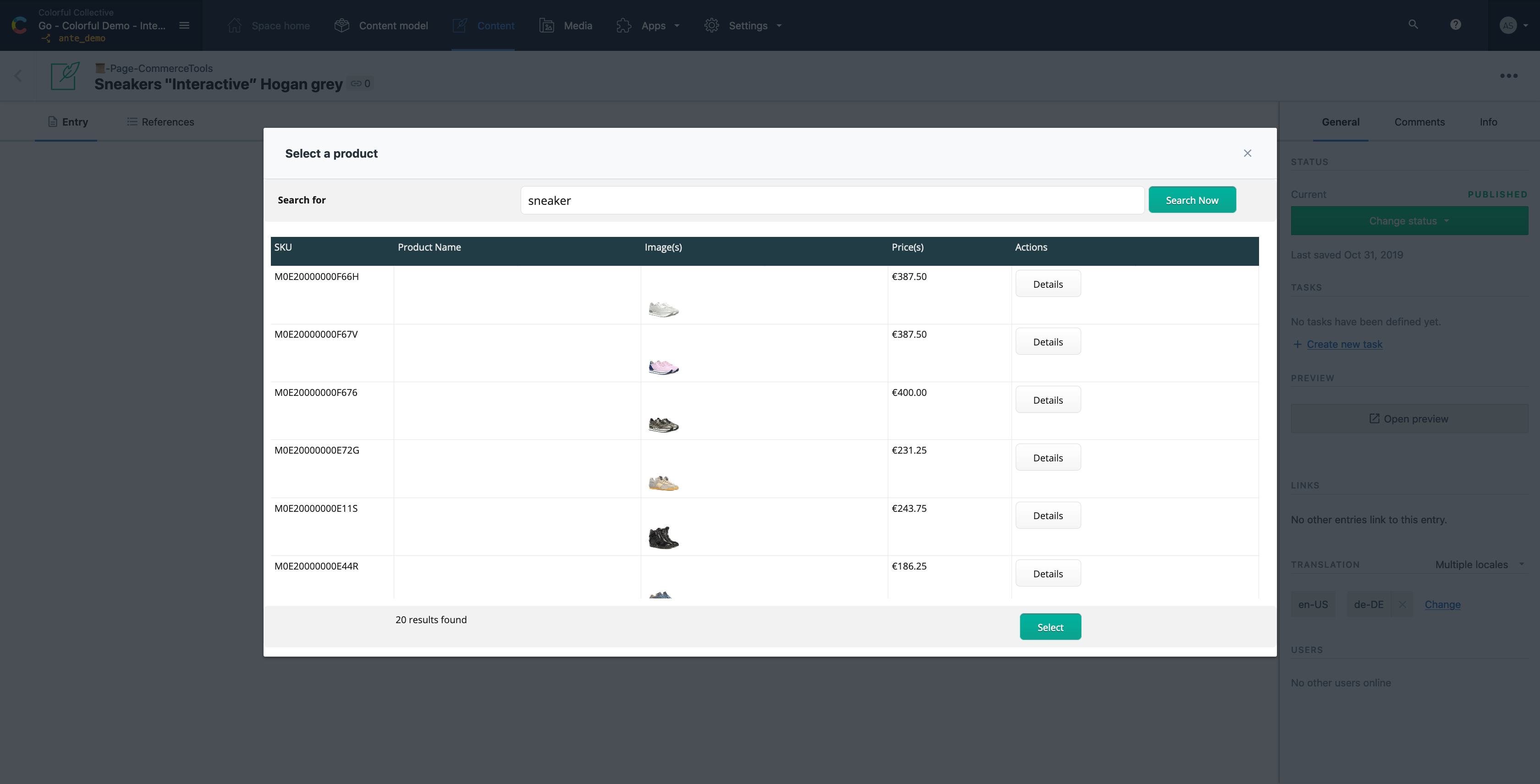
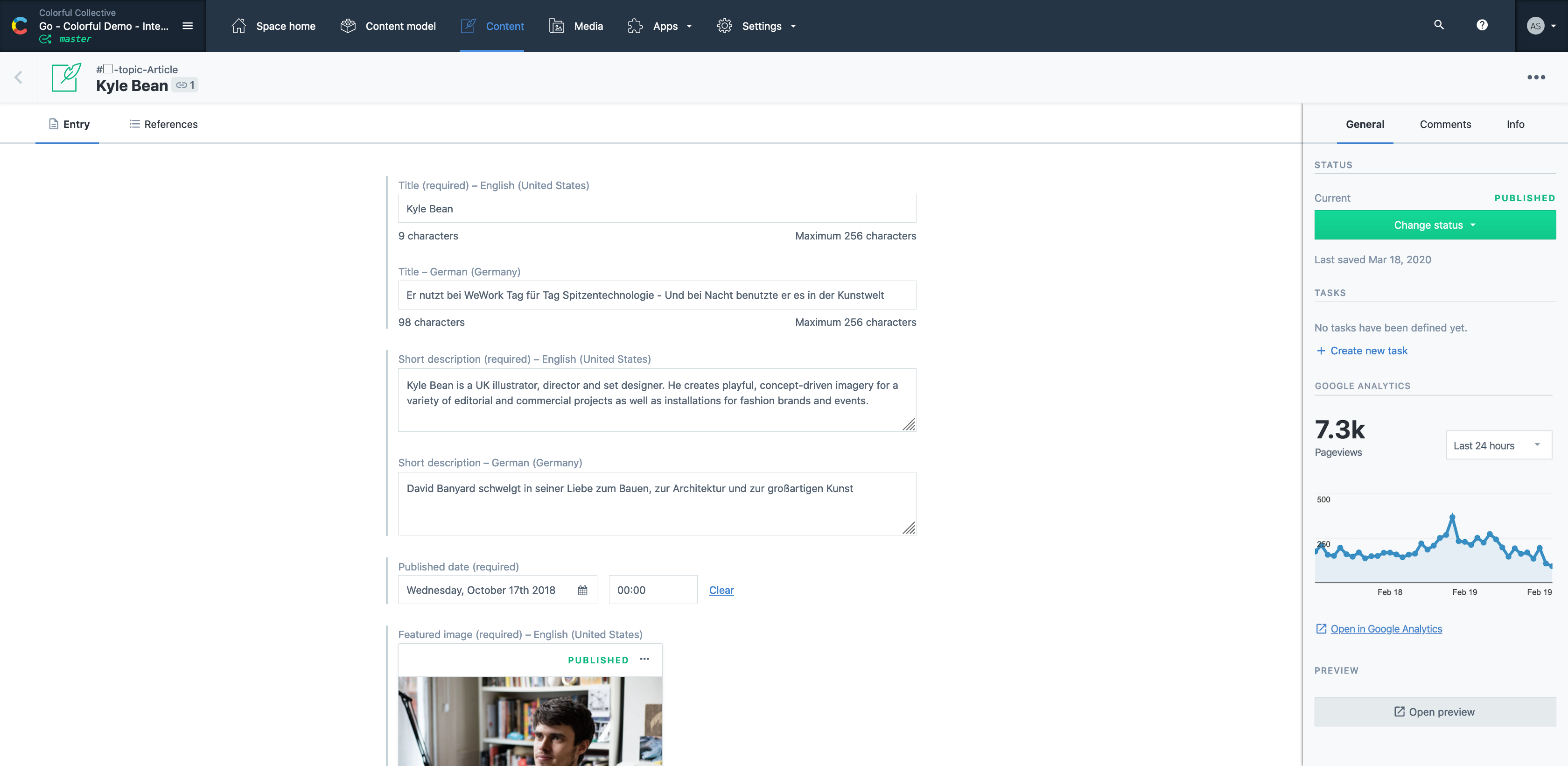
Contentful provides organized, flexible data models with support for a variety of data types and content editors (e.g. WYSIWYGs, form fields, raw text areas).
Contentful has great built-in versioning features with history and draft states so it's easy to make updates and revert when needed.
Contentful has an intuitive user interface and good support for multiple spaces (which can be helpful for companies that need separate projects for dev/staging/production).
The review mode is super convenient. Comparing a snapshot of the previous versions with the current one clearly outlines the respective changes and reduces the necessary content to review tremendously.
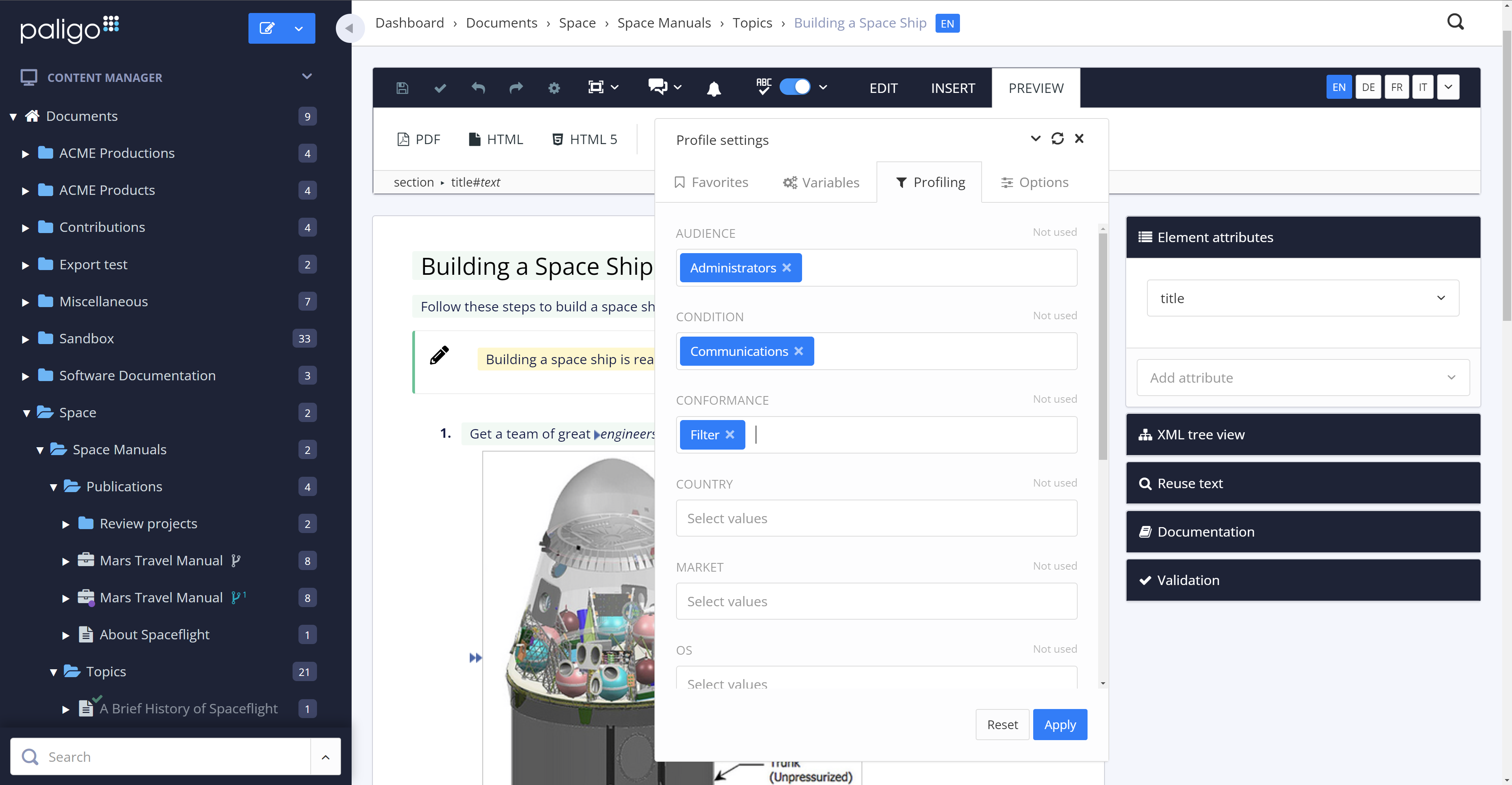
The option to reuse text fragments is another handy feature. Text fragments will be updated whenever the original text fragment is altered is also extremely helpful.
Managing a content's structure was never easier. An intuitive drag & drop functionality allows you to design your document's structure however you like.
You can also fork content, in addition to reuse text fragments. This is another helpful option that no longer requires you to create repetetive chapters over and over.
The amount of CSS/JS required to customize a site's appearance can be cumbersome
Product documentation can be lacking, specifically with integrations; in some cases, support offered no real help when trying to solve a problem with an integrated service
Some features require extensive development experience to use, which can sometimes be an obstacle to less-experienced team members
Generally, I'm very happy with Paligo and the productivity gains that I get from using it. There are a few arbitrary limitations on structure, and when applying conditional formatting, that I don't really understand. Unlinking / editing reused text uses this broadly inscrutible colour-coding that I just hate. It would be nice to double-click a component, make edits, then respond to a popup asking if I want to confirm the edit for all linked content, or unlink this instance. Likewise converting from an informal topic insertion to duplicates of its raw contents.
So far, support has been excellent. They reply very quickly and give in-depth replies. Solutions advisors and account managers have also been very responsive and clearly focused on creating the best experience for implementation. And that's only when the answers can't be found in excellent product documentation. The online training class and tutorials are also very good.
Paligo gives you the benefits of a fully integrated XML content database, making the whole package much easier to setup and use than a system using Oxygen. It's much easier to set up and far less expensive than Adobe's XML offerings. The cost is comparable to MadCap, but all our content was already in Docbook, so the transition to Paligo was nearly seamless.
Positive - has allowed us to create templates for integration documentation. this has greatly sped up our process for creating articles for each of our integrations, which we haven't had up to this point.
Positive - has created greater alignment between the self-service content team and the marketing team.
Positive - has introduced a review and feedback workflow for our content creation that was not available in ZenDesk. The feedback directly in the app allows me to pinpoint comments about text and other elements so my writers can address them directly and become better writers in the long term.
Negative - long ramp up time due to a completely different approach to creating content. My team was training in early August and we have not yet published our new help center (though, to be fair, it is a lot of content that had to be completely rewritten)
Positive - any UI updates only require updating a single image, which has saved us dozens of hours of updating already.