Conga CPQ empowers sales, partners, and customers to efficiently configure complex products and services offerings, and provide personalized prices and quotes, utilizing codified product and pricing information - to drive higher win rates and a more pleasurable buying experience. Conga CPQ also helps to maintain a single price book, discounting structure, and quoting structure across all channels. With an API-first approach, configuration, pricing, or quoting capabilities that can…
N/A
Freshsuccess
Score 7.3 out of 10
N/A
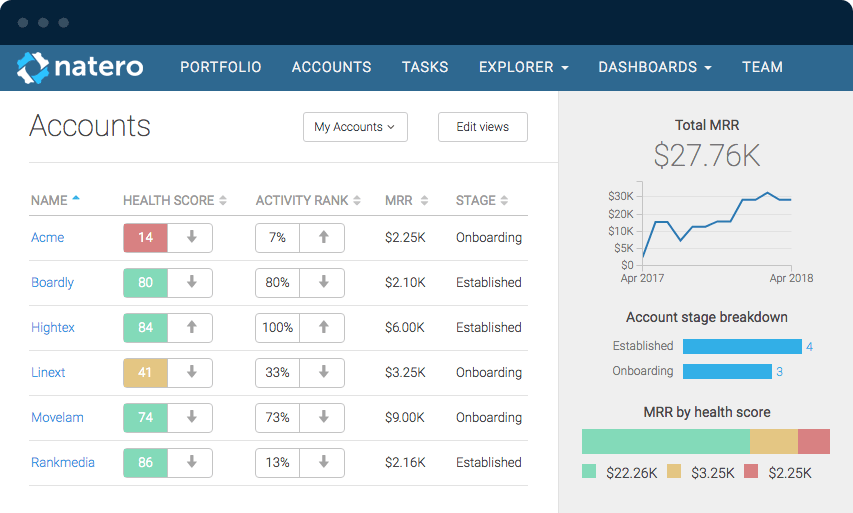
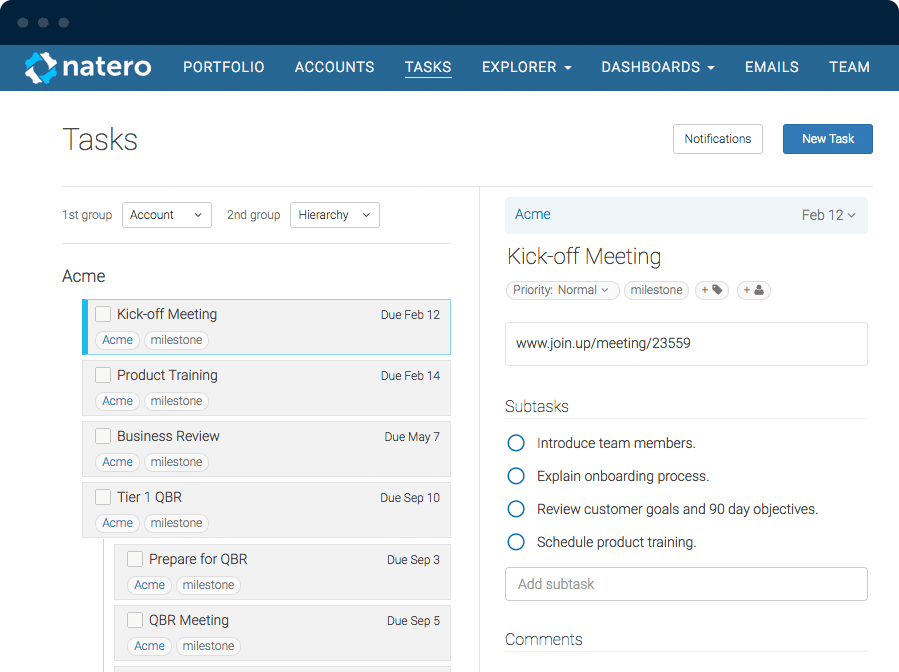
Freshsuccess (based on technology acquired by Natero by Freshworks in May 2019) is designed to help Customer Success Managers prevent churn, increase account expansion, and manage more customers with less effort. The vendor says features include: Customer 360 - See customer emails, chats, meetings, support tickets, billing history, and product usage, in one place. Predictive Alerts - Predict which customers are likely to churn, convert, or expand their…
$79
per month per user
Pricing
Conga CPQ
Freshsuccess
Editions & Modules
No answers on this topic
Estate
$79 billed annually
per month per user
Estate
$95 billed monthly
per month per user
Forest
$129 billed annually
per month per user
Forest
$150 billed monthly
per month per user
Offerings
Pricing Offerings
Conga CPQ
Freshsuccess
Free Trial
No
No
Free/Freemium Version
No
No
Premium Consulting/Integration Services
No
No
Entry-level Setup Fee
Optional
No setup fee
Additional Details
—
—
More Pricing Information
Community Pulse
Conga CPQ
Freshsuccess
Features
Conga CPQ
Freshsuccess
CPQ
Comparison of CPQ features of Product A and Product B
Conga CPQ
8.5
Ratings
2% below category average
Freshsuccess
-
Ratings
Quote sharing/sending
8.70 Ratings
00 Ratings
Product configuration
8.60 Ratings
00 Ratings
Configuration options
8.60 Ratings
00 Ratings
Pricing rules
8.00 Ratings
00 Ratings
Price adjustment
8.10 Ratings
00 Ratings
Purchase history and open contracts
8.40 Ratings
00 Ratings
Guided selling/Sales portal
8.00 Ratings
00 Ratings
CPQ reporting & analytics
7.20 Ratings
00 Ratings
CPQ-CRM integration
9.30 Ratings
00 Ratings
Attachments to quotes
9.30 Ratings
00 Ratings
Order capturing
8.70 Ratings
00 Ratings
Security
Comparison of Security features of Product A and Product B
Conga CPQ
-
Ratings
Freshsuccess
10.0
Ratings
12% above category average
Role-based user permissions
00 Ratings
10.00 Ratings
Platform & Infrastructure
Comparison of Platform & Infrastructure features of Product A and Product B
Conga CPQ
-
Ratings
Freshsuccess
7.1
Ratings
20% below category average
API
00 Ratings
7.20 Ratings
Integration with Salesforce.com
00 Ratings
7.20 Ratings
Integration with Marketo
00 Ratings
7.00 Ratings
Integration with Eloqua
00 Ratings
7.00 Ratings
Customer Data Extraction / Integration
Comparison of Customer Data Extraction / Integration features of Product A and Product B
Conga CPQ
-
Ratings
Freshsuccess
8.6
Ratings
3% below category average
Product usage
00 Ratings
8.10 Ratings
Help desk / support tickets
00 Ratings
9.10 Ratings
Customer Success Management
Comparison of Customer Success Management features of Product A and Product B
Conga CPQ
-
Ratings
Freshsuccess
7.1
Ratings
20% below category average
NPS surveys
00 Ratings
7.00 Ratings
Sponsor tracking
00 Ratings
7.00 Ratings
Customer profiles
00 Ratings
7.10 Ratings
Automated workflow
00 Ratings
8.00 Ratings
Internal collaboration
00 Ratings
5.30 Ratings
Customer health scoring
00 Ratings
8.10 Ratings
Customer segmentation
00 Ratings
7.20 Ratings
CSM Reporting & Analytics
Comparison of CSM Reporting & Analytics features of Product A and Product B
Conga CPQ is flexible in the price setup. We achieve a lot of customized pricing setups using CPQ. Usage flowing into billing works well also. The Conga cart is a huge painpoint for us. We bill each route and trip we run individually so we have a very large amount of manual, complex cart configuration.
Natero does an excellent job of reporting and having a lot of the data available. They don't do as well when you want to track specific metrics such as ARR. (Everything in the application is currently based in MRR)
Natero has done an excellent job for our smaller organization. I am not sure how it would work with a larger organization.
Fully integrated with Salesforce.com. Allows for the seamless update of all objects on the SFDC platform. As primary quotes are updated, so to are the opportunities.
Supports integration with Avalara for Sales Tax and Docusign for E-Signature.
Supports the quoting of product that requires customization that results in a dynamic cost, MSRP and customer price.
Significant amount of R&D is being invested in to the platform. Many of the items on our wish list have already been incorporated as a standard feature or on the near term roadmap.
The GUI design of Apttus is configurable but prescriptive. If you want a very specific look and feel, it will take some effort to do so. There have been some modern design updates recently using AngularJS. Check it out to see if it works for you.
It's a complex platform, it can be hard to find what you're looking for if you don't know where to look.
There have been a few features which work correctly but can be a bit confusing to get working correctly. Fortunately, the support team is so on it, we get an answer within an hour.
I would have liked Natero to have a mechanism in place to nudge users of the platform to use it. This would help with getting adoption on our end. While the onboarding documentation was great, a more hands-on approach to getting users to adopt and use the platform would have helped us get up to speed earlier. It took us nearly 9 months to really start using the system which is partially due to the complexity of the integration process and partially due to the difficulty of switching over CES processes into Natero.
It is a stable repository management tool but needs to upgrade its search engine to make it more efficient and user friendly. There can be an advanced search option which allows me to find agreements based on Contract numbers, Company name and Agreement Type as well as by affiliates
Conga CPQ is a great tool but lacks good support and [a] very limited knowledge base which doesn't include day to day errors which users face, thus leading us to support and take more time in turn. Also cart performance can be improved drastically which will enhance the user experience as the user doesn't have to wait for the pricing.
We had to use an outside vendor to implement the software and we paid them for a while during the initial choppy months. I was learning as I went along and then we could occasionally reach out to Salesforce if we really needed to. I think the support is there, but you obviously have to pay for it if the admin team doesn't have enough experience.
You need to have IT involved. The implementation partner downplayed the role that IT would have to play. We needed data migration, user set-up, customizations within Apttus for legacy migrations. Luckily we had a developer on our staff for Salesforce.com.
It has been too long for me to remember all the various CPQ products we evaluated. But our short list came down to Salesforce CPQ and and Conga CPQ. At the time, we considered them both pretty close to equivalent solutions for meeting our needs, so negotiation mainly came down to price of the solution, and estimates to implement. Now that we are migrating to Lightning, the balance has tipped very strongly in Salesforce CPQ's favour.
We initially looked at Gainsight, Amity, and another which I can't remember the name of. Only Natero and Amity were within a reasonable price range. We selected Natero because the platform was significantly more polished, the reporting seemed significantly stronger in Natero, and during the sales process Natero did a better job of showing us how the functionality would work, whereas our calls with Amity were frequently filled with "it doesn't work because this is a demo account" which was a bit of a red flag.
It cost the company almost $1million in 3 years of licensing. It then cost us the business to implement it in 2.5 years over $5 million dollars internally with resourcing involved to roll out globally. There was no ROI, that was just to implement it as the business continues to not adopt the product.
The adoption level of the product is ~25% of the business actually using the product.
Business areas ended up hiring and spending something near $150k/year in human resources to use the system for the sales team because of the low adoption.