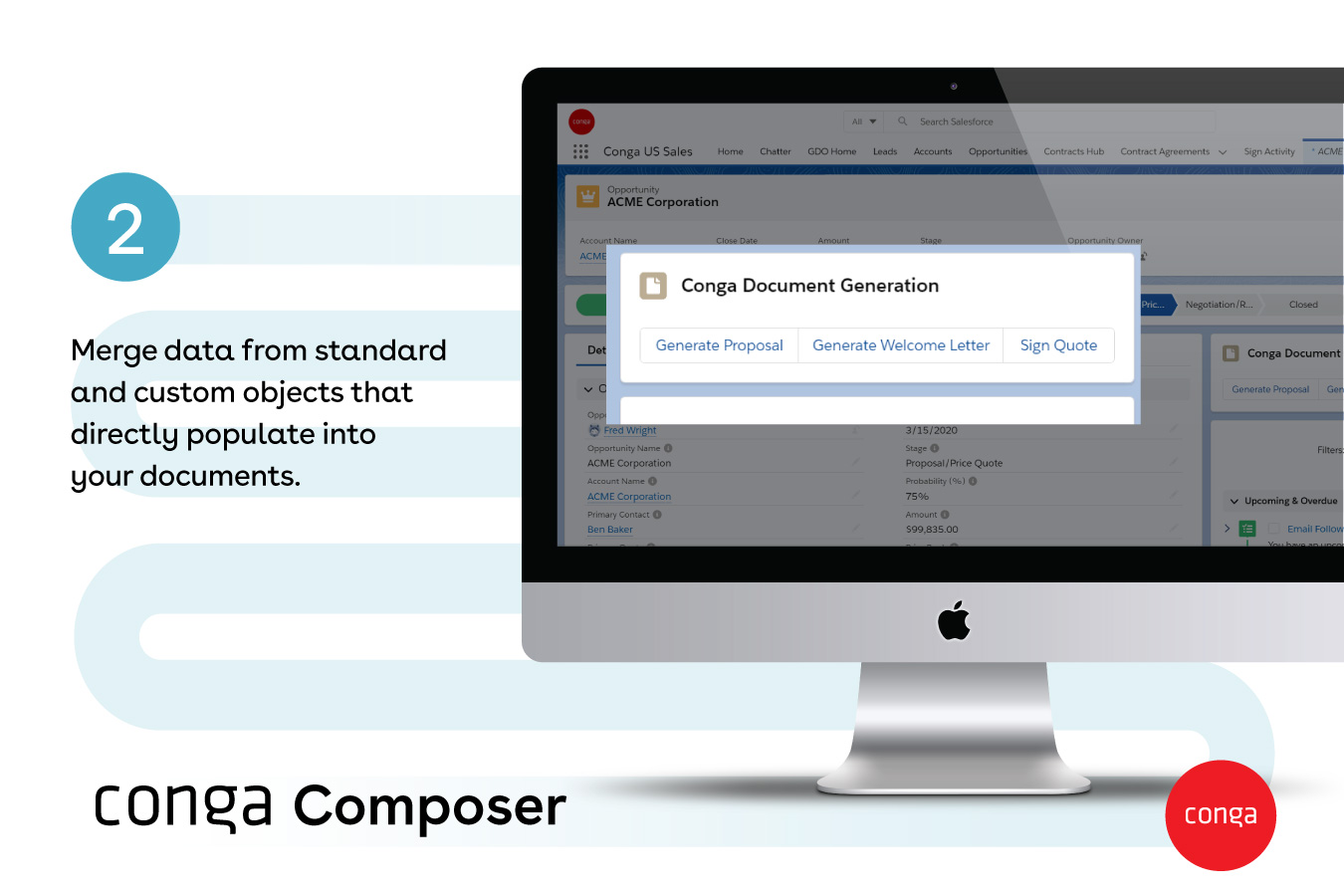
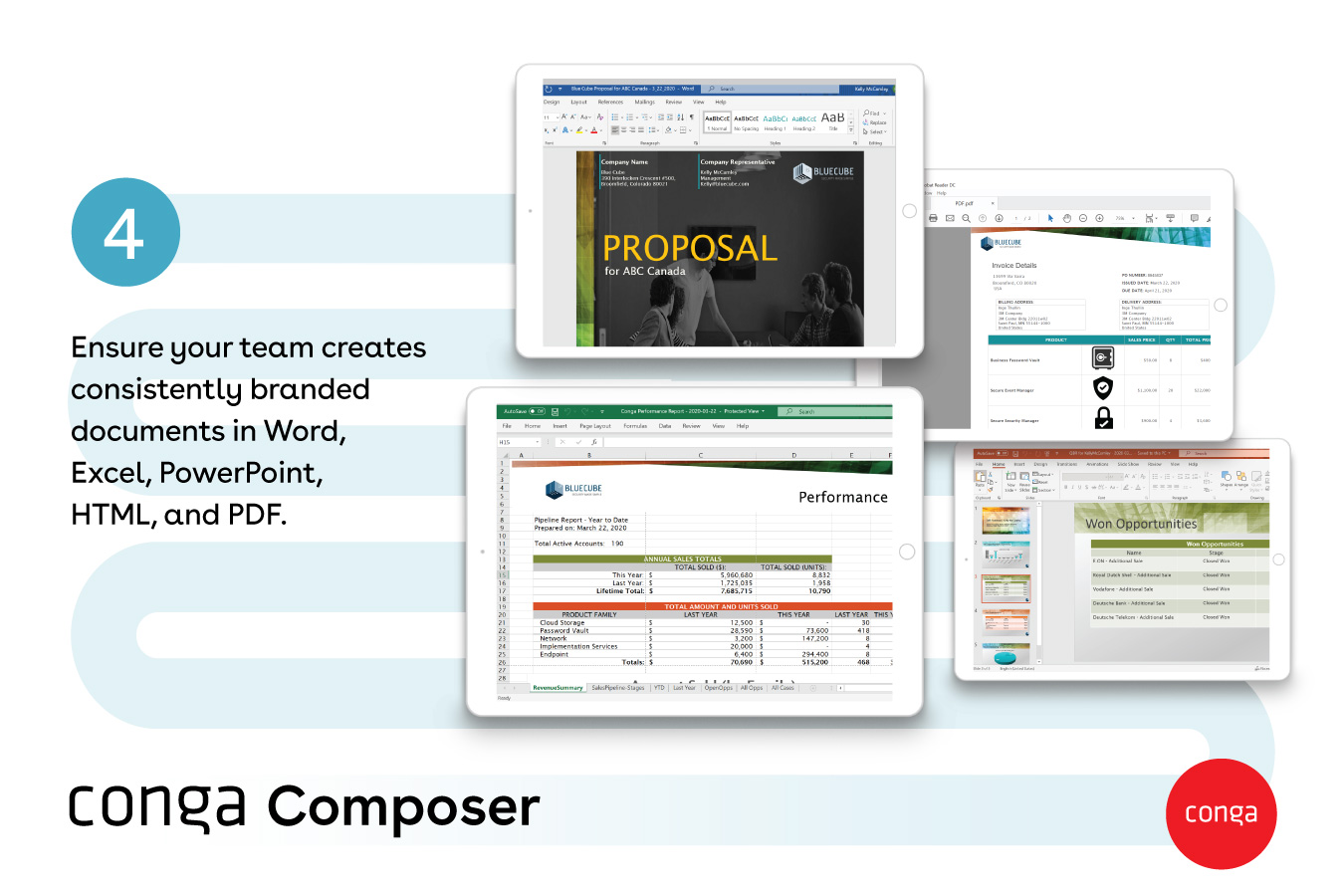
Conga Composer is a document generation and automation tool designed to simplify and streamline the process of creating and distributing customized documents, presentations, and reports.
$30
per month per user
Conga CPQ
Score8.5 out of 10
N/A
Conga CPQ empowers sales, partners, and customers to efficiently configure complex products and services offerings, and provide personalized prices and quotes, utilizing codified product and pricing information - to drive higher win rates and a more pleasurable buying experience. Conga CPQ also helps to maintain a single price book, discounting structure, and quoting structure across all channels. With an API-first approach, configuration, pricing, or quoting capabilities that can…
A de minimis incentive was given to thank the reviewer for their time. The incentive was not used to bias or drive a particular response, nor was the incentive contingent on a positive endorsement. More Info
Verified User
Chose Conga Composer
Conga Composer helps us in document generation part and once the document has been generated from Conga Composer it can be sent out to the customers. Here we can also use Conga Email Template to send out the message and the attachments. DocuSign here works so well and we can …
A de minimis incentive was given to thank the reviewer for their time. The incentive was not used to bias or drive a particular response, nor was the incentive contingent on a positive endorsement. More Info
Conga
Verified User
Chose Conga CPQ
We have used DocuSign for signatures and it is also a good product.
A de minimis incentive was given to thank the reviewer for their time. The incentive was not used to bias or drive a particular response, nor was the incentive contingent on a positive endorsement. More Info
From my experience, Conga Composer is particularly well-suited for generating documents, such as quotes and contracts, directly from Salesforce. It saves us a great deal of time, which is remarkably beneficial for companies with sales teams. Not suitable for companies lacking significant Salesforce expertise or administrative support.
A de minimis incentive was given to thank the reviewer for their time. The incentive was not used to bias or drive a particular response, nor was the incentive contingent on a positive endorsement. More Info
Conga CPQ is flexible in the price setup. We achieve a lot of customized pricing setups using CPQ. Usage flowing into billing works well also. The Conga cart is a huge painpoint for us. We bill each route and trip we run individually so we have a very large amount of manual, complex cart configuration.
A de minimis incentive was given to thank the reviewer for their time. The incentive was not used to bias or drive a particular response, nor was the incentive contingent on a positive endorsement. More Info
A de minimis incentive was given to thank the reviewer for their time. The incentive was not used to bias or drive a particular response, nor was the incentive contingent on a positive endorsement. More Info
The perceived power strength is that it is supposed to contain CPQ, Contract Management, Document generation and template manipulation, and cash/invoice process all in one wrapped package.
It was developed on the Force.com platform.
They provide multiple releases of their product per year.
A de minimis incentive was given to thank the reviewer for their time. The incentive was not used to bias or drive a particular response, nor was the incentive contingent on a positive endorsement. More Info
A de minimis incentive was given to thank the reviewer for their time. The incentive was not used to bias or drive a particular response, nor was the incentive contingent on a positive endorsement. More Info
Our number one complaint with Conga CPQ has been speed. In my experience, Conga CPQ is extremely slow, especially for large orders.
In my opinion, the configuration methods of Conga CPQ are outdated and error-prone. One literally puts configurations into string-based custom settings, including the API field names. This often leads to deployment issues and run-time configuration errors.
In my experience, Conga CPQ is everything but simple to develop. You need things like a 12-step pricing callback to support custom pricing.
In my experience, Conga CPQ support is not responsive.
When it comes time to lock in a renewal contract for Conga CPQ, in my experience, they delay engagement, so you are truly behind the 8 ball when it comes time to decide if you are going to continue with Conga CPQ.
A de minimis incentive was given to thank the reviewer for their time. The incentive was not used to bias or drive a particular response, nor was the incentive contingent on a positive endorsement. More Info
Though I love how easily Conga Composer ties into Salesforce and its given analytics, it takes a lot of data entry to get up and running. I don't love that sometimes queries can take a long time to pull. I like keeping our marketing templates consistent via templates in the system. Pulling multiple objects into one report is fantastic too.
A de minimis incentive was given to thank the reviewer for their time. The incentive was not used to bias or drive a particular response, nor was the incentive contingent on a positive endorsement. More Info
The rating is based on several things: 1) Ongoing support requirements being able to be addressed by cross training existing Salesforce administrators 2) Apttus superior corporate vision for the quote to cash space 3) Apttus execution of the corporate vision with automated agents (Max), and Artificial Intelligence/Machine Learning offerings to leverage the investment in Configure Price Quote 4) Apttus corporate health and investment in the product line
A de minimis incentive was given to thank the reviewer for their time. The incentive was not used to bias or drive a particular response, nor was the incentive contingent on a positive endorsement. More Info
It's a fairly simple tool to integrate into your current business structure. When we've had issues, we were able to resolve them extremely quickly. The users click a button and it can bring in all the quote lines, and our credit application seamlessly into our tool. I'd definitely recommend it to other colleagues
A de minimis incentive was given to thank the reviewer for their time. The incentive was not used to bias or drive a particular response, nor was the incentive contingent on a positive endorsement. More Info
Conga CPQ is a great tool but lacks good support and [a] very limited knowledge base which doesn't include day to day errors which users face, thus leading us to support and take more time in turn. Also cart performance can be improved drastically which will enhance the user experience as the user doesn't have to wait for the pricing.
A de minimis incentive was given to thank the reviewer for their time. The incentive was not used to bias or drive a particular response, nor was the incentive contingent on a positive endorsement. More Info
A de minimis incentive was given to thank the reviewer for their time. The incentive was not used to bias or drive a particular response, nor was the incentive contingent on a positive endorsement. More Info
It's been hit and miss depending on the issue. We use javascript to generate the urls which has confused many techs even though it generates a clean url - they are overwhelmed by the concept of code and can't understand that the url is all that matters.
A de minimis incentive was given to thank the reviewer for their time. The incentive was not used to bias or drive a particular response, nor was the incentive contingent on a positive endorsement. More Info
Tier1/tier 2 support can only handle native functionality. Customizations have to be escalated to developers which aren’t included in the support program.
I go ahead and copy the people I directly worked with on implementation for assistance. I would rate them an 8 for support assistance.
A de minimis incentive was given to thank the reviewer for their time. The incentive was not used to bias or drive a particular response, nor was the incentive contingent on a positive endorsement. More Info
Be iterative. Take the opportunity to build a catalog based on how Apttus works well. Learn the tool yourself or use an SI. Take the time to build a configuration / pricing migration tool with X-Author for Excel or roll your own. Stick with OOTB Apttus as any customization will cost you every time a new version is released
A de minimis incentive was given to thank the reviewer for their time. The incentive was not used to bias or drive a particular response, nor was the incentive contingent on a positive endorsement. More Info
I think Nintex is the primary competitor for Conga Composer, but I have not personally used it. I was not present for the decision to purchase Conga but I would recommend it in future document automation vendor selection processes because I have seen how well it works! We are especially fond of complementary features in Conga Composer, including Conga Email Templates and Conga Global Merge.
A de minimis incentive was given to thank the reviewer for their time. The incentive was not used to bias or drive a particular response, nor was the incentive contingent on a positive endorsement. More Info
We selected Apttus CPQ over SteelBrick due to the simplicity of SteelBrick's out of the box pricing and ability to customize quoted products. As a global organization with selling a highly configurable products, we felt the ability of Apttus to handle our requirements as standard functionalty rather than a customization was a material difference between the platforms.
A de minimis incentive was given to thank the reviewer for their time. The incentive was not used to bias or drive a particular response, nor was the incentive contingent on a positive endorsement. More Info
A de minimis incentive was given to thank the reviewer for their time. The incentive was not used to bias or drive a particular response, nor was the incentive contingent on a positive endorsement. More Info
A de minimis incentive was given to thank the reviewer for their time. The incentive was not used to bias or drive a particular response, nor was the incentive contingent on a positive endorsement. More Info
Could really use better error handling on the product when the document doesn't generate. Zero notifications are provided right now and have no idea where in a 20 page template the error is. Need to keep cutting the template into pieces to find the error.
The report generates 90% of the time so far.
Getting easier to generate templates when knowing how the JSON will be structured to add to merged fields.
Use Work Plan Template Entries and Work Steps to dynamically generate many deliverables.
A de minimis incentive was given to thank the reviewer for their time. The incentive was not used to bias or drive a particular response, nor was the incentive contingent on a positive endorsement. More Info
The ability to generate engineered configurations that is right by construction has reduced the cycle time of the customer engagement. The fact that we are able to guide the process and end up with a validated bill of material reduces the iterations with the customers.
As long as the validations rules are correct the generated bill of material is accurate. We are now looking at using Apttus to perform quality checks in our product rules since the tool is able to test different configurations quickly and efficiently.
Configuration that use to take weeks and consumed valuable engineering resources has been transformed to become a customer facing application that is simple enough for customer to self-service.