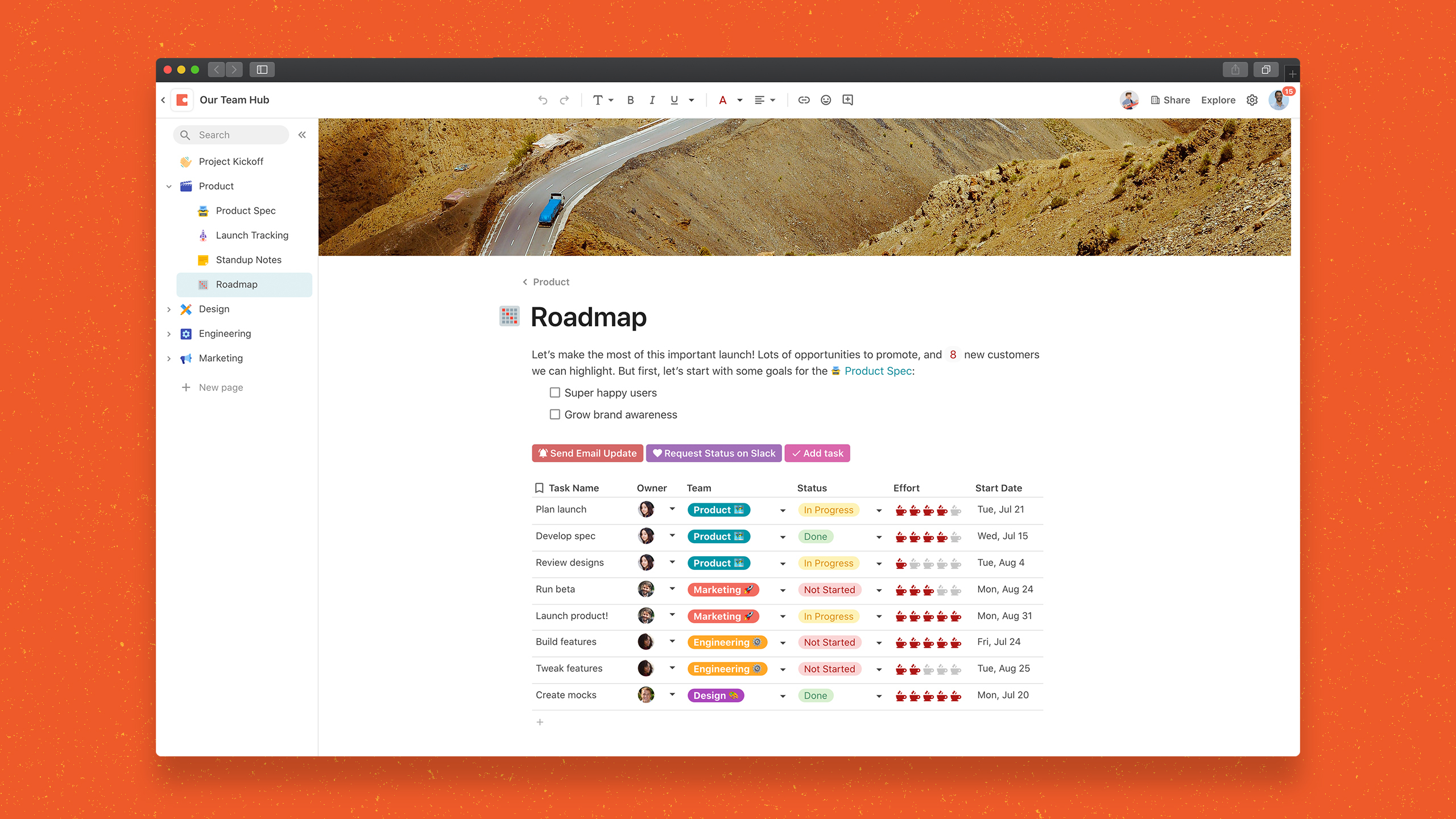
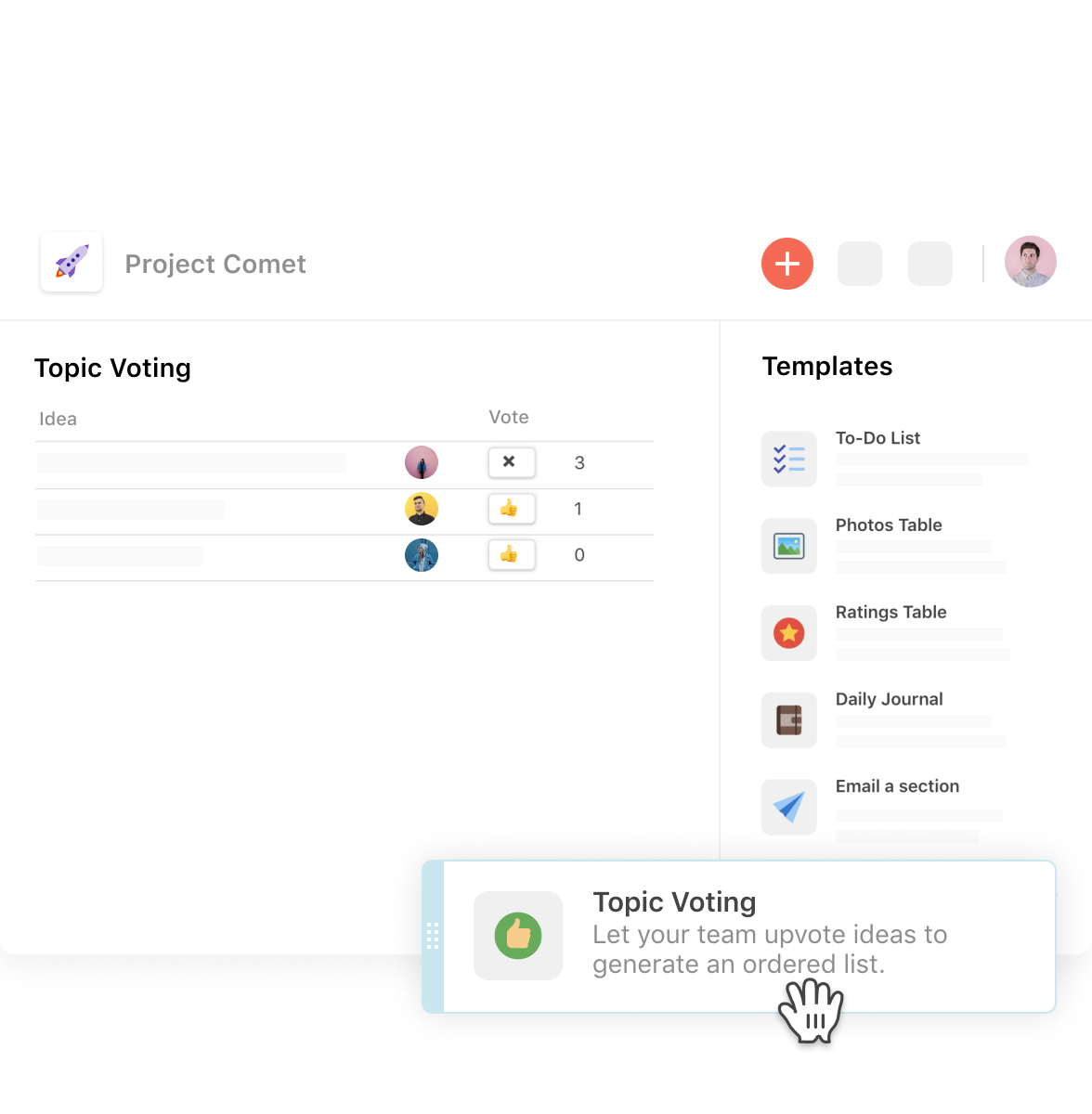
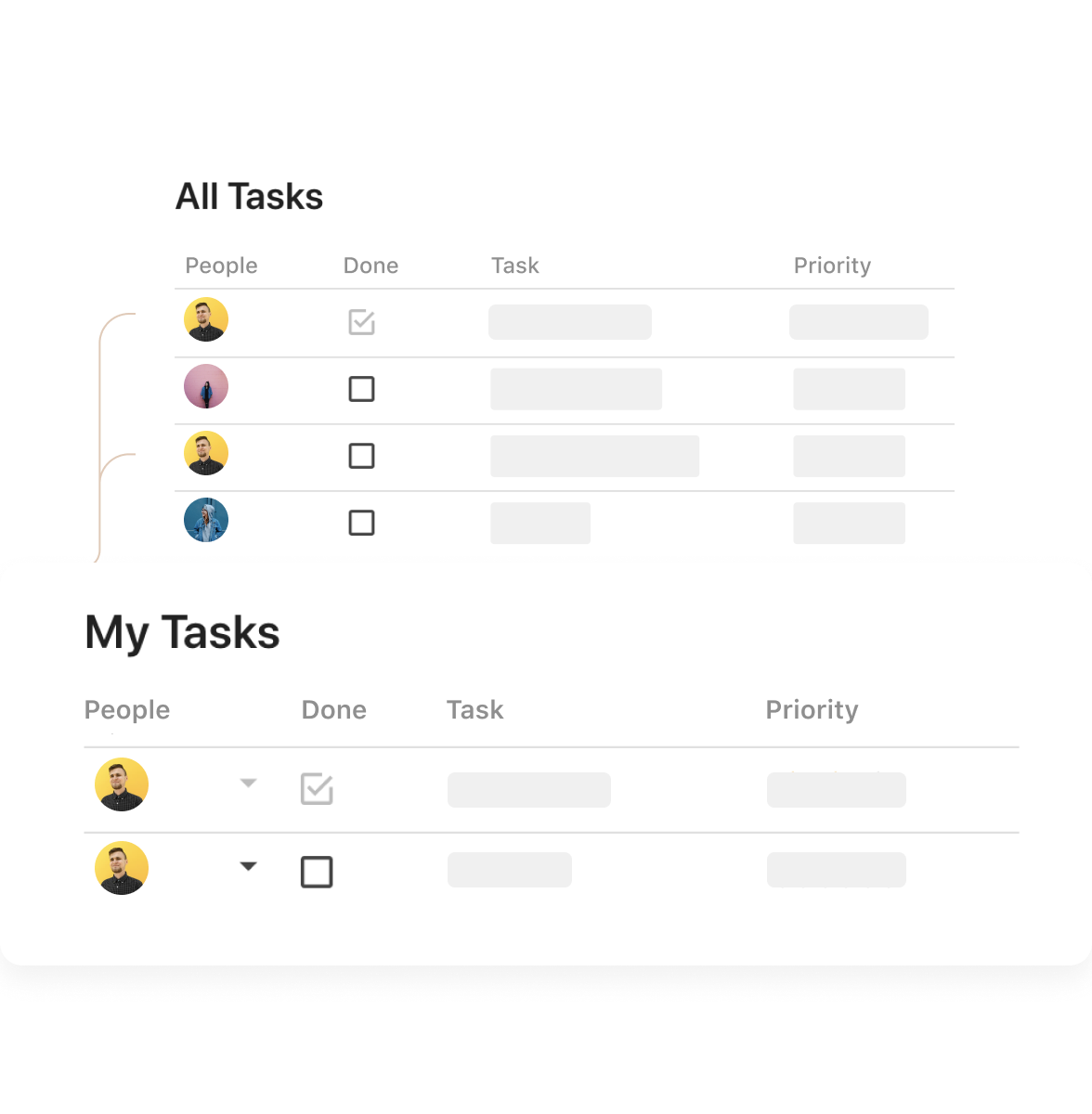
Coda, acquired by Grammarly in early 2025, is a template-based document creation and collaboration solution, supporting a variety of use cases.
$0
per month
OpenAir PSA
Score 8.0 out of 10
N/A
NetSuite OpenAir is a cloud-based Professional Service Automation (PSA) product which includes capabilities around project management, resource management, project accounting, etc.
N/A
Pricing
Coda by Grammarly
OpenAir PSA
Editions & Modules
Free
$0.00
per month
Pro
$10.00
per month per doc maker; unlimited editors (paid annually)
Team
$30.00
per month per doc maker; unlimited editors (paid annually)
Enterprise
Custom Pricing
No answers on this topic
Offerings
Pricing Offerings
Coda by Grammarly
OpenAir PSA
Free Trial
Yes
No
Free/Freemium Version
Yes
No
Premium Consulting/Integration Services
No
No
Entry-level Setup Fee
No setup fee
No setup fee
Additional Details
With Coda, you only pay for Doc Makers.
Often one person creates a doc, others edit it, and some simply observe from afar. Instead of charging for everyone, we only charge for the people who create docs.
Interested in enterprise pricing? Visit coda.io/enterprise
—
More Pricing Information
Community Pulse
Coda by Grammarly
OpenAir PSA
Features
Coda by Grammarly
OpenAir PSA
Project Management
Comparison of Project Management features of Product A and Product B
Coda by Grammarly
-
Ratings
OpenAir PSA
7.3
Ratings
5% below category average
Task Management
00 Ratings
8.00 Ratings
Resource Management
00 Ratings
7.50 Ratings
Gantt Charts
00 Ratings
8.00 Ratings
Scheduling
00 Ratings
6.00 Ratings
Workflow Automation
00 Ratings
6.00 Ratings
Team Collaboration
00 Ratings
8.00 Ratings
Support for Agile Methodology
00 Ratings
6.00 Ratings
Support for Waterfall Methodology
00 Ratings
7.00 Ratings
Document Management
00 Ratings
8.50 Ratings
Email integration
00 Ratings
7.00 Ratings
Mobile Access
00 Ratings
7.50 Ratings
Timesheet Tracking
00 Ratings
7.00 Ratings
Change request and Case Management
00 Ratings
8.00 Ratings
Budget and Expense Management
00 Ratings
7.50 Ratings
Professional Services Automation
Comparison of Professional Services Automation features of Product A and Product B
Coda is great to build a place for your users to go to and see information. It is easy to navigate through and the variety of content creation is great. However, it is not always easy to create what you want and there is a lot of playing around and learning. Coda also sometimes misses some functionality which is expected. For example, downloading a list of users that have access to the platform. Being able to send push notifications when a new page has been created etc. Overall it is a good tool to use just be prepared to invest time!
I would only recommend OpenAir if you are a company of 100+ with complex business processes and have a need to integrate into multiple external systems. I think most project managers find it cumbersome and irritating until they are trained on what not to use. It needs a more simplistic obvious approach rather than having every feature exposed all at once.
One source of truth: It's incredibly easy to keep everything organized and easy to find.
Being able to show different views of the same information throughout your doc makes it really easy to customize the information.
In general, I love the "coding" aspect of it, and being able to do advanced functions has helped us create some really interesting automation and streamline our process.
We had a specific process down pat with QuickArrow and wanted similar functionality. It gave us that and more.
It has a lot more reporting functionality than QuickArrow. There are hundreds of options for layout, what is reported, etc. I haven’t played too much with those reports yet. We more or less just replicated reports I had in QuickArrow. We needed the professional services/transition team at NetSuite to help me. There are too many options at this point. I imagine we won’t use all of those reports. Quick Arrow had a lot less.
Mobile Capabilities – There wasn’t a mobile concept for QuickArrow. OpenAir has been beneficial for iPhone users for time sheet submissions. There is no app for Droid users yet. There are not a lot of users out there, who really know how to use it yet. Managers are not using the app for dashboards/reporting, etc. The field has been pretty quiet but they do really like the mobile app feature. They like not having to go to laptop to enter their time. That’s all we require of them – just time entry. We ran into some glitches - some of the time sheets submitted via iPhone did not get to the tool itself. That happened in one instance. I made QA aware of it. I am not sure what the resolution turned out to be.
The UI of many parts of the system is really poorly designed. Inputting and updating forecasts is a very time-consuming and difficult process for our PMs and it doesn't allow any type of upload from a spreadsheet (which might be easiest in absence of a decent UI).
I have extensive experience with the reporting piece of OA and have a list of notes and improvements. The entire module is very inflexible at least pieces of it are not intuitive. Easy example: If you create a custom calc with a filter on Project Type to only include hours from our customer projects (Impl and MS), but then create a report with a filter to only show hours from MS, that custom calc won't work properly. The filter logic is unable to handle multiple filters on the same field.
Specific example of a ticket we've filed but not heard back on: When you close a project, any remaining forecasts from that project remain active and show as "committed hours" against those individuals which doesn't make sense on projects that are closed. Why would you not give an option to delete any remaining forecasts when closing a project as default behavior?
Coda is definitely something that has been proven to drive positive impact in our organization. We have many divisions that can benefit from this that we have yet to explore. It would definitely be worth renewing.
We plan to continue our use of NetSuite OpenAir for the reasons cited already. Outside factors, behond our control, would be the only reason we would not renew -- such as an executive mandate to use the same platform going forward. If such were to happen, our Services processes would need to be revamped, as other PSA solutions do not support our current have-to-have criteria.
There is a little bit of a learning curve on where to point and click to add in different elements and make edits. But it is still very manageable once you get the hang of it. I do still have some issues with some of my connected pages updating each other when I don't want them to sync. So I'll end up editing one page, and it will make the same edits on another page.
In this day and age I should not have to read a manual to understand a product. It should be intuitive to administrate and perform basic tasks. It feels like a ton of intelligence was poured into making OpenAir feature rich but no where near as much attention was given to the user experience.
We haven't done any integrations - the initial part of our experience we found that for docs with complex formulas, the page tends to load slowly but in recent months, Coda has improved and optimized the loading times in general and we generally don't find any problems in terms of speed anymore.
Mainly due to timezone differences. I think Coda's support in general is well implemented and executed. They know their stuff and are helpful. But since I'm not in the same timezone, solution rates are slower for me, and that's not something I prefer. I work in customer service, too, and more often than not, time is important. Shortening the solution time would be a much greater experience.
As an admin, I've had more contact with OA support than most. I've found their response to tickets typically timely and helpful, however many of the responses to tickets are "we will file an enhancement request" and then I never hear about it again. So not terrible, but not a very fulfilling experience.
Very knowledgeable and able to articulate how other customers configured the solution to meet their needs as well as the best practices they recommended.
We did a 3 day online remote course back in April. NetSuite prefers training to occur before migration. We went over the functionality of tool and three months later we migrated. Personally, I didn’t find it that beneficial. Certain parts of it were beneficial as they applied to me – talked a lot about invoicing capabilities that didn’t apply to me. They also have knowledge base / e-learning assets, but I haven’t referred to them
I'm relatively inexperienced but this experience is meaningful. It would have been nice to have some guidance from Coda so that we understood more on Coda's purpose and potential.
It went fine. Everything came over the way we wanted. In addition to migrating the current projects we wanted to migrate historical data – did that seamlessly. The finished product looked pretty good – just needed to tweak – and they helped us with that
For general use cases, Google Docs or Airtable are often a better starting place. But if things get complex or you're constantly pairing the two together, consider graduating to Coda to save yourself long-term headaches. Notion is great for personal use, but the powerful automation and collaboration features in Coda make it a better fit for teams in my experience so far.
It was our goal to be on a single vendor solution for all aspects of our business: CRM, Project Management, and Finance. By choosing NetSuite with OpenAir PSA, we were able to eliminate the need for three other vendor solutions that required external integration among the disparate systems (Salesforce.com for CRM, MS Project Server for Project Management, and MS Dynamics for finance).
I think scalability is definitely good here since it's based on number of doc makers. Implementation into each dept becomes simpler. That being said, due to the nature of our work, we find it easier that we have a "super user" and then a team of other doc makers. This would make the doc creation and management more efficient.