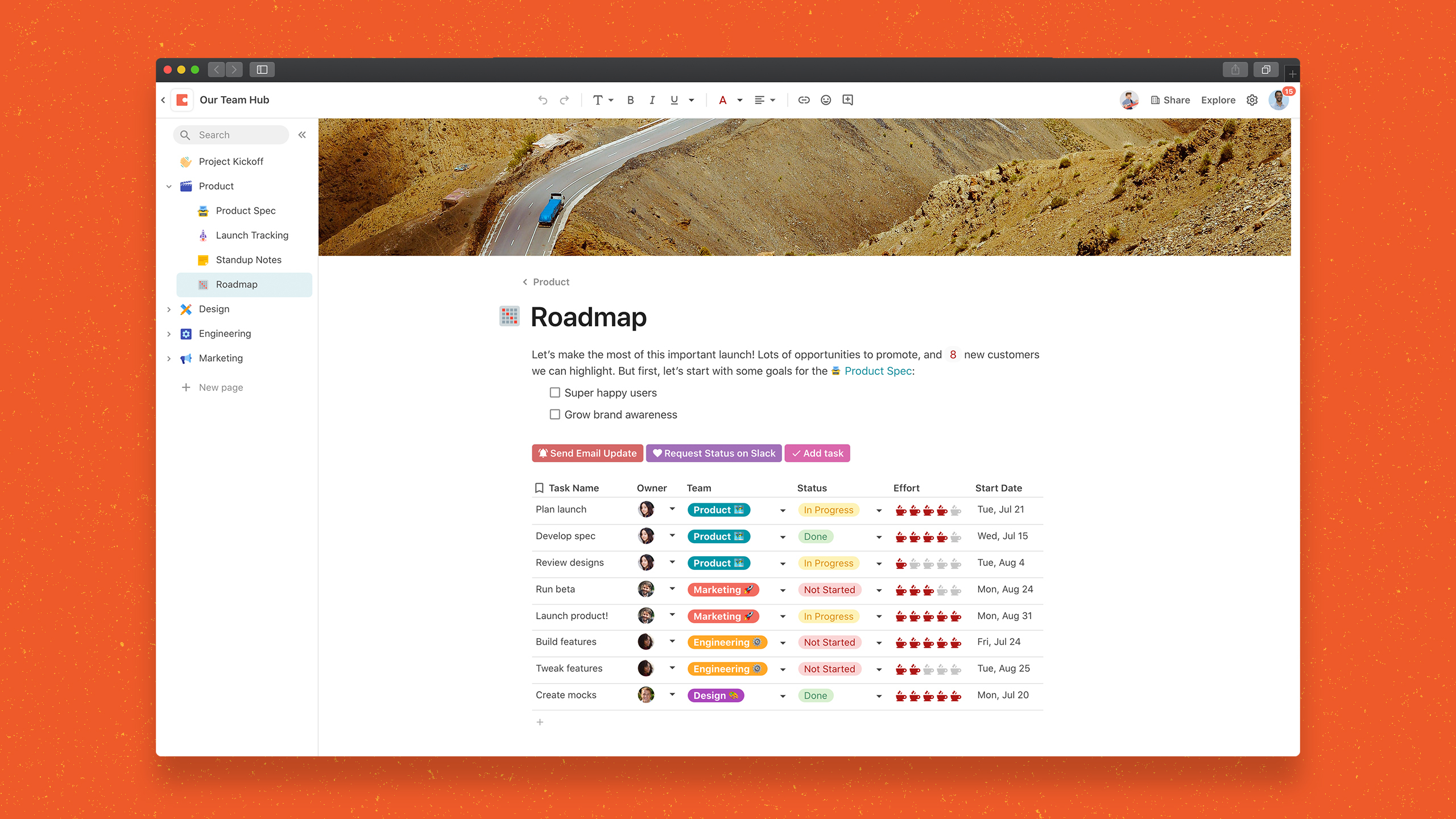
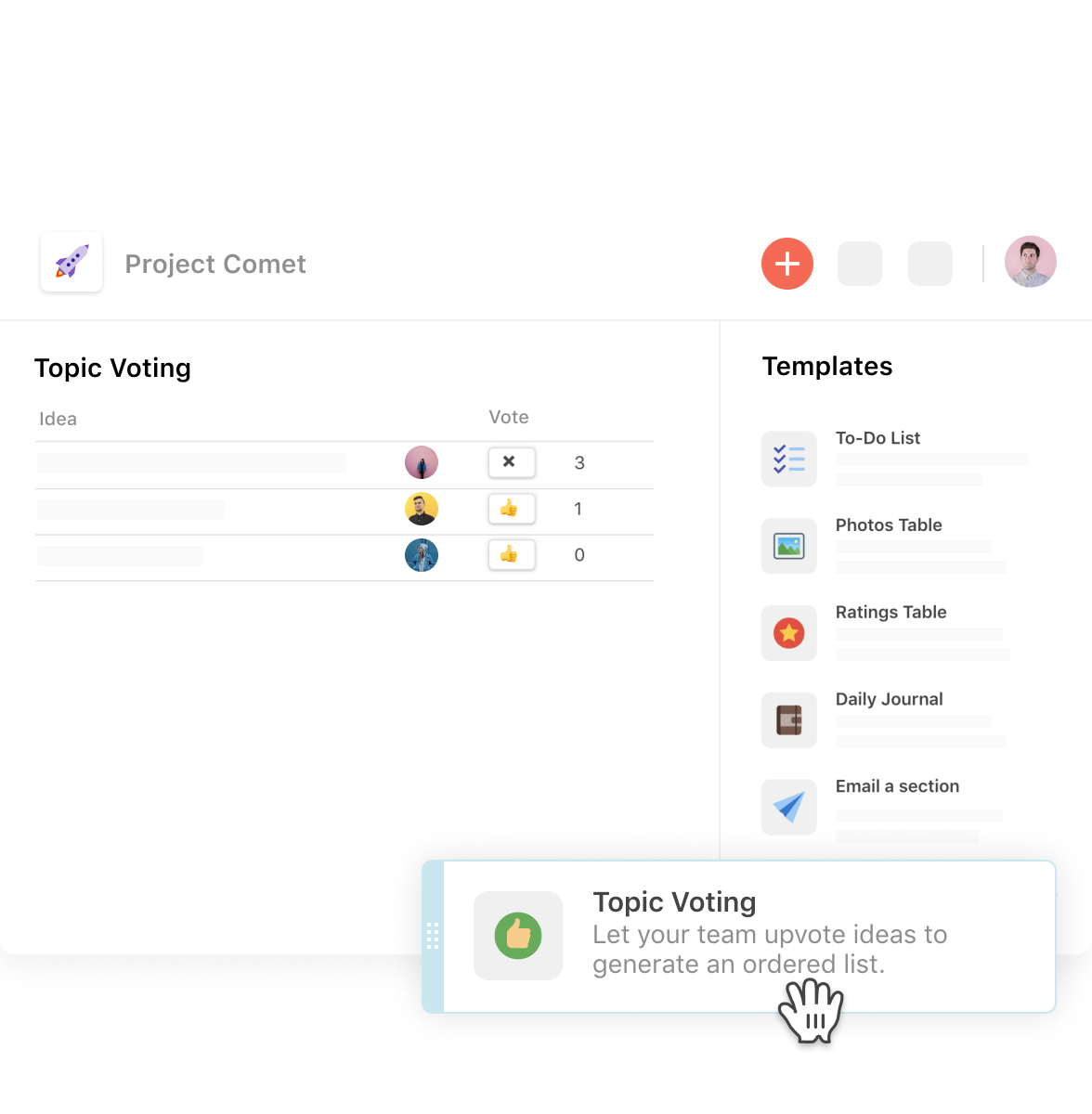
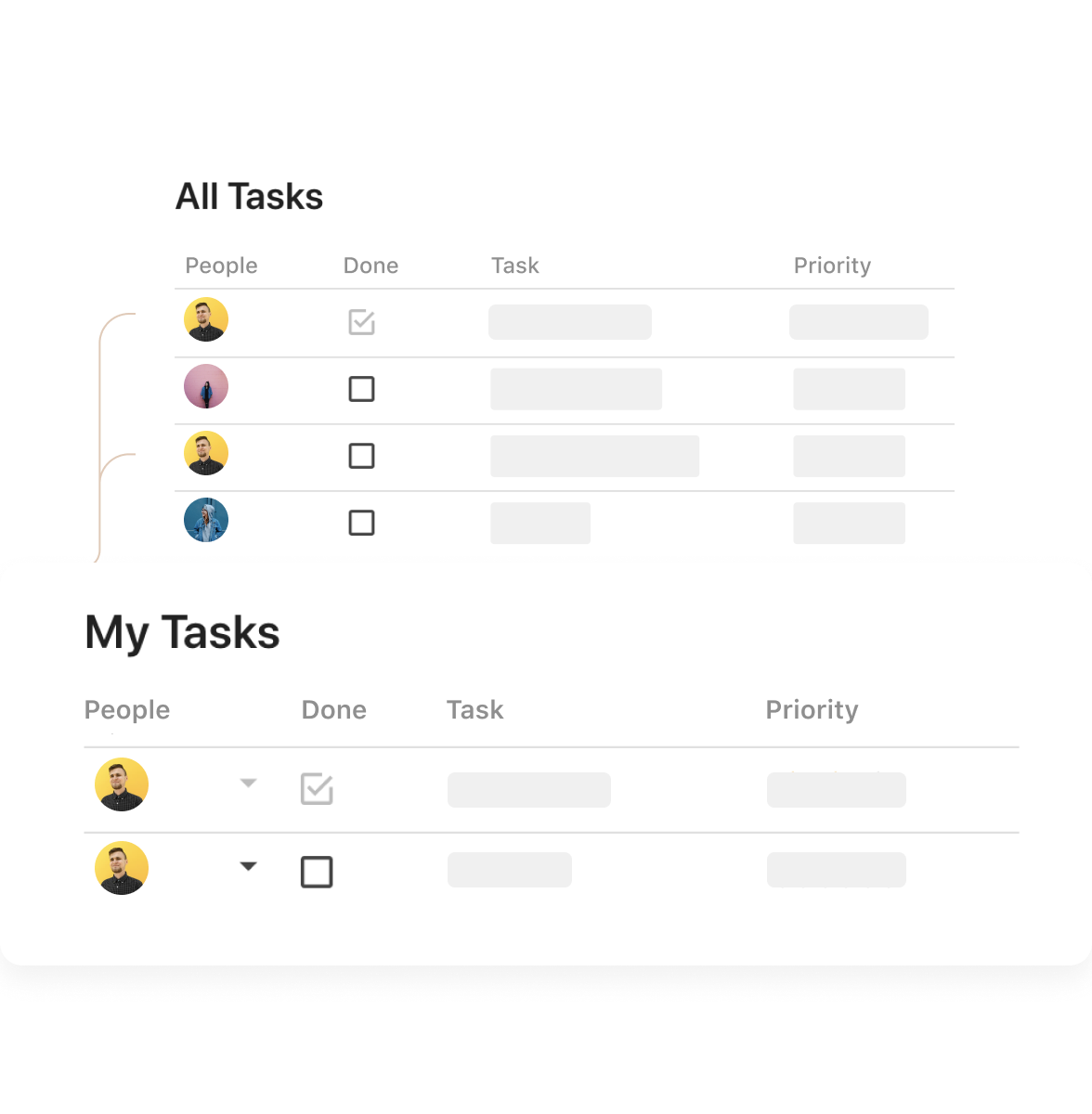
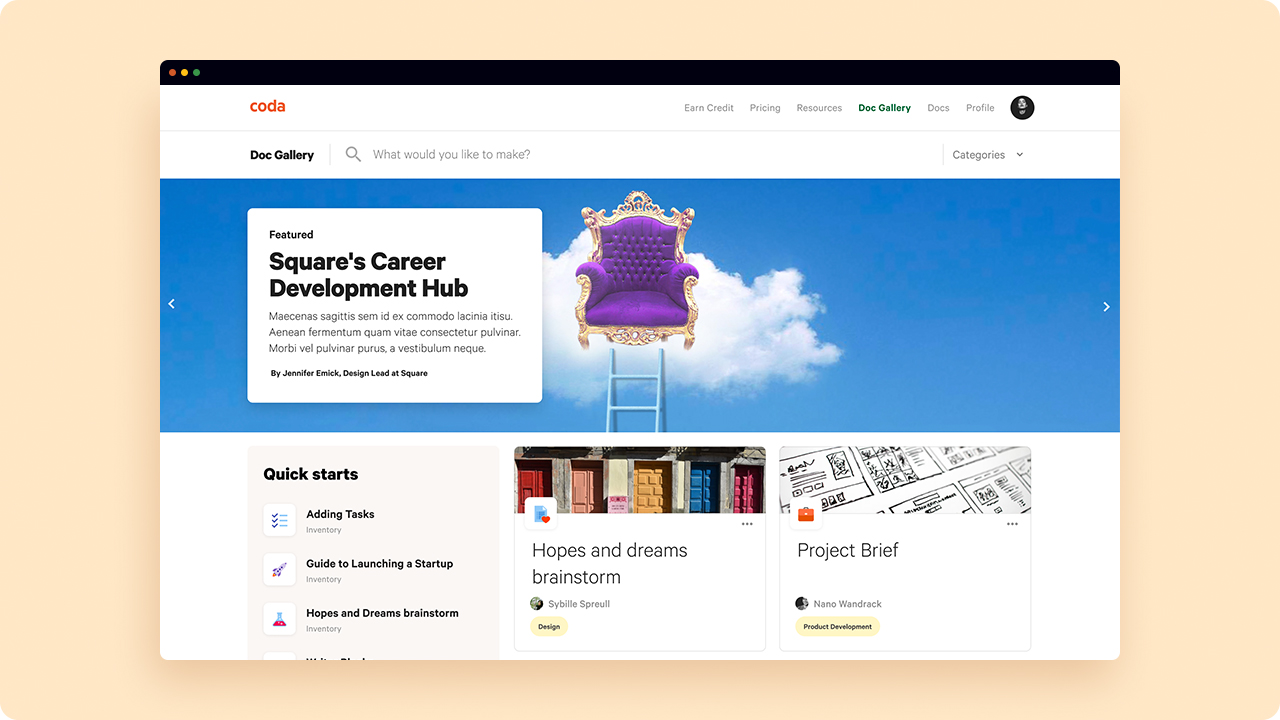
Coda, acquired by Grammarly in early 2025, is a template-based document creation and collaboration solution, supporting a variety of use cases.
$0
per month
HCL Connections
Score 9.0 out of 10
N/A
Connections from HCL Technologies (formerly from IBM, acquired by HCL in 2018) is a collaboration tool and employee digital workspace with key features like social analytics, blogs, document management, and a social network.
N/A
Pricing
Coda by Grammarly
HCL Connections
Editions & Modules
Free
$0.00
per month
Pro
$10.00
per month per doc maker; unlimited editors (paid annually)
Team
$30.00
per month per doc maker; unlimited editors (paid annually)
Enterprise
Custom Pricing
No answers on this topic
Offerings
Pricing Offerings
Coda by Grammarly
HCL Connections
Free Trial
Yes
No
Free/Freemium Version
Yes
No
Premium Consulting/Integration Services
No
No
Entry-level Setup Fee
No setup fee
No setup fee
Additional Details
With Coda, you only pay for Doc Makers.
Often one person creates a doc, others edit it, and some simply observe from afar. Instead of charging for everyone, we only charge for the people who create docs.
Interested in enterprise pricing? Visit coda.io/enterprise
Coda is great to build a place for your users to go to and see information. It is easy to navigate through and the variety of content creation is great. However, it is not always easy to create what you want and there is a lot of playing around and learning. Coda also sometimes misses some functionality which is expected. For example, downloading a list of users that have access to the platform. Being able to send push notifications when a new page has been created etc. Overall it is a good tool to use just be prepared to invest time!
IBM Connections is possibly most suited for larger organizations where bigger teams are able to have more people to share with. Also, it may be less appropriate when there is so much security that it would hinder the anytime, anywhere access capabilities and prevent users from being able to enjoy sharing content with each other.
One source of truth: It's incredibly easy to keep everything organized and easy to find.
Being able to show different views of the same information throughout your doc makes it really easy to customize the information.
In general, I love the "coding" aspect of it, and being able to do advanced functions has helped us create some really interesting automation and streamline our process.
Search in connections is incredibly poor. It's commonly joked that once data goes into Connections, you never find it again, unless you have a direct link. This alone kills usability for Connections.
Embedded content in wiki pages in connections is poorly implemented. While the content displays, you can't interact with it, or edit it reasonably, and it's really slow to load.
The "social" features in Connections are pretty lame, and no self-respecting user spends any time trying to build their profile. It's just disappointing.
Coda is definitely something that has been proven to drive positive impact in our organization. We have many divisions that can benefit from this that we have yet to explore. It would definitely be worth renewing.
Connections has continued to more than meet our needs from a collaboration point of view and we are currently working on integration with our IBM Websphere portal platform to provide an integrated collaboration solution. This scenario will provide our users the best both products have to offer in a single interface.
There is a little bit of a learning curve on where to point and click to add in different elements and make edits. But it is still very manageable once you get the hang of it. I do still have some issues with some of my connected pages updating each other when I don't want them to sync. So I'll end up editing one page, and it will make the same edits on another page.
Connections combines all the most useful abilities from various social networks. This makes it useful of course, but it also reduces user adoption time initially by allowing users to get comfortable with basic features. Once they are comfortable, it's easy for users to start exploring. They find new people in the organization to contact, new sources of information, etc. Before you know it, about half of the users are contributing back in some form -- and all with little or no training needed by IT.
Once Connections was installed, patched, etc. it was ALWAYS up. We only had to bring it down for OS updates to the servers. That seems to be typical of anything that runs on WebSphere; it's bulletproof and could probably run for months and years if the underlying OS didn't require constant patching.
We haven't done any integrations - the initial part of our experience we found that for docs with complex formulas, the page tends to load slowly but in recent months, Coda has improved and optimized the loading times in general and we generally don't find any problems in terms of speed anymore.
IBM Connections web UI, mobile app (data sync to / from the device), and file transfer speeds were almost always very fast. It was rare for a slow-down of any kind, even when doing searches.
Mainly due to timezone differences. I think Coda's support in general is well implemented and executed. They know their stuff and are helpful. But since I'm not in the same timezone, solution rates are slower for me, and that's not something I prefer. I work in customer service, too, and more often than not, time is important. Shortening the solution time would be a much greater experience.
IBM Support has ALWAYS been quick to respond, regardless of the product. Even first level techs seldom provide "canned" responses and they really try to help. If they can't help, they don't wallow around but engage the right person immediately. It's very rare that the first level tech needs to escalate, and even more rare when they do escalate and the next person engaged cannot solve it. We have been more than satisfied with IBM support's quick and professional responses to our issues.
I'm relatively inexperienced but this experience is meaningful. It would have been nice to have some guidance from Coda so that we understood more on Coda's purpose and potential.
Try to understand you will never find a product which suites all your end user for 100%. IBM Connections is the best of all breeds but if you go look on each functionality on its own there are better example out there. But as IBM COnnections delivers it all in just one platform makes it the best example about integration of different functionality into one platform.
For general use cases, Google Docs or Airtable are often a better starting place. But if things get complex or you're constantly pairing the two together, consider graduating to Coda to save yourself long-term headaches. Notion is great for personal use, but the powerful automation and collaboration features in Coda make it a better fit for teams in my experience so far.
IBM Connections offers a complete package of tools that can be useful but it doesn't integrate well with other services. Competitors like Yammer offer slightly fewer features but are cheaper and much easier to maintain. If we were making a decision today we probably would choose a combination of Yammer, Slack, Microsoft Teams, and other Microsoft or Google Tools.
I think scalability is definitely good here since it's based on number of doc makers. Implementation into each dept becomes simpler. That being said, due to the nature of our work, we find it easier that we have a "super user" and then a team of other doc makers. This would make the doc creation and management more efficient.
Scaling UP is never an issue with IBM's core technologies like WebSphere, DB2, etc. as long as you have or can find the technical resources to implement it. Where IBM seems to fail is scaling DOWN for smaller organizations. Connections 5.0 on-premises would have required us to create 7 servers -- yes, they would be virtualized, but still that's 7 OS licenses, 40 virtual CPU cores, 80GB RAM, and a few TB of hard disk space. All to replace Quick which runs on 1 server with 1 OS license, 4 cores, 8GB RAM and 600GB of disk. Granted, there are major differences in capabilities between the two, but how do you get a CFO understand why features like a mobile app, file sync, and social sharing require 10x the back-end resources?