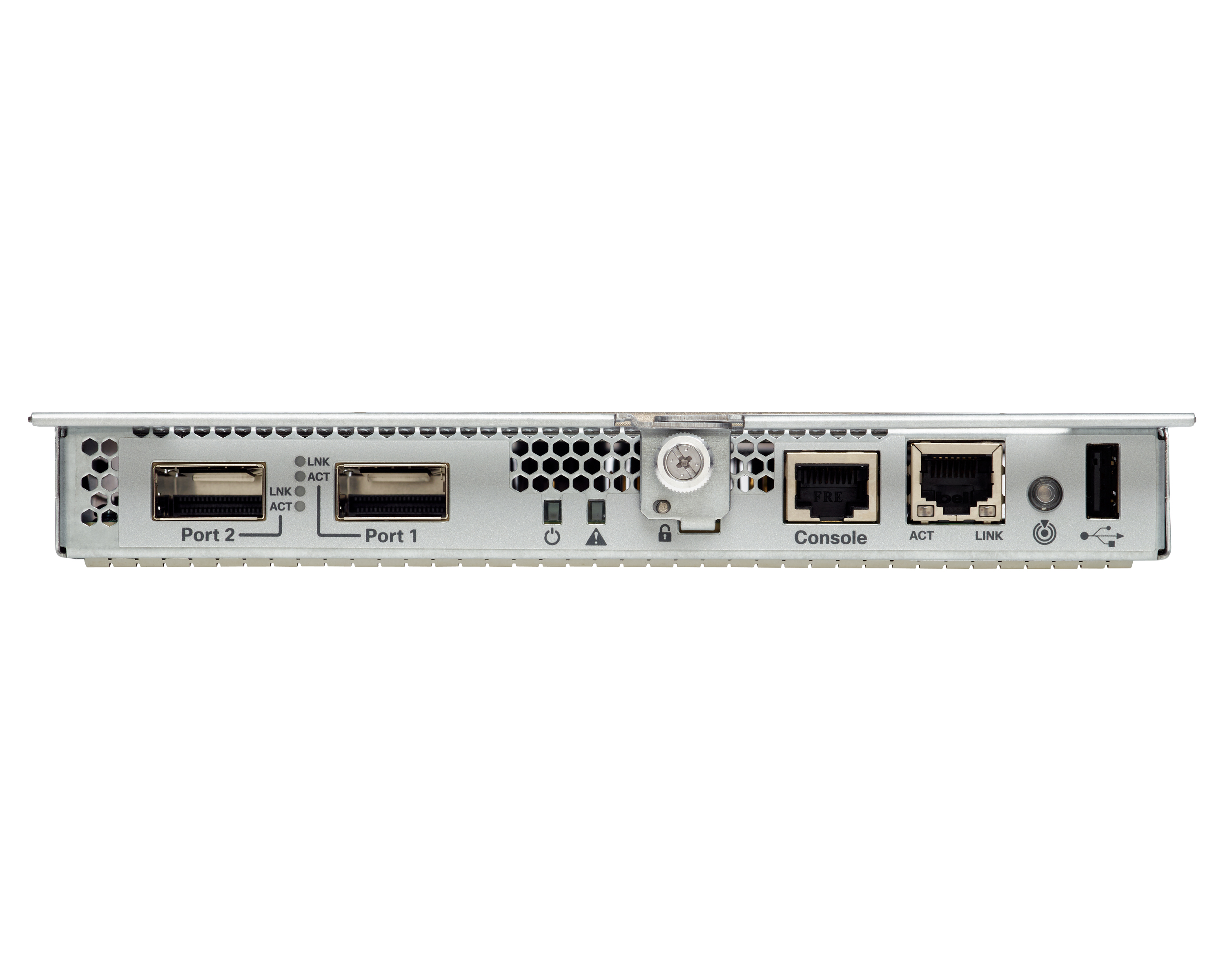
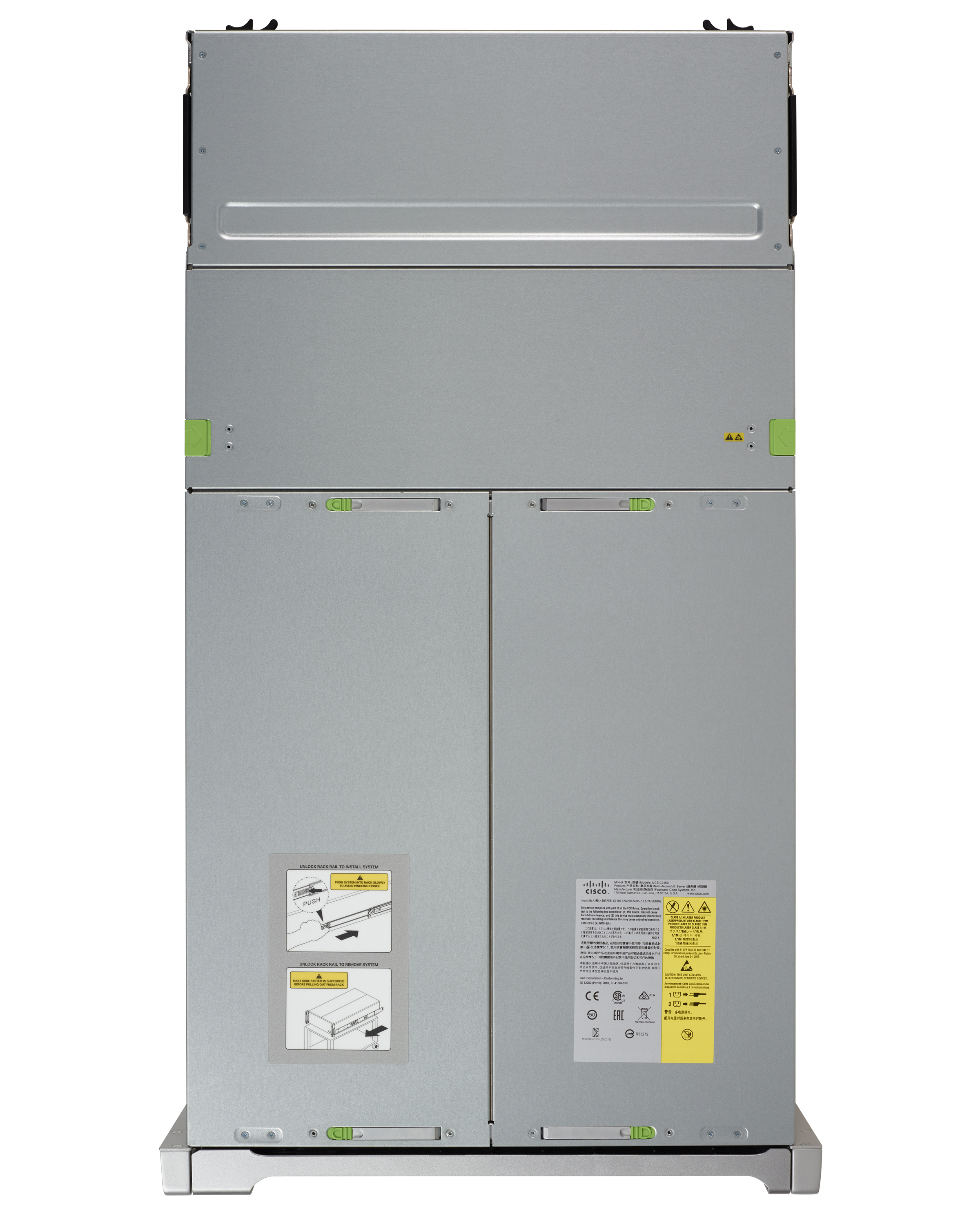
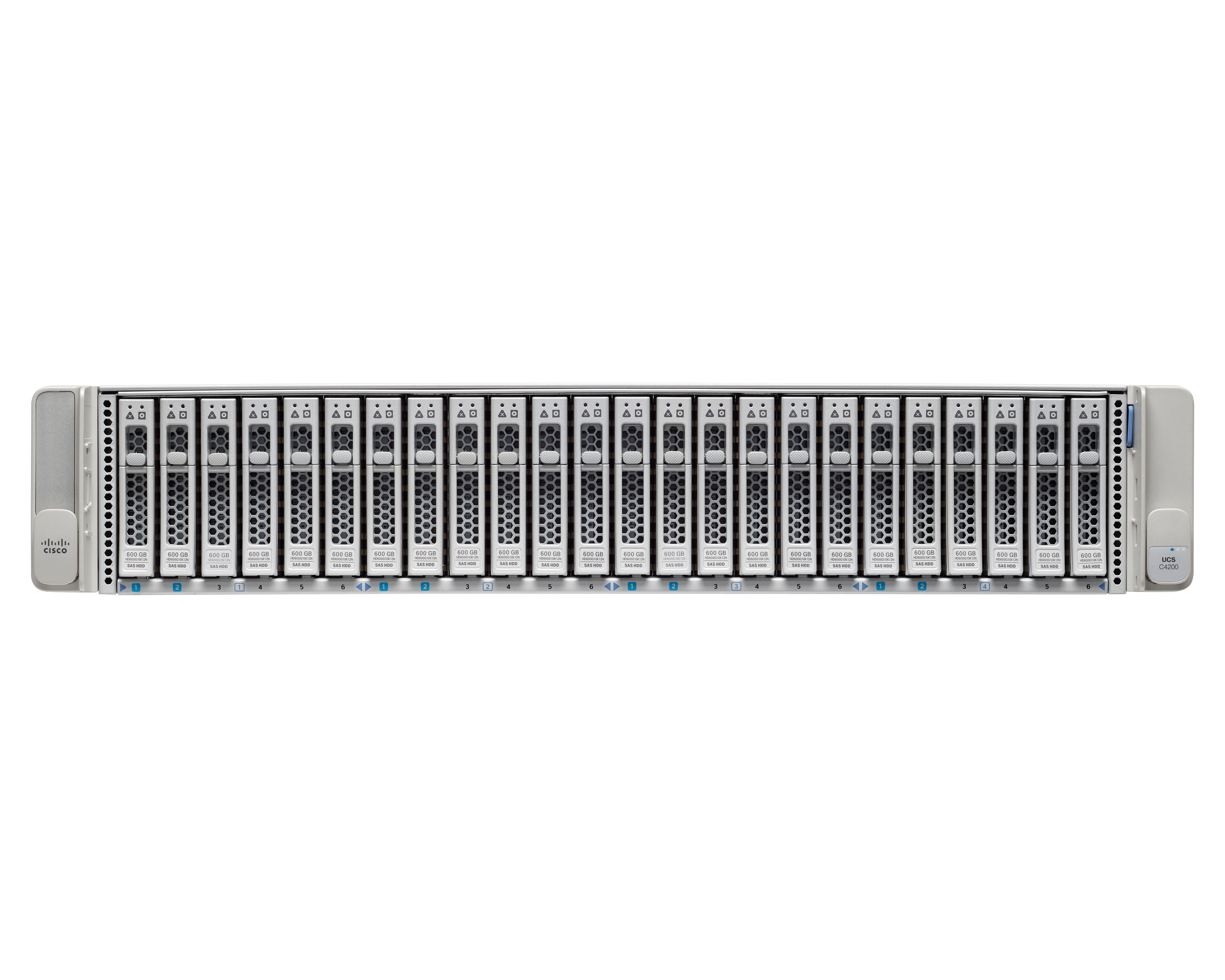
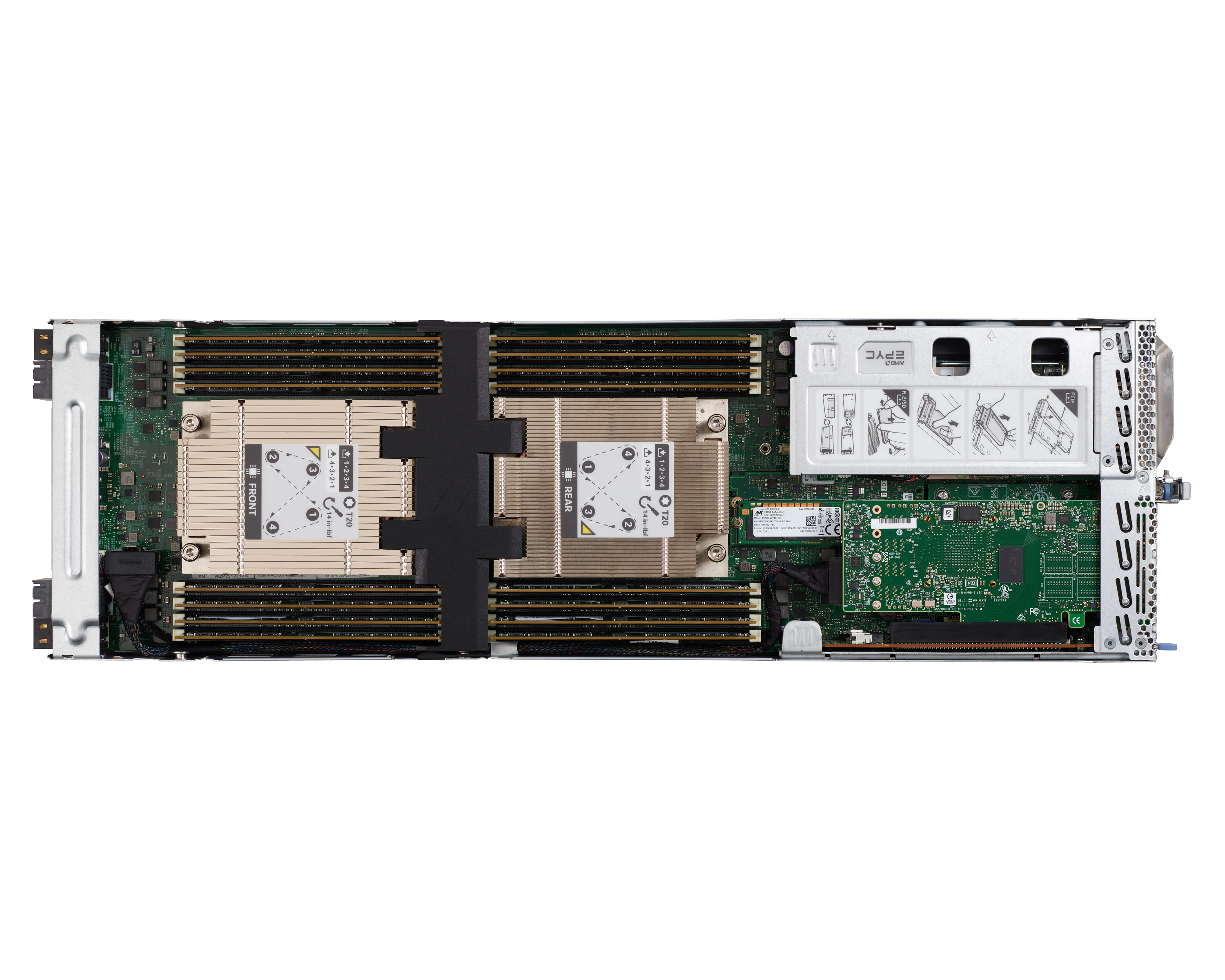
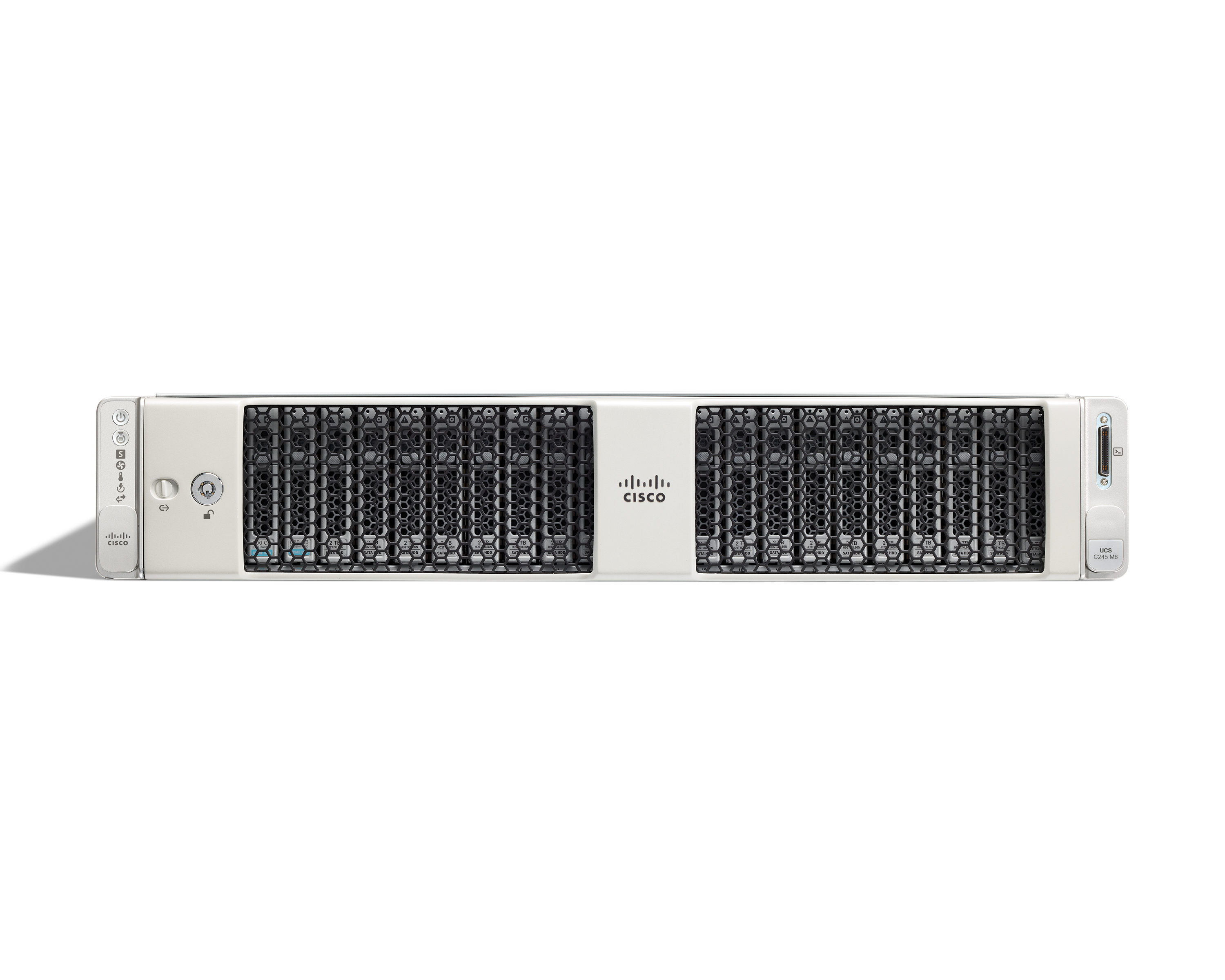
The Cisco UCS Series is a modular, high-density, high-availability, dual-node storage- optimized server suited for service providers, enterprises, and industry-specific environments. It provides dense, cost-effective storage to address your ever-growing data needs. Designed for a new class of data-intensive workloads, it is simple to deploy and excellent for applications for big data, data protection, software-defined storage environments, scale-out unstructured data repositories, media…
N/A
Proxmox VE
Score 9.0 out of 10
N/A
Proxmox Virtual Environment is an open source server virtualization management solution based on QEMU/KVM and LXC. Users can manage virtual machines, containers, highly available clusters, storage and networks via a web interface or CLI. Proxmox VE code is licensed under the GNU Affero General Public License, version 3. The project is developed and maintained by Proxmox Server Solutions GmbH.
$90
year & CPU socket
Pricing
Cisco UCS Series
Proxmox VE
Editions & Modules
No answers on this topic
Community
€ 90
year & CPU socket
Basic
€ 280
year & CPU socket
Standard
€ 420
year & CPU socket
Premium
€ 840
year & CPU socket
Offerings
Pricing Offerings
Cisco UCS Series
Proxmox VE
Free Trial
No
No
Free/Freemium Version
No
Yes
Premium Consulting/Integration Services
No
No
Entry-level Setup Fee
Optional
No setup fee
Additional Details
—
Proxmox Virtual Environment's source code is published under the free software license GNU AGPL, v3 and thus is freely available for download, use and share. A Proxmox VE Subscription is an additional service program that helps IT professionals and businesses keep Proxmox VE deployments up-to-date. A subscription provides access to the stable Proxmox VE Enterprise Repository delivering software updates and security enhancements, technical help and support.
More Pricing Information
Community Pulse
Cisco UCS Series
Proxmox VE
Features
Cisco UCS Series
Proxmox VE
Server Virtualization
Comparison of Server Virtualization features of Product A and Product B
We have used these servers as edge servers as well as core servers. They always perform extremely well and have very few hardware issues. If they do experience a hardware issue it is easy to find the replacement part and fix it without any issues. They are great performers and overall a great buy.
Proxmox VE is a virtualization platform that provides a range of features and functionalities suitable for various scenarios. Here are some specific scenarios where Proxmox VE is well suited and some scenarios where it might not be the best choice:Well-suited scenarios:Virtualization of server workloads: Proxmox VE is well suited for virtualizing server workloads such as web servers, mail servers, database servers, and other similar applications. Its high-performance virtualization capabilities allow these workloads to run smoothly and efficiently.Hosting multiple virtual machines (VMs): Proxmox VE is ideal for hosting multiple VMs on a single server. It provides efficient resource management, allowing users to easily allocate resources to each VM.Clustered environments: Proxmox VE is a great choice for clustered environments. It supports clustering and can easily manage multiple servers, providing high availability and load balancing for mission-critical applications. Less appropriate scenarios: Limited hardware resources: Proxmox VE requires significant hardware resources to run efficiently. If you have limited hardware resources, it might not be the best choice. Simple applications: If you only need to run a single, simple application, Proxmox VE might be overkill. Other virtualization platforms or even a basic web hosting service might be more appropriate.
It's very customizable. It's customizable as in you have a chassis, but you could pick and choose the size of your blades puff with full width depending on what your workloads are. So in a way, you're not locked in. It's not like you buy a chassis and you're stuck into one thing could go and put, you need something that's storage intensive or maybe you've got more graphics intensive workload. You could choose and mix and match in the same.
ZFS storage out of the box. The integration with ZFS is fantastic. You can easily create pools to store your VM images and data on, and the Proxmox web UI provides an easy way to check drive health, ZFS scrub status, etc.
Great web UI. Practically everything configurable is available to do so from the web user interface. You'll rarely need to drop to the command line for administrative tasks, unless you want to, in which case you can do that too. The UI also provides graphs and visualisations to help you keep check of how everything is performing.
Easy to setup a high availability cluster. Although Proxmox VE works perfectly well on a single server, you can also install it on multiple hosts and setup a cluster.
Uses a Debian core system with an Ubuntu based kernel. This means everything to do with the base operating system is tried and trusted. We use a lot of Debian and Ubuntu installs, so having this run underneath Proxmox VE was an added bonus for us.
The web UI does not work as well on mobile devices. It is useable, but a mobile optimised / responsive UI would be nice to have. There is a mobile app, so that may alleviate this issue, but I have not yet tried it.
Support in the community forums could be better. There are paid support plans, but new users trying out the software will not have access to this. Answers to questions can sometimes be terse, and I can imagine this may put some people off.
The wiki is a bit hit and miss with certain topics. I've often seen outdated or missing information, and the whole thing looks like it could do with some polish. I'd love to see it opened up for the community to add to.
Cisco UCS has been a highly reliable compute platform for our workloads, handling MSSQL, SSIS, virtualization (VMware vSphere), and analytics workloads with low latency and high efficiency. UCS Service Profiles and centralized management (UCS Manager, Intersight) make it easy to provision, scale, and manage compute resources efficiently across production and non-production environments. Our UCS setup integrates well with Pure Storage and Nimble HF40, delivering high IOPS, low latency, and fast throughput for data-intensive workloads. Cisco UCS hardware and licensing can be expensive compared to some alternative compute platforms, especially when considering cloud-based or hyperconverged options. While UCS can work in a hybrid cloud setup, it doesn’t natively integrate as seamlessly with public cloud providers like Azure or AWS compared to some newer solutions. We may need to evaluate Azure Stack HCI or AWS Outposts for future flexibility.
Proxmox VE provides the most capable, yet stable virtualization platform in the market today. Licensing options are also competitive and cost-effective for support, and support is extremely fast and knowledgable of getting issues resolved as quickly and soundly as possible.
While Cisco's hardware is solid and long running, their software is usually the weak point. I will say that they are getting better with each release but if I had to find a problem with usability that would be it. Overall usability is good when you can work around software issues.
The interface is easy to use for most of it, but still lacks screens for some configurations. Also, a few of the screens are not as intuitive as they could be. This is specially true with disk and network configuration, where some graphic/visual representations of the configurations would be very useful
The platform’s redundant fabric interconnects, power supplies, and built-in high-availability features ensure that systems remain online even during hardware failures or maintenance. Unplanned outages are rare, and when combined with proactive monitoring, UCS provides a very reliable environment for critical workloads.
Proxmox VE's ha-cluster functionality is very much improved, though does have a not-very-often occurrence of failure. In a 2-node cluster of Proxmox VE, HA can fail causing an instance that is supposed to migrate between the two nodes stop and fail until manually recovered through the command-line tools provided. Other than this, the HA clustering capability of Proxmox VE has proven to be reliable in 3 or more clustered environments with much less chance of these failures to occur.
The platform delivers fast and consistent compute performance for a wide range of workloads, including virtualization, and high-throughput applications. Even when integrated with other systems or software, UCS maintains responsiveness, ensuring reports, applications, and services run efficiently without noticeable slowdowns.
Proxmox VE's interfacing is always fast to load, both the Web interface and the command-line tool interfaces. Reporting is practically real time almost all the time, and you can see everything in mere seconds, easily able to identify if something is wrong or it everything is in tip-top shape as always desired
Cisco TAC is simply unbeatable and that goes for Cisco UCS server support just as well as it does for Cisco CUCM software. TAC has a well-deserved, excellent reputation and I do not hesitate to call them or open a ticket online, because I always know that I will get the help that I need and get it quickly
I would rate the in-person training as excellent. The sessions were well-structured, hands-on, and delivered by knowledgeable instructors who made UCS concepts easy to understand. It greatly improved our team’s confidence in managing the platform.
The training materials provided were generally informative and covered the essential aspects of the UCS platform, such as UCS Manager, Service Profiles, and integration with other systems. However, some of the training modules could benefit from being more hands-on and interactive. Additionally, certain advanced topics, like complex network configurations or troubleshooting hardware issues, were not covered in as much depth. Overall, while the training was useful, there’s room for improvement in terms of depth and practical application for more advanced users.
While there were some challenges, particularly with driver compatibility, network configuration, and hardware integration, the overall process was well-managed. The implementation team worked effectively to resolve issues, and we received great support from Cisco throughout the process. The training and knowledge gaps were addressed, and once the system was up and running, the UCS Series has significantly improved our infrastructure. The experience was generally positive, and any difficulties encountered were ultimately overcome with careful planning and support.
UCS integrates with VMware vSphere while adding hardware automation and unified fabric. Why UCS? Cisco UCS offers better infrastructure abstraction and automation via UCS Manager and Intersight. The integration of compute and fabric in a single system reduced configuration time and enabled faster troubleshooting. We selected Cisco UCS because it aligns with our long-term strategy, offering infrastructure, simplified lifecycle management, automated scaling, and reduced operational complexity. Additionally, we secured a significant discount from Cisco due to our use of another Cisco solution.
Cisco UCS Series provides a highly flexible architecture with service profiles, fabric interconnects, and modular blades/rack servers, allowing organizations to scale compute and network resources across multiple departments and sites efficiently. The only minor limitation is that careful planning is required to maintain consistency at very large scales.
Proxmox VE provides everything you need to quickly add new storage mediums, network and local, as well as networking interfaces, such as using Linux standard bridges and now Open-vSwitch bridges which can be even more scalable than before. Proxmox VE 4.0 dropped support for OpenVZ in favor of the more well supported and native LXC and made an upgrade path to it very simple.