Chose Cisco Multicloud Defense
As mentioned on the previous comments, Ease of use, Saved a lot of operational overhead compared to other products.

| Product | Rating | Most Used By | Product Summary | Starting Price |
|---|---|---|---|---|
 Cisco Multicloud Defense | N/A | A solution to simplify security and gain multidirectional protection across any public or private cloud to block inbound attacks, lateral movement, and data exfiltration using a single solution. Cisco Multicloud Defense protects all cloud environments using a single software-as-a-service (SaaS) control plane, eliminating inefficient, complex, and costly point solutions. | N/A | |
 Microsoft Defender for Cloud | N/A | Microsoft Defender for Cloud is a Cloud Security Posture Management (CSPM) and Cloud Workload Protection Platform (CWPP) for Azure, on-premises, and multicloud (Amazon AWS and Google GCP) resources. | N/A |
| Cisco Multicloud Defense | Microsoft Defender for Cloud | |||||||||||||||
|---|---|---|---|---|---|---|---|---|---|---|---|---|---|---|---|---|
| Editions & Modules | No answers on this topic | No answers on this topic | ||||||||||||||
| Offerings |
| |||||||||||||||
| Entry-level Setup Fee | No setup fee | No setup fee | ||||||||||||||
| Additional Details | — | — | ||||||||||||||
| More Pricing Information | ||||||||||||||||
| Cisco Multicloud Defense | Microsoft Defender for Cloud | |
|---|---|---|
| Considered Both Products | Cisco Multicloud Defense Chose Cisco Multicloud Defense Virtual Firewalling solutions are a traditional way of bringing your own security into the cloud. Multi cloud defense is a new way that is cloud native. |  Microsoft Defender for Cloud  Dipak Ugale System Integration Consultant Chose Microsoft Defender for Cloud There is the several ways to protect the applications and lot more tools available in the market. Most commonly we used Crowd strike Falcon for endpoint detection and response capabilities. McAfee endpoint protection also provide broad range of security features. Best …  Apoorv Tiwari Cloud Engineer Chose Microsoft Defender for Cloud It is very good in comparison to other products that we have used. Its price is very effective and attractive, and it also provides good security policies. threat intelligence is also good and user protection is also very much better, and it also serves new updates as and when … |
| Cisco Multicloud Defense | Microsoft Defender for Cloud | ||||||||||||||||||||||||
|---|---|---|---|---|---|---|---|---|---|---|---|---|---|---|---|---|---|---|---|---|---|---|---|---|---|
| Cloud Computing Security Features |
|
| Cisco Multicloud Defense | Microsoft Defender for Cloud | |
|---|---|---|
| Small Businesses |  Armor Score 6.0 out of 10 | No answers on this topic |
| Medium-sized Companies |  Druva Security Cloud Score 9.7 out of 10 |  CrowdStrike Falcon Score 9.1 out of 10 |
| Enterprises | Druva Security Cloud Score 9.7 out of 10 | CrowdStrike Falcon Score 9.1 out of 10 |
| All Alternatives | View all alternatives | View all alternatives |
| Cisco Multicloud Defense | Microsoft Defender for Cloud | |
|---|---|---|
| Likelihood to Recommend | 8.2 (0 ratings) | 8.1 (0 ratings) |
| Likelihood to Renew | - (0 ratings) | 8.9 (0 ratings) |
| Usability | 9.1 (0 ratings) | - (0 ratings) |
| Cisco Multicloud Defense | Microsoft Defender for Cloud | |
|---|---|---|
| Likelihood to Recommend |
|
|
| Pros |
|
|
| Cons |
|
|
| Likelihood to Renew |
|
|
| Usability |
|
|
| Support Rating |
| No answers on this topic |
| Alternatives Considered |
|
|
| Return on Investment |
|
|
| ScreenShots | Microsoft Defender for Cloud Screenshots   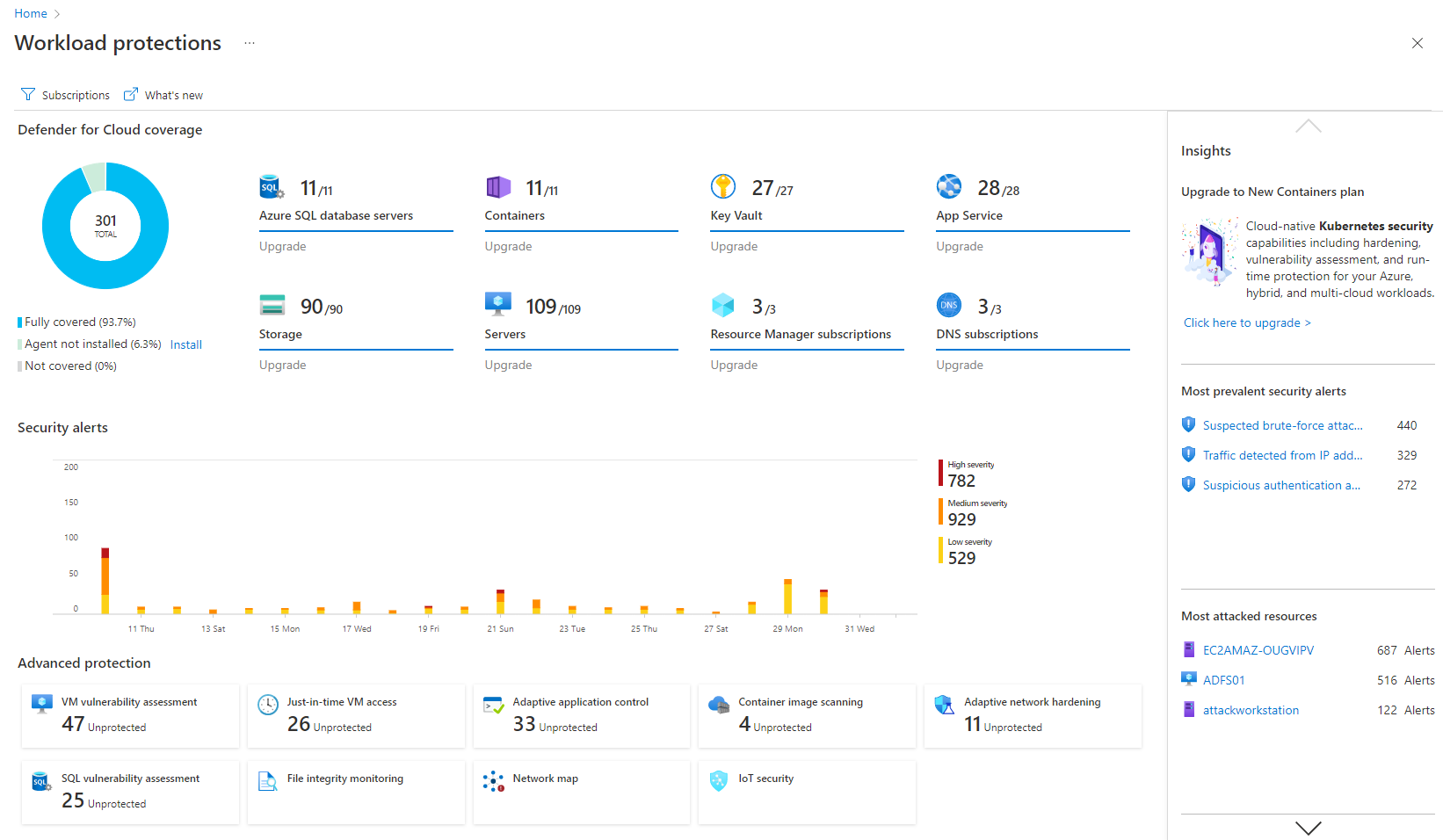   |
