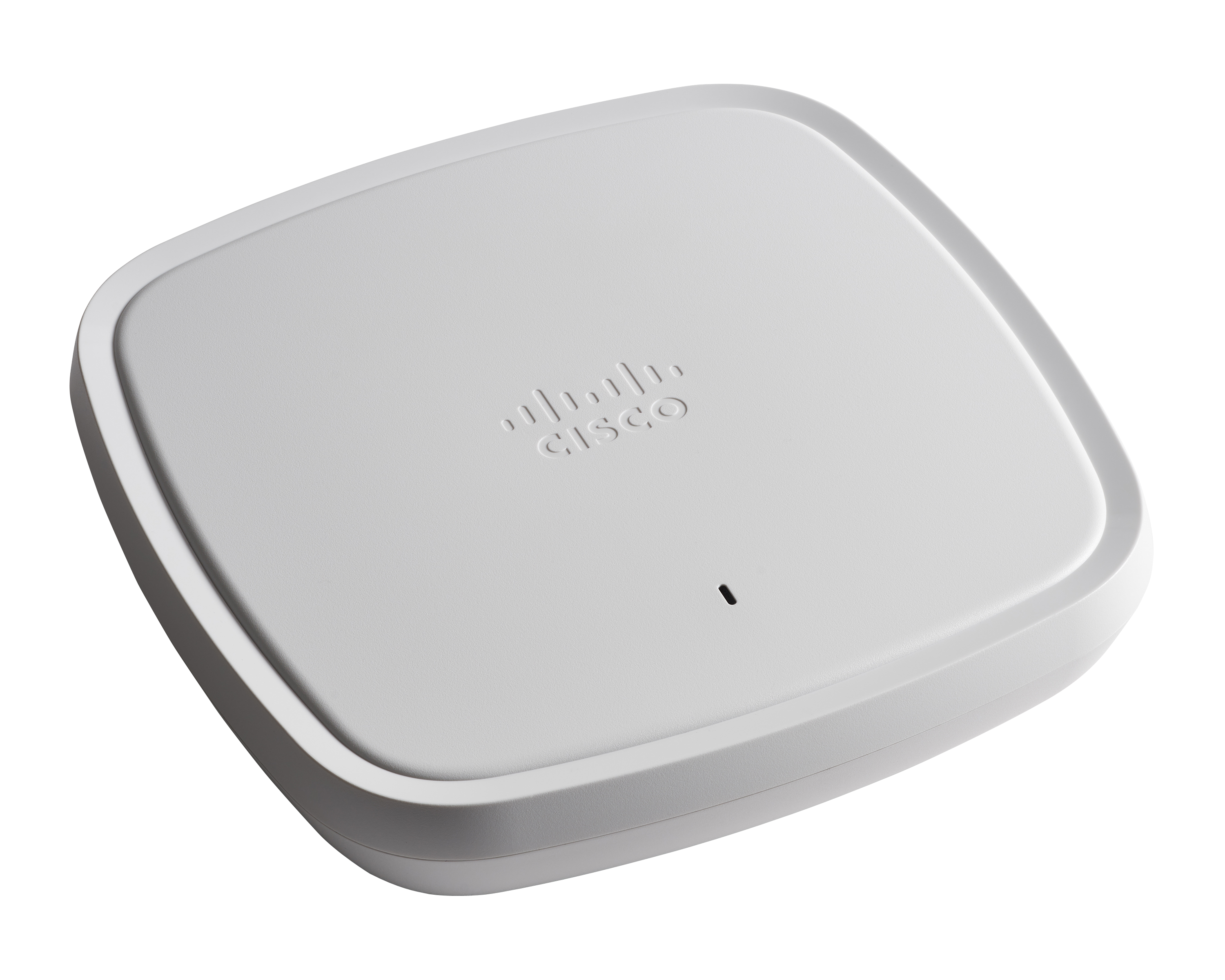
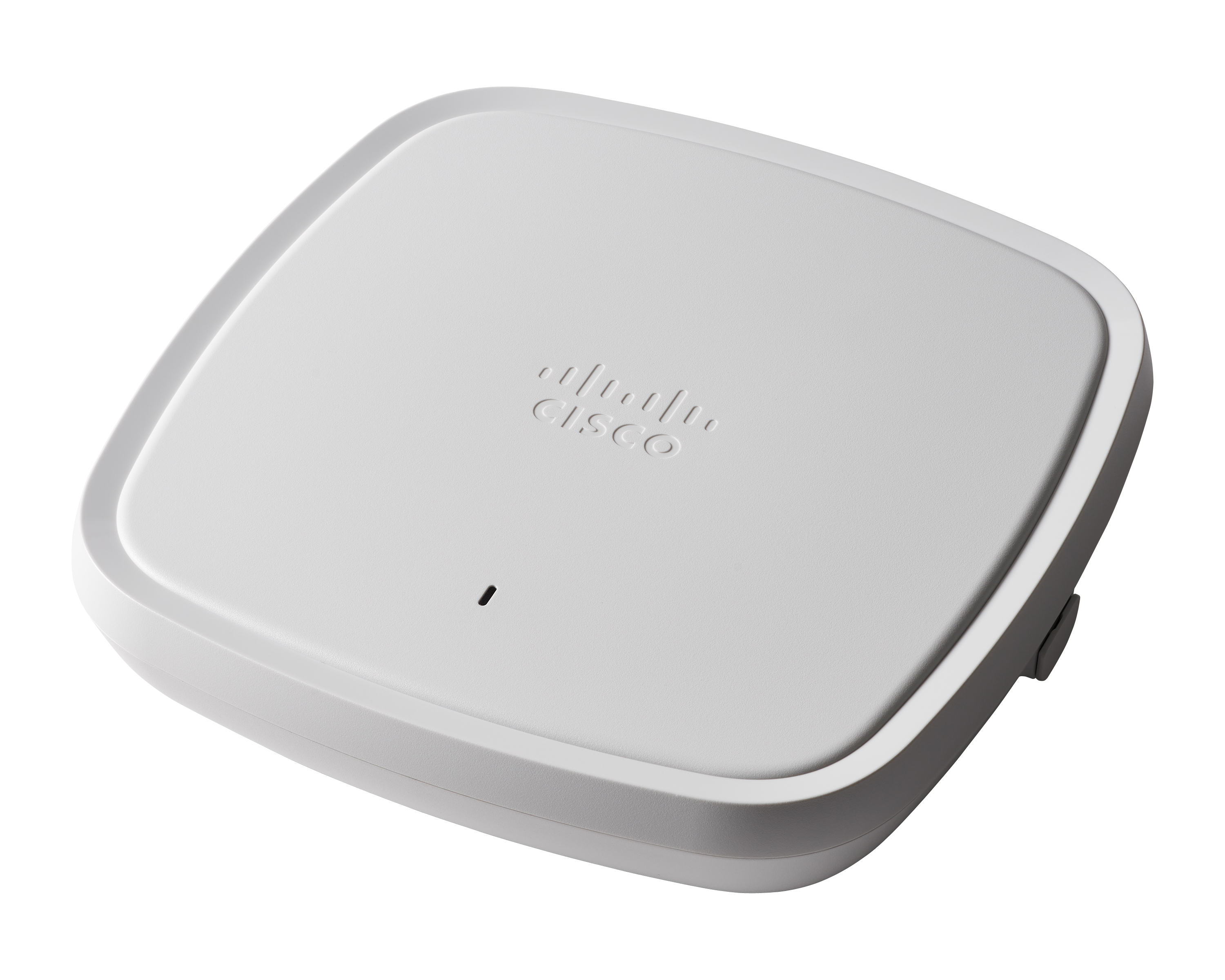
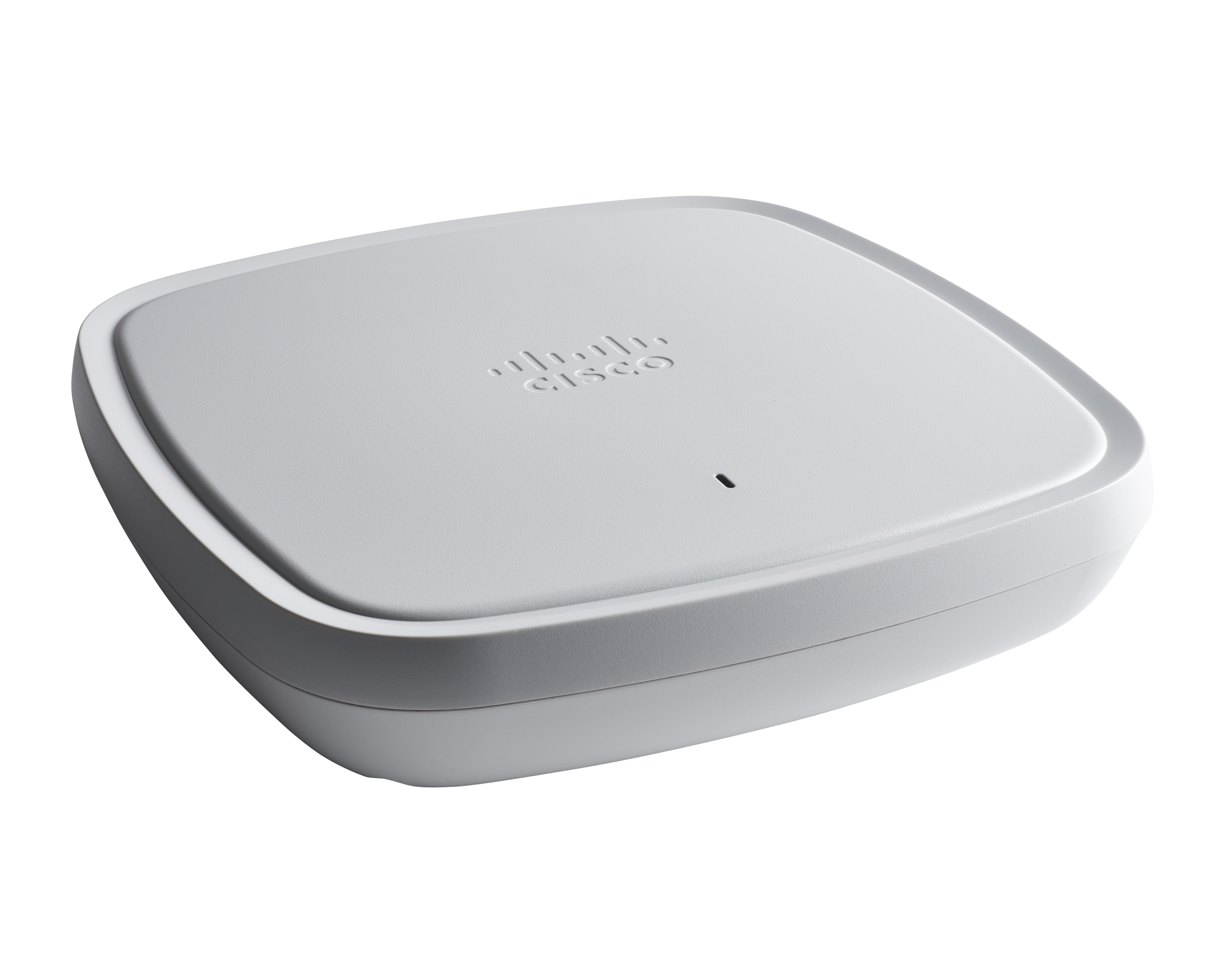
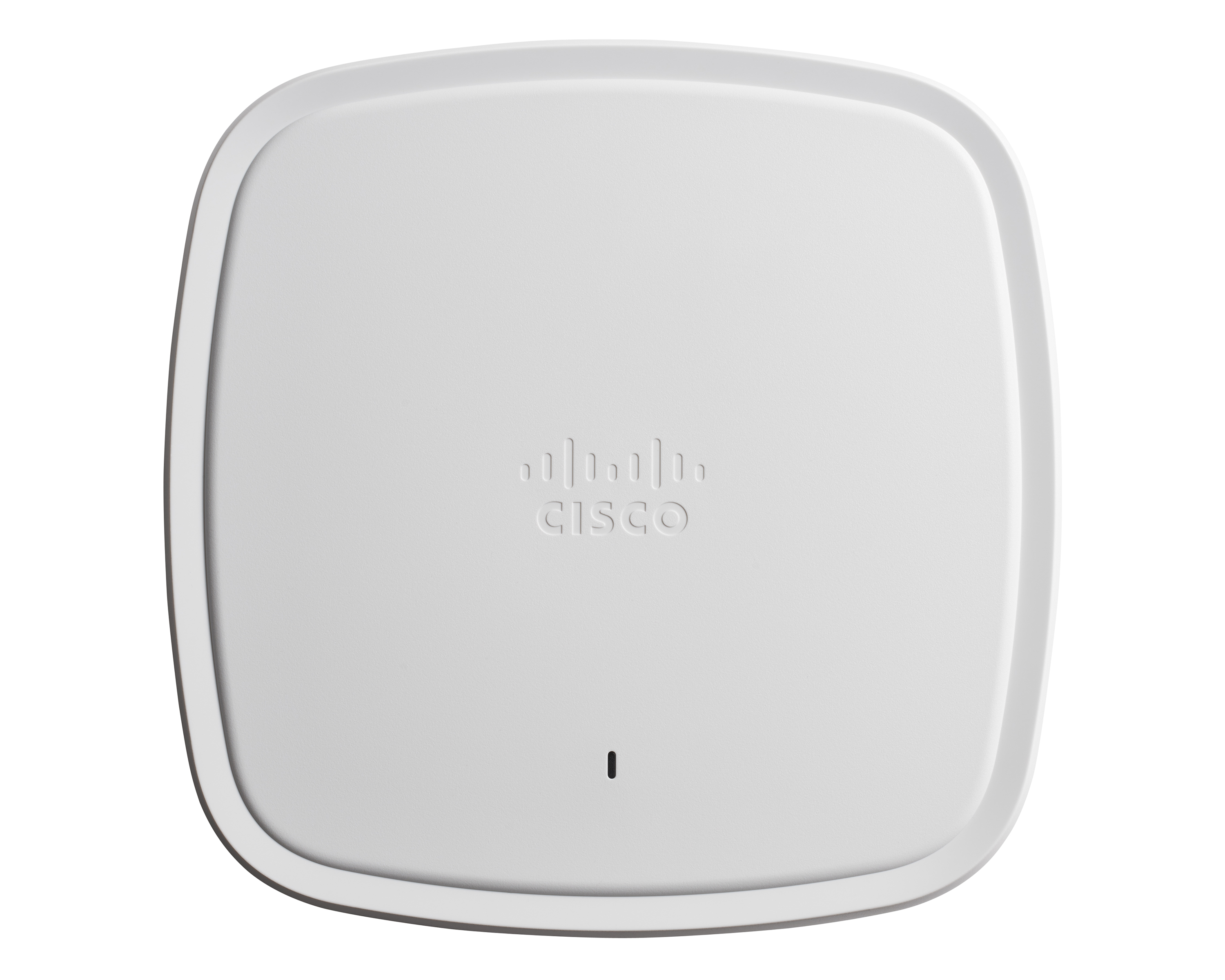
The Cisco Catalyst 9100 Access Points includes the 9115 and 9117, and designed to meet high demand network access.
N/A
Cisco Catalyst 9800 Series Wireless Controllers
Score 9.2 out of 10
N/A
The Cisco Catalyst 9800-80 is a modular wireless controller with optional 100 Gigabit Ethernet (G) modular uplinks boasting seamless software updates for large enterprises and campuses, and security with ETA and SD-Access.
N/A
Pricing
Cisco Catalyst 9100 Access Points
Cisco Catalyst 9800 Series Wireless Controllers
Editions & Modules
No answers on this topic
No answers on this topic
Offerings
Pricing Offerings
Cisco Catalyst 9100 Access Points
Cisco Catalyst 9800 Series Wireless Controllers
Free Trial
No
No
Free/Freemium Version
No
No
Premium Consulting/Integration Services
No
No
Entry-level Setup Fee
No setup fee
No setup fee
Additional Details
—
—
More Pricing Information
Community Pulse
Cisco Catalyst 9100 Access Points
Cisco Catalyst 9800 Series Wireless Controllers
Considered Both Products
Cisco Catalyst 9100 Access Points
Verified User
Administrator
Chose Cisco Catalyst 9100 Access Points
Cisco Catalyst 9100 Access Points support more standards and are easier to configure than Ubiquiti APs. Ubiquiti APs also have some strange quirks or bugs if wired connection is lost.
We have knowledge that Cisco APs will fit our necessities. A very good range of options and configuration that help to IT Team to setup the network. The use of the new Wifi 6 technlogy is also other fact to select this brand. The users will have devices that will use wifi 6 …
So that's our company policy to go with the standard products. We have tried a couple of other vendors, but we didn't actually get a proper alignment with our requirements. So Cisco actually passed our standard requirement. So that's the reason why we go with Cisco. And also I …
We are migrating from Aironet platform to Cisco Catalyst 9100 Access Points. That's more flexible, and we do it to sync switching, SDWAN, and wifi under one family.
Of all the different APs that I have implemented the Cisco APs are still the most feature rich. The analytics that they provide sets them apart from all other vendors I have tested.
Nothing compares to Cisco APs. Meraki is owned by cisco, but they are a poor mans cisco. Combined with the 9800 series controllers the 9000 series aps are unbeatable. i would recommend them to anyone, because they are easy to set up and are secure. they broadcast a long way and …
Chose Cisco Catalyst 9800 Series Wireless Controllers
Cisco Catalyst 9800 Series Wireless Controllers is more modern, looks better, supports newer access points. Using different tags - site tags, policy tags, etc. is a nice way to configure different access point groups or locations. Also Cisco Catalyst 9800 Series Wireless …
Cisco Catalyst 9100 Access Points are well suited for dense Client solutions. We have used these in areas where we have a large number of guests that need top-notch connectivity without ever losing connection. The one area where we do have difficulty is in outdoor deployment, where large areas need to be covered, but we do not have physical connectivity in order to get the access points connected. This is not an access point issue but more of a physical connectivity limitation.
I think any size organization can benefit from them. The smaller "L" models work well for a smaller organization and of course, the same answer for the larger platforms. The failover/redundancy options are quite nice and the unified setup and UI is always nice for consistency.
So this product actually helps in healthcare facilities where we have a wireless, we call this WOW monitors. It's Wireless On Wheels. So we use those monitors to the patient's room to room. So in that case, rather than connecting it to wire, so it really helps us to connect through the WIFI and access the patients whenever we be needed.
I think the updates are great. ISSU upgrading code is fantastic. I think the speed with which CAPWAP converges or reconverges, I think the redundancy mechanisms for roaming APs to other controllers is very good. I think overall, getting away from more of a monolithic processor where subprocesses handle what they call the WNCD tasks, I think fundamentally is an improvement in performance.
The radioactive tracing, all of the troubleshooting and all of the logging and all of the importing and exporting features for logging and analytics within the controller itself is really, really good compared to the predecessor AireOS.
They could definitely download their code faster. When we first get them out of the box and join them on the network, it takes probably 20, 30 minutes per access point to download the new code from the wireless controller and then reboot itself and then come back online.
When you're configuring it on the controller, if you want to switch access point groups, we have them broken out per site. Every time you add it to one of those groups, it also has to reboot. That's like downtime for us. That could be improved, I think.
The only downside I would say is the GUI performance is a little bit slow, even with a newer 9800, performance still lags a bit even compared to the previous generations. So I would like to see that improved. But aside from that, that's really the only issue that we have with it.
Despite common software and hardware issues this is still the best product on the market for large scale enterprise deployments. Cisco has worked with us extensively to reduce the amount of bugs in every iteration however new bugs are introduced or new incompatibilities always arise with major releases. Thus, while I'm hesitant to recommend the product it's still much better than all the other competitors such as Aruba and Juniper in the WIFi space. There is also extensive integration with DNAC/Catalyst Center and ISE in an SDA deployment. Recently there has been a number of critical issues with the controller software and Cisco has proved themselves to be incapable of timely troubleshooting and diagnosis. This has reduced our confidence in the product and it's current and future stability and maintainability. At it's current state the product is taking up too much of our engineering resources to maintain despite also paying for premium support from Cisco. As such I have reduced by rating as we are likely to look at alternative vendors for our long-term wireless management solution
The Cisco Catalyst 9120 Access Points have been a solid deployment for me. Using their interface is a mix of new and old. They run IOS, so if you know the CLI, you can easily navigate around them. You can join them to an older controller if it supports a certain version, you can join it to a new 9800 controller--very straight forward--and you can run the embedded wireless controller on them directly. I've found this to be very useful at smaller sites. The Cisco Catalyst 9120 Access Points are not limited to feature sets like the older generations' mobility express platform.
Due to our HA set up we have always managed to access our wireless networks without problems, when issues occur. When we have lost access to the GUI, due to internal network problems, console access is always welcomed and brings with it the normal Cisco CLI syntax. From previous versions of CLI, it is now a lot simpler and reflects other Cisco products, making it easier to troubleshoot and navigate when necessary.
Using Cisco Catalyst 9100 Access Points you can expect good performance, if not excellent. Coupled with other tools and managment systems you can easily gain good insight and ease of management. Flexible deployment variations help you adopt the equipment to work for most any required scenario you could think of. It's a well designed and evolved product.
Monitoring is very good Seamless integration with Cisco ISE RRM configuration very easy. It has REST API support IOS-XE is very powerful operation system. Multicasting and mDNS features are really good and very easy to configure. It supports Pyats and Genie so getting constructed data from python script calls very helpful.
Cisco has been very good at correcting early issues with their code. Their TAC support has been fantastic when I would open a case with issues I was facing. Even though the hardware was new, they were very familiar with the interfaces and issues I was having. In the past I've been concerned about adopting a new product right away because of support issues. That was not the case here. Once I had the deployment up and running, they have had a good run of reliability.
We are migrating from Aironet platform to Cisco Catalyst 9100 Access Points. That's more flexible, and we do it to sync switching, SDWAN, and wifi under one family.
Ubiquiti WLAN is very much a consumer platform. It is not production ready, it is buggy, it has issues. It is cheaper than Cisco, but you get what you pay for. Aruba doesn't integrate nicely with our existing largely Cisco based networks, so when time came to replace AireOS, the Cisco Catalyst 9800 Series Wireless Controllers came out on top.
These access points offer flexibility in deployment scenarios, supporting both standalone and controller-based architectures. Organisations can choose the model that best suits their current needs and scale as their requirements grow. Cisco Aironet Access Points are compatible with Cisco's Wireless LAN controllers, allowing for centralized management and monitoring of a large number of access points across the network. With the recent changes, it will even support cloud base controllers.
Positive impacts, yeah, is good to have a central location to control all these profiles for different countries and locations. And the drawback, like I said to you really because of the too many integrations that have a dependency on the software version. For example, Cisco ONE for Access have certain software that can run through and then this scatter center need to make sure it's working with the others APS version that is currently working. And we also, the Cisco Catalyst Center also have some kind another version of software that you need to support this controller. So it's like two tier three tiers of the software version that we need to match. Then only it can work.