Catchpoint is an Internet Resilience solution offering services for retailers, Global2000, CDNs, cloud service providers, and xSPs that help increase their resilience by catching any issues in the Intenet Stack before they impact their business.
N/A
Progress WhatsUp Gold
Score 7.2 out of 10
Mid-Size Companies (51-1,000 employees)
WhatsUp Gold developed by Ipswitch (acquired by Progress Software May 2019) offers network performance monitoring and mapping. It supports core monitoring features, including automated workflows and network capacity planning, and monitors across hybrid environments.
N/A
Pricing
Catchpoint
Progress WhatsUp Gold
Editions & Modules
No answers on this topic
No answers on this topic
Offerings
Pricing Offerings
Catchpoint
Progress WhatsUp Gold
Free Trial
Yes
Yes
Free/Freemium Version
No
No
Premium Consulting/Integration Services
No
No
Entry-level Setup Fee
No setup fee
Optional
Additional Details
- White glove migration services
- Annual subscription
- Professional Services
- Competitive Benchmarking
Proactive Website and API performance testing, Synthetic monitoring, and third-party integration are where Catchpoint is best suited. Catchpoint is less appropriate in Deep Application Performance monitoring, debugging complex user journeys in real-time, Small businesses, and Mobile app performance monitoring. These are the scenarios where I find Catchpoint is well-suited and scenarios where it is less appropriate.
[Progress WhatsUp Gold (formerly Ipswitch WhatsUp Gold)] is good for what it is. An inexpensive but accurate monitor for alerting on systems and services. However, it is time consuming to configure, The GUI leaves a lot to be desired and the formatting for txt alerts stinks (I just use it now as an alert to check my email to view the actual alert.)
Catchpoint Synthetics: We create our synthetic monitoring using catchpoint. Creating the synthetics monitors are easy and requires basic knowledge on selenium and javascript. It allows you to run the test from external(backbone) and internal enterprise nodes. The screenshot and filmstrip feature is an add-on along with various customisations. Once created, It provides a detailed insight of each request that is involved in the application flow which helps us in addressing the issue at the request level.
Catchpoint API Test: This is another kind of test which we have explored in our organisation. This has helped us to maintain the health check of our APIs and also we have utilised it for a variety of our use cases.
Catchpoint Dashboard: This is our one-stop shop for all our monitors. It has multiple widgets that displays various application performance metrics. We use this feature immensely and it is of great value to the business.
Catchpoint UI: It is very user friendly and with basic introduction anyone can just get started with it.
While it does require a whole server with IIS and a SQL db it is low impact on resources but still quick to respond.
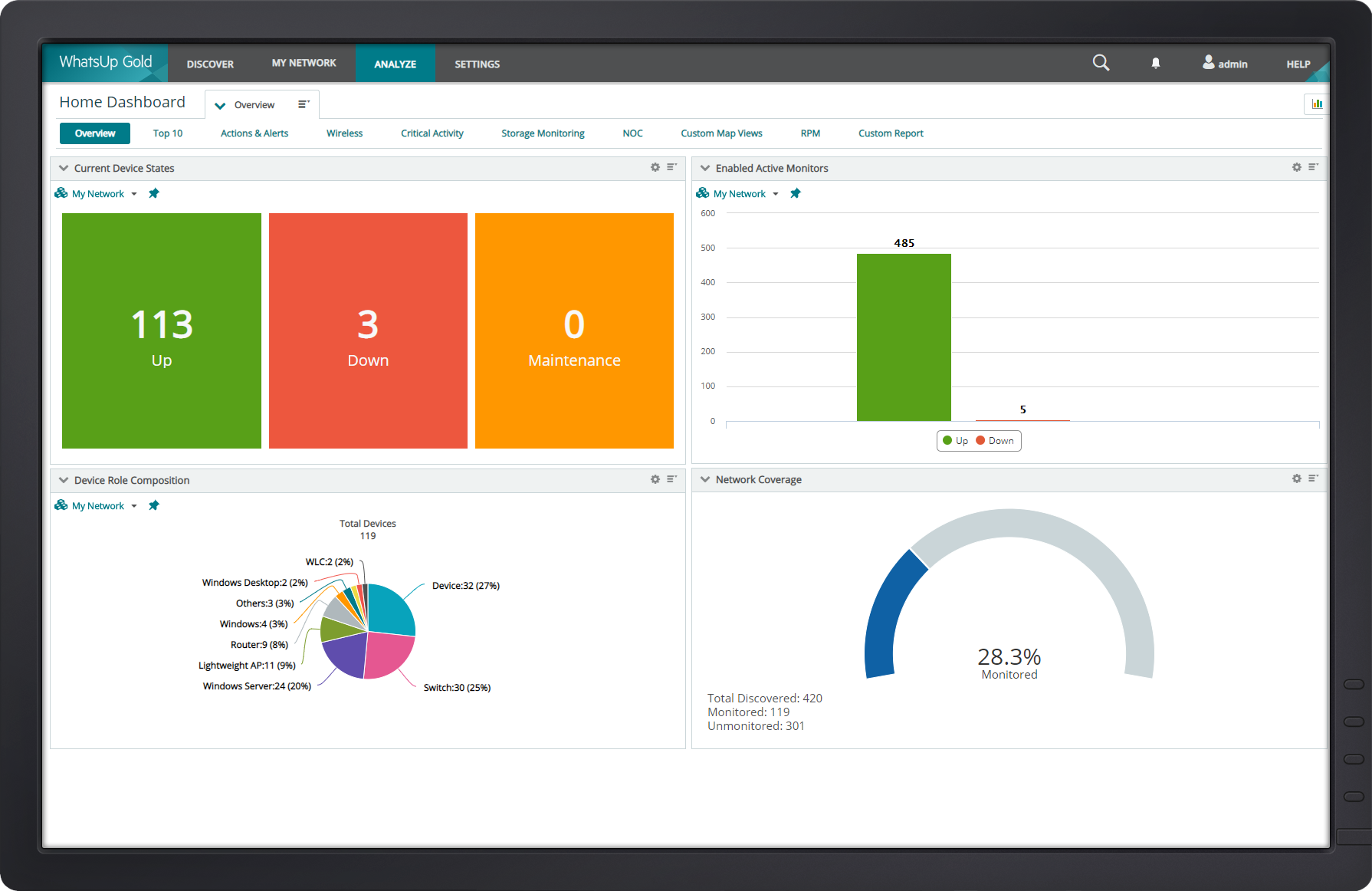
Great for quick notifications about a server going above a configured resource threshold. We don't have to look at every server's resource utilization individually anymore.
Quick and easy to setup a service up or down notification.
The ability to monitor the Catchpoint nodes with the ability to setup a take a recovery action based on specific criteria
The ability to tell us when we are at X% capacity so that we better plan or budget for increasing the "capacity" of the Catchpoint nodes before we get to an overloaded state. The capacity utilization graph is not a reliable indicator for this metric. How can the capacity utilization rate get above 100%, it does not make sense
While it is easy to get up and running, I know I could utilize the software better if I had some formal training on it. There are a wealth of features available, but I don't have time to learn them all in depth.
The training classes offered are very expensive. I'd love it if IPSwitch offered some kind of reasonably priced training options.
we are heavily dependent catchpoint system for the following functions * Detect end-user availability/performance-related problems * Ensures service level objectives (SLO) are met, that prevents service level agreement (SLA) breaches * Identify and understand the cause of any network connectivity or application level issue * Improves the availability and response time service levels
It's hard to find the functionalities that I am looking for in the application. Even if I did something in the past, after a time I have to re-learn again where the functionalities are. This is a powerful tool, but not user-friendly. Texts in the buttons and menus are not always meaningful or easily comprehensible.
The customer support is fantastic as they keep you updated and follow up even though we may not even follow up. Make sure they send a communication so that we remain updated. They value engineers who will get on a call with you to understand any requirement we have on any test, and they bring in the best developers on call.
Datadog is good, but more expensive. New Relic is good but does not provide the same features as Catchpoint does. Checkly is good, but Catchpoint offers different frameworks to create synthetic tests, which is preferable to my engineering team.
WhatsUp Gold gives you a much better in-depth analysis and understanding of both your network and endpoint devices but the emphasis should be laid more on report generation. WhatsUp Gold has the ability to generate a report (e.g device uptime, bandwidth utilization, device health etc) and track events that took place even as low as 5 minutes ago.
Catchpoint points based licensing for public hosted nodes is complicated and unpredictable in points required.
Catchpoint lacks AI powered anomaly detection and automated remediation. This gap means more manual triage and slower MTTR during incidents.
The advanced 360 degree blackbox monitoring is enabling us to monitor the APIs, UI and proactively gain insights into the application behavior and performance before customer is impacted.
As I mentioned earlier, the monitoring of the external environment and uptime is a necessity. An hour down is a 1% loss of revenue per day which may not sound like much but in a million dollar company, that 1% is a huge chunk.
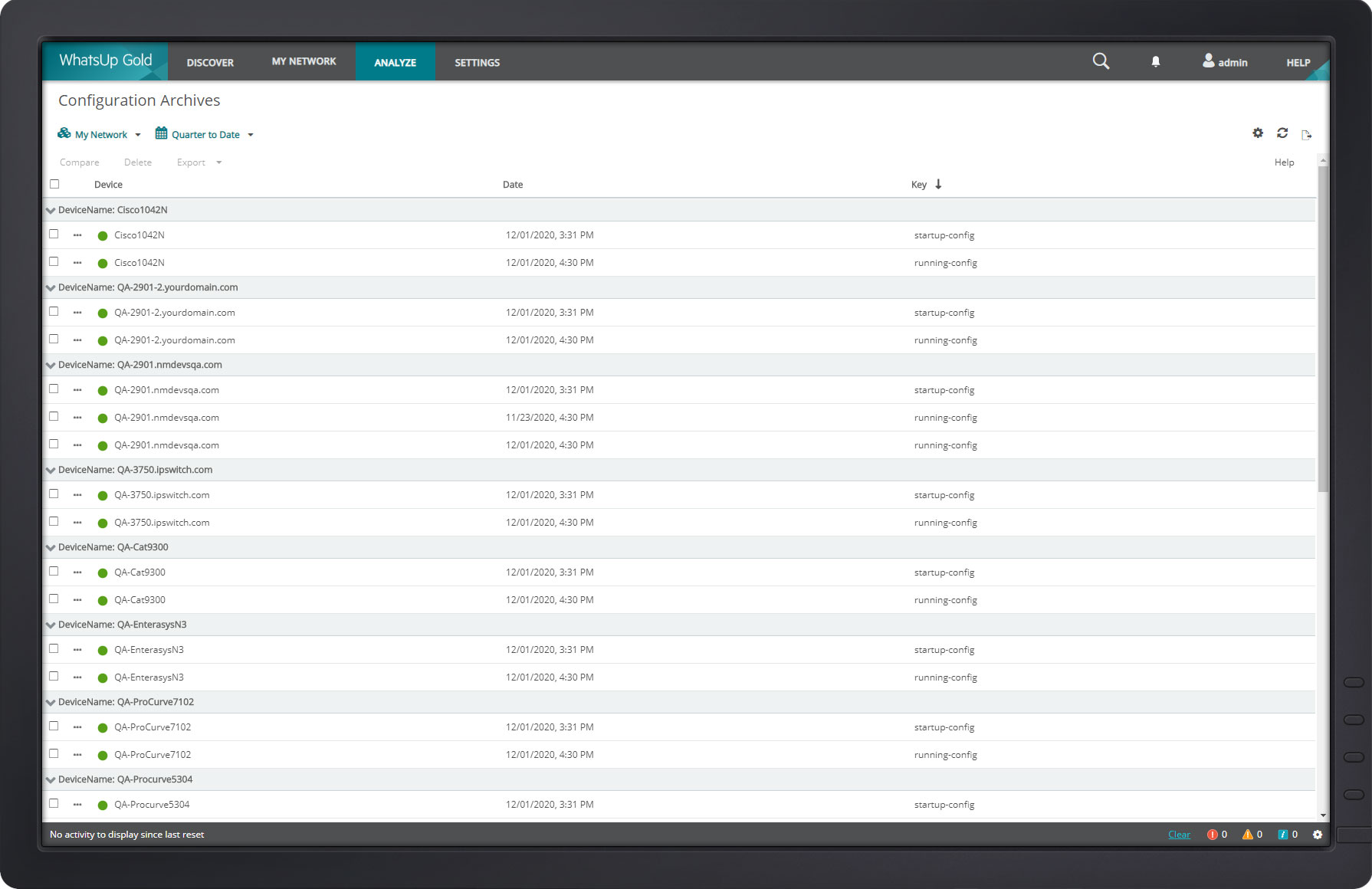
The backup configuration has been very handy in turn around time for failed equipment. I did have a homegrown way of backing up configurations but had to check daily and verify every backup. This becomes very time consuming and a waste of company time.
Only negative is the mapping. In the Cisco world CDP is a great way to map connections and they don't seem to do it that way.