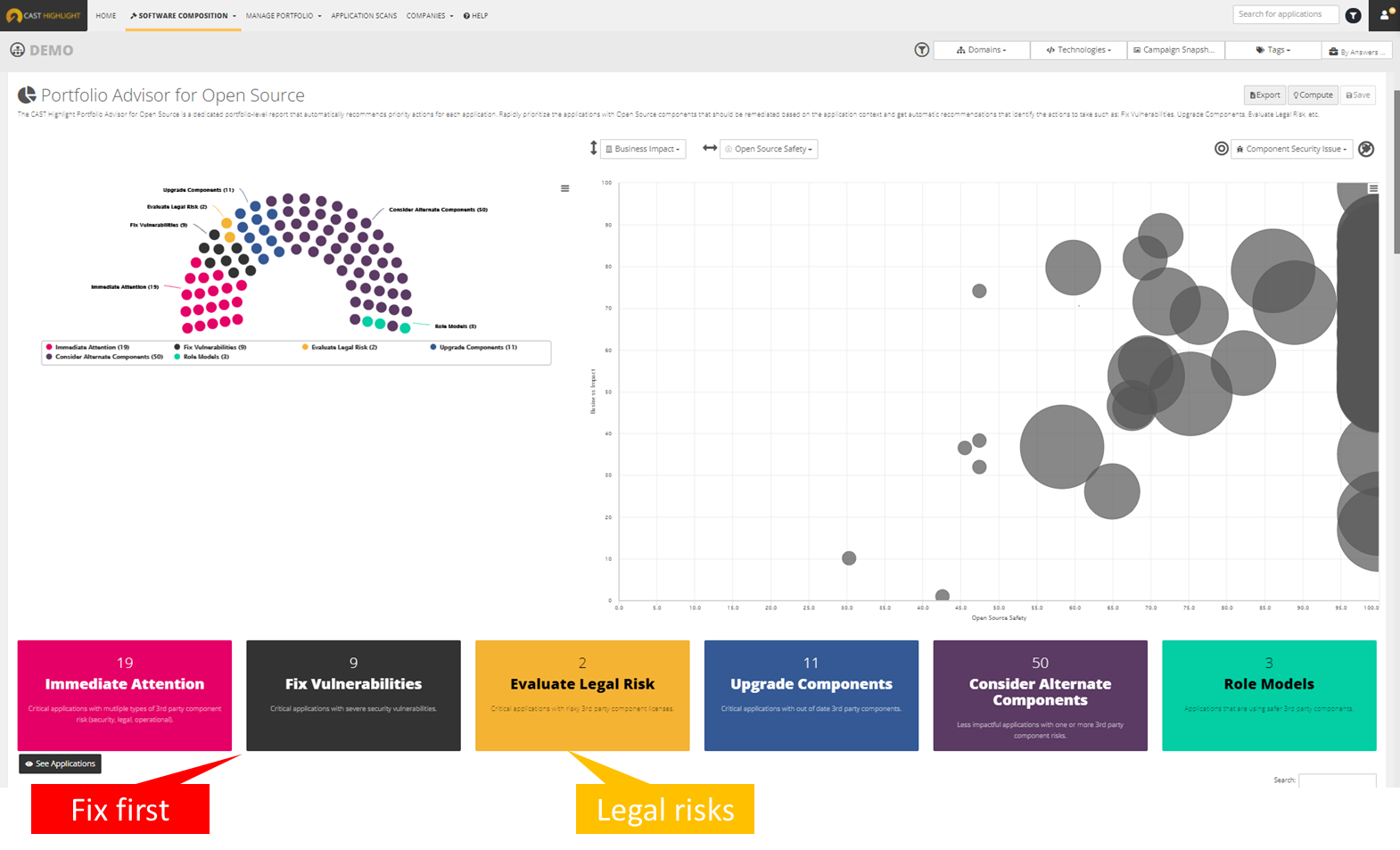
CAST headquartered in New York offers Highlight, an application portfolio management solution providing software component analysis , application security, application benchmarking, and technical due diligence.
$25,000
Portfolio Size 25
SonarQube Server
Score 9.5 out of 10
N/A
SonarQube is a code quality and vulnerability solution for development teams that integrates with CI/CD pipelines to ensure the software you produce is secure, reliable, and maintainable.
I think CAST is a great tool to give insight into your applications. The tool can be met with resistance from team members as the tool is going to expose defects that should be addressed. Out of the box, it may need some tailoring to focus on certain areas so that you are not overwhelmed with defects the first time you scan your code. But ultimately, you will want to eliminate all defects in the code and have all violations turned on.
Large codebase: The tool's static analysis capabilities can help teams quickly identify and fix bugs, vulnerabilities, and code smells in large codebases.
Compliance and security: The tool can check the code against industry standards or regulations, such as OWASP and CWE, and identify any issues that need to be addressed.
Agile development: SonarQube can be integrated with CI/CD pipelines allowing teams to continuously monitor and improve code quality throughout the development process.
Teams using multiple languages: Teams that use multiple programming languages can benefit from using SonarQube, as the tool supports a wide range of languages and can be integrated with a variety of development tools.
Scenarios where SonarQube may be less appropriate:
Small codebase: Organizations with a small codebase may not see the full benefits of using SonarQube, as the tool's static analysis capabilities may be overkill for a smaller codebase.
Limited resources: Organizations with limited resources may find it difficult to set up and configure SonarQube, as the tool can be complex and may require specialized expertise.
Limited integration: Organizations that use development tools or IDEs that are not supported by SonarQube may find it difficult to integrate the tool into their existing development workflow.
Limited scalability: Large organizations with millions of lines of code may find SonarQube's performance and scalability to be an issue. It may take longer for the analysis to finish and the results may not be as accurate.
We we easily able to integrate the SonarQube steps into our TFS process via the Microsoft Marektplace, we didn't have the need to call SonarQube support. We've used their online documentation and community forum if we ran into any issues.
These other tools only do a part of what CAST does. CAST gives a comprehensive view into the code looking at all aspects, code quality, security, maintainability, vulnerability, privacy, reuse, etc. These other tools only focus on one or two dimensions.
SonarQube identifies significant more thing compared to the built-in suggestions in IntelliJ IDEA. The suggestions how to correct issues are also a lot better with SonarQube. IntelliJ IDEA provides great refactoring support to make it easy to refactor the code to solve issues. We use these tools together and they really complement each other.
I believe once we had the tool working for our code base, we immediately saw positive ROI.
We spent some time getting to where our code code be scanned efficiently but some of that was trying to do things ourselves instead of fully utilizing Cast Professional Services. I highly recommend to do an engagement with CAST to have them help setup the tool in your environment or to run it in the cloud for you.
Positive ROI from the standpoint of flagging several issues that would have otherwise likely been unaddressed and caused more time to be spent closer to launch
Slightly positive ROI from time-saving perspective (it's an automated check which is nice, but depending on the issues it finds, can take developers time to investigate and resolve)