
Carbonite Server vs. Percona XtraBackup
Carbonite Server vs. Percona XtraBackup
| Product | Rating | Most Used By | Product Summary | Starting Price |
|---|---|---|---|---|
 Carbonite Server | N/A | Carbonite Server (also replacing the former EVault products acquired from Seagate in 2016) is a full backup and discovery solution. Designed to recover anything from a single file to an entire system with the click of a button, Carbonite Server users can protect virtually any type of file on both physical and virtual servers, NAS, SAN and external hard drives. The vendor’s value proposition is that their solution assures that users without an IT department and those that are the IT department… | $800.04 per year | |
 Percona XtraBackup | N/A | Percona XtraBackup is a free, open source, online backup solution for all versions of Percona Server for MySQL, MySQL, and MariaDB. Percona XtraBackup performs online non-blocking, tightly compressed, secure backups of InnoDB, XtraDB, and HailDB storage engines on transactional systems, so that applications remain fully available during planned maintenance windows. Percona XtraBackup can perform streaming, compressed, and incremental MySQL backups. Percona… | N/A |
| Carbonite Server | Percona XtraBackup | |||||||||||||||
|---|---|---|---|---|---|---|---|---|---|---|---|---|---|---|---|---|
| Editions & Modules |
| No answers on this topic | ||||||||||||||
| Offerings |
| |||||||||||||||
| Entry-level Setup Fee | No setup fee | Optional | ||||||||||||||
| Additional Details | Trial and paying customers have access to our valet install free of charge. Call and speak to a specialist who can remotely connect to your machine to ensure it's installed and configured correctly to protect your critical data. | Free and open-source | ||||||||||||||
| More Pricing Information | ||||||||||||||||
| Carbonite Server | Percona XtraBackup |
|---|
| Carbonite Server | Percona XtraBackup | |||||||||||||||||||||||||||||||||||||||||||||
|---|---|---|---|---|---|---|---|---|---|---|---|---|---|---|---|---|---|---|---|---|---|---|---|---|---|---|---|---|---|---|---|---|---|---|---|---|---|---|---|---|---|---|---|---|---|---|
| Data Center Backup |
|
| Carbonite Server | Percona XtraBackup | |
|---|---|---|
| Small Businesses |  Cove Data Protection Score 9.9 out of 10 | Cove Data Protection Score 9.9 out of 10 |
| Medium-sized Companies |  Bacula Enterprise Score 9.2 out of 10 | Bacula Enterprise Score 9.2 out of 10 |
| Enterprises | Bacula Enterprise Score 9.2 out of 10 | Bacula Enterprise Score 9.2 out of 10 |
| All Alternatives | View all alternatives | View all alternatives |
| Carbonite Server | Percona XtraBackup | |
|---|---|---|
| Likelihood to Recommend | 9.0 (35 ratings) | 8.8 (3 ratings) |
| Likelihood to Renew | 4.8 (6 ratings) | - (0 ratings) |
| Usability | 5.5 (1 ratings) | 7.9 (3 ratings) |
| Support Rating | 5.5 (1 ratings) | 8.2 (3 ratings) |
| Implementation Rating | 6.4 (1 ratings) | - (0 ratings) |
| Carbonite Server | Percona XtraBackup | |
|---|---|---|
| Likelihood to Recommend |  Carbonite, an OpenText company
| Percona
 Douglas Doo Principle Database Architect [MySQL|RDS|Aurora|PXC|MongoDB|Oracle|CloudSQL|Clickhouse] |
| Pros | Carbonite, an OpenText company
 Shea Taylor Owner | Percona
 Anil Yadav Senior Engineering Manager (Site Reliability Engineering) |
| Cons | Carbonite, an OpenText company
| Percona
Douglas Doo Principle Database Architect [MySQL|RDS|Aurora|PXC|MongoDB|Oracle|CloudSQL|Clickhouse] |
| Likelihood to Renew | Carbonite, an OpenText company
| Percona No answers on this topic |
| Usability | Carbonite, an OpenText company
| Percona
 Harjit Lakhan Senior MySQL DBA |
| Support Rating | Carbonite, an OpenText company
| Percona
Harjit Lakhan Senior MySQL DBA |
| Implementation Rating | Carbonite, an OpenText company
| Percona No answers on this topic |
| Alternatives Considered | Carbonite, an OpenText company
 Robb Glietz Realtor | Percona
Anil Yadav Senior Engineering Manager (Site Reliability Engineering) |
| Return on Investment | Carbonite, an OpenText company
 Timika Hite Senior IT Analyst | Percona
Douglas Doo Principle Database Architect [MySQL|RDS|Aurora|PXC|MongoDB|Oracle|CloudSQL|Clickhouse] |
| ScreenShots | Percona XtraBackup Screenshots 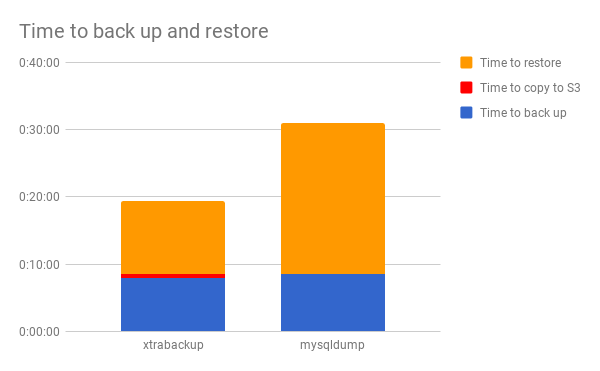 |