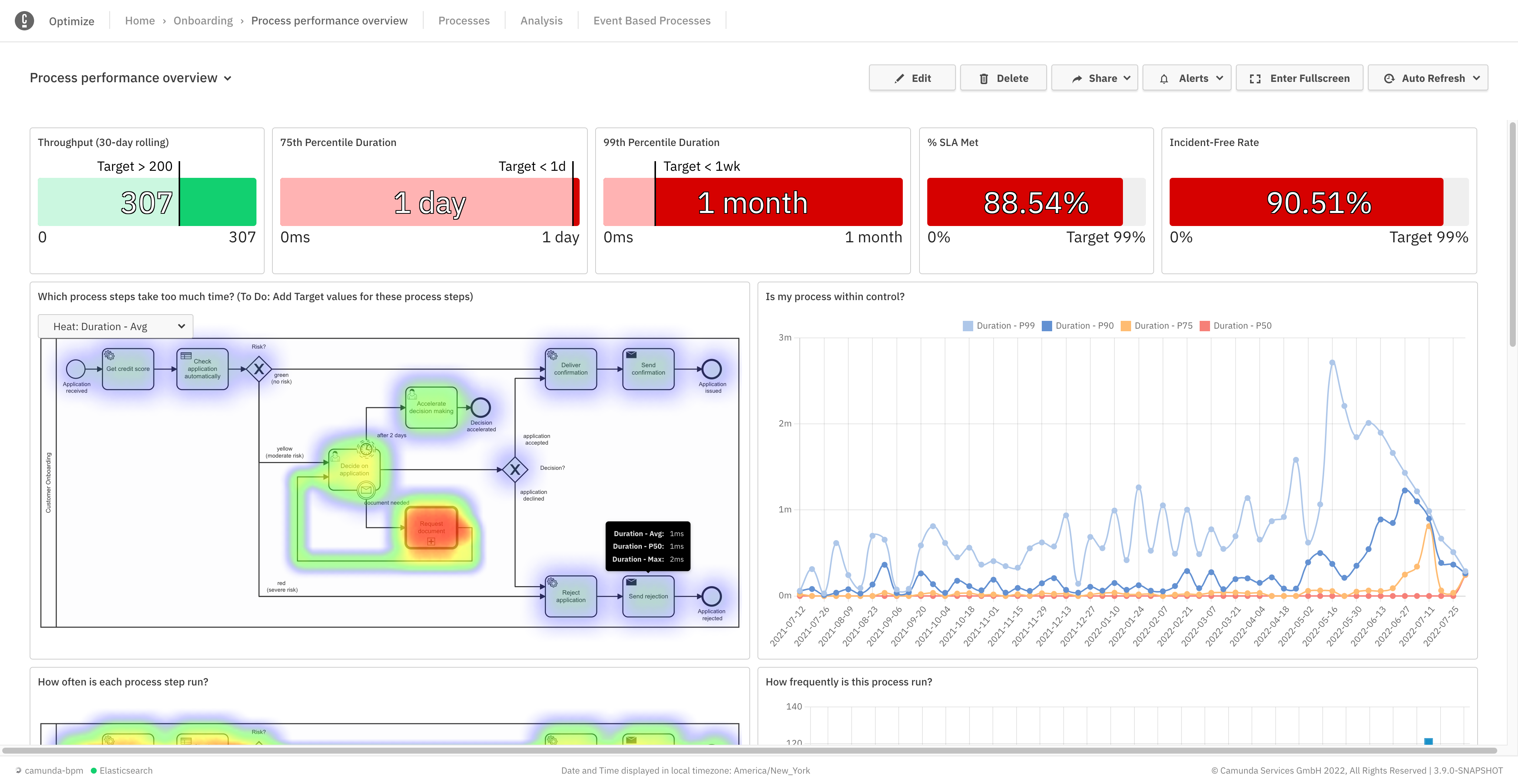
Camunda is a process orchestration tool designed to help organizations design, automate, and improve any process. Built for business and IT collaboration using BPMN and DMN standards, Camunda aims to enable seamless integration across endpoints to transform mission-critical processes.
N/A
Okta Workflows
Score 8.8 out of 10
N/A
Azuqua was a tool that helped users integrate their SaaS applications and build custom automations. It was acquired by Okta in late 2019, and is now part of Okta Workflows. Okta Workflows leverages Azuqua’s workflow orchestration engine and application integrations to automate complex identity-centric processes such as user onboarding and offboarding. The product is available as part of the Okta Lifecycle Management…
N/A
Pricing
Camunda
Okta Workflows
Editions & Modules
Self-Managed Enterprise
Contact Sales
per year
SaaS Enterprise
Contact Sales
per year
No answers on this topic
Offerings
Pricing Offerings
Camunda
Okta Workflows
Free Trial
Yes
No
Free/Freemium Version
Yes
No
Premium Consulting/Integration Services
No
No
Entry-level Setup Fee
No setup fee
Optional
Additional Details
—
—
More Pricing Information
Community Pulse
Camunda
Okta Workflows
Features
Camunda
Okta Workflows
Customization
Comparison of Customization features of Product A and Product B
Camunda
9.0
Ratings
38% above category average
Okta Workflows
-
Ratings
API for custom integration
9.00 Ratings
00 Ratings
Reporting & Analytics
Comparison of Reporting & Analytics features of Product A and Product B
Camunda
8.0
Ratings
1% below category average
Okta Workflows
-
Ratings
Dashboards
8.00 Ratings
00 Ratings
Standard reports
7.00 Ratings
00 Ratings
Custom reports
9.00 Ratings
00 Ratings
Process Engine
Comparison of Process Engine features of Product A and Product B
Camunda
8.5
Ratings
17% above category average
Okta Workflows
-
Ratings
Process designer
9.00 Ratings
00 Ratings
Process simulation
9.00 Ratings
00 Ratings
Business rules engine
7.00 Ratings
00 Ratings
SOA support
9.00 Ratings
00 Ratings
Process player
9.00 Ratings
00 Ratings
Form builder
5.00 Ratings
00 Ratings
Model execution
10.00 Ratings
00 Ratings
Business Process Automation
Comparison of Business Process Automation features of Product A and Product B
Camunda Platform is well suited for scenarios where there are different stages in a business flow and the flow is driven by user action at each stage. For example placing of an order on an ecommerce platform. Depending on whether user was able to make the payment or not the workflow would go to dispatch or retry stage. Now the retry stage would trigger further actions like sending follow up emails etc. Likewise, dispatch stage would have a different set of actions. Since every order is important and we need to know where it stands, using Camunda Platform is imperative. Camunda Platform might not be a right choice where just a one off thing needs to be done. For example, uploading of product information by user or periodic processing of heavy images by a worker. These are all either one step processes or periodic automated processes where we can track the status without using a business modeler like Camunda Platform.
The integration I used Azuqua for was based on Salesforce, Wrike and Office 365. I found the integration of Salesforce reasonably straightforward, Wrike was limited in the "cards" capability but functional (there are bugs but there are also workarounds but they required assistance from the Azuqua support team) and Office 365 was quite immature (primarily around Excel bugs but also email was limited).
The best part about Azuqua is that you do not need to write code. You do however need to have an understanding of logic and how the software works. This happens to fit me perfectly as someone with basic programming experience.
Their Support is second to none. Not only are they extremely quick and responsive, but their answers are never canned responses and always provide valuable content.
They seem to take feedback seriously and will continue to evolve and make a better product.
Documentation - It is usually daunting for beginners because of lack of good documentation
Simplified setup on local machine for Camunda Server would help developers test changes quickly
Easier migration from one deployment version of a Camunda process to another deployment version would help in making changes and deploying them faster.
Heap memory management becomes issue at times resulting in stuck processes. This needs to be resolved.
I think it requires an easy way to migrate flows created from one user to then move the ownership to another user. It happened to us that one of our engineers left the company and he had the Azuqua account and flows. It required quite some time, cases and telephone calls to do the migration to my account.
The system is working as it should, keeping our programs safe from outside hackers. Helping us keep our passwords safe, convenient and already ready to get us logged into the program securely and quickly. Verification that only authorized users are able to access our company's programs. Okta Workflows (Azuqua) is a very good system that has helped our company greatly.
I evaluated Zapier and Microsoft Flow before coming across Azuqua. Zapier was too simplistic and didn't allow for transfer of enough variables. The price point also didn't work for the value it could provide. Microsoft Flow couldn't make the connection with Smartsheet, and I was unable to get Microsoft support or Smartsheet support to assist me with the issue.
Increased time savings. We could not function as a matter of daily business if we did not have a tool to automate project folders (and complementary workflow management profiles) for the thousands of projects that flow through daily.
Opens up a greater understanding of all the silos and divisions within the company infrastructure and tests secure means to link those groups safely and share information.
Opens up the chance to communicate with other API information sources if our company is doing a partnership with another organization. Granted everything is square with IT security.