BugHerd is a bug tracking solution designed for users of all technical backgrounds. By making it easy for anyone to report a bug, BugHerd aims to make resolution by technical teams easier and faster.
$39
per month
SpiraTest
Score 8.0 out of 10
Mid-Size Companies (51-1,000 employees)
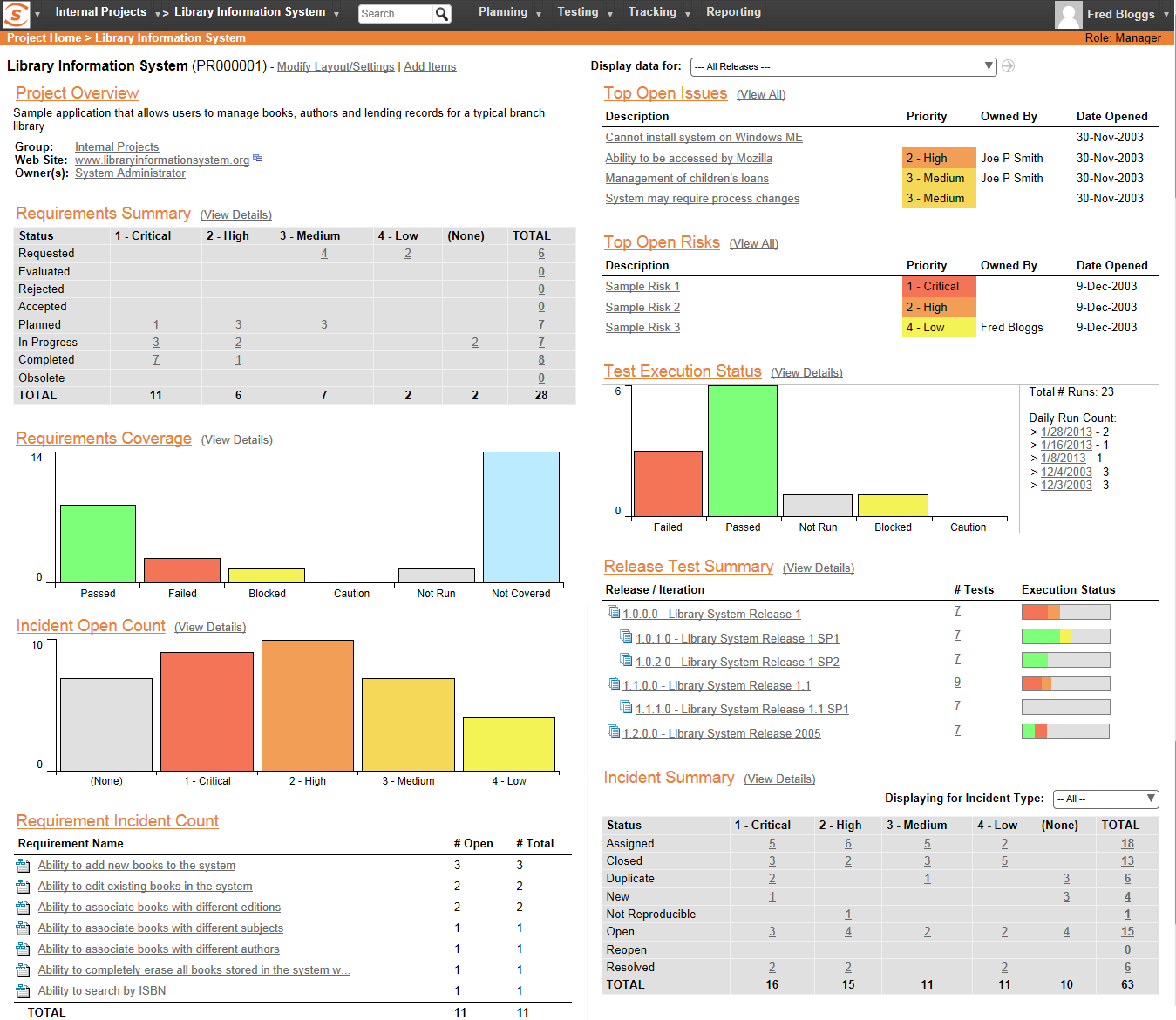
SpiraTest allows customers to manage their software testing and quality assurance activities. It provides requirements management, test management and bug-tracking functionality with integrated reporting.
$43.66
per month per concurrent user
Pricing
BugHerd
SpiraTest
Editions & Modules
Standard
$39.00
per month
Premium
$129
per month
Deluxe
$229
per month
Cloud
$43.66
per month per concurrent user
Download
$423.66
per year per concurrent user
Offerings
Pricing Offerings
BugHerd
SpiraTest
Free Trial
Yes
Yes
Free/Freemium Version
No
No
Premium Consulting/Integration Services
No
No
Entry-level Setup Fee
No setup fee
No setup fee
Additional Details
BugHerd gives a discount equivalent to the cost of two months for annual subscriptions.
BugHerd offers a 14-day free-trial of all plans.
Custom pricing is available for large enterprises.
Discount available for annual billing on Cloud solution. 3 concurrent user minimum. Volume concurrent user discount available.
More Pricing Information
Community Pulse
BugHerd
SpiraTest
Features
BugHerd
SpiraTest
Test Management
Comparison of Test Management features of Product A and Product B
Bugherd is well suited to our needs because it's an intuitive tool that doesn't require a ton of training, and we are working with a development agency to improve our backend and communicate issues to developers. From what I've seen, it does require you to use Chrome, which might not be perfect for other companies but it great for us. The tool has great functionality for tracking and allows you to move bugs into stages like "doing", "done" or "backlog". The screenshot tool has been super easy to use, and when we do have a bug that requires multiple screenshots, it's easy to open up a newly submitted ticket to attach a custom screenshot. It isn't easy to track down a specific bug you've logged if there are hundreds, so be prepared to dig quite a bit if you're using it for extensive testing and find yourself trying to go back
I think SpiraTest is well suited as a test suite, but in situations where the team is already using multiple products from one particular provider, it may be better to go with that provider's test solution. This is because integrations are very important nowadays, and should be considered when picking your project management software. It should be noted that management selected SpiraTest primarily due to the low cost of the test software. I'm less familiar with other test software in the field, but if cost is an issue, you should take a look at SpiraTest.
Basic reporting can become very verbose unless you set lots of filters and parameters.
The ability to customize some of the verbiage in the application would help bridge the gap between translating what SpiraTest's testing terminology is and the company culture uses for testing terminology.
BugHerd is an easy-to-use, highly intuitive tool that fits seamlessly into our web development process. It is easy for all users to use, web developers, project managers, testers and clients. Clients are able to easily pin bugs and provide explanatory feedback that allows our team to fix what is broken and incorporate client feedback.
Truthfully, we have had very little need for BugHerd support, as the tool is intuitive and does not have many bugs of its own. They have a pretty solid help/FAQ section and their support people have been reasonably responsive the few times we have needed to contact customer support. We have had our issues resolved and questions answered.
As promised during product selection, SpiraPlan support has always been quick and helpful. Replies almost always come back in hours (and often in an hour or two). And SpiraPlan's online tech support maintains all support conversations online so no need to look through emails to try to recall repllies.
BugHerd is more focused on web-based tools, which we needed, as opposed to app-based tools like Instabug. Jira has a much higher level of complexity and barrier to entry and didn't suit our use case.