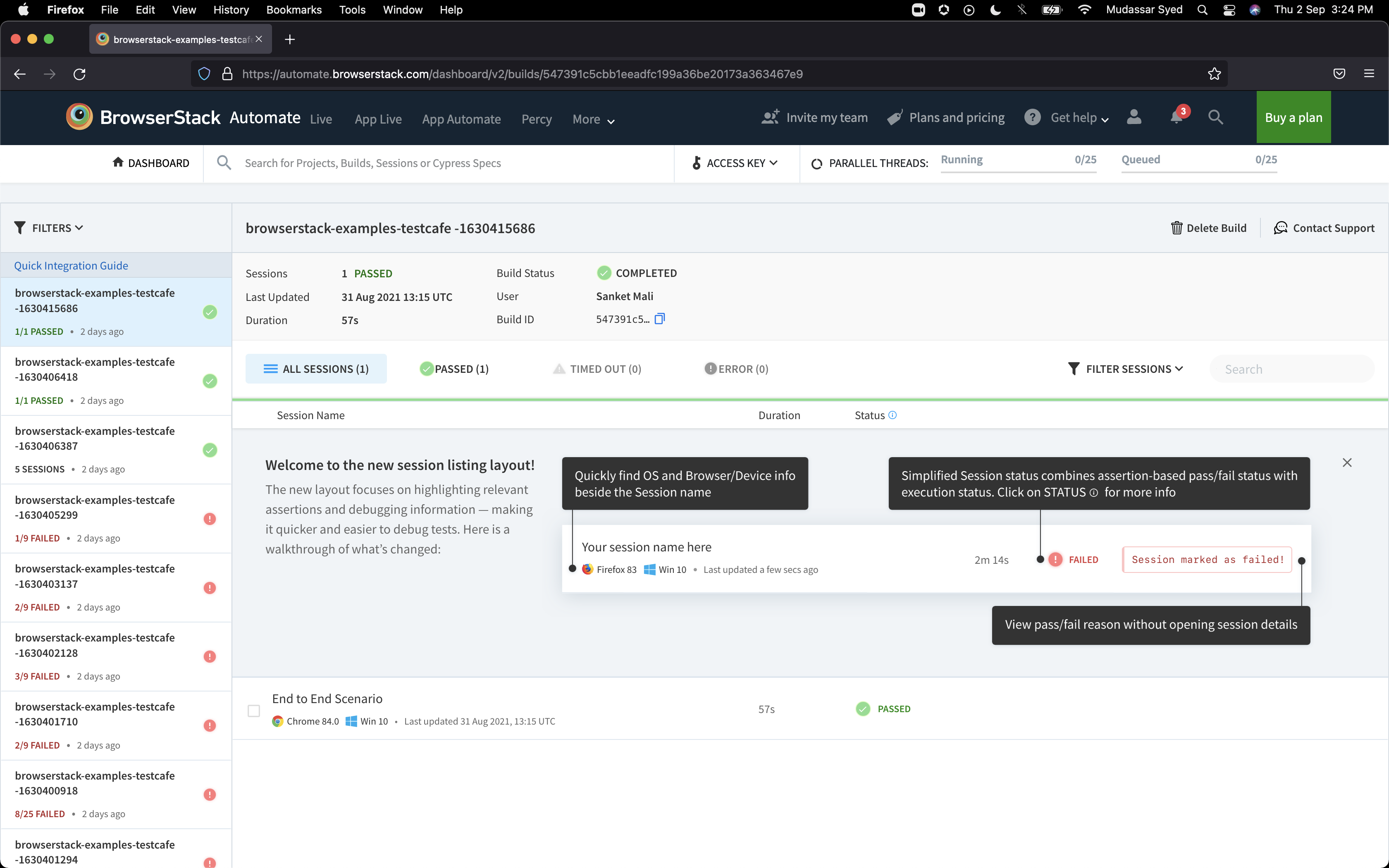
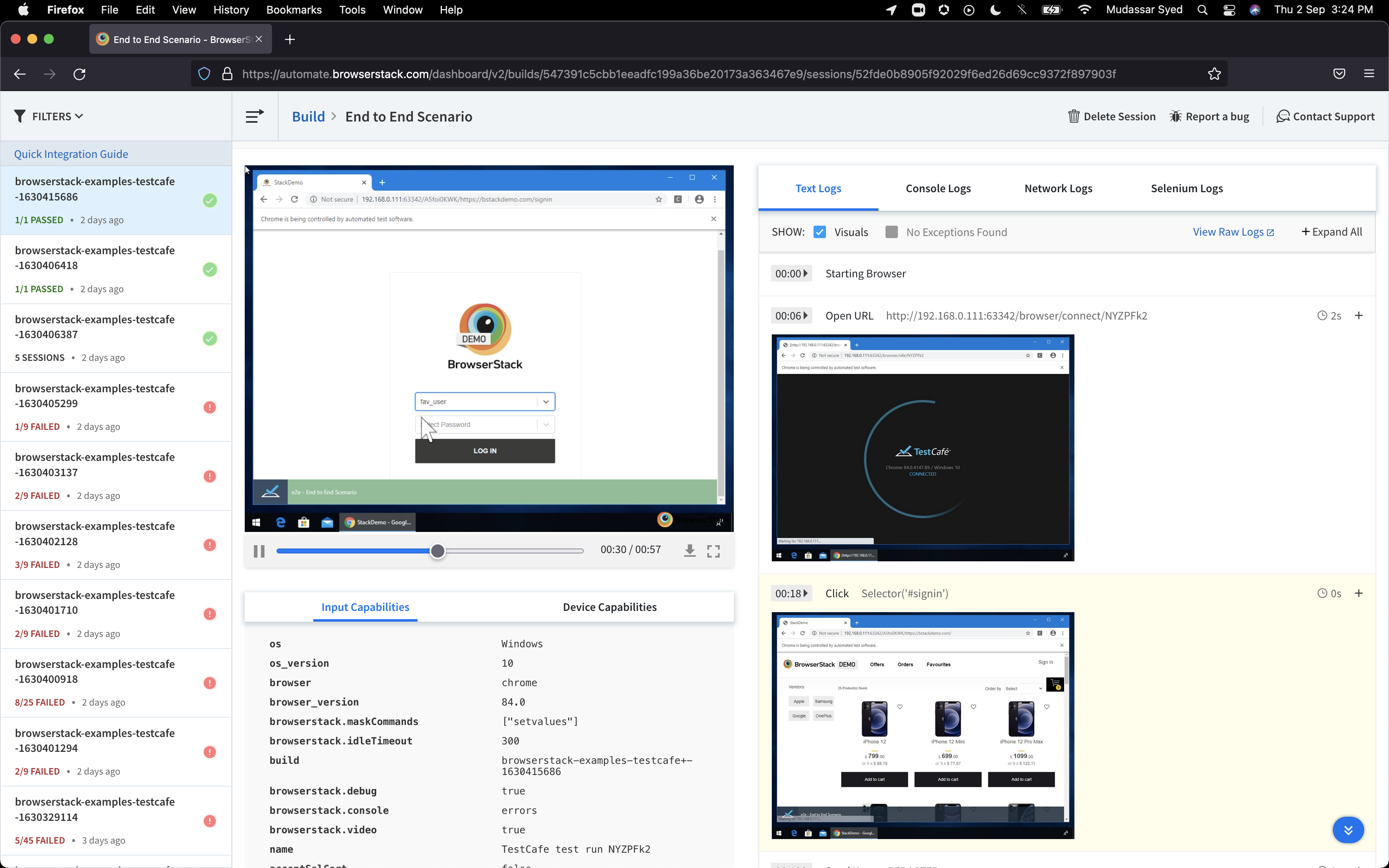
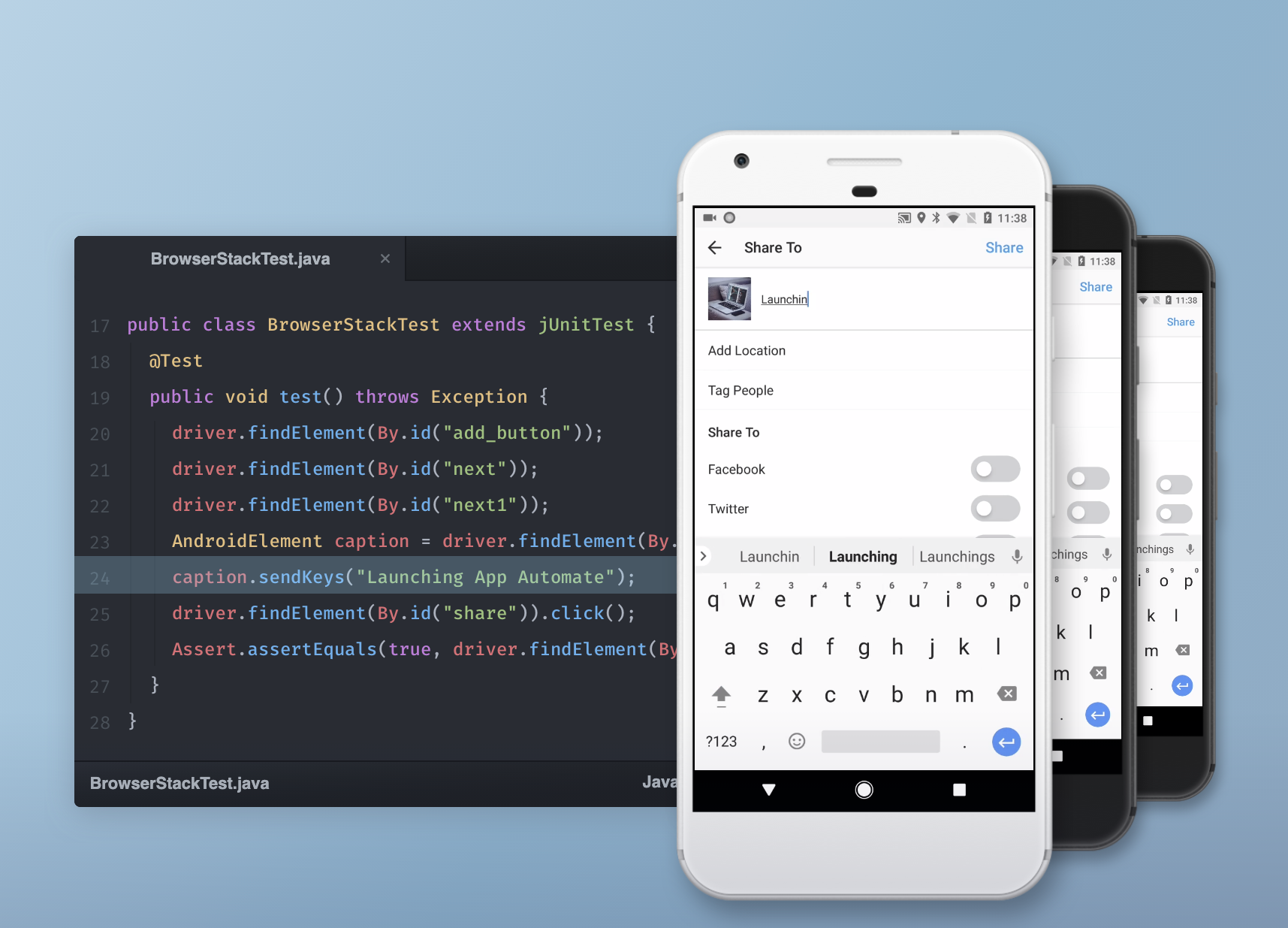
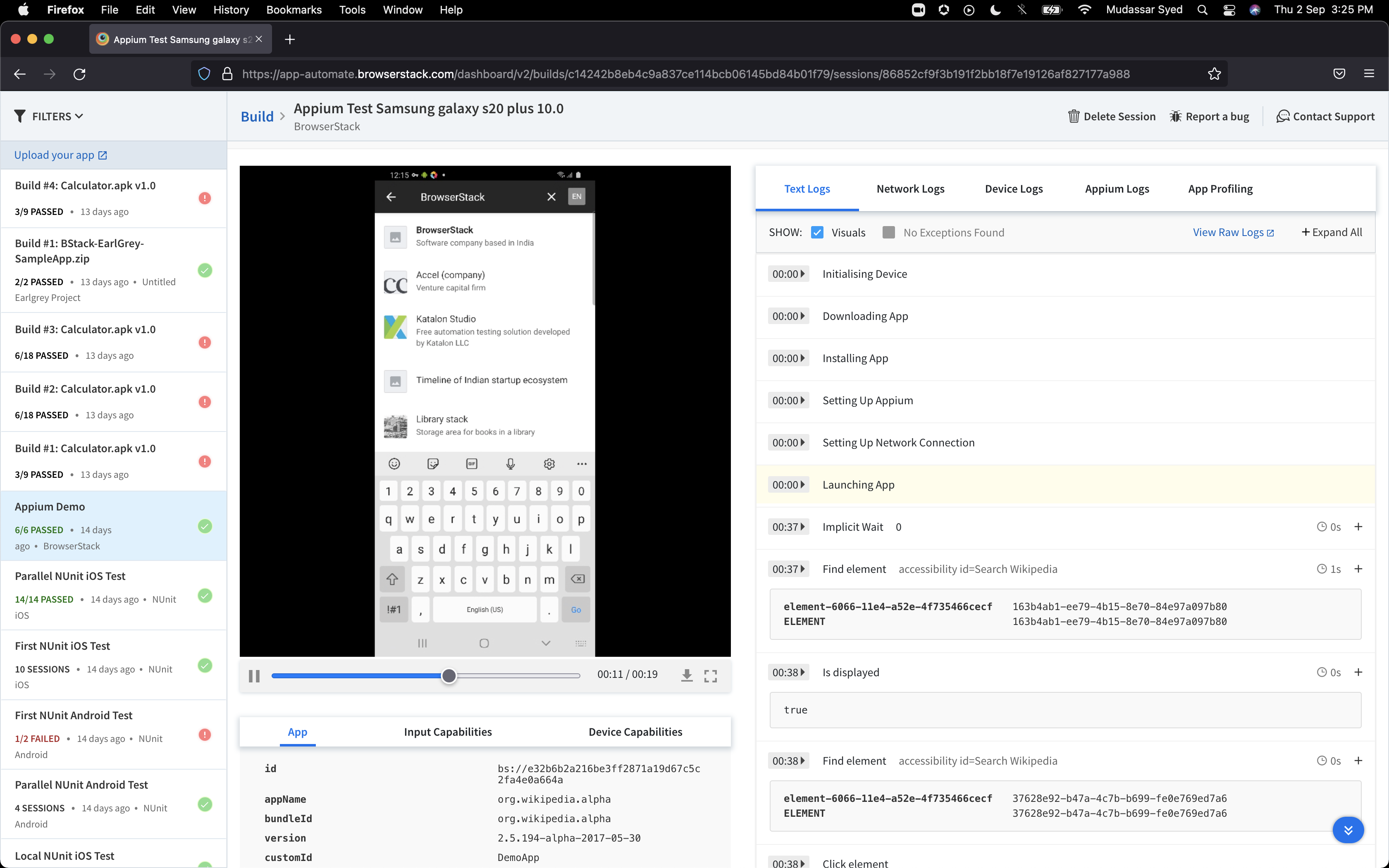
BrowserStack is a test platform built for developers and QAs to expand test coverage, scale and optimize testing with cross-browser, real device cloud, accessibility, visual testing, test management, and test observability. BrowserStack states it currently powers over a billion tests a year for customers who include Amazon, Paypal, Well Fargo Bank, Nvidia, MongoDB, Pfizer, GE, Discovery, React JS, Apache, JQuery and several others rely on BrowserStack to test their web and mobile apps.
$0
per month Unlimited users and 5000 free screenshots
OpenText Silk Central
Score7 out of 10
N/A
Formerly from Micro Focus and earliler from Borland, unified test management with OpenText™ Silk Central drives reuse and efficiency. It gives users the visibility to control application readiness.
N/A
Pricing
BrowserStack
OpenText Silk Central
Editions & Modules
Percy - Free
$0
per month Unlimited users and 5000 free screenshots
App Percy - Free
$0
per month 5000 free screenshots and 100 minutes of infrastructure
It's well suited to tracking down hard to find errors that are only affecting a tiny portion of customers often due to older browser compatibility. BrowserStack's Chrome extension also helps us find and address potential Accessibility issues with our sites. Not suitable for testing HTML email templates, but there are other platforms for that.
A de minimis incentive was given to thank the reviewer for their time. The incentive was not used to bias or drive a particular response, nor was the incentive contingent on a positive endorsement. More Info
We didn't just select Borland Silk Central randomly. In the selection process, we actually evaluated in total 26 available test management tools in the market. We sent surveys to all potential users in the department to collect their wish list of our next management tool, converted them to a criteria list, and used that list to evaluate all 26 tools. We reduced the possible candidate tools to five and organized a small committee to pick the final three. Top management then checked their price tags and selected Borland Silk Central. Based on this evaluation process, I would say Borland Silk Central is suitable to an organization which has no more than 60 testers; needs both manual tests and automated tests; needs on-line support; needs a low learning curve and has a limited budget. My personal view is that this tool reaches the balance points among ease-of-use, budget and support.
A de minimis incentive was given to thank the reviewer for their time. The incentive was not used to bias or drive a particular response, nor was the incentive contingent on a positive endorsement. More Info
A de minimis incentive was given to thank the reviewer for their time. The incentive was not used to bias or drive a particular response, nor was the incentive contingent on a positive endorsement. More Info
Borland Silk Central is good for the users to associate test requirements, test cases, execution plans and test reports together. Each asset (test case, requirement, etc...) provides links for the users to jump to other assets in a click, and the users can jump back and forth between two assets.
Borland Silk Central is also good in test automation. Although Micro Focus does provide a client tool for test automation, the users don't really need it to automate the tests. In our case, we are using Python to automate the tests and use a batch file to launch tests, and in Borland Silk Central we just call that batch file from server side. The test result is automatically fed back to Silk server.
Micro Focus also publishes the schema of the database behind Borland Silk Central, so it is very easy to extend its function beyond its original design. Moreover, because its schema is published, we can easily retrieve and process its data for business intelligence purpose.
A de minimis incentive was given to thank the reviewer for their time. The incentive was not used to bias or drive a particular response, nor was the incentive contingent on a positive endorsement. More Info
I wish it didn't time out so quickly. I often move back and forth between my native Mac OS system and browsers to BrowserStack for Windows browsers and it often times out so I have to start over.
I am not sure why, but when I've been testing in BrowserStack for a long period of time - maybe over a couple of hours, it sometimes gets buggy and unresponsive or slow to respond. It makes it hard to tell if I'm experiencing an issue with the site I'm testing or if it's an issue with BrowserStack.
If I'm wishing for the moon and stars, I'd ask for the ability to use BrowserStack to also test with JAWS screen reader. But I'm happy having NVDA.
On the other hand, the plugins of Borland Silk Central with third-party tools are programmed poorly. In our case, the plugins for JIRA have a lot of limitations and were almost unusable in our test environment. (They did improve the plugins a little bit later, however.)
The tech support people are located in UK, so frequently it is difficult to get a hold of these guys due to different time zones. Also, most of them obviously don't have enough experience and sometimes drove us nuts in emergency situations.
The last thing I feel is that Micro Focus possibly doesn't provide enough manpower to maintain Borland Silk Central. There are tons of feature requests for Borland Silk Central pending there. Although they have frequent hot fixes every few months, they don't digest these requests quick enough.
A de minimis incentive was given to thank the reviewer for their time. The incentive was not used to bias or drive a particular response, nor was the incentive contingent on a positive endorsement. More Info
It's almost the 3rd year for us and it's renewal time for us. So yes, we are already discussing how many licenses we need to increase as users are increasing internally. So it's 100% sure that we are already planning renewal this year as well BrowserStack with live and app automate.
A de minimis incentive was given to thank the reviewer for their time. The incentive was not used to bias or drive a particular response, nor was the incentive contingent on a positive endorsement. More Info
It integrates directly in internal networks and local development. The point and click interface of choosing your device, pick the browser/version and you have a working emulation of that exact environment. What else could you ask for? I've set our least computer savvy users up with BrowserStack for testing in minutes. It feels like it's just part of your local environemnt.
A de minimis incentive was given to thank the reviewer for their time. The incentive was not used to bias or drive a particular response, nor was the incentive contingent on a positive endorsement. TR verified that a representative sample of customers was invited. More Info
I rated BrowserStack's availability a 10 because it is consistently reliable, with minimal to no downtime or unplanned outages. The platform is accessible whenever needed, ensuring uninterrupted testing. Its robust infrastructure and proactive monitoring ensure a seamless experience, allowing us to meet deadlines without delays caused by availability issues and all
The tests are fast considering the fact that they're Appium tests. I've seen tests reliably pass or fail when they're supposed to, with next to zero issues on the BrowserStack side of things. Tests launch only seconds after I kick off them off from my CLI.
A de minimis incentive was given to thank the reviewer for their time. The incentive was not used to bias or drive a particular response, nor was the incentive contingent on a positive endorsement. More Info
I'm saying a 10 for support for BrowserStack only based on feedback from the development team. I myself have never had to reach out to support for any questions or issues, but others in the company have. From my conversations with them, the support was fantastic and had been a pleasure working with the BrowserStack team.
A de minimis incentive was given to thank the reviewer for their time. The incentive was not used to bias or drive a particular response, nor was the incentive contingent on a positive endorsement. More Info
Yes, it was online training on meet, and trainer looks like skilled and technical strong, he has covered end to end all the features and he has answers all the queries. because of this trainings we are able to implement it by our own in the organization, thank you for support and training.
A de minimis incentive was given to thank the reviewer for their time. The incentive was not used to bias or drive a particular response, nor was the incentive contingent on a positive endorsement. More Info
It was a quick training from the support of browserstack, it was nice and easy to understand, thanks again for the support given by the team. and regularly I used to receive mails for training from support for any new feature they launch, I was able to spread same training to all my team and dev.
A de minimis incentive was given to thank the reviewer for their time. The incentive was not used to bias or drive a particular response, nor was the incentive contingent on a positive endorsement. More Info
I rated the implementation satisfaction an 8 because while it went smoothly overall, there were some challenges during the initial learning phase and integration with existing tools. Key insights include the importance of providing sufficient training upfront and ensuring seamless integration with other systems to minimize disruptions and improve adoption speed.
BrowserStack products has been found better for low code automations and visual regression techniques. We have been struggling to maintain the API endpoint sanity tests and writing a lot of code for them while releasing the builds, while we chose BrowserStack accessibility solutions, we found it a way easier than we thought and worked it up.
A de minimis incentive was given to thank the reviewer for their time. The incentive was not used to bias or drive a particular response, nor was the incentive contingent on a positive endorsement. More Info
IBM Collaborate Suite - it is way too complicated and the learning curve is too high.
HP Quality Center - it is OK but a little bit expensive.
TestLink, Squash TM and other open source tools: The capabilities of open source tools just can't compare to commercial tools. Although we can modify the source code to improve the tool, we are just test engineers, not developers.
Zephyr: Our testers simply didn't like its UI - too weird.
A de minimis incentive was given to thank the reviewer for their time. The incentive was not used to bias or drive a particular response, nor was the incentive contingent on a positive endorsement. More Info
A de minimis incentive was given to thank the reviewer for their time. The incentive was not used to bias or drive a particular response, nor was the incentive contingent on a positive endorsement. More Info
I may not be the best person to answer this as I am only using it for 1 department and at 1 site but will still try my best As far as Scalability for Devices for Mobile Automation is concerned, it gets a Solid 10, as the users can run cases on upto 10 device parallel and also have the best choices of devices to choose
A de minimis incentive was given to thank the reviewer for their time. The incentive was not used to bias or drive a particular response, nor was the incentive contingent on a positive endorsement. More Info
A de minimis incentive was given to thank the reviewer for their time. The incentive was not used to bias or drive a particular response, nor was the incentive contingent on a positive endorsement. More Info
A de minimis incentive was given to thank the reviewer for their time. The incentive was not used to bias or drive a particular response, nor was the incentive contingent on a positive endorsement. TR verified that a representative sample of customers was invited. More Info
Borland Silk Central provides a centralized test platform for multiple test departments in the company, so now all of the departments know what each of them is doing. In turn, all departments can coordinate with each other to reduce the duplicated test items and increase the overall test efficiency.
Also, Borland Silk Central enables the users to publish the test procedure (steps) of each test case so all the users can know how each test case is performed. It is not like what we had before, the test procedures resided in difference place from Excel to Google drive or some other weird locations.
Also, because all departments are using Borland Silk Central, all testers of the departments have better communication regarding testing methods. In the past, the department used different test management tools and it was hard for the testers to understand each other's testing methods.
Finally, because all departments share BorlandSilk Central, they also share the same set of reports published to Atlassian Confluence, so now they use the same set of reports to evaluate the test progress.
A de minimis incentive was given to thank the reviewer for their time. The incentive was not used to bias or drive a particular response, nor was the incentive contingent on a positive endorsement. More Info