Boomi is a cloud-based, on-premise, or hybrid integration platform. It offers a low-code/no-code
interface with the capacity for API and EDI connections for integrating with external organizations and
systems, as well as compliance with data protection regulations.
$550
per month
Anypoint Platform
Score7.8 out of 10
N/A
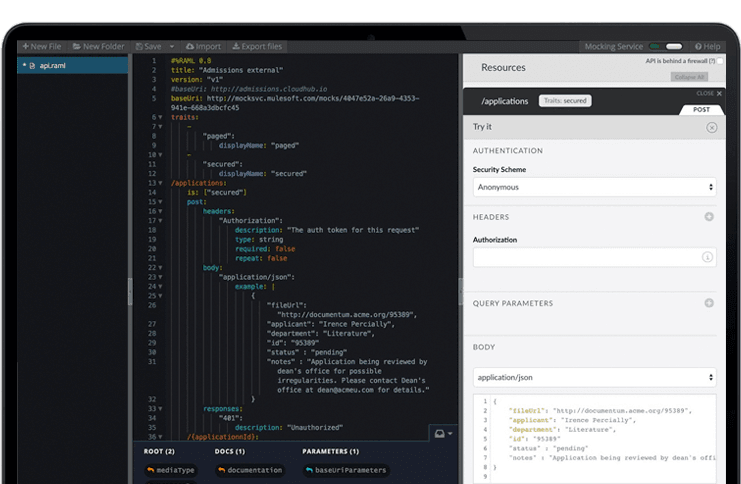
The Anypoint Platform developed by MuleSoft and acquired by Salesforce in early 2018 is designed to
connect apps, data, and devices anywhere, on-premises or in the cloud. This platform was built to
offer out-of-the-box connectors as well as tools that architects and developers can adopt quickly to
design, build and manage the entire lifecycle of their APIs, applications, and products.
Solutions Architect in Information Technology at United Techno (Computer Software, 51-200 employees)
Chose Boomi
Boomi is one of the best integration platforms out there, but it still has its niche. It is suitable for most integration scenarios especially those that doesn't require very high throughput. The runtime could be hosted on-prem and in the cloud or even in a hybrid mode, which …
A de minimis incentive was given to thank the reviewer for their time. The incentive was not used to bias or drive a particular response, nor was the incentive contingent on a positive endorsement. More Info
Business Solution Development Officer in Sales at Unilab, Inc. (Pharmaceuticals, 5001-10,000 employees)
Chose Boomi
MuleSoft and Boomi are built on totally different frameworks. Mulesoft is an API-led network whereas Boomi is an ETL middleware approach. In easy words, Mulesoft can connect to several apps and business units, can create and reuse multiple components. Boomi offers only …
A de minimis incentive was given to thank the reviewer for their time. The incentive was not used to bias or drive a particular response, nor was the incentive contingent on a positive endorsement. More Info
Verified User
Chose Boomi
Mulesoft was evaluated by [and] definitely was not the right fit for the organization considering the type of integrations which were built in the enterprise historically. Dell Boomi on the other hand was more graphical and was more easy to use and is the best ipaas at the …
A de minimis incentive was given to thank the reviewer for their time. The incentive was not used to bias or drive a particular response, nor was the incentive contingent on a positive endorsement. More Info
A de minimis incentive was given to thank the reviewer for their time. The incentive was not used to bias or drive a particular response, nor was the incentive contingent on a positive endorsement. More Info
Senior Consultant EAI in Information Technology at Capgemini (Information Technology and Services, 10,001+ employees)
Chose Boomi
We have evaluated Mulesoft as well before going with Dell Boomi. The only difference is the Complete Cloud architecture provided by Boomi and also the ease of using the software, where you don't need to install anything on a developer machine or testing machine or any quality …
A de minimis incentive was given to thank the reviewer for their time. The incentive was not used to bias or drive a particular response, nor was the incentive contingent on a positive endorsement. More Info
Founder in Information Technology at Sangam IT Solutions Pvt Ltd (Information Technology and Services, 11-50 employees)
Chose Boomi
Dell Boomi - no installation. Start immediate coding - it's the best thing which I like. Now all PaaS providers are doing same. Dell Boomi entered the game first.
A de minimis incentive was given to thank the reviewer for their time. The incentive was not used to bias or drive a particular response, nor was the incentive contingent on a positive endorsement. More Info
Director of Finance, Revenue Operations in Finance and Accounting at Workfront (Computer Software, 501-1000 employees)
Chose Boomi
Even though Azuqua may be a bit more user friendly, Boomi can handle many more situations. Azuqua couldn't handle the majority of the processes we wanted to perform.
A de minimis incentive was given to thank the reviewer for their time. The incentive was not used to bias or drive a particular response, nor was the incentive contingent on a positive endorsement. More Info
A de minimis incentive was given to thank the reviewer for their time. The incentive was not used to bias or drive a particular response, nor was the incentive contingent on a positive endorsement. More Info
Salesforce Consultant in Information Technology at Appirio (Information Technology and Services, 1001-5000 employees)
Chose Anypoint Platform
Dell Boomi is kind of similar in drag and drop implementation. However, it doesn't have as many connectors (shapes in Dell Boomi). Moreover, it also doesn't have deployment stuff on its own.
Informatica is way behind Dell Boomi and Anypoint Platform, but users are still using it …
A de minimis incentive was given to thank the reviewer for their time. The incentive was not used to bias or drive a particular response, nor was the incentive contingent on a positive endorsement. More Info
Associate Consultant in Information Technology at Capgemini (Information Technology and Services, 10,001+ employees)
Chose Anypoint Platform
Compared to Dell Boomi the API management suite of Mulesoft is much mature, however if its only about the integration , then i would always go for Dell Boomi, as there is no infrastructure setup that needs to be done from the developer's end.
A de minimis incentive was given to thank the reviewer for their time. The incentive was not used to bias or drive a particular response, nor was the incentive contingent on a positive endorsement. More Info
SAP Technical Manager in Information Technology at Consulting Organization for a client (Information Services, 10,001+ employees)
Chose Anypoint Platform
Overall a better experience in pricing negotiation with the Sales team. The breadth of services offered by Mulesoft was really important and the expertise offered by our consulting partner influenced the decision. The overall deployment was completed well within the timelines. …
A de minimis incentive was given to thank the reviewer for their time. The incentive was not used to bias or drive a particular response, nor was the incentive contingent on a positive endorsement. More Info
Cloud Solutions Administrator in Information Technology at Chartered Bank (Financial Services, 201-500 employees)
Chose Anypoint Platform
We selected Mulesoft for speed of implementation. We did not have the luxury of time and needed a solution that can be learned and implemented within weeks so we can take advantage of newly formed partnerships. The training that was provided to use during our pre-sales and …
A de minimis incentive was given to thank the reviewer for their time. The incentive was not used to bias or drive a particular response, nor was the incentive contingent on a positive endorsement. More Info
Verified User
Chose Anypoint Platform
We believe Anypoint Platform is best in breed and has features that match nearly any other iPaaS offering. It also allows for accomplishing much more challenging and complex integrations due to the ability to connect to nearly any system, use custom connectors, and embed …
A de minimis incentive was given to thank the reviewer for their time. The incentive was not used to bias or drive a particular response, nor was the incentive contingent on a positive endorsement. More Info
Technical Lead in Engineering at Algoworks (Computer Software, 201-500 employees)
Chose Anypoint Platform
Anypoint Platform is really very easy to adopt for application integration. Simple UI and easy data weave language allows user to focus on business portion only. The API management and deployment of application are hassle free. We have selected Anypoint platform because it is …
A de minimis incentive was given to thank the reviewer for their time. The incentive was not used to bias or drive a particular response, nor was the incentive contingent on a positive endorsement. More Info
Verified User
Chose Anypoint Platform
API led architecture focus with a decent API ecosystem for developer collaboration, policy management and declarative implementation. Batch processing, visualization, Anypoint MQ and ObjectStore leave a lot to be explored. Multiple deployment models make it worth considering.
A de minimis incentive was given to thank the reviewer for their time. The incentive was not used to bias or drive a particular response, nor was the incentive contingent on a positive endorsement. More Info
Founder in Information Technology at Sangam IT Solutions Pvt Ltd (Information Technology and Services, 11-50 employees)
Chose Anypoint Platform
We provide options to customers to choose from the best tools. Customers are the decision makers. Personally, because of open-source and large community base, MuleSoft is the repo in the market.
A de minimis incentive was given to thank the reviewer for their time. The incentive was not used to bias or drive a particular response, nor was the incentive contingent on a positive endorsement. More Info
Legacy systems often need to be replaced or integrated with new applications in order to modernize businesses. A strong API strategy that avoids custom coding and third-party programs is essential to enable this integration. Boomi's new-age connectivity and integration solutions ensure safe, secure, and robust integration. In the age of information, businesses are under more pressure than ever to be able to collect and manage large amounts of data. This data comes in from a variety of sources, including personalized devices such as voice assistants and wearable tech. While this data can be immensely valuable to businesses, they often lack the infrastructure necessary to handle it effectively. This can lead to data build-up in databases or silos, and can eventually lead to problems with integration and security.
MuleSoft Anypoint Platform is best tool in the market for developing APIs with complex structures communicating with various different types of applications including web applications as well as legacy applications. Also applications including database connectivity for fetching and updating data in the DB tables. I cant think of any scenario which MuleSoft Anypoint Platform could not be used for developing the integrations.
A de minimis incentive was given to thank the reviewer for their time. The incentive was not used to bias or drive a particular response, nor was the incentive contingent on a positive endorsement. More Info
A de minimis incentive was given to thank the reviewer for their time. The incentive was not used to bias or drive a particular response, nor was the incentive contingent on a positive endorsement. More Info
A de minimis incentive was given to thank the reviewer for their time. The incentive was not used to bias or drive a particular response, nor was the incentive contingent on a positive endorsement. More Info
More from a development perspective. It is always difficult to use the properties features. It takes a while to understand how the data/variables can be used across an integration.
Dell Boomi should also invest more on API Management and not just seen as a ETL,ESB tool.
Should roll out features more often based on users reviews.
A de minimis incentive was given to thank the reviewer for their time. The incentive was not used to bias or drive a particular response, nor was the incentive contingent on a positive endorsement. More Info
Has more features than what we really need so we're paying for more than we use. Sort of like paying for an Abrams tank when all we really need is a Toyota Corolla.
Not a value product, tends to be expensive.
Takes a while for developers to learn to use Mulesoft Anypoint.
A de minimis incentive was given to thank the reviewer for their time. The incentive was not used to bias or drive a particular response, nor was the incentive contingent on a positive endorsement. More Info
Dell Boomi has provided us with the ability to connect our campus together using our various existing platforms. There are many supported features and have yet to run into something that we cannot do. Its user interface is very intuitive which would allow users to begin developing fairly easily. There is a myriad of resources available
A de minimis incentive was given to thank the reviewer for their time. The incentive was not used to bias or drive a particular response, nor was the incentive contingent on a positive endorsement. More Info
My IT and Finance teams have noted that setting up the tool is a breeze. Dell Boomi has never caused an issue during a system implementation that I am aware of. We are pleased with the tool and recommend others consider it.
A de minimis incentive was given to thank the reviewer for their time. The incentive was not used to bias or drive a particular response, nor was the incentive contingent on a positive endorsement. More Info
MuleSoft Anypoint Platform is really very easy to adopt for application integration. Simple UI and easy data weave language allows user to focus on business portion only. The API management and deployment of application are hassle free.
A de minimis incentive was given to thank the reviewer for their time. The incentive was not used to bias or drive a particular response, nor was the incentive contingent on a positive endorsement. More Info
The atom sphere takes a time to load, when I open a process or when I open a log. One more slow processing is when I import objects from NetSuite.
About the performance of processing, it looks like Boomi takes a time to initialize some things such as connectors before starting the process. This is also performance we have.
A de minimis incentive was given to thank the reviewer for their time. The incentive was not used to bias or drive a particular response, nor was the incentive contingent on a positive endorsement. More Info
Boomi support was responsive and knowledgable, however being a closed cloud service, it doesn't have good community support. We found the learning curve to be steep and there aren't avenues like google, forums, or blogs that provide community driven insight into the product or how to go about designing solutions using the tool
A de minimis incentive was given to thank the reviewer for their time. The incentive was not used to bias or drive a particular response, nor was the incentive contingent on a positive endorsement. More Info
Anypoint Platform support is very responsive. There is also a huge knowledge base and an active online forum where answers to most questions can be found. When needed support engages the engineering group so adequate solutions or workarounds are always provided.
A de minimis incentive was given to thank the reviewer for their time. The incentive was not used to bias or drive a particular response, nor was the incentive contingent on a positive endorsement. More Info
We decided to go with Dell Boomi because another department in our company was already using the software. We did not research competitor applications to use as our business solution. Dell Boomi was very easy and quick to set up, so once we decided to use Dell Boomi for systems integration, we had it set up and running within a few working days.
A de minimis incentive was given to thank the reviewer for their time. The incentive was not used to bias or drive a particular response, nor was the incentive contingent on a positive endorsement. More Info
Once we have moved all of our system integration APIs to the MuleSoft Anypoint Platform, we will need to communicate with a wide variety of external systems. All of our business and service logic is stored in the aforementioned core systems. Anypoint Platform (and all of our APIs) makes it easy to connect to various other platforms. In order to link to these many other systems, connectors and/or components are utilized, and they are simple to configure and integrate.
A de minimis incentive was given to thank the reviewer for their time. The incentive was not used to bias or drive a particular response, nor was the incentive contingent on a positive endorsement. More Info
It has allowed us to scale significantly without having to add headcount, specifically those geared towards data entry. We went from a $10m ARR business to $200m ARR business with the same amount of Order Processors and 12x amount of transactions by leveraging Boomi to perform a lot of the work, and then having the Order Processing team to simply review that the transaction was processed successfully.
A de minimis incentive was given to thank the reviewer for their time. The incentive was not used to bias or drive a particular response, nor was the incentive contingent on a positive endorsement. More Info
A de minimis incentive was given to thank the reviewer for their time. The incentive was not used to bias or drive a particular response, nor was the incentive contingent on a positive endorsement. More Info