
Boomi vs. Coupler.io
Boomi vs. Coupler.io
| Product | Rating | Most Used By | Product Summary | Starting Price |
|---|---|---|---|---|
 Boomi | N/A | Boomi is a cloud-based, on-premise, or hybrid integration platform. It offers a low-code/no-code interface with the capacity for API and EDI connections for integrating with external organizations and systems, as well as compliance with data protection regulations. | $550 per month | |
 Coupler.io | N/A | Coupler.io is a no-code data automation and analytics platform. It allows users to collect, organize, transform, visualize, and act on their business data. Coupler.io offers over 1800 data integrations with Microsoft Ads, Google Analytics, GoHighLevel, Xero, Pipedrive, Airtable, Shopify, and other popular platforms. It allows the automatic loading of data to Excel, BigQuery, Power BI, Tableau, etc. Coupler.io's integrations with AI agents… | $32 per month |
| Boomi | Coupler.io | |||||||||||||||
|---|---|---|---|---|---|---|---|---|---|---|---|---|---|---|---|---|
| Editions & Modules |
|
| ||||||||||||||
| Offerings |
| |||||||||||||||
| Entry-level Setup Fee | No setup fee | No setup fee | ||||||||||||||
| Additional Details | — | Discount of up to 25% for annual billing. | ||||||||||||||
| More Pricing Information | ||||||||||||||||
| Boomi | Coupler.io |
|---|
| Boomi | Coupler.io | |||||||||||||||||||||
|---|---|---|---|---|---|---|---|---|---|---|---|---|---|---|---|---|---|---|---|---|---|---|
| Cloud Data Integration |
|
| Boomi | Coupler.io | |
|---|---|---|
| Small Businesses |  Make Score 8.9 out of 10 | Make Score 8.9 out of 10 |
| Medium-sized Companies |  IBM App Connect Score 9.5 out of 10 | IBM App Connect Score 9.5 out of 10 |
| Enterprises | IBM App Connect Score 9.5 out of 10 | IBM App Connect Score 9.5 out of 10 |
| All Alternatives | View all alternatives | View all alternatives |
| Boomi | Coupler.io | |
|---|---|---|
| Likelihood to Recommend | 9.0 (0 ratings) | 10.0 (0 ratings) |
| Likelihood to Renew | 10.0 (0 ratings) | - (0 ratings) |
| Usability | 8.0 (0 ratings) | 10.0 (0 ratings) |
| Performance | 7.9 (0 ratings) | - (0 ratings) |
| Support Rating | 6.0 (0 ratings) | - (0 ratings) |
| Boomi | Coupler.io | |
|---|---|---|
| Likelihood to Recommend | 
| 
|
| Pros |
 Cristian Bodnarasec Senior Software Development Manager |
|
| Cons |
|
|
| Likelihood to Renew |
| No answers on this topic |
| Usability |
 Phi Hoang Senior Software Engineer |
 Vishal Dave Sr. Digital Marketer |
| Performance |
| No answers on this topic |
| Support Rating |
| No answers on this topic |
| Alternatives Considered |
 Jef L Business Solution Development Officer |
Vishal Dave Sr. Digital Marketer |
| Return on Investment |
|
Vishal Dave Sr. Digital Marketer |
| ScreenShots | Coupler.io Screenshots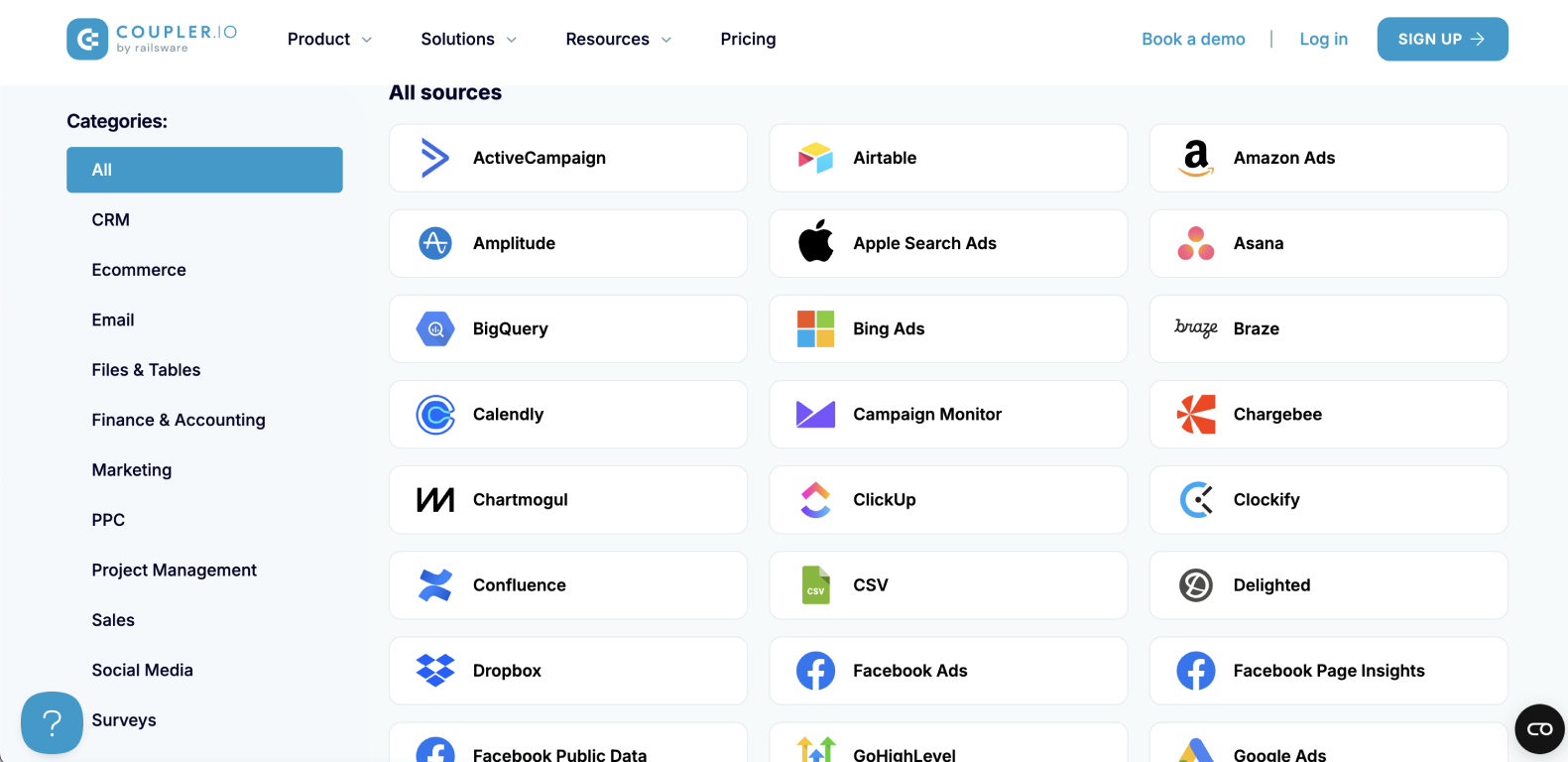 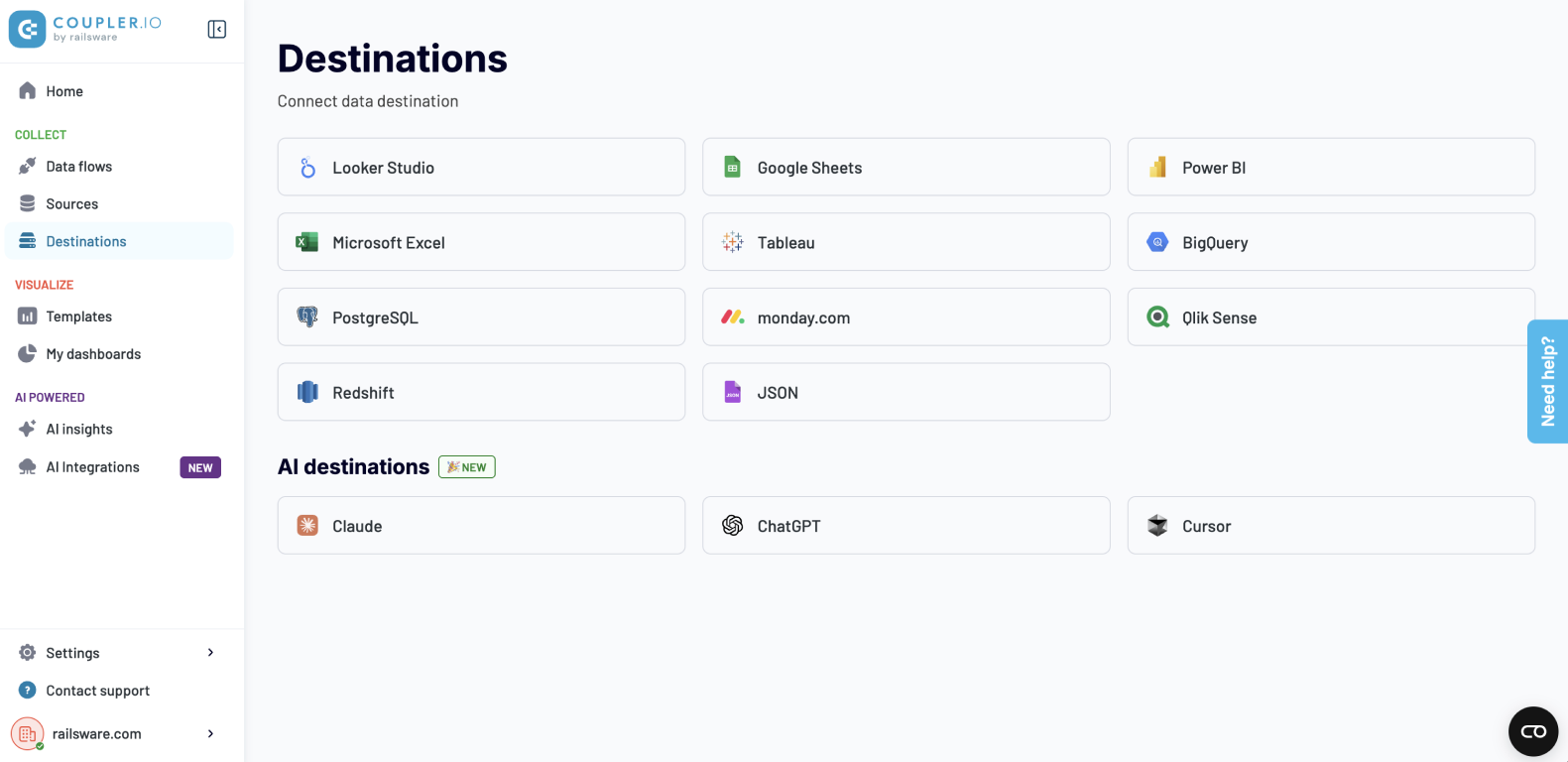 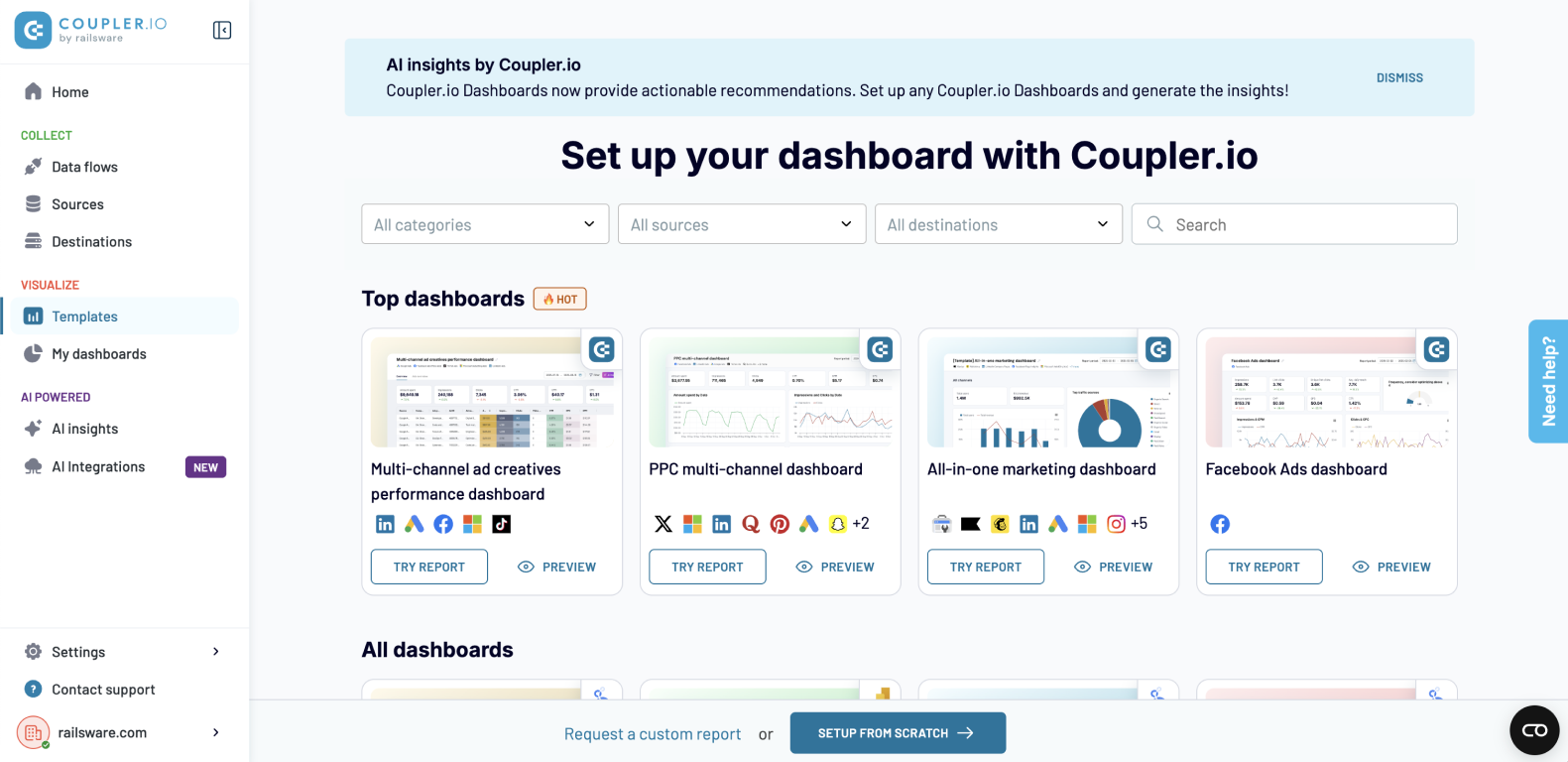 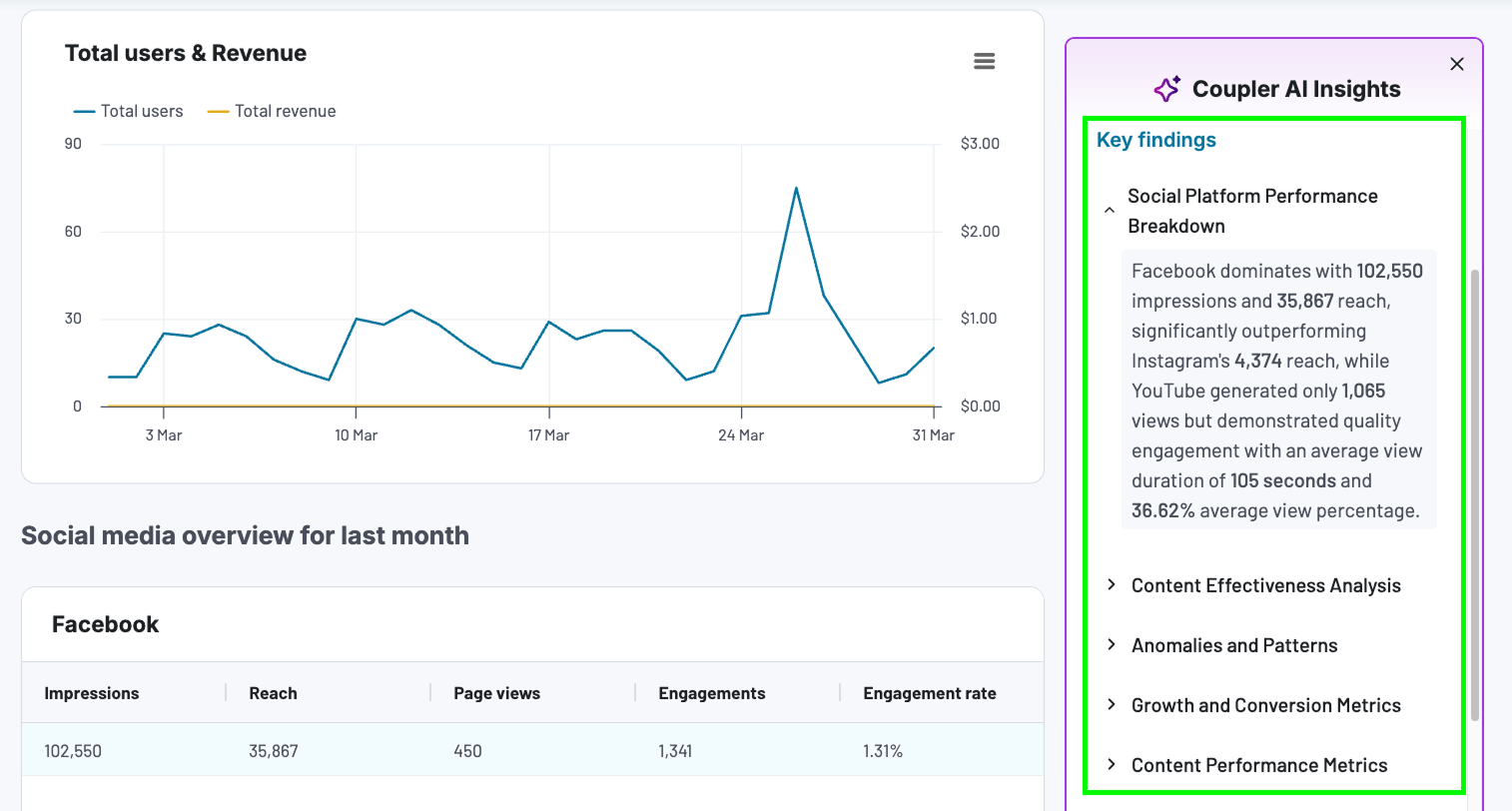 |