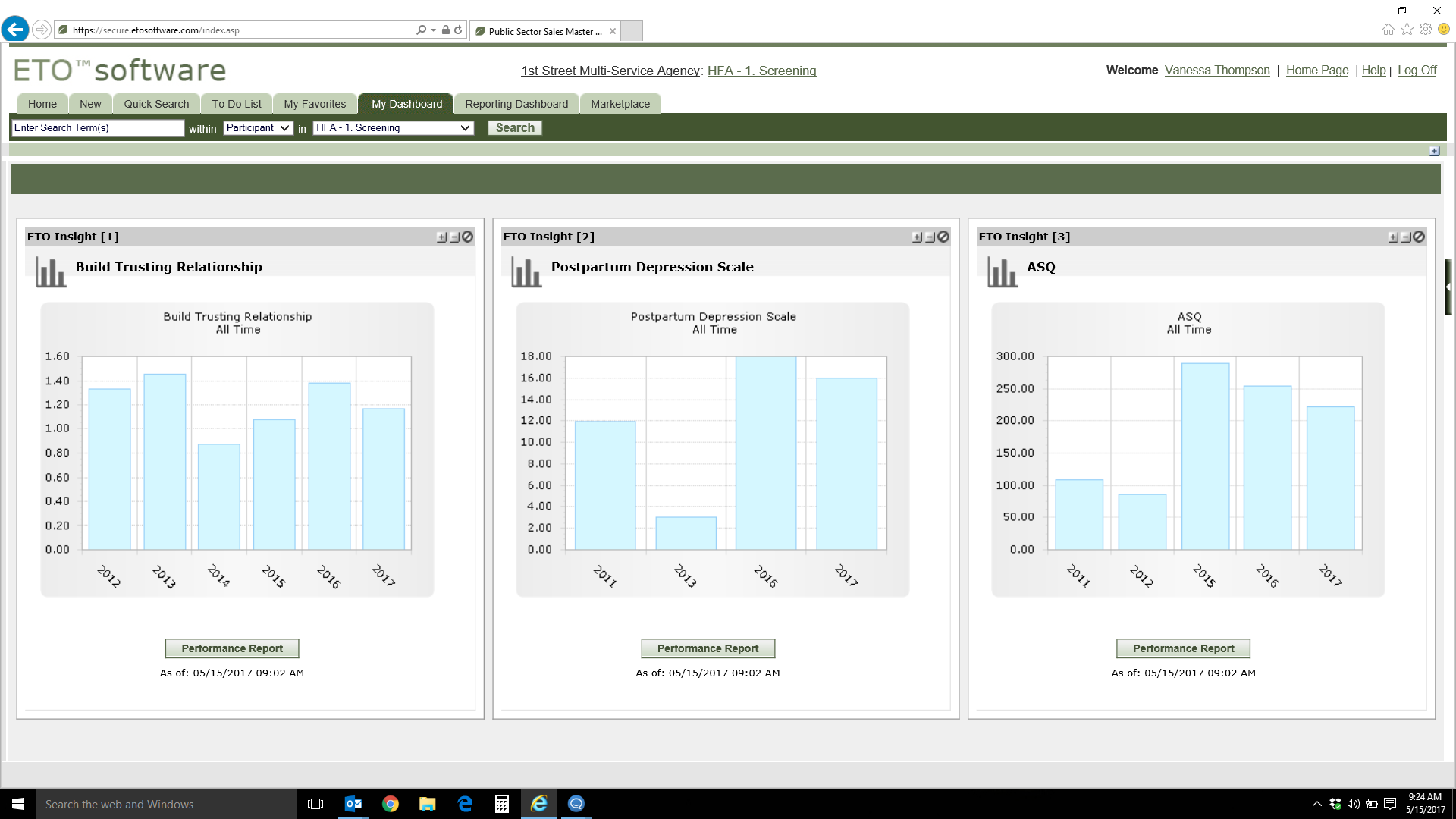
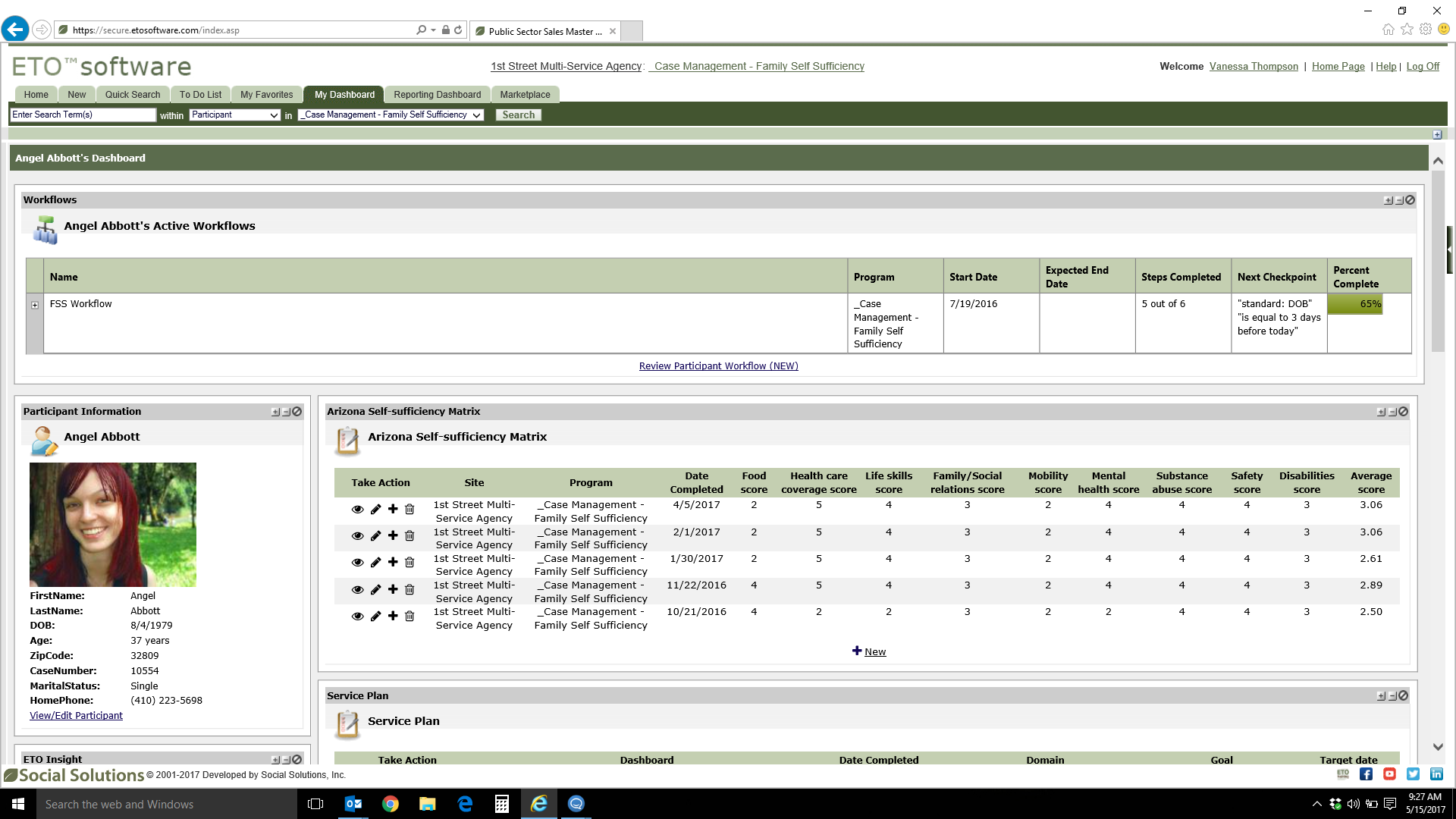
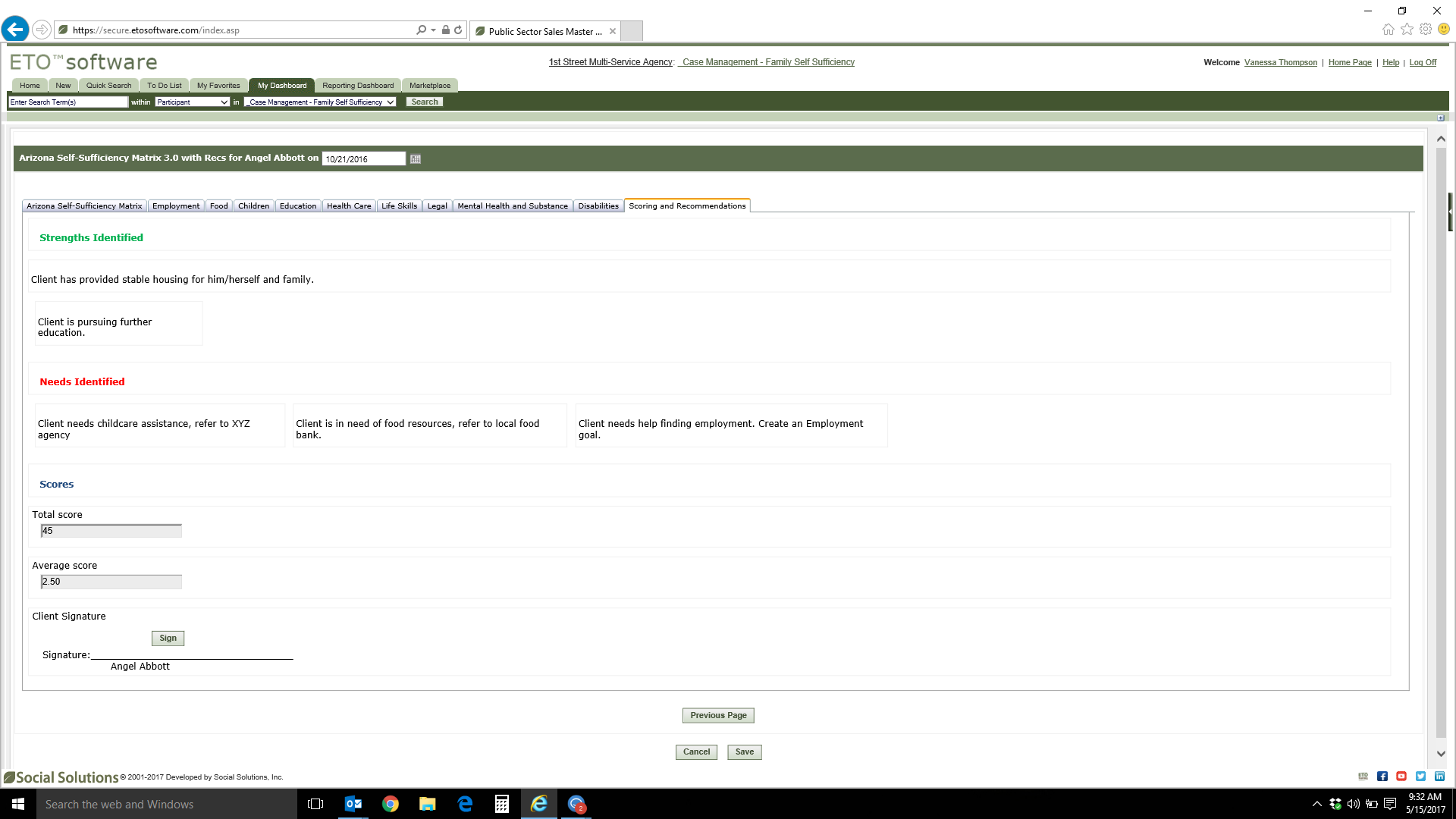
Bonterra ETO is a case management platform that consolidates data, caseloads, and service delivery programs, helping users to save time and serve more people. ETO is purpose-built for organizations looking to improve their program and case management. ETO is built in accordance with industry security standards and includes tools that helps users to focus on advancing their missions, as well as: Reduce time spent entering data into separate systems to increase…
N/A
OpenText Documentum
Score 8.4 out of 10
N/A
OpenText acquired Documentum from Dell EMC in 2017, and now supports the enterprise content management (ECM) system. The vendor says users can build content-centric applications and solutions from collaborating on business documents to delivering case-based applications to managing highly precise processes in the most regulated business environments.
N/A
Pricing
Bonterra ETO
OpenText Documentum
Editions & Modules
No answers on this topic
Offerings
Pricing Offerings
Bonterra ETO
OpenText Documentum
Free Trial
No
No
Free/Freemium Version
No
No
Premium Consulting/Integration Services
No
No
Entry-level Setup Fee
Required
Optional
Additional Details
—
—
More Pricing Information
Community Pulse
Bonterra ETO
OpenText Documentum
Features
Bonterra ETO
OpenText Documentum
Enterprise Content Management
Comparison of Enterprise Content Management features of Product A and Product B
Bonterra ETO
-
Ratings
OpenText Documentum
9.2
Ratings
14% above category average
Content capture & imaging
00 Ratings
10.00 Ratings
File sync, storage & archiving
00 Ratings
9.00 Ratings
Document management
00 Ratings
9.00 Ratings
Records management
00 Ratings
9.00 Ratings
Content search & retrieval
00 Ratings
9.00 Ratings
Enterprise content collaboration
00 Ratings
9.00 Ratings
Content publishing & creation
00 Ratings
9.00 Ratings
Security, risk management & information governance
I can see from an education perspective how it would be an incredible fit. The functionality is all there and growing. From a CAC perspective, it's still a work in progress, especially for larger CACs where lots more services are provided and the lines between programs blur a bit more. I think that ETO is becoming more user-friendly for CACs and Social Solutions is moving in the right direction too. I can't wait for some of the new features to roll out and be able to use them in our system. I really do think that will improve our user experience significantly.
What are the document volume, the throughput - currently and expected in year, 3 years etc.? Is the company doing content management on international level, where access from multiple locations is needed - then Documentum can be good investment. What ECM system will be used for - document storage, document lifecycle or retention? Or all of the above? - Documentum works very well if all 3 items are combined, yet for storage there must be cheaper and more easily adaptable solutions available.
It's good at integration with external systems through standard industry supported APIs, including but not limited to web services integration and file system integration.
Good support from major up and downstream technologies such as image capturing and back end ERP, Database, and HR.
ETO needs to be mobile friendly because a lot of our staff do outreach work, including all touchpoints, demographics, enrollments, and dashboards on their phone.
Too many ways to get to the same thing. E.g. Add New Participant Tab, Add New Participant in Navigation Bar, Add New Participant on Home Page, etc. This generates mistakes and a need for very thorough training and tight oversight.
Inability to remove touchpoints from custom universes once they have already been added. There is a limit of 20 touchpoints per custom universe. If the touchpoints in a universe have become obsolete or irrelevant, there is no way to make room for a new, more relevant touchpoint. Old touchpoints can be disabled but not removed.
Need to pay extra for email and calendar notifications. This should be a built-in function, as the software already costs a lot, and many organizations cannot afford to spend more to get this vital functionality.
It would be great if a "Case Conference" chat feature could be attached to participants. Case managers could enter the chat room and relay important information about the participant to each other. This could also work when people aren't there in real time, like emails. The important part is that all of this information would be accessible UNDER the participant's profile or dashboard that it's regarding.
Expense. If Documentum costs less it would penetrate more markets. This is often the reason a lighter weight solution is chosen.
Web Publishing. Documentum is not a great solution for replacing CMSs like SiteCore or Drupal. Probably better as an archiving target for parallel publishing to both web and Documentum. Documentum is also not a web hosting solution like some other systems, it is possible to try and consume directly from the repository in real time but it is better to push web content out and consume from another platform.
Development. The price of broad functionality is complexity. Arguably, Documentum drank the kool-aid and tried to become like other enterprise solutions by adapting Java, Windows, etc. in the late '90s and it made them slower, more complex in design, and less stable. They recovered from that but it still requires developers with a few years of experience in Documentum to safely develop in Documentum. The issue is not knowing Java but knowing what to do or not do in an ECM system. This is even more important in regulated ECM/RM systems.
Social Solutions has been great for our organization. It has allowed us to not only report on data, but to dive into it to see trends and give snapshots of the current status of our neighbors. Social Solutions has been helpful in getting us to see additional ways we can use our data and ways that it is easier for front line staff to use this tool
Stability is a key factor as well as its flexibility. Also, any organization that deploys Documentum will have made a significant investment in terms of time and money, so not renewing its commitment can come with a significant cost. That said, the decision to deploy Documentum initially should come only after extensive evaluation, knowing that once deployed it will likely remain the platform of choice.
6 years of experience dealing with a poor interface, unreliable reports, and broken promises with virtually zero improvements. I have too many issues to list but have an entire file if anyone ever shows interest from a site Manager. I listed some of the issues in some of the first questions in this review and I appreciate the opportunity to share my experiences.
Routine maintenance is announced with plenty of lead time, and the few times I've been unable to log in to the system properly a simple refresh was all that was required to fix.
Mostly really strong now, although I understand that for some years before switching their hosting service to AWS performance was a real issue with ETO and we had frequent problems with pages timing out or other glitches stemming from performance issues. With AWS that is mostly a thing of the past, although it is still a major issue with the reporting tool which is unable to run reports on the entire database due to performance limitations, instead requiring admins to define universes prior to running queries.
We love the first tier customer support folks! They're friendly, helpful, and knowledgeable within the scope of their position. The experiences we've had with their supervisors have also been mostly good and again they seem to be doing what they can within the scope of their positions. This is what prevents me from selecting 1. Unfortunately, none of these wonderful folks can offer real solutions when things are actually broken. They verify there's a problem and send it to the black hole called "the developers". After that, we don't hear anything useful and we figure out how to live with/work around the problem ourselves. (Requests for updates typically get "still with the developer" responses.) This is highly frustrating given that most of our issues are basic system issues (functionality that worked then broke after an update by Social Solutions, servers not syncing, report universes not flattening automatically, etc.). All we want is for the system to work as designed and to be fixed in a timely fashion when it doesn't. Apparently, that's too much to ask. (And no, we don't expect it to happen instantly, programming and quality control checks obviously take time.)
Really good trainer and exhaustive curriculum covered, but ETO is a complex enough system that you don't *really* know how to use it until you've been in the trenches for a few weeks. For instance, I took a Report Writing training and emerged with some fluency in the reports interface and a vague understanding of the process, but immediately encountered a legion of instance-specific idiosyncrasies that would have been totally impossible to address in a webinar training for a dozen folks from different orgs working in different instances.
Hard to say, as I was not with the agency at the time. However, based on our use of the software ~5years later I can say that there were no catastrophic design choices made during implementation that have become unduly burdensome as we've scaled up.
We originally built our program around SharePoint and were dissatisfied by the lack of transparency it provided. We then moved to ETO, primarily because it was the cheapest of the other solutions that we looked at. Now, we are realizing that we are not getting any real value from our ETO system, so we will likely be investing in a more sophisticated system.
Subjective but here's how I see it: Heavy duty (in order of how much they can do and how much they can handle): 1)Documentum, 2)FileNet 3)OpenText Middle duty: 1)WCC-WebCenter Content, 2)Alfresco, 3)M-Files (3rd b/c it is Windows only), 4)Nuxeo (only b/c of its newish approach that may lead somewhere) Light duty: 1) BOX (not an ECM but it says it is), 2) EFSS (pick your poison, BOX is an enhanced EFSS), 3) CMSs (some have some ECM capability, none have much)
The core product scales well, and we've grown quite a bit as an agency during our use of ETO. However, there are some real pain points particularly around creating new programs and managing report universes that require extensive offline checklist resources and a full-spectrum understanding of how changing settings in one part of ETO can have downstream impact in other areas. This can introduce a "chilling" effect on proposed changes to the system, where there is strong incentive to leave things as-is to avoid unforeseen consequences.
It has saved us time in terms of putting together reports for internal use and for external funders.
Better accountability for gathering information.
Given the monthly cost of the system we are probably paying too much but the cost of switching to another piece of software doesn't quite justify a move yet.
After this product, the client is able to manage content security and due to it, the client is able to use the business process, and this really reduces effort and increases the profit in business.
It provides integration with SAP easily which really helps the client to manage this effectively and with minimum effort system is ready to use.
Also searching, automated flows also create a bigger impact and reduce a lot manual effort.