Azure Databricks is a service available on Microsoft's Azure platform and suite of products. It provides the latest versions of Apache Spark so users can integrate with open source libraries, or spin up clusters and build in a fully managed Apache Spark environment with the global scale and availability of Azure. Clusters are set up, configured, and fine-tuned to ensure reliability and performance without the need for monitoring. The solution includes autoscaling and auto-termination to improve…
N/A
DataRobot
Score 8.2 out of 10
N/A
The DataRobot AI Platform is presented as a solution that accelerates and democratizes data science by automating the end-to-end journey from data to value and allows users to deploy AI applications at scale. DataRobot provides a centrally governed platform that gives users AI to drive business outcomes, that is available on the user's cloud platform-of-choice, on-premise, or as a fully-managed service. The solutions include tools providing data preparation enabling users to explore and…
N/A
Pricing
Azure Databricks
DataRobot
Editions & Modules
No answers on this topic
No answers on this topic
Offerings
Pricing Offerings
Azure Databricks
DataRobot
Free Trial
No
Yes
Free/Freemium Version
No
Yes
Premium Consulting/Integration Services
No
No
Entry-level Setup Fee
No setup fee
No setup fee
Additional Details
—
—
More Pricing Information
Community Pulse
Azure Databricks
DataRobot
Features
Azure Databricks
DataRobot
Platform Connectivity
Comparison of Platform Connectivity features of Product A and Product B
Azure Databricks
8.1
Ratings
3% below category average
DataRobot
-
Ratings
Connect to Multiple Data Sources
6.20 Ratings
00 Ratings
Extend Existing Data Sources
9.00 Ratings
00 Ratings
Automatic Data Format Detection
9.00 Ratings
00 Ratings
MDM Integration
8.00 Ratings
00 Ratings
Data Exploration
Comparison of Data Exploration features of Product A and Product B
Azure Databricks
6.4
Ratings
27% below category average
DataRobot
-
Ratings
Visualization
5.90 Ratings
00 Ratings
Interactive Data Analysis
6.90 Ratings
00 Ratings
Data Preparation
Comparison of Data Preparation features of Product A and Product B
Azure Databricks
8.0
Ratings
2% below category average
DataRobot
-
Ratings
Interactive Data Cleaning and Enrichment
7.00 Ratings
00 Ratings
Data Transformations
9.00 Ratings
00 Ratings
Data Encryption
9.00 Ratings
00 Ratings
Built-in Processors
7.10 Ratings
00 Ratings
Platform Data Modeling
Comparison of Platform Data Modeling features of Product A and Product B
Azure Databricks
8.3
Ratings
1% below category average
DataRobot
-
Ratings
Multiple Model Development Languages and Tools
8.10 Ratings
00 Ratings
Automated Machine Learning
9.00 Ratings
00 Ratings
Single platform for multiple model development
8.00 Ratings
00 Ratings
Self-Service Model Delivery
8.00 Ratings
00 Ratings
Model Deployment
Comparison of Model Deployment features of Product A and Product B
Having access to all databases and tables in one place is what has helped me and my team to function better. The in built functionality/access to SQL and Python is definitely an added bonus! The icing on the cake is the ability to export your data into an Excel spreadsheet for additional analysis. If you have less to no working knowledge of SQL or Python, its better to look at alternatives.
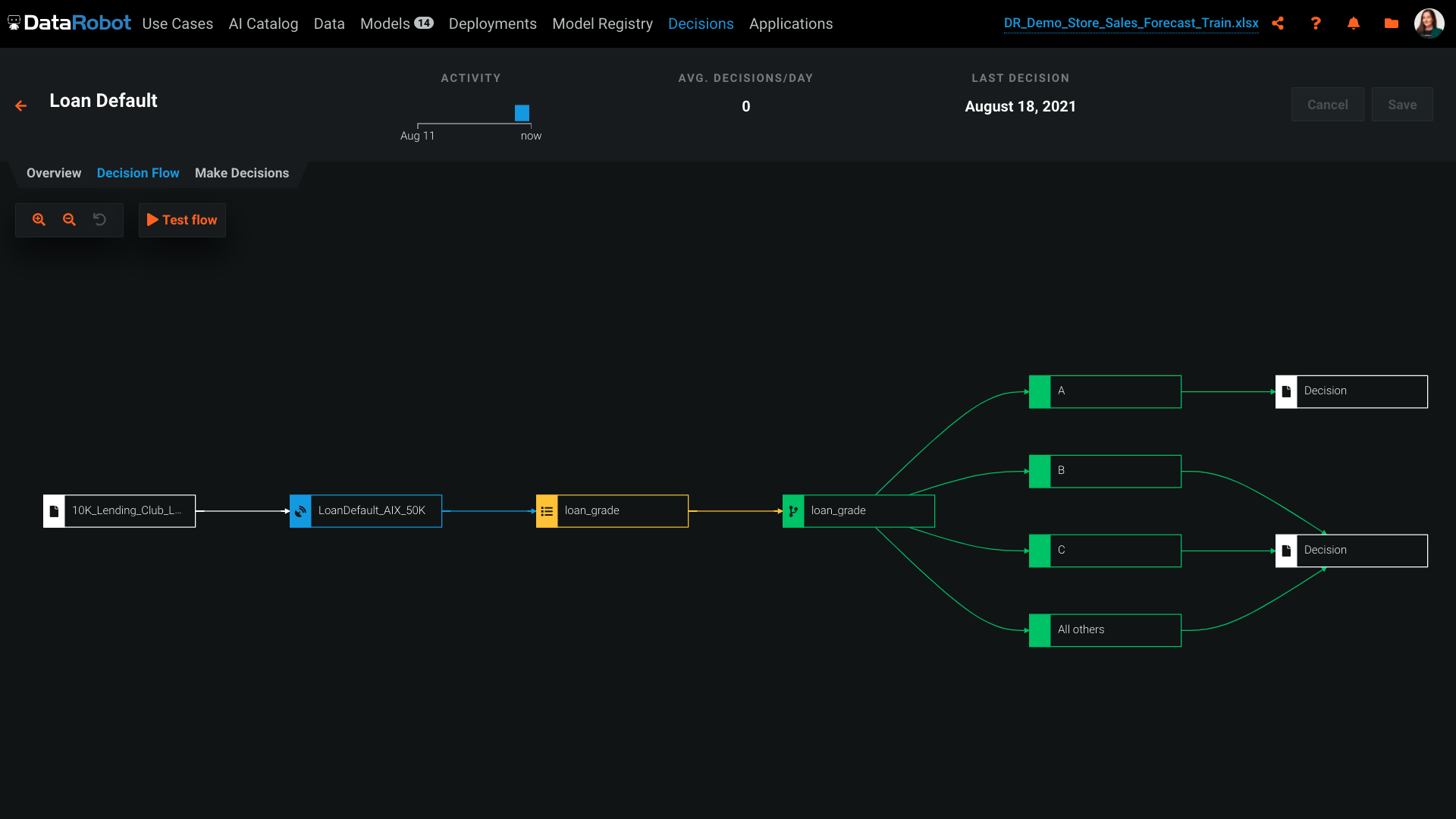
DataRobot can be used for risk assessment, such as predicting the likelihood of loan default. It can handle both classification and regression tasks effectively. It relies on historical data for model training. If you have limited historical data or the data quality is poor, it may not be the best choice as it requires a sufficient amount of high-quality data for accurate model building.
Further improvements to their text analysis tool, to be more like the Qualtrics text analysis tool, would be a great addition. Qualtrics has templates built into their text analysis tool for customer service, quality control, etc, and will automatically slot your text responses into categories associated with certain sub areas of those larger categories.
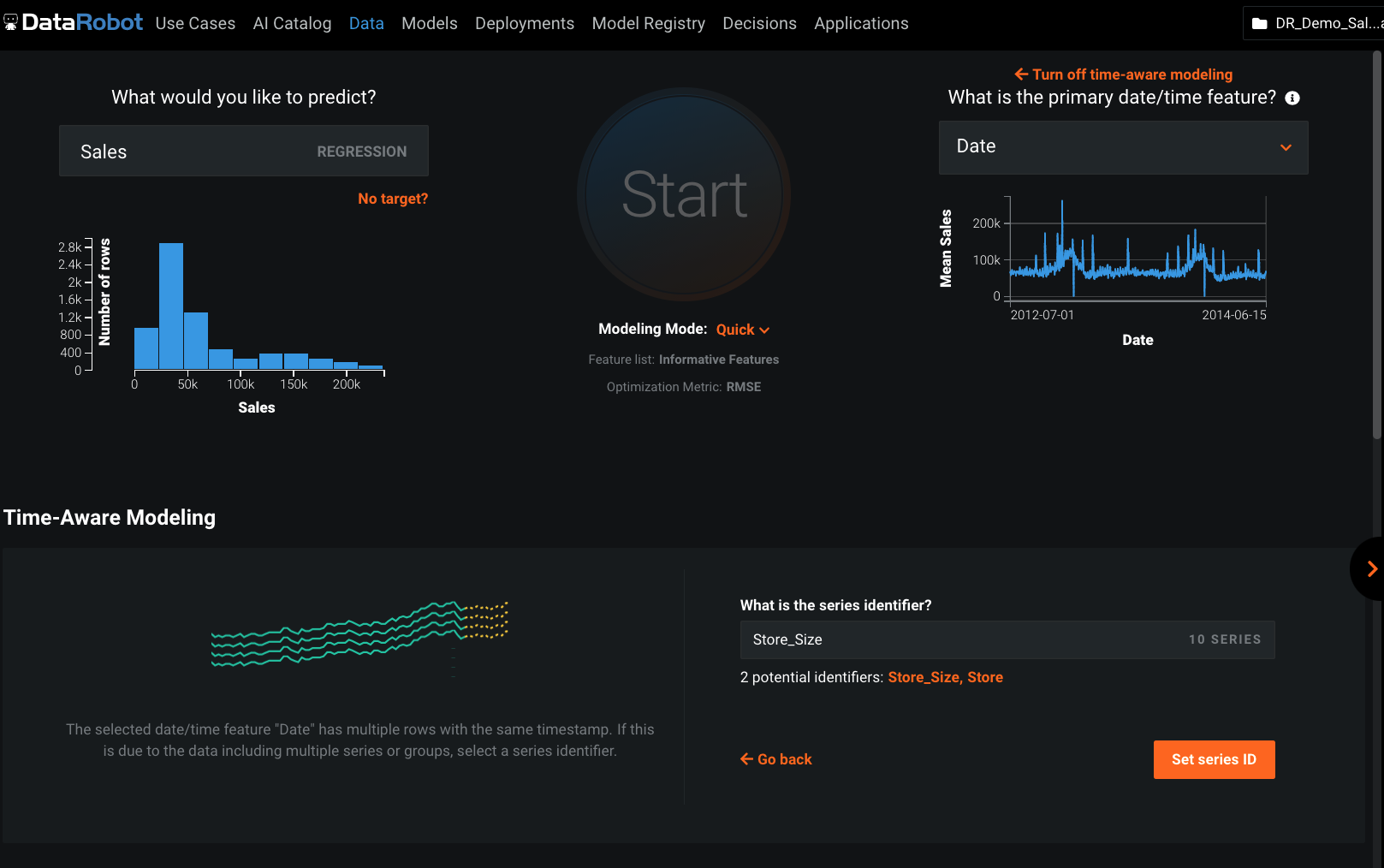
DataRobot presents a machine-learning platform designed by data scientists from an array of backgrounds, to construct and develop precise predictive modeling in a fraction of the time previously taken. The tech invloved addresses the critical shortage of data scientists by changing the speed and economics of predictive analytics. DataRobot utilizes parallel processing to evaluate models in R, Python, Spark MLlib, H2O and other open source databases. It searches for possible permutations and algorithms, features, transformation, processes, steps and tuning to yield the best models for the dataset and predictive goal.
Based on my extensive use of Azure Databricks for the past 3.5 years, it has evolved into a beautiful amalgamation of all the data domains and needs. From a data analyst, to a data engineer, to a data scientist, it jas got them all! Being language agnostic and focused on easy to use UI based control, it is a dream to use for every Data related personnel across all experience levels!
As I am writing this report I am participating with Datarobot Engineers in an complex environment and we have their whole support. We are in Mexico and is not common to have this commitment from companies without expensive contract services. Installing is on premise and the client does not want us to take control and they, the client, is also limited because of internal IT regulations ,,, soo we are just doing magic and everybody is committed.
Against all the tools I have used, Azure Databricks is by far the most superior of them all! Why, you ask? The UI is modern, the features are never ending and they keep adding new features. And to quote Apple, "It just works!" Far ahead of the competition, the delta lakehouse platform also fares better than it counterparts of Iceberg implementation or a loosely bound Delta Lake implementation of Synapse
I've done machine learning through python before, however having to code and test each model individually was very time consuming and required a lot of expertise. The data Robot approach, is an excellent way of getting to a well placed starting point. You can then pick up the model from there and fine tune further if you need.