If you have a medium amount of data (2GB - 2.4TB), high-security concerns, and search is a key requirement in your single-tenant application then Azure Search likely has you covered. If you have a small amount of data per tenant (EG, about 2GB), have low-security concerns, and a multi-tenant application where search is a key requirement, then Azure Search would likely be a good choice - though you would need to implement your own concept of sharding and managing across potentially multiple Azure Search instances. If you can reflect your would-be indexes in Azure Search by depositing the data in columns in a SQL table and just index it for full-text search - and that still fits your requirements - it's probably better to start with SQL Database then scale up to Azure Search when you need the advanced features like ranking or cognitive abilities.
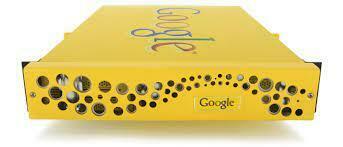
The Google Search Appliance is well suited to most site search needs and it is possible to customize the front end seen by website visitors to produce a satisfactory basic interface with basic branding applied to it. However, in some situations it may be necessary to instead make API calls from a web page to retrieve search results and the format in which those results are returned might be a little more difficult to work with.
Like virtually all Azure services, it has first-class treatment for .Net as the developer platform of choice, but largely ignores other options. While there is a first-party Python SDK, there are only community packages for other languages like Ruby and Node. Might be a game of roulette for those to be kept up-to-date. This might make it a non-starter for some teams that don't want to do the work to integrate with the REST API directly.
In my opinion, partitions inside of Azure Search don't count as data segregation for customers in a multi-tenant app, so any application where you have many customers with high-security concerns, Azure Search is probably a non-starter.
To elaborate on the multi-tenant issue: Azure Search's approach to pricing is pretty steep. While there is a free tier for small applications (50MB of content or less) the first paid tier is about 14x more expensive than the first SQL Database tier that supports full-text search. For many applications, it makes a lot more economic sense to just run some LIKE or CONTAINS queries on columns in a table rather than going with Azure Search.
Azure Search is a competitor against Google's own AI autosuggest a feature. We went with Azure because our network security folks found it to be more robust from a security standpoint, which is incredibly important when you have proprietary manufacturing information. Additionally, we're a Microsoft shop so it plugged into our cloud hosting package and client facing OS.
There has also been a cost associated with our need to switch to another site search solution in the near future, due to Google ending support for the sppliance.
That said, we have so much support content that we owed it to our customers to offer a comprehensive search tool to help them find the most relevant content - and of course Google are the masters of this. However, it's worth noting that the alogorithms used on the GSA are far older than those used on google.com.